
In modern warehousing and logistics operations, speed alone is no longer enough. Distribution centers, e-commerce fulfillment hubs, parcel facilities, and automated warehouses now depend heavily on precision. Even the fastest sorting system loses value if packages fail to reach the correct destination consistently.
Among the most widely used automated sorting technologies today, cross-belt sorters stand out for their high throughput, flexibility, and ability to handle a broad range of parcel types. These systems are designed to achieve fast and highly accurate discharge performance across thousands of items per hour.
However, over time, many facilities begin experiencing a common but costly issue: declining discharge accuracy.
When cross-belt sorter accuracy drops, the consequences spread quickly throughout the operation:
- Increased mis-sorts
- Delayed shipments
- Higher labor costs
- Customer complaints
- Return handling expenses
- Reduced throughput efficiency
- Manual resorting requirements
- Downtime and maintenance interruptions
Even a small reduction in sorting precision can create major operational problems in high-volume facilities.
The good news is that most cross-belt discharge accuracy issues can be identified and corrected through systematic troubleshooting.
In this comprehensive guide, we will explore the most common causes of reduced cross-belt sorter discharge accuracy, explain how these problems develop, and provide practical solutions to restore optimal performance.
Understanding How Cross-Belt Sorters Achieve Discharge Accuracy
Before diagnosing problems, it is important to understand how cross-belt sorters operate.
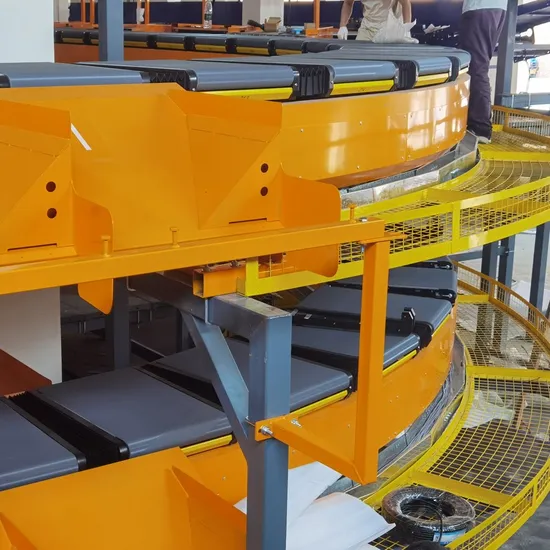
A cross-belt sorter consists of individual carrier units mounted on a circulating track. Each carrier contains a small belt conveyor capable of moving items laterally into designated chutes, bins, or output lanes.
The system relies on multiple synchronized components working together precisely:
- Barcode or RFID identification
- Sensor detection
- Package positioning
- Carrier tracking
- Belt activation timing
- Conveyor speed synchronization
- Control software logic
- Mechanical stability
Accurate discharge depends on perfect coordination between these systems.
Any deviation in timing, tracking, positioning, or mechanical alignment can reduce sorting precision.
Signs That Cross-Belt Sorter Accuracy Is Declining
Facilities often notice early warning signs before serious failures occur.
Common symptoms include:
- Increased package mis-sorts
- Parcels missing discharge chutes
- Packages partially ejecting
- Frequent operator intervention
- Product collisions during discharge
- Inconsistent discharge trajectories
- More rejected packages
- Rising system alarms
- Reduced throughput efficiency
Ignoring these early signs can allow small problems to escalate into major operational disruptions.
Root Cause Category 1: Sensor-Related Problems
Sensors are the eyes of the sorting system.
If sensor performance declines, the sorter loses its ability to detect, position, and track items accurately.
Dirty Photoelectric Sensors
Dust, adhesive residue, cardboard fibers, and dirt gradually accumulate on sensor surfaces.
This contamination can interfere with accurate detection.
Symptoms include:
- Missed package detection
- Incorrect positioning
- Delayed discharge timing
- False triggers
Solutions
- Establish regular cleaning schedules
- Use compressed air and lint-free cloths
- Inspect sensors daily in dusty environments
- Replace damaged sensor lenses
Preventive maintenance significantly reduces sensor-related failures.
Misaligned Sensors
Vibration and long-term operation may gradually shift sensor alignment.
Even small positioning errors can affect package tracking.
Solutions
- Verify alignment during routine inspections
- Use calibration tools when available
- Tighten mounting hardware securely
- Monitor vibration-prone sections carefully
Sensor Communication Failures
Faulty wiring, loose connections, or electrical interference may interrupt sensor communication.
Solutions
- Inspect cable integrity regularly
- Check connector stability
- Shield cables from interference sources
- Replace worn wiring harnesses
Root Cause Category 2: Conveyor Belt Wear and Mechanical Degradation
Mechanical wear is one of the most common causes of declining discharge accuracy.
Cross-belt systems operate continuously under heavy loads, creating gradual component fatigue.
Worn Cross Belts
The cross belts themselves experience constant friction.
Over time, belts may:
- Lose grip
- Stretch unevenly
- Slip during discharge
- Develop surface damage
This directly affects lateral discharge consistency.
Solutions
- Monitor belt wear patterns
- Replace worn belts proactively
- Maintain proper tension settings
- Use manufacturer-approved replacement parts
Belt Tension Inconsistency
Improper tension creates unstable belt movement.
Belts that are too loose may slip.
Belts that are too tight increase motor strain and uneven wear.
Solutions
- Perform regular tension checks
- Standardize tension adjustment procedures
- Use tension measurement tools
- Train maintenance teams carefully
Carrier Wheel Wear
Carrier wheels guide each sorting unit along the track.
As wheels wear unevenly, carrier stability decreases.
This can affect:
- Position tracking
- Vibration control
- Discharge alignment
Solutions
- Inspect wheel surfaces regularly
- Replace damaged bearings promptly
- Monitor noise and vibration levels
- Lubricate moving parts properly
Root Cause Category 3: Inaccurate Package Positioning
Package positioning is critical for precise discharge.
If parcels are not centered correctly on the carrier, discharge trajectories become unpredictable.
Improper Induction Feeding
Packages entering the sorter at poor angles create positioning instability.
Common causes include:
- Operator inconsistency
- Poor upstream conveyor alignment
- Excessive conveyor speed
- Insufficient spacing
Solutions
- Improve induction conveyor design
- Add centering guides
- Install spacing control systems
- Train operators on loading standards
Irregular Package Dimensions
Modern logistics facilities process increasingly diverse package shapes.
Problems often occur with:
- Soft bags
- Cylindrical items
- Oversized parcels
- Lightweight packages
- Flexible packaging
These items may shift during transport.
Solutions
- Adjust sorter speed for unstable products
- Use specialized handling zones
- Add package stabilization devices
- Improve package orientation controls
Package Surface Friction Problems
Low-friction packaging materials may slide unpredictably.
Solutions
- Modify belt materials if necessary
- Optimize acceleration profiles
- Improve induction stability

Root Cause Category 4: Encoder and Tracking Errors
Encoders monitor conveyor movement and carrier positioning.
If tracking data becomes inaccurate, discharge timing suffers.
Encoder Slippage
Mechanical slippage creates inaccurate motion data.
This can lead to:
- Early discharge
- Late discharge
- Misaligned ejection
Solutions
- Inspect encoder mounting systems
- Check coupling integrity
- Replace worn encoder components
- Verify calibration routinely
Tracking Synchronization Drift
Over time, synchronization between software and physical carrier positions may drift.
Solutions
- Recalibrate tracking systems regularly
- Update control software when necessary
- Monitor cumulative positioning deviations
Root Cause Category 5: Software and Control System Issues
Modern cross-belt sorters depend heavily on intelligent control systems.
Even mechanically healthy systems can suffer from software-related accuracy problems.
Incorrect Sort Logic Parameters
Changes in throughput or package types may require software adjustments.
Outdated parameters can affect:
- Discharge timing
- Speed control
- Carrier assignment
- Sensor interpretation
Solutions
- Review control logic settings regularly
- Validate timing parameters
- Optimize discharge algorithms
- Test software changes carefully
Database Communication Delays
Large facilities rely on communication between:
- Warehouse management systems
- Warehouse control systems
- PLCs
- Sortation software
Communication delays may result in incorrect destination assignments.
Solutions
- Monitor network latency
- Upgrade communication infrastructure
- Reduce unnecessary data traffic
- Improve server performance
Software Bugs and Firmware Problems
Occasionally, firmware or software errors affect system performance.
Solutions
- Apply validated software updates
- Work closely with equipment vendors
- Maintain backup configurations
- Test updates in controlled environments
Root Cause Category 6: Speed Mismatch Problems
Cross-belt sorters operate through carefully synchronized motion.
Speed inconsistencies can severely reduce accuracy.
Conveyor Speed Variations
Variable speed fluctuations may affect package timing.
Solutions
- Inspect motor drives regularly
- Verify VFD calibration
- Monitor speed consistency
- Replace unstable motors
Excessive Throughput Demands
Facilities sometimes push systems beyond their designed operational limits.
High-speed operation increases:
- Vibration
- Positioning errors
- Mechanical wear
- Package instability
Solutions
- Operate within recommended throughput ranges
- Analyze bottlenecks scientifically
- Expand capacity when necessary
Root Cause Category 7: Vibration and Structural Problems
Mechanical vibration affects precision significantly.
Loose Structural Components
Loose supports or frame instability create alignment problems.
Solutions
- Inspect bolts and supports regularly
- Reinforce weak structures
- Monitor vibration hotspots
Track Deformation
Long-term mechanical stress may deform sorter tracks.
Even minor track irregularities can affect carrier positioning.
Solutions
- Conduct laser alignment inspections
- Replace damaged track sections
- Monitor wear progression
Root Cause Category 8: Environmental Factors
Environmental conditions are often overlooked during troubleshooting.
Dust Accumulation
Dust affects:
- Sensors
- Bearings
- Belt traction
- Cooling systems
Solutions
- Improve facility cleaning procedures
- Install dust control systems
- Increase maintenance frequency
Temperature and Humidity Variations
Extreme environments can affect:
- Electronics
- Belt materials
- Sensor reliability
- Lubrication performance
Solutions
- Stabilize environmental conditions
- Use industrial-grade components
- Improve ventilation systems
Root Cause Category 9: Poor Preventive Maintenance Practices
Many discharge accuracy problems develop gradually because preventive maintenance is inconsistent.
Reactive maintenance alone is not sufficient for high-speed automation.
Lack of Inspection Schedules
Without structured inspections, small issues remain undetected.
Solutions
Create preventive maintenance schedules covering:
- Sensors
- Belts
- Bearings
- Motors
- Encoders
- Fasteners
- Lubrication points
Inadequate Documentation
Poor maintenance records make trend analysis difficult.
Solutions
- Implement digital maintenance logs
- Track recurring failures
- Analyze wear patterns
- Monitor component lifespan
Root Cause Category 10: Human Operational Errors
Even highly automated systems still depend on human interaction.
Improper Manual Loading
Incorrect induction loading creates unstable package positioning.
Solutions
- Standardize operating procedures
- Improve operator training
- Use visual loading guides
Delayed Response to Warning Signs
Operators sometimes ignore early alarms or small mis-sort increases.
Solutions
- Encourage rapid reporting culture
- Monitor KPI trends closely
- Escalate abnormalities early
How Artificial Intelligence Is Improving Sorter Accuracy
Modern logistics automation increasingly integrates AI-driven monitoring systems.
These technologies can:
- Predict component failures
- Detect abnormal vibration
- Analyze discharge trajectories
- Monitor wear trends
- Optimize speed dynamically
AI-based predictive maintenance reduces unplanned downtime and improves long-term discharge consistency.
Using Data Analytics to Diagnose Accuracy Problems
Advanced facilities rely heavily on operational data.
Useful performance metrics include:
- Mis-sort rate
- Throughput trends
- Carrier utilization
- Sensor fault frequency
- Belt replacement intervals
- Motor load variations
- Alarm history
Data-driven troubleshooting identifies root causes faster than guesswork.
Why Preventive Maintenance Is More Cost-Effective Than Reactive Repairs
Waiting for major failures is extremely expensive.
Consequences often include:
- Production delays
- Emergency repairs
- Overtime labor
- Shipment disruptions
- Customer dissatisfaction
Preventive maintenance reduces:
- Downtime
- Equipment damage
- Unexpected failures
- Long-term operational costs
Best Practices for Maintaining High Cross-Belt Sorter Accuracy
Conduct Daily Visual Inspections
Small abnormalities often appear visually before causing failures.
Monitor Sorting KPIs Continuously
Track mis-sort trends carefully.
Replace Wear Components Early
Waiting too long increases secondary damage risks.
Train Operators Thoroughly
Human consistency improves system stability.
Maintain Stable Environmental Conditions
Controlled environments improve equipment reliability.
Schedule Regular Calibration
Periodic recalibration preserves synchronization accuracy.
Work Closely With Equipment Manufacturers
OEM guidance improves troubleshooting efficiency.
The Financial Impact of Reduced Discharge Accuracy
Many companies underestimate the cost of inaccurate sorting.
Even small error rates can create significant expenses through:
- Manual resorting
- Customer refunds
- Delayed deliveries
- Additional transportation
- Labor inefficiency
- Inventory confusion
- Brand reputation damage
In high-volume fulfillment centers, tiny improvements in discharge precision may save millions annually.
The Future of Cross-Belt Sortation Technology
As e-commerce volumes continue growing, cross-belt systems are evolving rapidly.
Future innovations may include:
- AI-powered adaptive discharge
- Machine vision positioning
- Self-calibrating sensors
- Predictive digital twins
- Autonomous maintenance alerts
- Advanced robotics integration
The goal is not only faster throughput but also near-perfect sorting accuracy.
Facilities that invest in proactive maintenance and intelligent monitoring will remain more competitive in increasingly demanding logistics environments.
Creating a Systematic Troubleshooting Process
Successful troubleshooting follows a structured process.
Step 1: Identify Symptoms Clearly
Document:
- Mis-sort patterns
- Affected destinations
- Package types involved
- Time-related trends
Step 2: Isolate Variables
Separate:
- Mechanical issues
- Software problems
- Environmental factors
- Human operational influences
Step 3: Analyze Historical Data
Review maintenance records and operational trends.
Step 4: Inspect Critical Components
Focus first on:
- Sensors
- Belts
- Encoders
- Carrier alignment
Step 5: Test Corrections Gradually
Avoid changing multiple variables simultaneously.
Step 6: Monitor Results Carefully
Confirm improvements using measurable KPIs.
Final Thoughts
Cross-belt sorters play a critical role in modern warehouse automation, enabling fast and efficient parcel handling across massive distribution networks.
However, maintaining high discharge accuracy requires continuous attention to mechanical condition, software synchronization, sensor reliability, environmental stability, and operational discipline.
Reduced sorting precision rarely results from a single issue alone.
In most cases, declining accuracy develops gradually through the interaction of wear, misalignment, data errors, poor maintenance practices, and increasing operational stress.
The most successful facilities approach troubleshooting scientifically.
They combine:
- Preventive maintenance
- Real-time monitoring
- Data analytics
- Skilled technicians
- Structured inspection routines
- Continuous optimization
By identifying root causes early and implementing targeted corrective measures, warehouses can restore high sorting precision, reduce operational disruptions, and improve long-term system reliability.
In today’s highly competitive logistics environment, discharge accuracy is not simply a technical metric.
It directly affects customer satisfaction, operational profitability, labor efficiency, and overall supply chain performance.
Facilities that prioritize sorter accuracy maintenance will be better positioned to meet the growing demands of modern fulfillment and automated logistics operations.