
Most sortation projects spend their attention on the sorter and almost none on the feeding side. That is backwards. The sorter can only run as fast as items arrive at it, separated and oriented, and the equipment that does that job is the part most likely to cap your throughput for years.
What singulation does on the feeding side
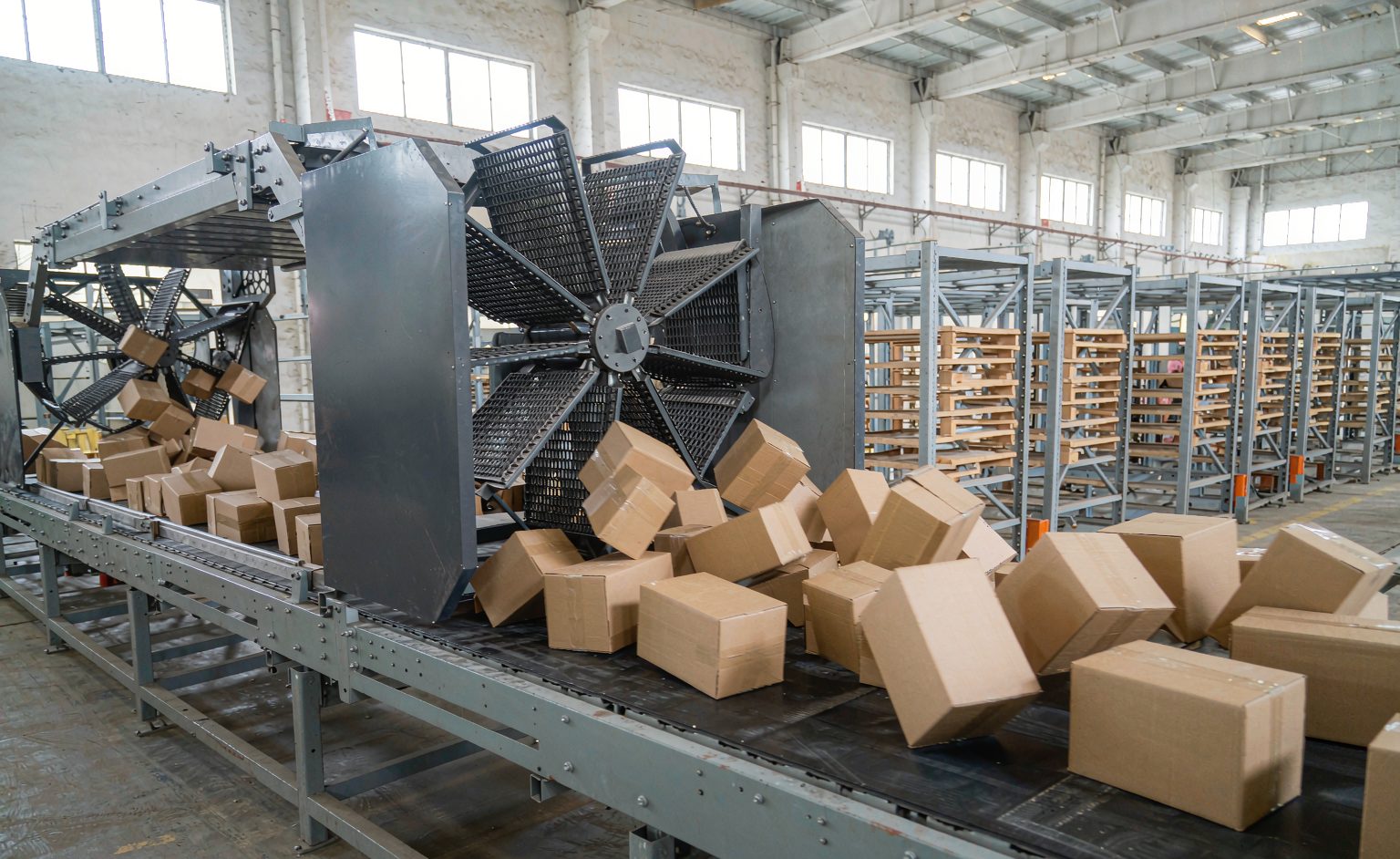
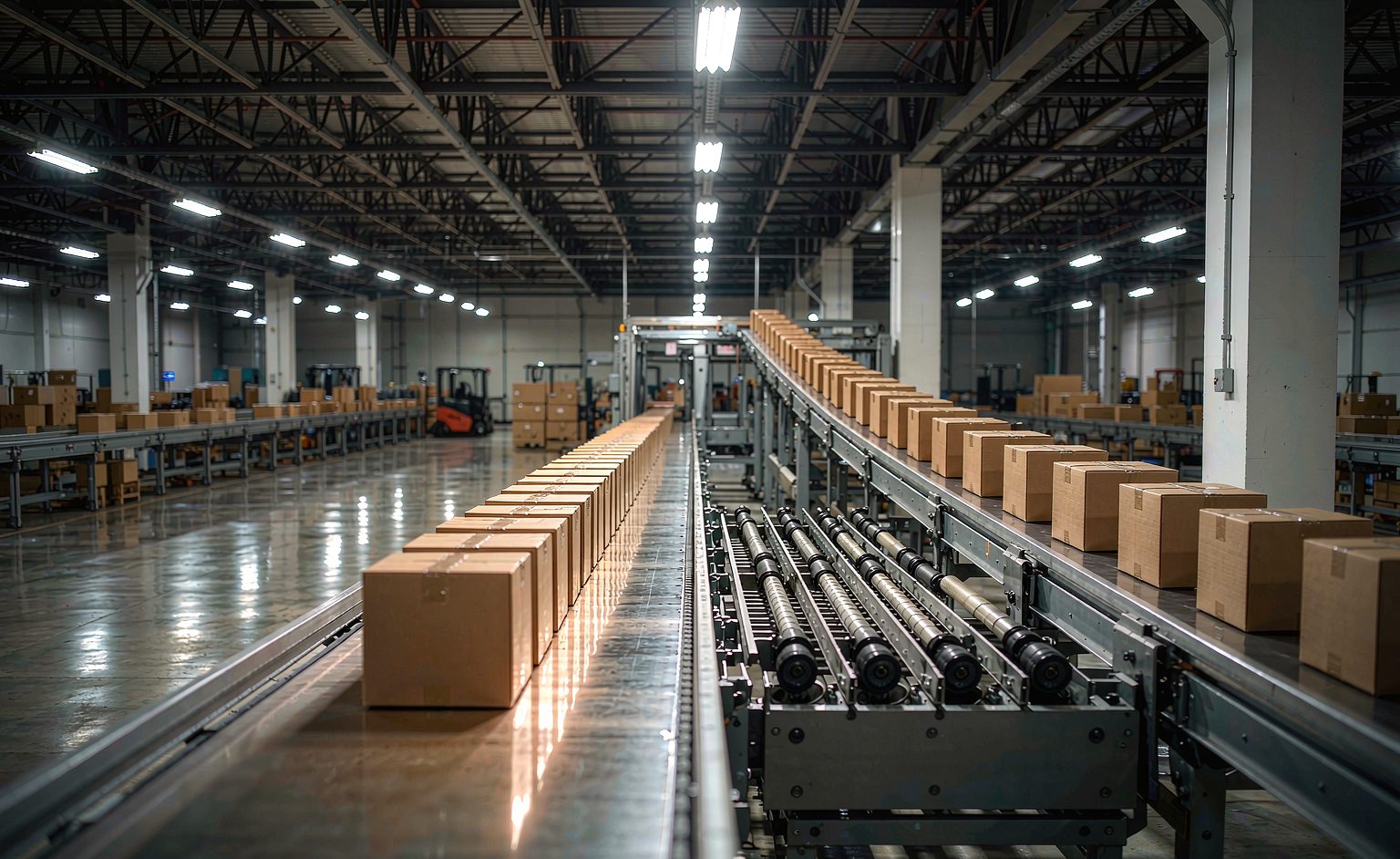
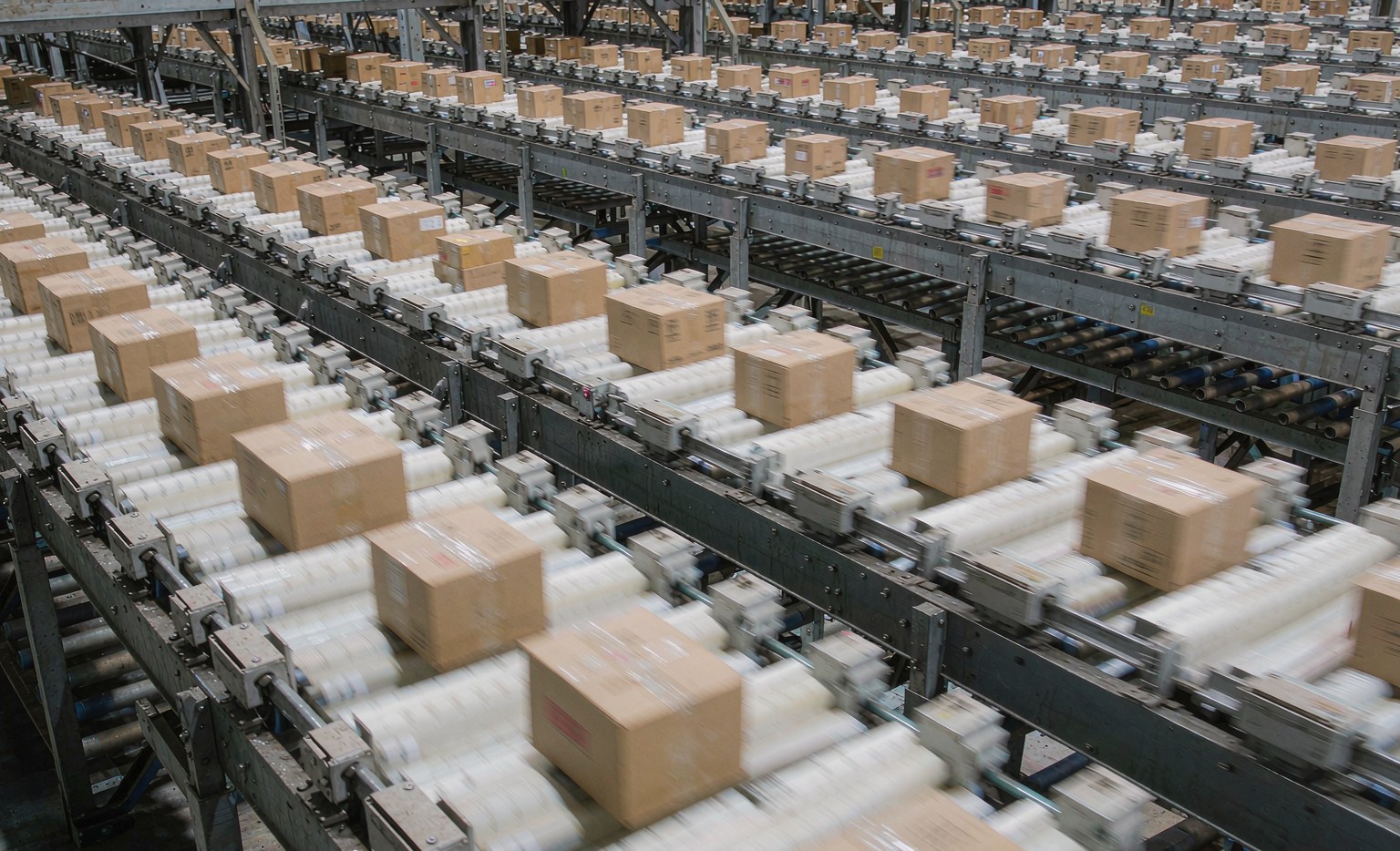
A sorter needs items presented one at a time, with a gap, at a known orientation. Whatever arrives — a mixed stream from an unload station, a tote, or a bulk conveyor — has to be turned into that stream. That transformation is singulation, and it happens before the sorter’s first scan point.
There are two broad ways to get there. A full singulator is a dedicated machine that separates, orients and gaps items automatically. A semi-automatic station puts a person in the loop for part of the job, usually the separation step, while the rest is mechanized.
Where a semi-automatic station fits
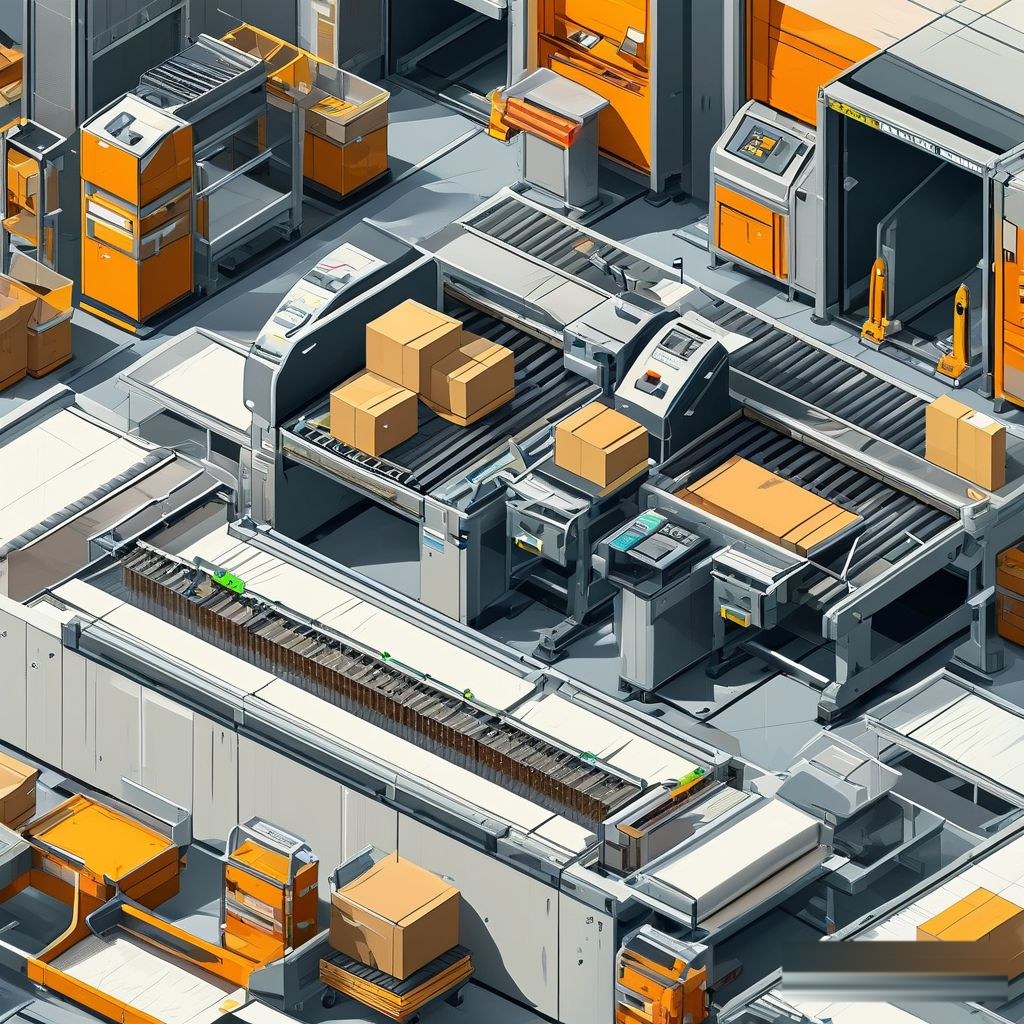
A semi-automatic station makes sense when the item stream is too irregular for a fixed singulator but too fast for manual sortation. The classic case is a returns stream: mixed sizes, mixed packaging, no consistent orientation, arriving in unpredictable bursts.
| Scenario | Full singulator | Semi-automatic station | Manual |
|---|---|---|---|
| Uniform parcels, steady flow | Best | Over-specified | Too slow |
| Mixed returns, bursty | Struggles with irregular items | Best | Labor cost too high |
| Low volume, varied | Waste of capital | Waste of capital | Best |
| Peak season overlay | Fixed capacity | Scales with staffing | Scales but slowly |
The capacity math is the real argument. A semi-automatic station’s ceiling is set by the operator, which means it scales with headcount on a peak day. A full singulator’s ceiling is fixed, and exceeding it requires a second machine.
Volume and labor math
Before comparing equipment prices, compare what each option costs per thousand items at your actual volume.
- Manual: headcount × loaded hourly cost. Scales linearly, with a hard quality ceiling because fatigue drives mis-sorts.
- Semi-automatic: fewer operators than manual at the same throughput, plus a modest equipment cost, plus a training curve.
- Full singulator: highest capital and maintenance, lowest per-item labor, but a fixed ceiling.
The crossover is usually between roughly 3,000 and 8,000 items per day, and it moves with your loaded labor rate and how uniform your item mix is. Run the number for your own volumes before anyone shows you a quote.
Layout constraints that cap throughput
Three layout mistakes account for most feeding-side bottlenecks, and none of them are visible on a layout drawing.
- Insufficient accumulation upstream. If the buffer before the station is too short, every small stoppage propagates straight back to the unload dock.
- Operator reach envelope. A station that forces reaching or twisting will not sustain its rated rate for a full shift, regardless of what the throughput sheet says.
- Return path congestion. Rejects and re-circulated items need a route out that does not cross the main flow. Crossed paths become jams.
None of these are equipment problems, which is exactly why they survive into commissioning.
What to instrument
If you cannot measure the feeding side, you cannot tune it. Instrument these four points and review them weekly for the first quarter:
- Arrival rate at the first scan point — this is your real throughput, not the sorter’s rating.
- Gap distribution — items arriving too close together will not scan reliably.
- Reject rate by cause — separates no-reads from genuinely mis-sorted items.
- Station uptime versus sorter uptime — when they diverge, the constraint has moved.
For the wider picture of how the feeding side fits into a full line, our parcel singulator guide covers dedicated separation equipment, and choosing a parcel sorting system walks through the whole-line decision.
Frequently asked questions
When does a semi-automatic station beat a full singulator?
When the item mix is irregular or the volume is bursty. A person can separate a returns stream that a fixed singulator cannot handle, and the capacity scales with staffing on peak days.
What throughput should I plan for per operator?
It depends entirely on item mix and reach distance. Measure it on your own items with a timed trial before committing to a layout, rather than accepting a generic rate.
Does a semi-automatic station reduce mis-sorts?
It can, because a human catches items a scanner mis-reads. But the operator still needs a clear, low-reach work position or accuracy will drift over a shift.
Can I add a semi-automatic station to an existing line?
Usually yes, if there is accumulation space upstream and a clear reject path. The two constraints that most often block a retrofit are buffer length and floor space around the operator.