
A narrow belt sorter moves each item on its own short belt segment rather than on one continuous conveyor, and that seemingly small design choice changes everything about speed, gentleness and maintenance. Where a cross-belt sorter pushes items sideways on perpendicular belts, a narrow belt sorter tilts or diverts each segment to drop items into the correct chute at high rate with minimal contact. This guide explains the mechanism, the throughput envelopes where it shines, and the trade-offs against cross-belt and other technologies.
Key Takeaways
- Narrow belt sorters run each item on its own belt segment, enabling high-rate, low-contact diverting.
- Sweet spot: 8,000–20,000 items/hour on uniform, stable parcels.
- Gentler than cross-belt on fragile items, but more belt segments means more wear points.
- Best for high-SKU e-commerce and parcel hubs; less ideal for irregular or very large items.
- Selection is a throughput-vs-gentleness-vs-maintenance triangle — pick by parcel profile.
How a Narrow Belt Sorter Works
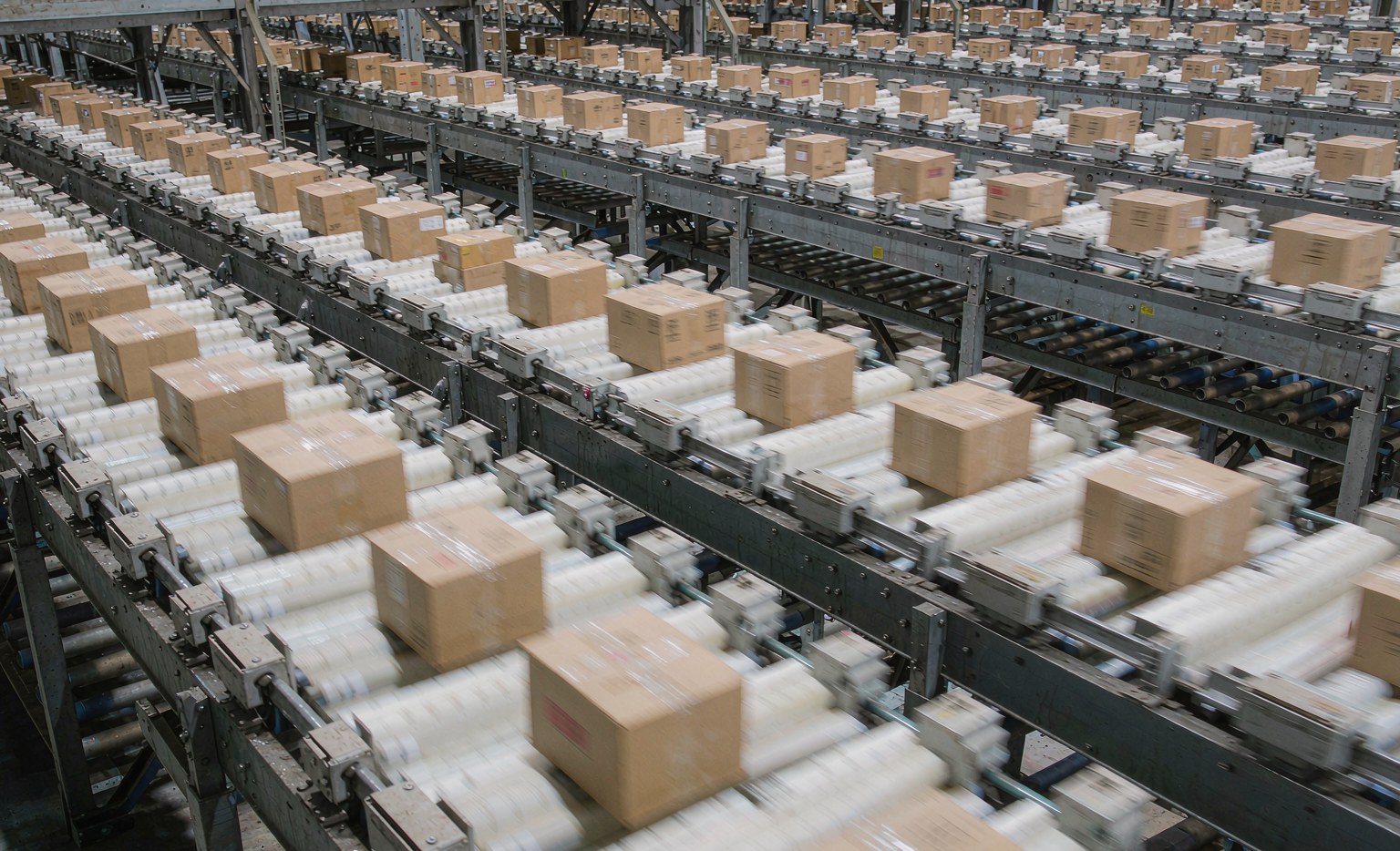
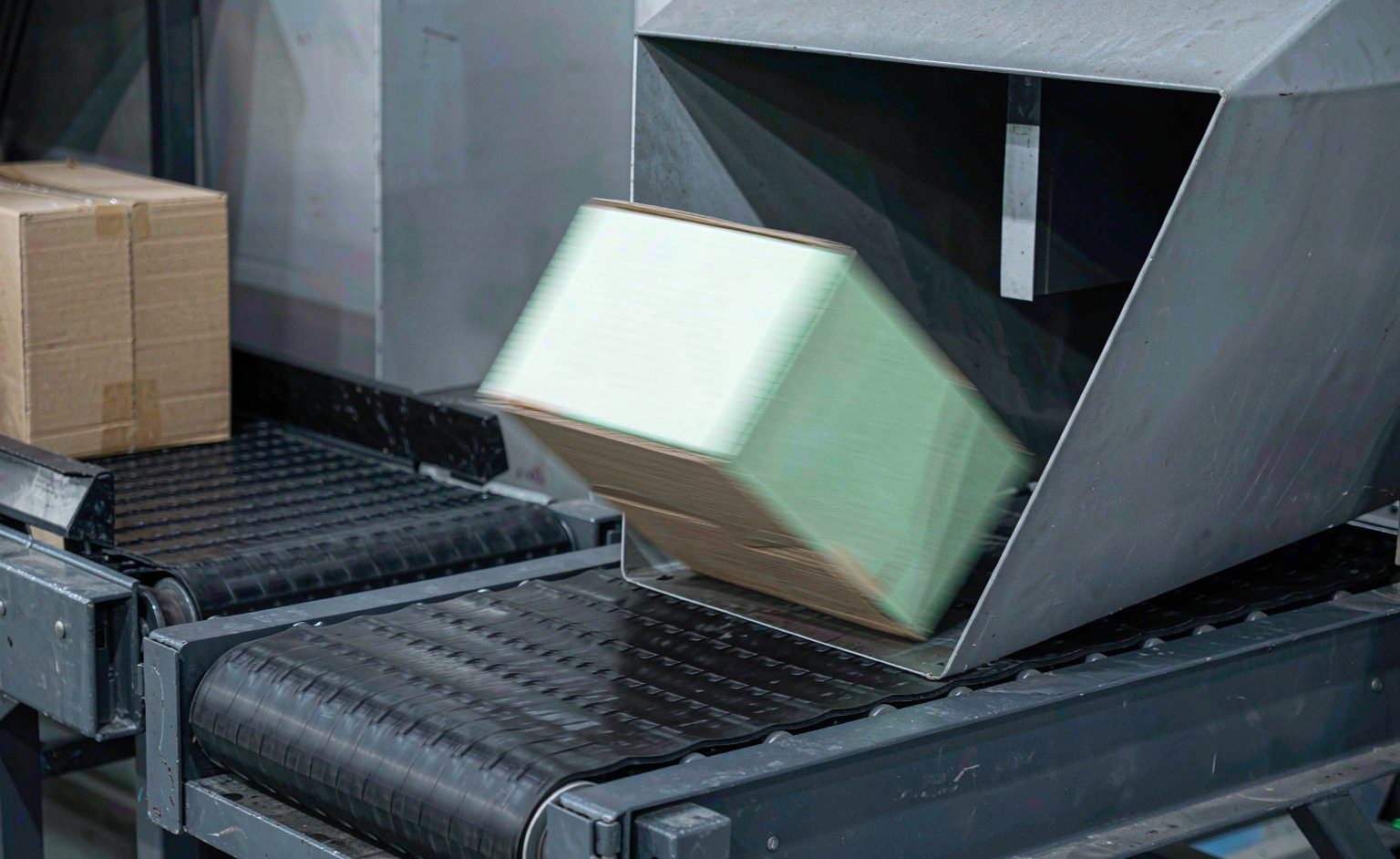
The sorter is a train of narrow, individually driven belt segments. As an item rides the main line, the segment beneath it is commanded to diverge — tilting or accelerating laterally — so the item slides into the assigned chute at the right point. Because each item has its own segment, diverts happen in parallel without the lateral shove of a cross-belt, which is why the handling is gentler on fragile goods. The mechanism is detailed alongside the cross-belt comparison in our cross-belt vs narrow-belt guide.
| Attribute | Narrow belt sorter | Cross-belt sorter |
|---|---|---|
| Drive per item | Individual segment | Perpendicular cross-belt |
| Divert method | Segment diverge/tilt | Lateral belt push |
| Gentleness | High (low contact) | Moderate |
| Typical rate | 8k–20k items/hr | 10k–30k+ items/hr |
| Maintenance points | Many segments | Fewer, larger belts |
Throughput and the Parcel Profile
Narrow belt sorters sit comfortably in the 8,000–20,000 items/hour band for uniform, stable parcels — the dominant profile in e-commerce and postal hubs. Their limit is parcel irregularity: very large, very light, or unstable items do not track on a diverging segment as predictably. For those, a sliding-shoe or tilt-tray system is often the better fit, as discussed in our sorter selection guide. The efficiency gains from pairing narrow belt with good layout are covered in warehouse efficiency optimization.
Where Narrow Belt Beats Cross-Belt
The win is gentleness and parallelism. Because items are not shoved sideways, fragile or high-value goods survive sortation with less damage, and the per-segment diverge enables high effective rates on a compact footprint. Cross-belt scales higher in raw rate but at more contact and often more floor space. For a high-SKU e-commerce operation where damage reduction is a KPI, narrow belt is frequently the better economics despite more belt segments to maintain. The unit-level view is in our unit-sorter explainer.
Maintenance Trade-offs
More segments means more belt and roller wear points, so preventive maintenance must be disciplined — tension checks, alignment and cleaning on a schedule. The upside is modularity: a failed segment is swapped without stopping the whole line. Operators who treat the segment train as the asset (rather than the line as one machine) get the high availability narrow belt systems are capable of.
Frequently Asked Questions
What rate can a narrow belt sorter handle?
Typically 8,000–20,000 items/hour on uniform, stable parcels; irregular items reduce effective rate.
Is it gentler than cross-belt?
Yes. Items diverge on their own segment rather than being pushed sideways, so contact and damage are lower.
What are the maintenance drawbacks?
Many belt segments mean many wear points; disciplined preventive maintenance is required, though modules are swappable.
When should I choose narrow belt over cross-belt?
When damage reduction on fragile goods and a compact footprint matter more than absolute top-line rate.
What parcel types are problematic?
Very large, very light or unstable items do not track on a diverging segment as predictably; consider shoe or tilt-tray for those.
Does it need more floor space?
Generally no — narrow belt achieves high rates on a compact footprint, often less than an equivalent cross-belt line.
Technical background: conveyor systems, warehouse operations and automated storage and retrieval cover the logistics context.