
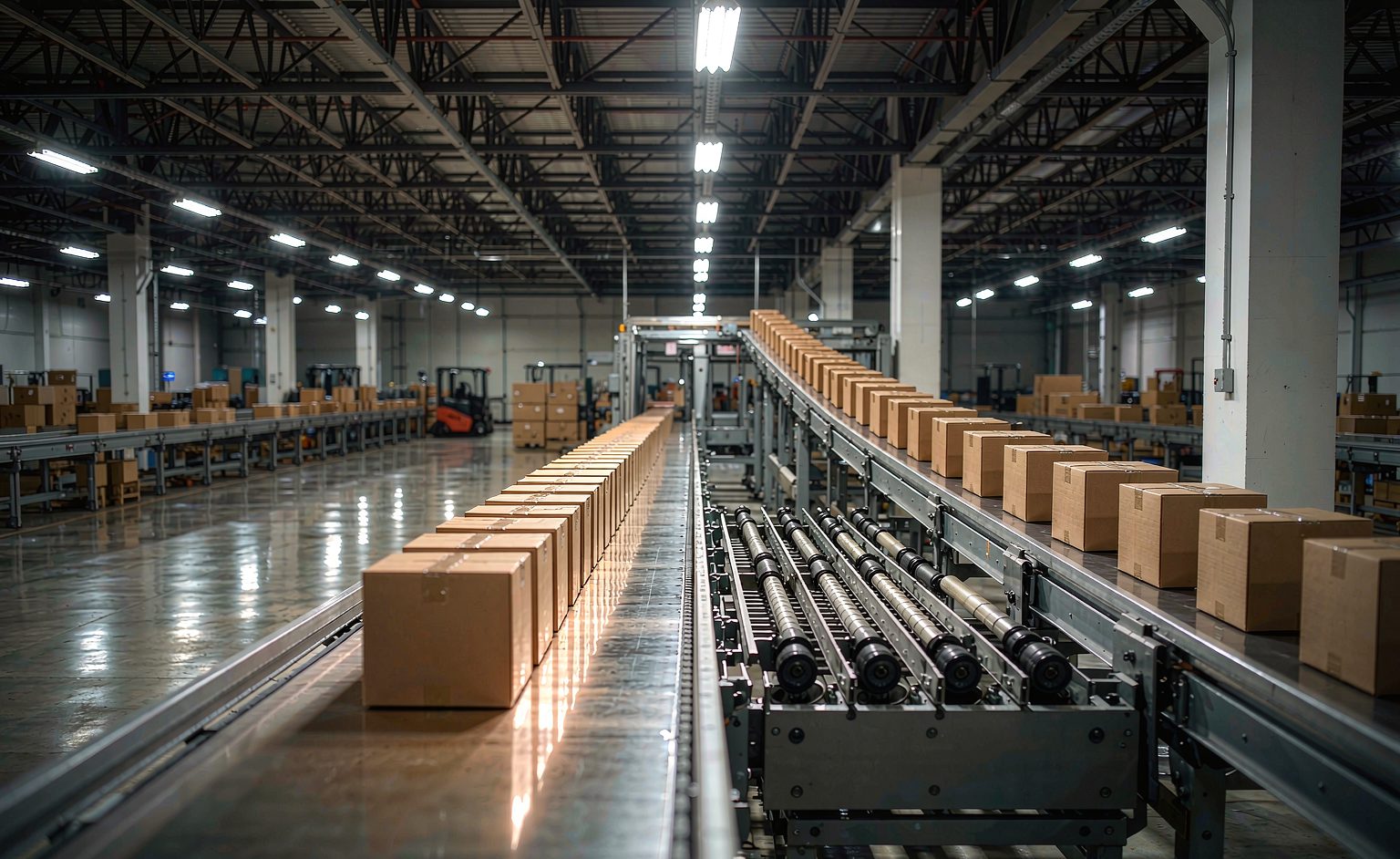
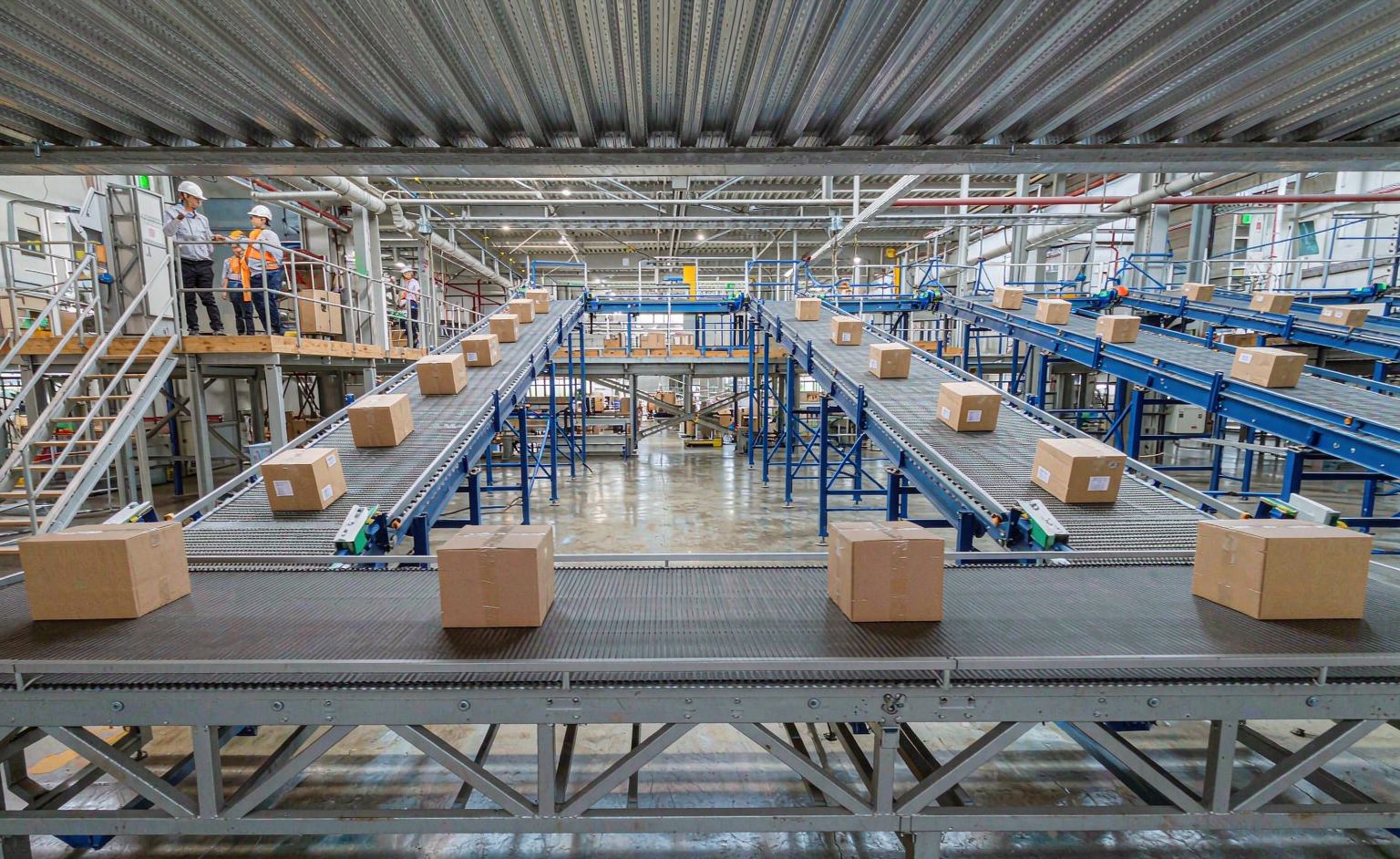

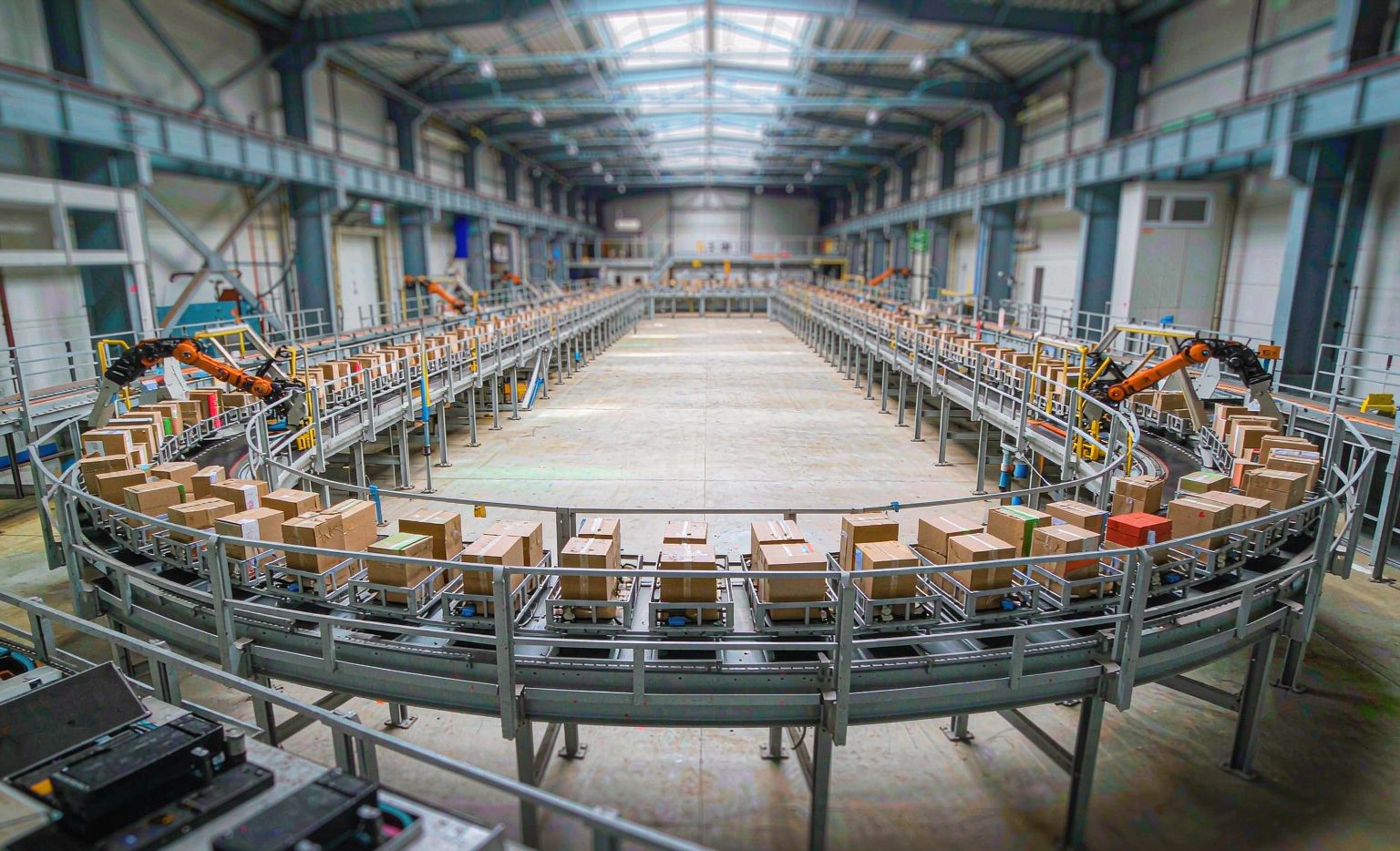
A swivel wheel sorter hides its cleverness in the floor: rows of small wheels set into the conveyor surface rotate to an angle and divert a parcel sideways at speed, then return to neutral to let the next item pass straight through. Because the divert is smooth and contact-light, it handles uniform parcels at very high rates with little wear on the goods. This guide explains the mechanism, the rate envelope, the parcel profiles it loves and those it does not, and how it sits against shoe and narrow-belt technologies.
Key Takeaways
- Swivel wheel sorters divert via angled floor wheels — smooth, contact-light, high-rate.
- Ideal for uniform, flat-bottomed parcels; struggles with irregular or soft items.
- Rate envelope typically 10,000–30,000+ items/hour on the right profile.
- Lower damage than pusher/shoe on suitable items; fewer wear points than narrow belt.
- Layout (chute pitch, induction) decides realised rate more than the wheel module.
How a Swivel Wheel Sorter Works
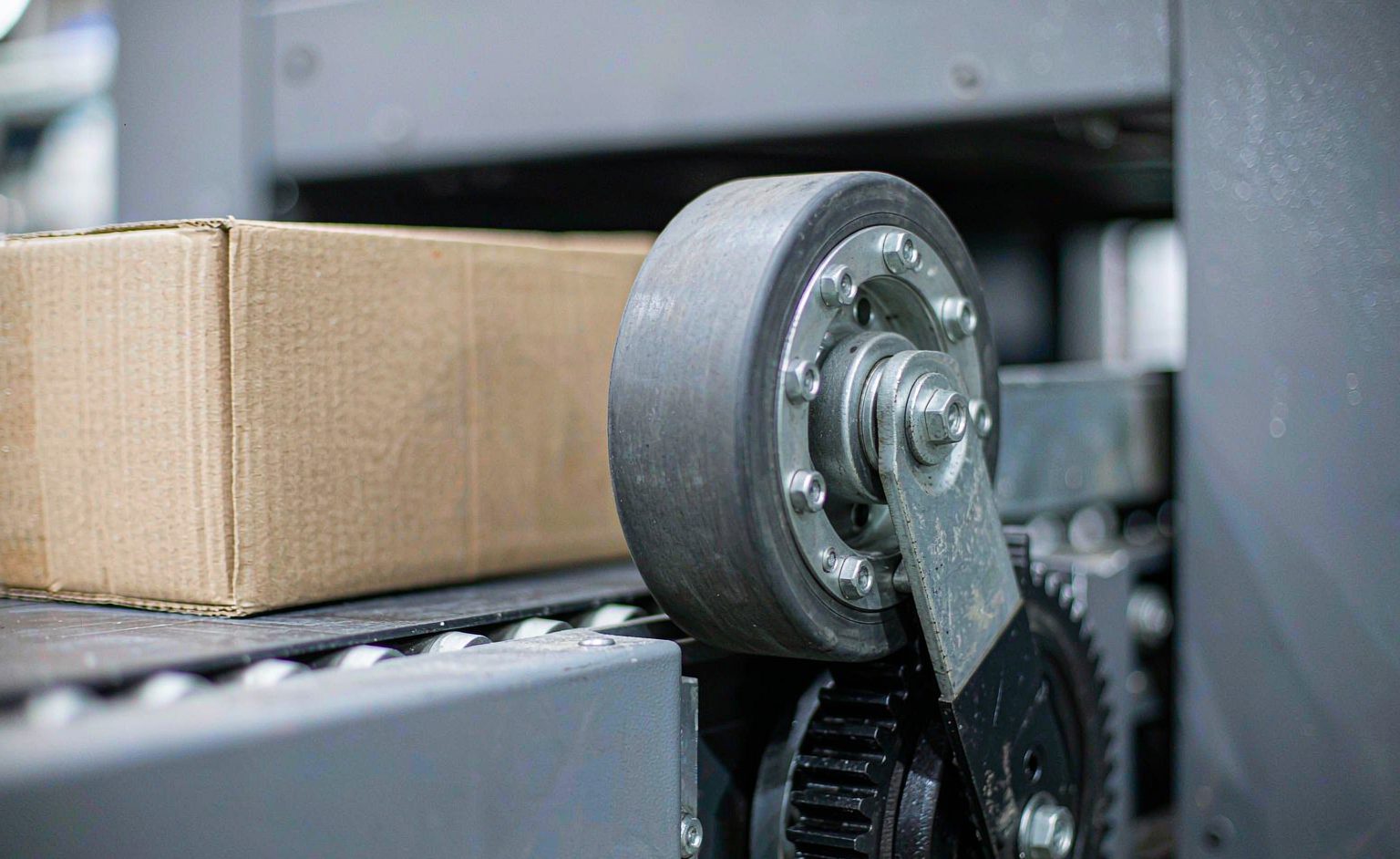
Embedded in the main conveyor are rows of small wheels. In neutral, they run parallel to flow and parcels pass straight. To divert, a row rotates to an angle and the parcel is carried sideways into the chute, then the row returns to neutral for the next item. The action is continuous and contact-light, which is why damage is low on suitable items. The intelligent variant — balance/tilt-wheel logic — is explored in our balance-wheel sorter explainer.
| Technology | Divert action | Best parcel profile | Rate envelope |
|---|---|---|---|
| Swivel wheel | Angled floor wheels | Uniform, flat-bottom | 10k–30k+/hr |
| Sliding shoe | Shoes push laterally | Mixed, larger | 10k–25k/hr |
| Narrow belt | Segment diverge | Fragile, uniform | 8k–20k/hr |
| Tilt tray | Tray tilts to drop | Mixed, fragile | 8k–18k/hr |
The Parcel Profile It Loves
Swivel wheel sorters are happiest with uniform, flat-bottomed, stable parcels — the bread-and-butter of postal and e-commerce flows. On those, they reach 10,000–30,000+ items/hour with low damage. The wheel module also has fewer wear points than a segment-based narrow belt, which simplifies maintenance. The broader taxonomy of sortation is in our sorting-system explainer and conveyor sortation technologies.
Where It Struggles
Irregular, soft, very light or round items do not track on angled wheels predictably; they need a shoe or tilt-tray system. The selection is therefore a parcel-profile decision first and a rate decision second. Even with the right profile, realised rate depends on layout — chute pitch and induction spacing, covered in our layout design guide — matter as much as the wheel module itself.
Frequently Asked Questions
What rate can a swivel wheel sorter reach?
Typically 10,000–30,000+ items/hour on uniform, flat-bottomed parcels.
Is it gentler than a shoe sorter?
On suitable items, yes — the contact-light wheel divert damages goods less than a lateral shoe push.
What parcels does it handle poorly?
Irregular, soft, very light or round items that do not track on angled wheels; use shoe or tilt-tray for those.
How does maintenance compare to narrow belt?
Fewer wear points, since there is no train of belt segments to maintain.
Does layout affect realised rate?
Strongly — chute pitch and induction spacing often matter more than the wheel module.
Is it good for mixed parcels?
Only if the mix is dominated by uniform, flat-bottom items; heavy irregular loads favour shoe or tilt-tray.
Technical background: conveyor systems and warehouse operations provide the logistics context.