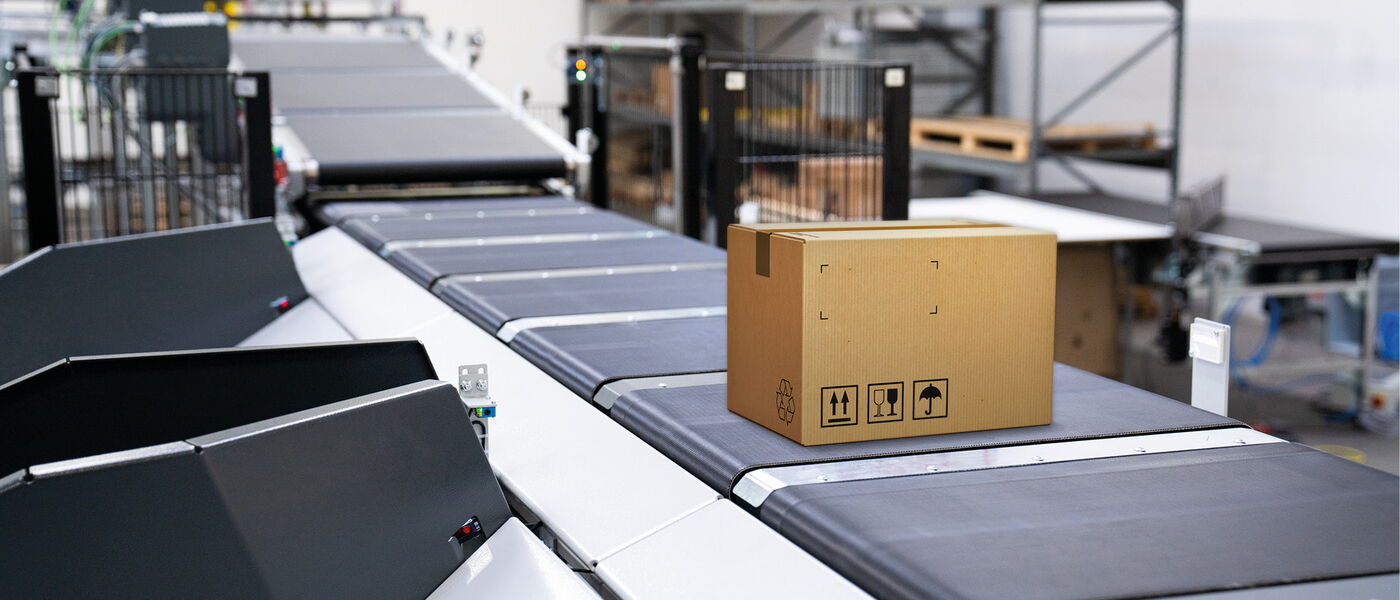
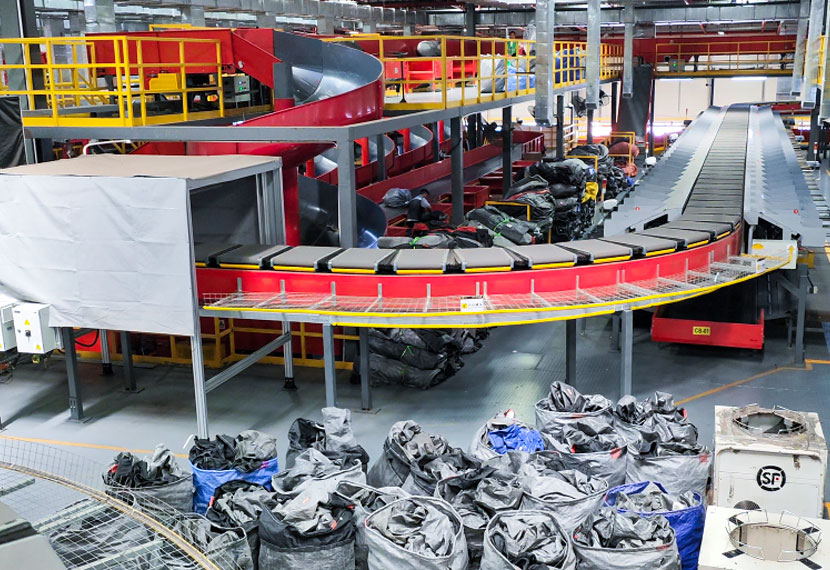
Walk into any high-performance distribution center today, and you’ll notice something remarkable: an intricate choreography of motion. Packages glide, pivot, and disappear down chutes with astonishing precision. Orders are processed at speeds that would have been unthinkable just a decade ago. At the center of this orchestrated flow is one of the most critical pieces of equipment in modern logistics—the cross-belt sorter.
Often described as the “heart” of a fulfillment operation, cross-belt sortation systems are responsible for keeping goods moving efficiently, accurately, and at scale. But what exactly makes them so essential? And why have they become the preferred solution for many of the world’s most advanced logistics centers?
In this comprehensive guide, we’ll explore how cross-belt sorters work, what makes them unique, and why they play such a vital role in today’s fast-moving supply chains.
What Is a Cross-Belt Sorter?
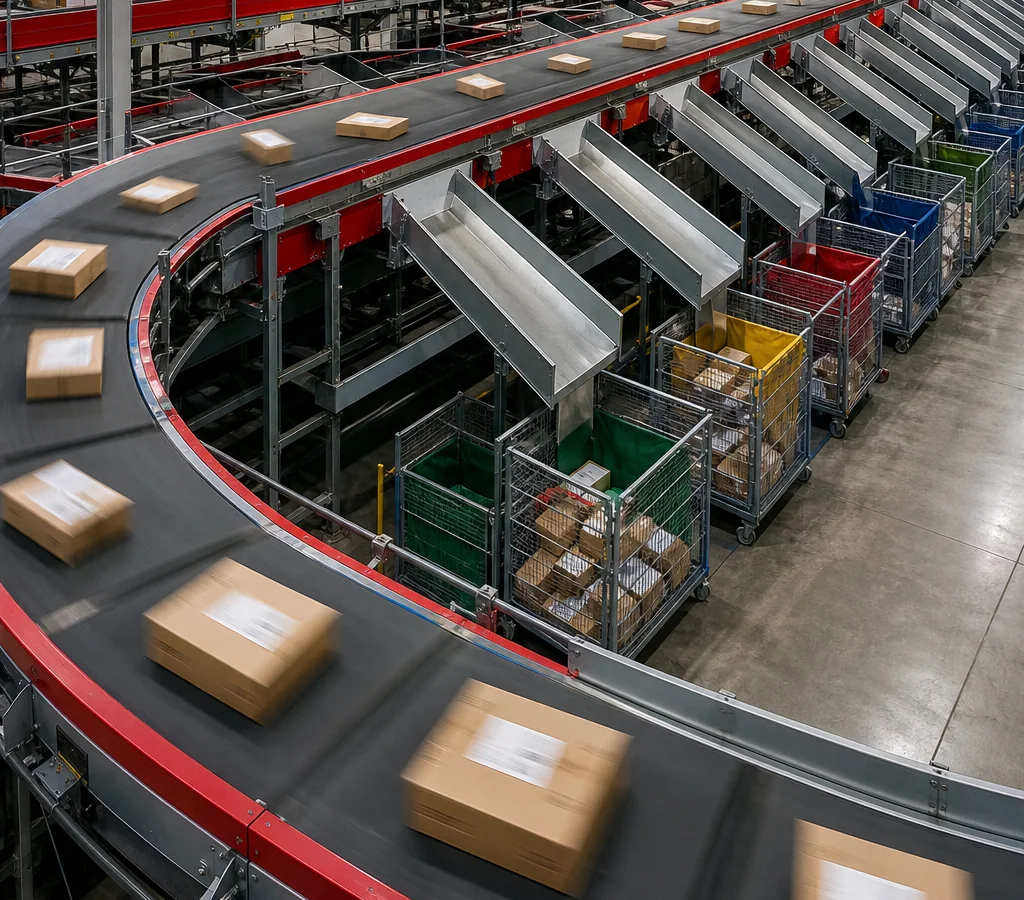
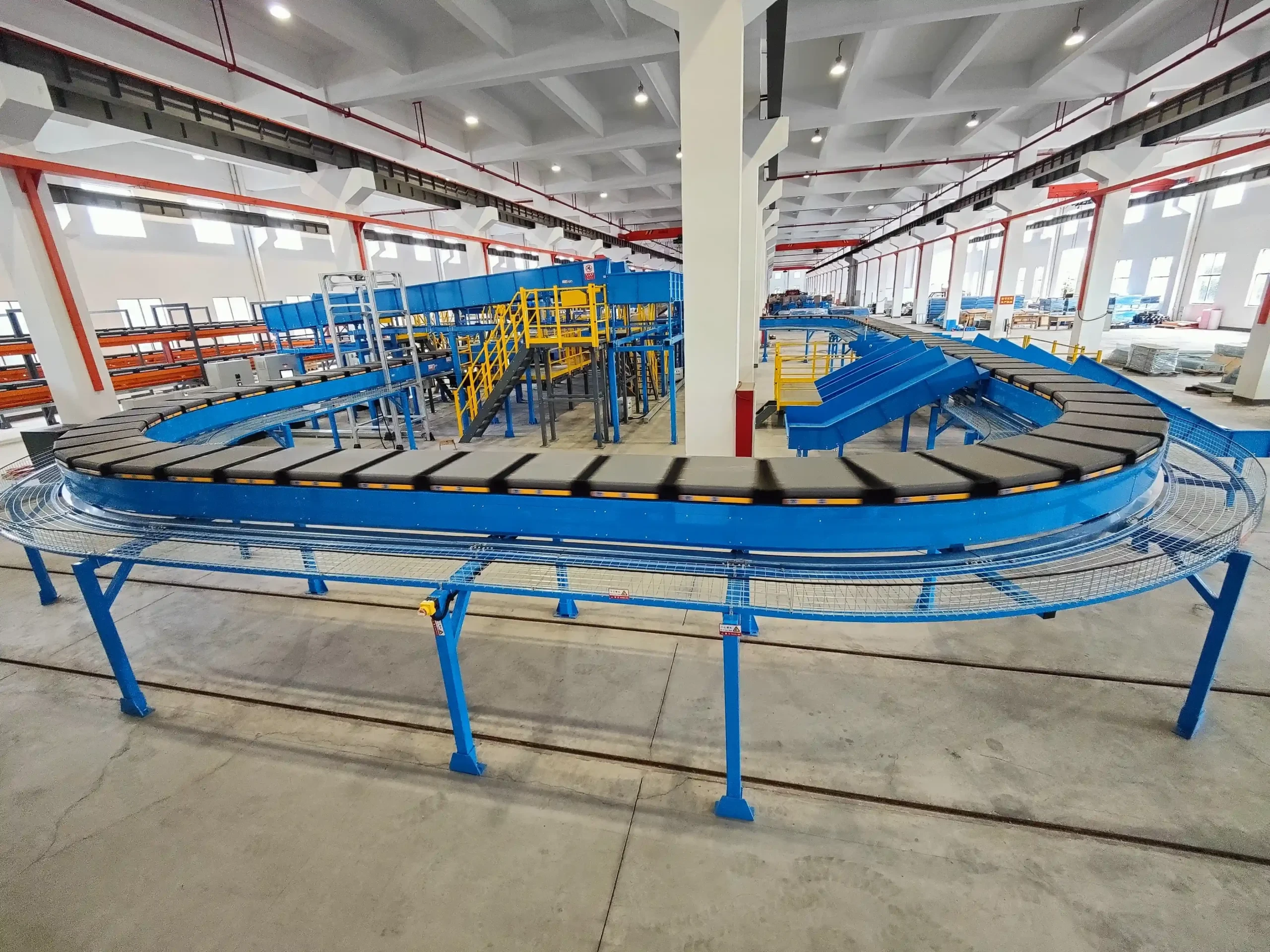
A cross-belt sorter is an automated material handling system designed to sort items quickly and accurately into designated destinations.
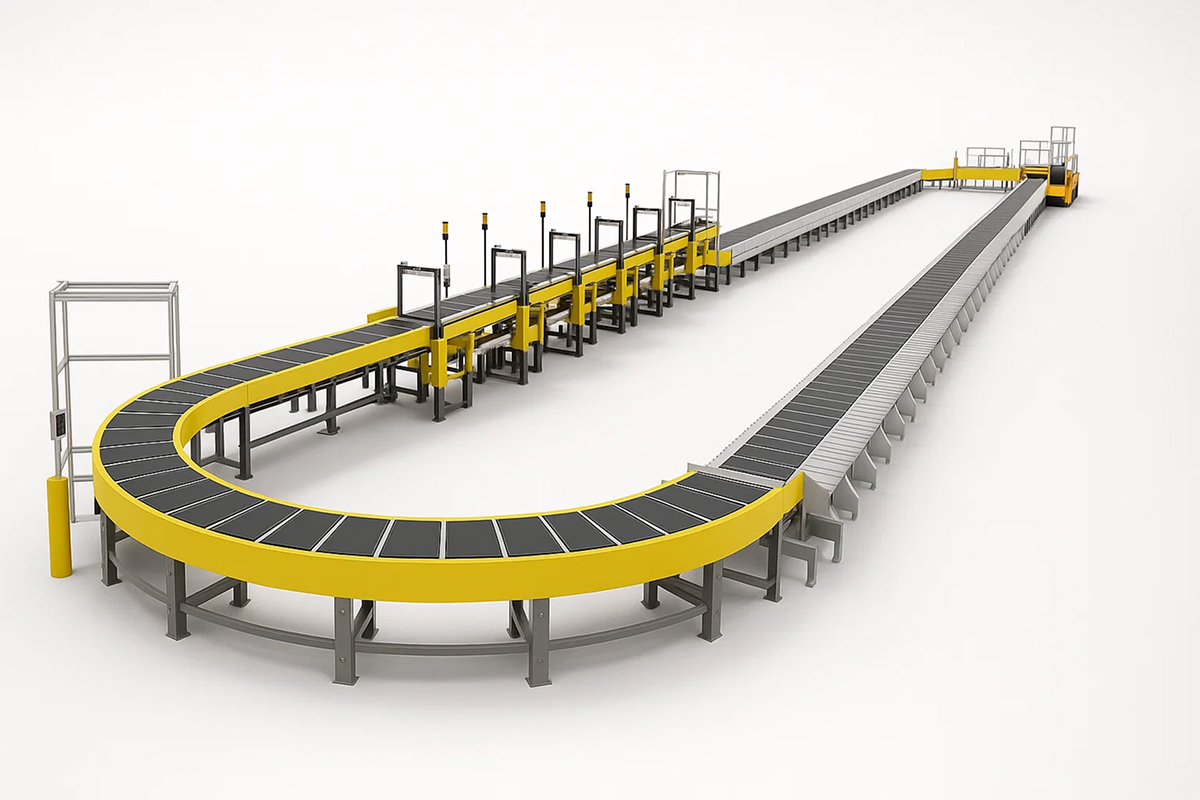
At its core, the system consists of:
- A continuous loop of carriers
- Each carrier equipped with a small conveyor belt (the “cross-belt”)
- A track system guiding carriers through the facility
- Discharge points (chutes or bins) along the route
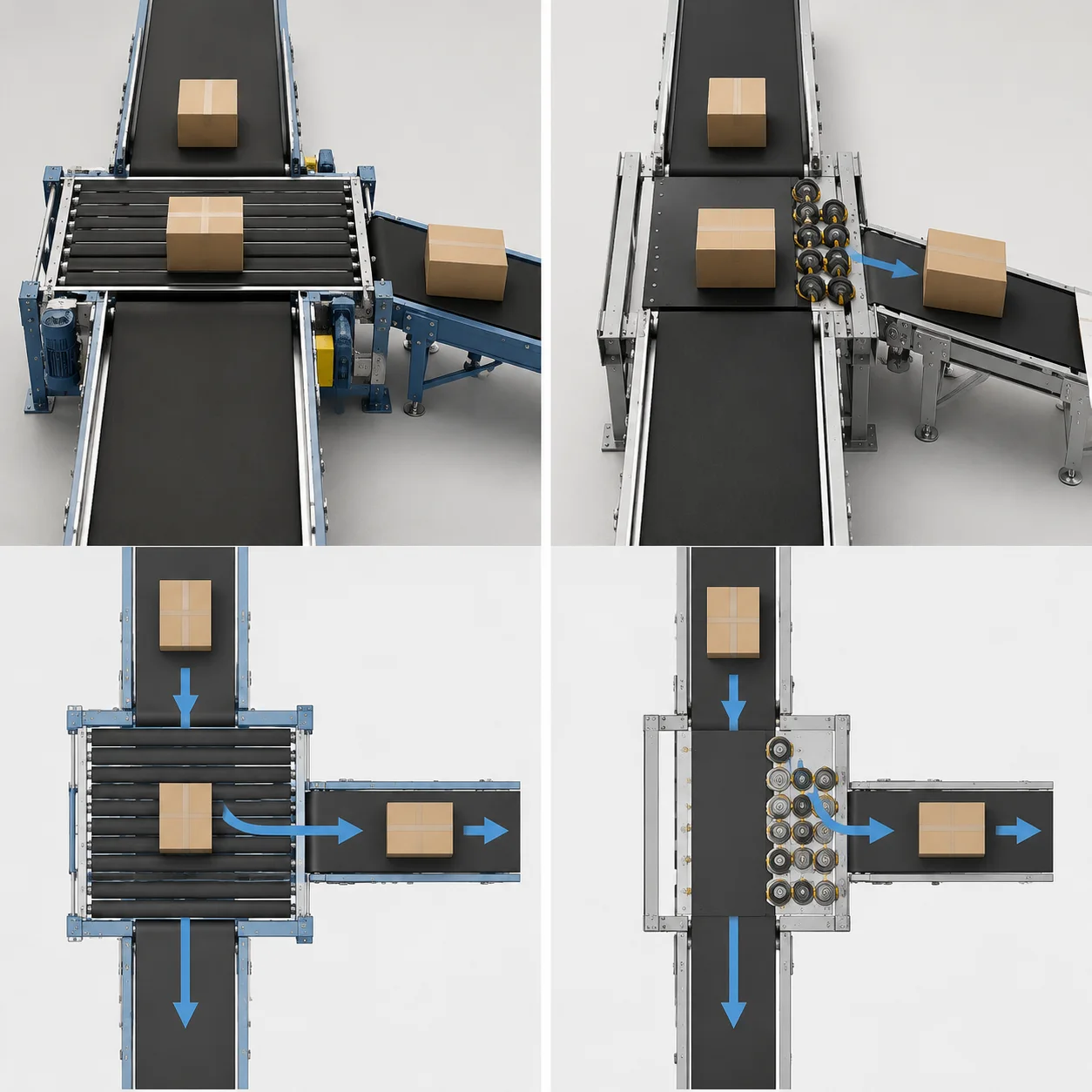
Items are placed onto the carriers, and when they reach the correct destination, the cross-belt activates—moving the item sideways off the carrier into the appropriate chute.
Why Cross-Belt Sorters Matter in Modern Logistics
The demands on logistics operations have changed dramatically.
Rising Expectations
Customers now expect:
- Faster delivery times
- Accurate order fulfillment
- Real-time tracking
Increasing Complexity
Warehouses handle:
- Thousands of SKUs
- Mixed product sizes and shapes
- High order volumes
Labor Challenges
Manual sorting is:
- Time-consuming
- Error-prone
- Difficult to scale
Cross-belt sorters address all of these challenges by combining speed, precision, and flexibility.
How Cross-Belt Sorters Work: A Step-by-Step Overview
Understanding the workflow helps illustrate why these systems are so powerful.
1. Induction
Items enter the system via conveyors or manual loading stations.
Operators or automated systems place items onto carriers.
2. Identification
Each item is identified using:
- Barcodes
- RFID tags
- Vision systems
This data determines where the item needs to go.
3. Transport
Carriers move continuously along the track, transporting items through the system.
4. Sorting Decision
The control system calculates the optimal discharge point based on:
- Order requirements
- Destination zones
- System efficiency
5. Discharge
At the correct location, the cross-belt activates, moving the item sideways into a chute or bin.
6. Recirculation (if needed)
If an item misses its destination, it can be recirculated for another attempt.
Key Advantages of Cross-Belt Sorters
1. High Throughput
Cross-belt systems can handle:
- Thousands to tens of thousands of items per hour
This makes them ideal for high-volume operations.
2. Exceptional Accuracy
Automated sorting reduces human error, ensuring that items reach the correct destination.
3. Gentle Handling
Unlike some other systems, cross-belt sorters handle items carefully, making them suitable for:
- Fragile goods
- Irregularly shaped items
- Lightweight packages
4. Versatility
They can process a wide range of products, including:
- Apparel
- Electronics
- Parcels
- Cosmetics
5. Scalability
Systems can be expanded or modified to accommodate growing demand.
Why It’s Called the “Heart” of the Warehouse
The analogy isn’t just metaphorical—it’s functional.
Central Flow Control
Just as the heart circulates blood, the cross-belt sorter:
- Directs the flow of goods
- Connects different operational zones
- Maintains system rhythm
Dependency of Other Systems
Upstream and downstream processes rely on the sorter:
- Picking systems feed into it
- Packing stations depend on its output
- Shipping operations are synchronized with it
Continuous Operation
Like a heart, it must run continuously and reliably.
Any disruption can impact the entire facility.
Comparing Cross-Belt Sorters to Other Systems
Tilt-Tray Sorters
- Use trays that tilt to discharge items
- Suitable for lighter goods
- Less precise for certain applications
Sliding Shoe Sorters
- Use sliding mechanisms to push items off conveyors
- Better for uniform packages
- Less gentle than cross-belt systems
Manual Sorting
- Flexible but labor-intensive
- Limited scalability
- Higher error rates
Cross-belt sorters strike a balance between precision, speed, and versatility.
Real-World Applications
E-Commerce Fulfillment
Handling rapid order turnover and diverse product ranges.
Parcel Distribution Centers
Sorting high volumes of packages efficiently.
Retail Logistics
Managing inventory across multiple stores and channels.
Manufacturing
Routing components and finished goods within production environments.
Integration with Advanced Technologies
Cross-belt sorters are increasingly integrated with modern innovations.
AI and Machine Vision
Enhancing identification and decision-making capabilities.
Warehouse Management Systems (WMS)
Coordinating inventory, orders, and sorting logic.
Robotics
Automating induction and downstream handling.
IoT Sensors
Monitoring system performance and predicting maintenance needs.
Design Considerations
Implementing a cross-belt sorter requires careful planning.
Layout Optimization
- Space availability
- Flow efficiency
- Accessibility
Throughput Requirements
System capacity must match operational demand.
Product Characteristics
Size, weight, and fragility influence system design.
Maintenance Access
Easy access reduces downtime and improves reliability.
Challenges and Limitations
While powerful, cross-belt systems are not without challenges.
High Initial Investment
Installation and equipment costs can be significant.
Complexity
Requires skilled operation and maintenance.
Space Requirements
Large systems need substantial floor space.
Downtime Impact
Failures can affect the entire operation.
Maintenance and Reliability
To function as the “heart,” the system must be well-maintained.
Routine Maintenance
- Inspect belts and carriers
- Check alignment
- Lubricate moving parts
Predictive Maintenance
Using data to anticipate and prevent failures.
Spare Parts Management
Keeping critical components on hand reduces downtime.
Future Trends
The evolution of cross-belt sorters continues.
Increased Automation
Greater integration with autonomous systems.
Smarter Control Systems
AI-driven optimization for efficiency and accuracy.
Energy Efficiency
Reducing power consumption and environmental impact.
Modular Designs
Easier expansion and customization.
Strategic Value for Businesses
Investing in a cross-belt sorter can:
- Improve operational efficiency
- Reduce labor costs
- Enhance customer satisfaction
- Enable scalability
Common Misconceptions
“Only Large Facilities Need Them”
Smaller operations can also benefit from scaled-down systems.
“They Replace Human Workers”
In reality, they complement human roles and improve productivity.
“They’re Too Complex to Manage”
With proper training and support, they become manageable and reliable.
Building a Business Case
When evaluating a cross-belt sorter, consider:
- Return on investment
- Throughput gains
- Error reduction
- Labor savings
Final Thoughts
Cross-belt sorters are more than just machines—they are the central nervous system of modern logistics operations. By enabling fast, accurate, and flexible sorting, they keep goods flowing smoothly from inbound processing to final shipment.
As supply chains become more complex and customer expectations continue to rise, the importance of efficient sortation will only grow. For many logistics centers, the cross-belt sorter isn’t just a component—it’s the heartbeat that keeps everything alive and moving.
Understanding how it works and why it matters is the first step toward building a smarter, more resilient operation in today’s demanding logistics environment.