
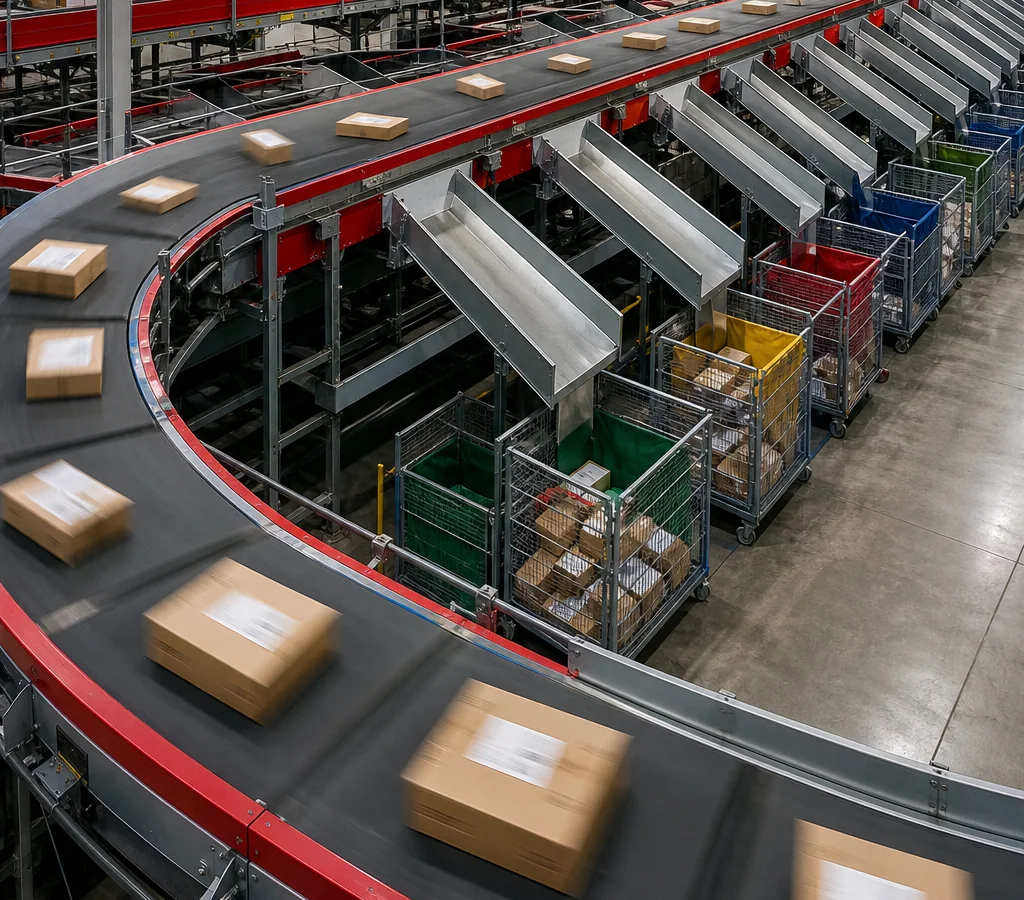
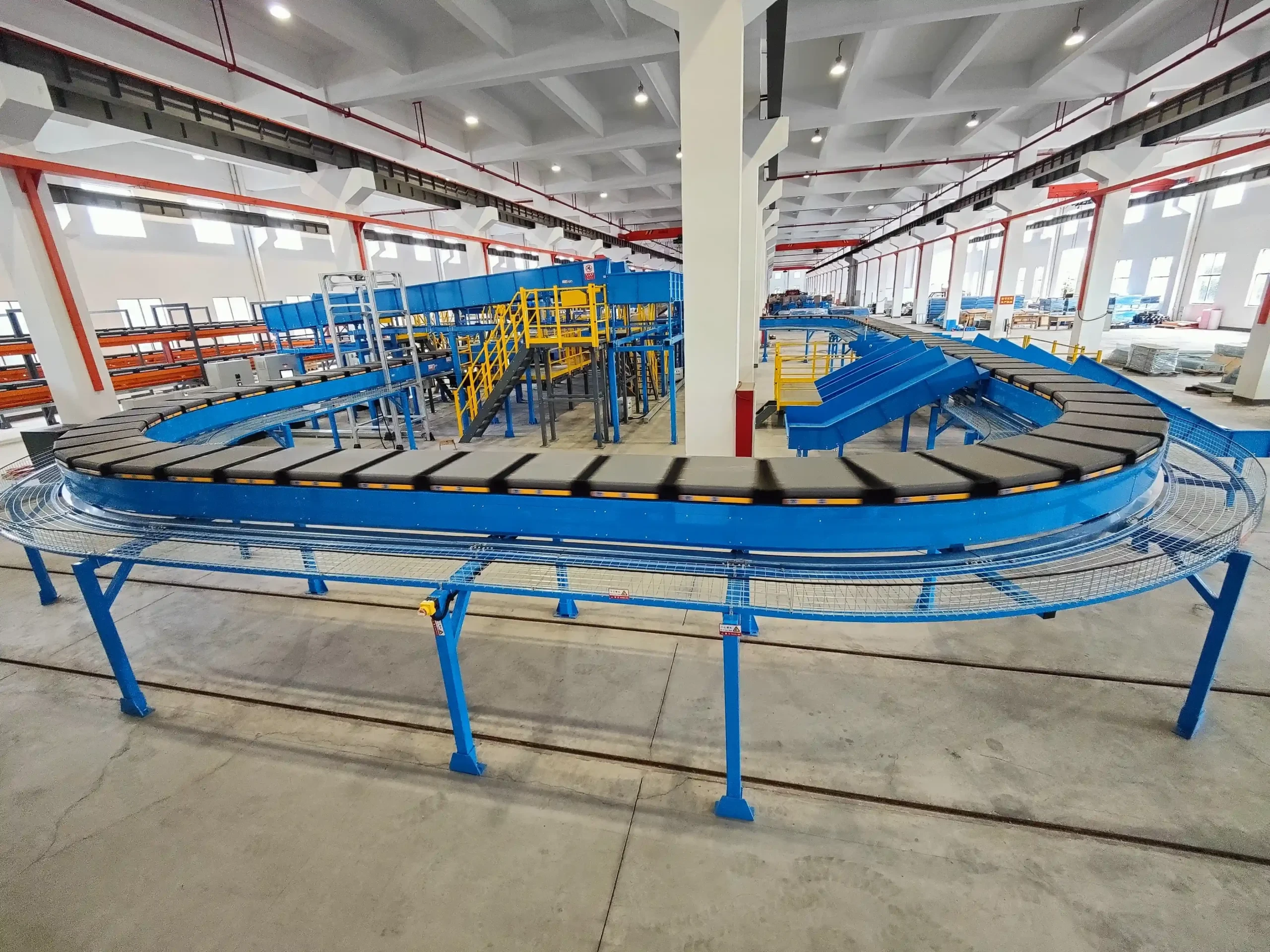
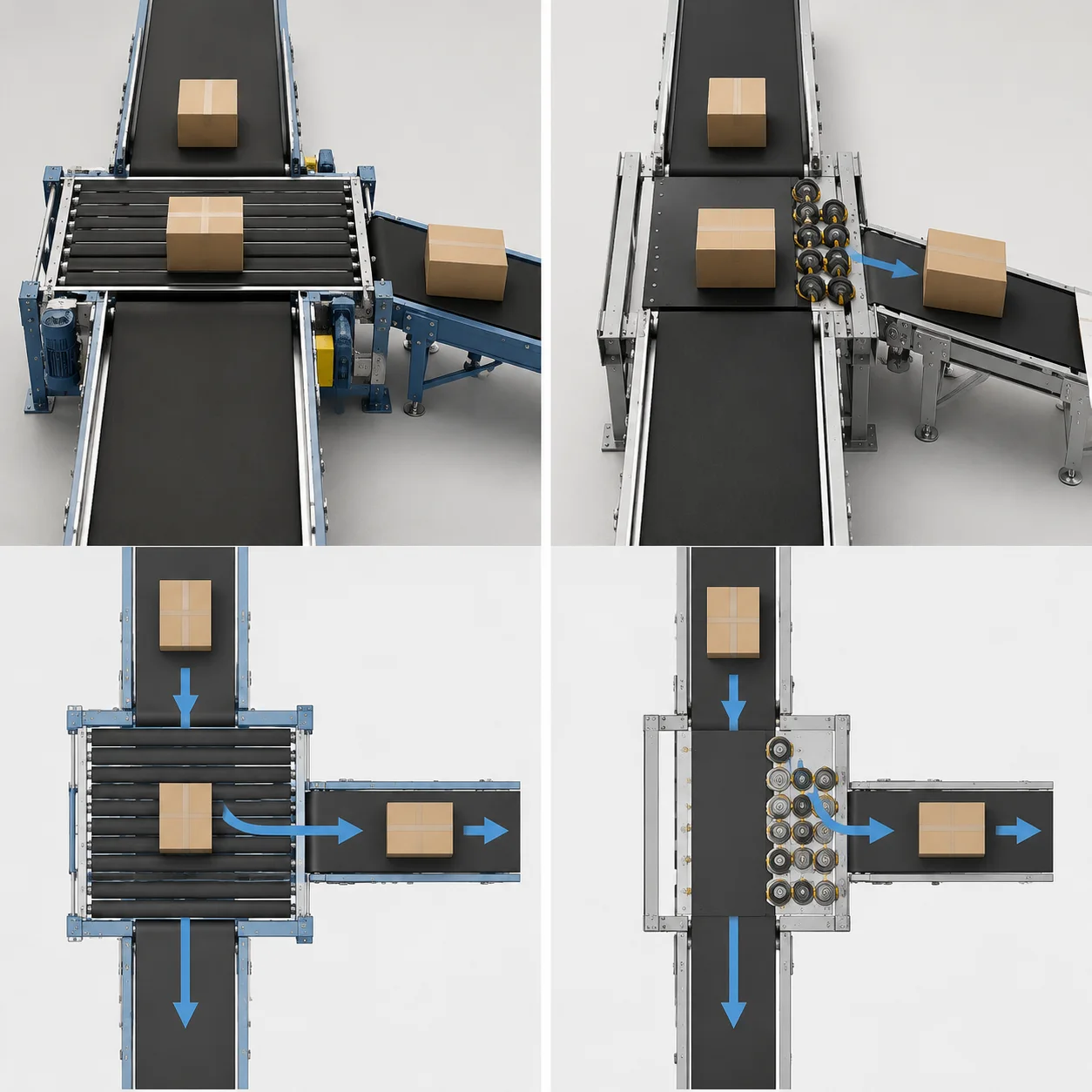
In today’s high-speed logistics landscape, the definition of “difficult-to-handle” items has changed dramatically. It’s no longer just about bulky or irregular packages. Increasingly, fulfillment centers are dealing with ultra-light, ultra-thin items—think poly mailers, flat envelopes, lightweight apparel, and flexible packaging.
These items introduce a unique challenge: they are extremely sensitive to airflow, friction, and motion inconsistencies. Traditional sorting methods that work well for standard parcels often struggle to place these delicate items accurately.
So how do modern cross-belt sorting systems manage to handle them with such precision?
The answer lies in a critical yet often overlooked technology: differential speed control.
This article explores how differential speed control works, why it matters, and how it enables cross-belt sorters to achieve highly accurate placement—even for the most challenging items.
The Challenge of Ultra-Light and Ultra-Thin Items
Before diving into the technology, it’s important to understand the problem.
Ultra-light and ultra-thin items behave very differently from rigid packages:
- They have low mass, making them sensitive to small forces
- They have high surface area, increasing air resistance
- They can flex, flutter, or fold during movement
- They often have low friction contact with conveyor surfaces
As a result, even minor inconsistencies in speed or motion can cause:
- Misalignment during transport
- Unstable movement during discharge
- Inaccurate placement into chutes or bins
In high-throughput environments, these issues quickly translate into sorting errors, rework, and reduced efficiency.
What Is Differential Speed Control?
Differential speed control refers to the ability to independently adjust and coordinate the speeds of different motion components within a sorting system.
In a cross-belt sorter, this typically involves:
- The main carrier speed (movement along the loop)
- The cross-belt speed (sideways discharge motion)
Instead of operating at fixed or synchronized speeds, these two motions can be dynamically adjusted relative to each other.
This allows the system to precisely control how an item transitions from forward motion to lateral movement.
Why Fixed-Speed Systems Fall Short
In traditional systems, the relationship between carrier speed and belt speed is often fixed or limited.
This creates several problems:
1. Abrupt Transitions
When the cross-belt activates at a fixed speed, the item experiences a sudden change in direction. For lightweight items, this can cause:
- Sliding
- Skewing
- Loss of control
2. Inconsistent Trajectories
Without speed matching, items may:
- Overshoot the chute
- Fall short
- Drift sideways
3. Sensitivity to Variability
Different items require different handling characteristics. A one-size-fits-all speed profile cannot accommodate:
- Weight differences
- Surface textures
- Packaging materials
How Differential Speed Control Solves These Issues
Differential speed control introduces dynamic coordination between movements, enabling smoother, more controlled transitions.
Let’s break down the key mechanisms.
1. Speed Matching at Discharge
At the moment of sorting, the system can adjust the cross-belt speed to match the forward velocity of the carrier.
This reduces relative motion between the item and the belt, minimizing sudden forces.
Result:
- Smoother transfer
- Reduced slipping
- Improved stability
2. Controlled Acceleration and Deceleration
Instead of instant activation, the cross-belt can:
- Gradually accelerate
- Maintain optimal speed
- Decelerate as needed
This creates a predictable motion profile tailored to the item.
3. Adaptive Speed Profiles
Advanced systems can adjust speeds based on:
- Item weight
- Dimensions
- Material properties
This allows for customized handling in real time.
4. Directional Precision
By fine-tuning the speed differential, the system can control:
- Discharge angle
- Exit velocity
- Placement accuracy
This is especially important for narrow chutes or tightly spaced destinations.
The Physics Behind Precision Placement
To understand why differential speed control is so effective, it helps to consider the basic physics involved.
When an item transitions from forward motion to lateral motion, it experiences:
- Inertial forces
- Frictional forces
- Air resistance
For ultra-light items, these forces are small but highly influential.
By carefully controlling speed, the system:
- Minimizes sudden force changes
- Maintains consistent contact with the belt
- Reduces turbulence and instability
In essence, differential speed control creates a controlled environment where physics works in favor of precision rather than against it.
Key Components Enabling Differential Speed Control
Achieving this level of control requires advanced hardware and software integration.
1. Independent Drive Systems
Each carrier or belt must be capable of independent speed adjustment.
This is often achieved through:
- Distributed motors
- High-response drive systems
2. Real-Time Control Algorithms
Software plays a crucial role in:
- Calculating optimal speed profiles
- Synchronizing movements
- Adjusting parameters on the fly
3. Sensor Integration
Accurate data is essential.
Sensors may track:
- Item position
- Speed
- Dimensions
This information feeds into the control system for real-time adjustments.
4. Communication Networks
High-speed communication ensures that all components operate in sync.
Low latency is critical for maintaining precision at high throughput.
Benefits Beyond Precision
While differential speed control is essential for handling ultra-light items, its advantages extend further.
1. Increased Throughput
With more accurate placement, systems can operate at higher speeds without increasing error rates.
2. Reduced Recirculation
Fewer sorting errors mean fewer items need to be reprocessed.
3. Improved System Reliability
Smoother motion reduces mechanical stress on components.
4. Enhanced Flexibility
The system can handle a wider range of item types without manual adjustments.
Real-World Applications
Differential speed control is particularly valuable in industries such as:
E-Commerce Fulfillment
Handling poly bags, clothing, and small packages with high accuracy.
Postal and Parcel Services
Sorting envelopes and lightweight parcels efficiently.
Apparel Distribution
Managing flexible, lightweight garments without damage.
Pharmaceutical Logistics
Ensuring precise handling of small, sensitive packages.
Challenges and Considerations
Despite its advantages, implementing differential speed control comes with challenges.
System Complexity
Advanced control systems require careful design and integration.
Cost
Higher initial investment compared to simpler systems.
Expertise Requirements
Operators and technicians need specialized knowledge.
However, for operations dealing with diverse and delicate items, these challenges are often outweighed by performance gains.
Future Trends in Precision Sorting
As logistics continues to evolve, differential speed control is expected to become even more sophisticated.
Emerging trends include:
- AI-driven optimization of speed profiles
- Machine learning for predictive adjustments
- Integration with vision systems for real-time item analysis
These advancements will further enhance the ability to handle complex item types with minimal error.
Final Thoughts
Ultra-light and ultra-thin items present one of the most demanding challenges in modern sorting systems. Their sensitivity to motion requires a level of precision that traditional methods struggle to achieve.
Differential speed control provides the solution by enabling dynamic, coordinated movement that adapts to each item’s characteristics.
Through speed matching, controlled acceleration, and real-time adjustments, cross-belt sorters can achieve highly accurate placement—even under high-speed conditions.
In a logistics environment where efficiency and accuracy are critical, this technology is not just an enhancement—it’s a necessity.
As item diversity continues to grow and customer expectations rise, differential speed control will remain a key driver of innovation in automated sorting systems, helping operations stay fast, flexible, and precise.