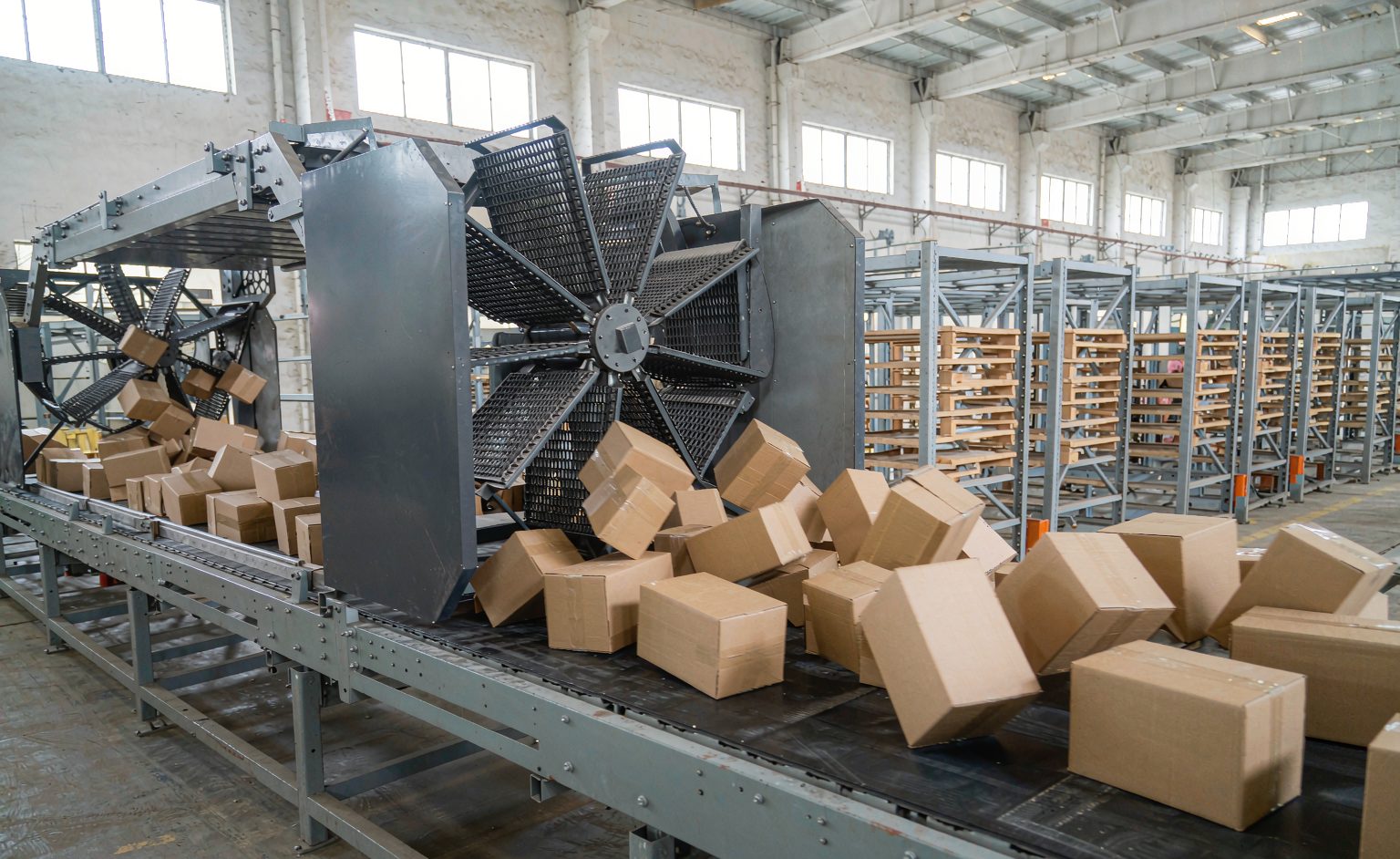

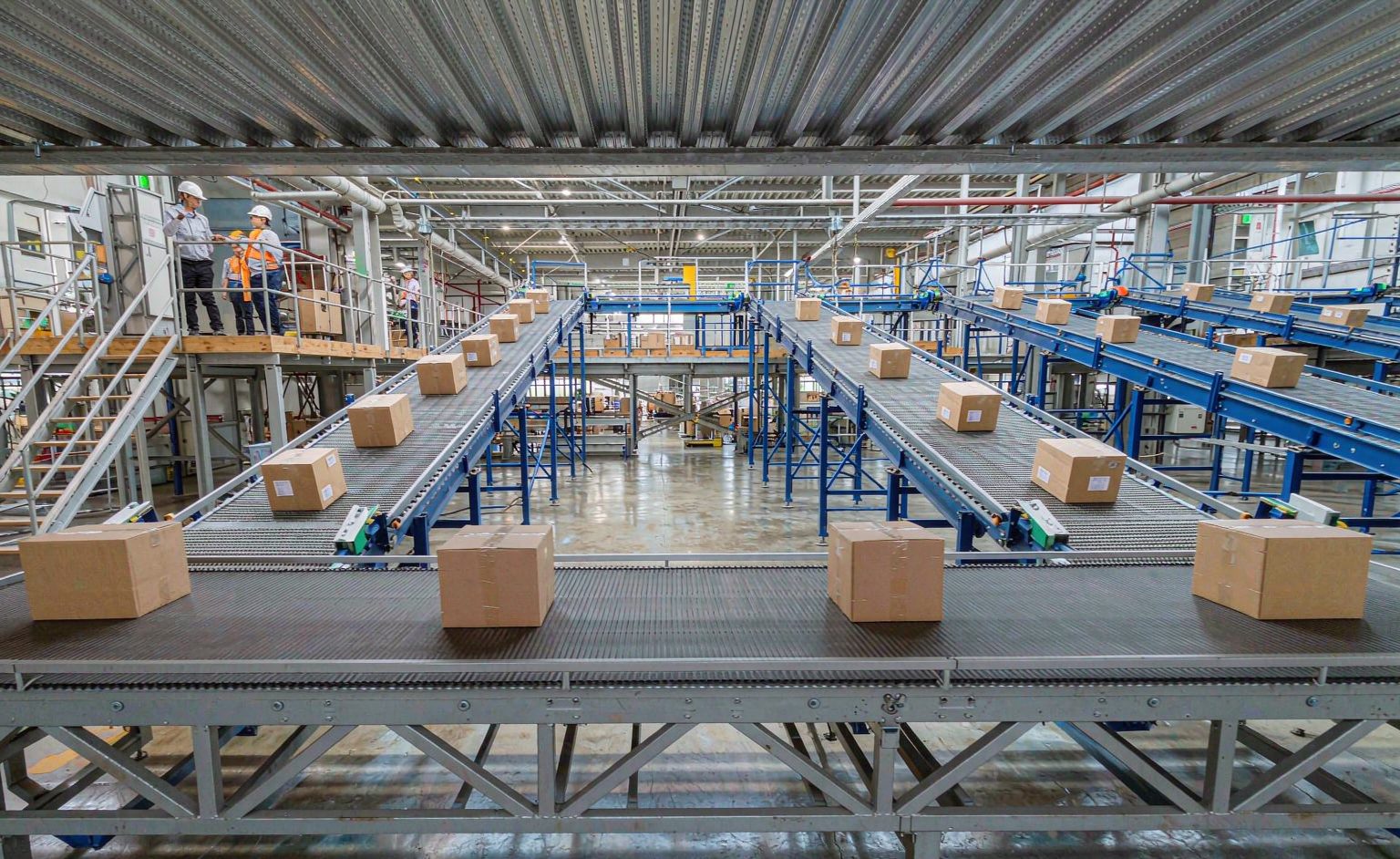
In high-velocity logistics, e-commerce fulfillment, and courier hubs, speed and data accuracy are critical. If a facility relies on manual processes to measure, weigh, and scan incoming packages, the shipping line will quickly experience bottlenecks. Furthermore, shipping billing errors and inaccurate package profile data can lead to high revenue leakage for carriers and 3PL providers.
The solution is the integration of an advanced dimensioning weighing scanning system (DWS). By capturing all three physical parameters simultaneously while parcels travel at speeds up to 2.5 meters per second, a DWS system eliminates manual data capture, ensures accurate commercial billing, and synchronizes package routing. This guide explains the core components of dynamic DWS systems, how they integrate into automated sortation lines, and how to select the right platform for your facility.
—
Section 1: What is a DWS System in Parcel Sorting?
To understand the role of this technology, we must first answer a basic question: what is DWS in parcel sorting and why is it essential for logistics automation?
A DWS system is a unified hardware and software platform installed along a conveyor line, typically directly upstream of an automated sorter. It combines three critical data capture functions into a single step:
- Dimensioning: Calculating the precise length, width, and height of a package, which is used to calculate its volumetric weight.
- Weighing: Capturing the actual physical weight of the package using dynamic load cells.
- Scanning: Reading the package’s barcode or 2D shipping label to identify its tracking ID and routing destination.
Integrating a DWS system for logistics automation protects carriers and 3PLs from billing discrepancies. Most transport carriers bill customers based on *dimensional weight* (volumetric weight) rather than actual physical weight. The standard volumetric formula is:
If a shipper under-reports package dimensions or weight, the carrier loses revenue. An automated DWS system verifies these measurements in real-time, auditing every package against its declared profile and automatically charging back any discrepancies, protecting the carrier’s margins.
—
Section 2: Technical Breakdown of the Three Pillars
A dynamic DWS system relies on highly precise optical and mechanical components working in synchronization. Let’s analyze the technical principles behind each pillar.
1. Dynamic Dimensioning (Laser & Time-of-Flight Vision)
As a package travels along the conveyor, it passes beneath a dimensioning sensor head. There are two primary technologies used for dynamic measurement:
- Laser Rangefinders & Light Curtains: These systems project multiple laser beams or light curtains across the conveyor track. As the package breaks the light beams, the system calculates its length, width, and height based on the duration of the light interruption. These systems are highly reliable for standard cuboidal boxes.
- 3D Time-of-Flight (TOF) Cameras: Advanced systems use TOF cameras that project infrared light pulses and measure the time it takes for the light to bounce back. The system’s software builds a detailed 3D volumetric mesh of the parcel. This allows the system to calculate the smallest bounding box (minimum bounding cuboid) for irregular shapes like polybags, shipping tubes, or irregular packages.
2. Dynamic Weighing (In-Motion Checkweighers)
To capture weight in motion, the conveyor track incorporates an integrated dynamic scale module. The type of scale mechanism determines the system’s speed and accuracy limits:
- Strain Gauge Load Cells: These scales measure weight based on the physical deformation of an internal metal structure, which has a slow stabilization time and is sensitive to mechanical vibrations. They are cost-effective but best suited for lower-speed lines (under 1.2 m/s).
- Electromagnetic Force Restoration (EMFR) Load Cells: These scales utilize an electromagnetically controlled counter-force mechanism to balance the weight, stabilizing within milliseconds. This is the industry standard for high-speed dynamic checkweighers operating at speeds up to 2.5 m/s, delivering weighing accuracies within +/- 10g.

3. High-Speed Barcode Scanning & Parcel Identification
The scanning module captures the package’s tracking barcode to enable routing. High-capacity lines utilize camera-based scanning tunnels rather than manual laser scanners. These tunnels feature multi-sided (5-side or 6-side) CCD camera arrays that capture high-resolution images of the moving package from every angle. This ensures successful parcel identification even if the shipping label is applied sideways, wrinkled, or partially damaged.
—
Section 3: System Configurations: Static DWS vs. Dynamic Dynamic DWS
Depending on your facility’s daily throughput and budget, DWS systems are configured as either manual static workstations or fully automated dynamic inline systems.
| System Parameter | Static DWS Workstation | Dynamic (In-Motion) DWS System |
|---|---|---|
| Operating Principle | Operator manually places the parcel on a static scale under a sensor head. | Parcels travel continuously along a motorized conveyor line. |
| Typical Throughput | 300 to 500 parcels per hour (PPH) | 3,000 to over 10,000 parcels per hour (PPH) |
| Conveyor Line Speeds | N/A (Stationary) | 1.2 to 2.5 meters per second (m/s) |
| Dimensioning Precision | High (typically +/- 5mm or smaller) | High (typically +/- 5 to 10mm depending on speed) |
| Integration Complexity | Low (Stand-alone USB or Ethernet to single PC) | High (Requires PLC handshakes, WCS database queries) |
| Typical CAPEX | Low | Medium to High |
Performance Note: Sorter throughput is highly dependent on system design and integration. While automated dynamic DWS systems can achieve high capacities, actual performance is heavily influenced by package profiles, spacing (gapping), scan rates, and the physical flow of goods through the facility.
—
Section 4: Integrating DWS into an Automated Sorter
A DWS system does not operate as a standalone island; it acts as the data center of your automated conveyor line. The collected physical data is transmitted in real-time to the sorting system to enable precise routing.
For example, in a high-speed logistics line utilizing cross belt sorter loops, the dynamic DWS scale is installed on the induction conveyor line. As a package passes through the DWS system, the barcode scanner captures its shipping ID and queries the Warehouse Control System (WCS) for its routing destination. Within milliseconds, the WCS maps the barcode ID to a physical carrier carriage and triggers the divert mechanism at the designated chute, executing a smooth, high-speed sorting cycle.
—
Section 5: Step-by-Step Implementation Guide for Logistics Managers
Logistics facility engineering teams should follow these technical steps when procuring and integrating a dynamic DWS system.
Step 1: Define Your Physical Package Spectrum
Compile a detailed database of your standard package profiles, detailing the minimum and maximum dimensions, weights, and packaging materials (e.g., cartons, soft polybags, tubes). This data defines the physical width of your dimensioning sensors, the sensitivity range of your load cells, and the required camera resolutions.
Step 2: Match Conveyor Speed with Scale Response Time
Ensure that your dynamic checkweigher uses EMFR load cells that stabilize fast enough to record accurate weights at your sorter line speed. If your sorter runs at 2.0 m/s, the dynamic scale must complete its physical stabilization and weight calculation within a 200ms window to prevent data errors.
Step 3: Establish Calibration and Legal-for-Trade Certifications
If your facility uses DWS data to bill customers based on package weight and volume, the system must hold Legal-for-Trade certifications (such as OIML in Europe or NTEP in North America). Work with your supplier to calibrate the system using certified test weights and obtain the necessary regulatory approvals.
Step 4: Configure Software Handshake Protocols
Ensure that the DWS system’s software interfaces smoothly with your Warehouse Control System (WCS) and Warehouse Management System (WMS). The communication interface must parse barcode, weight, and dimensional data, and query the WMS for routing instructions in under 20ms to support high-speed tracking.
—
Section 6: Common DWS Implementation Pitfalls & Solutions
The table below outlines common physical and software challenges encountered during DWS system implementation, along with recommended engineering solutions.
| Typical Pitfall | Operational Impact | Engineering Mitigation Solution |
|---|---|---|
| Structural Vibration Interference | Conveyor motor vibrations corrupt the dynamic scale readings, causing weight errors. | Physically isolate the scale conveyor frame from adjacent conveyor frames using vibration-damping pads and independent floor mounts. |
| Environmental Dust on Lenses | Dust accumulation on camera and laser lenses leads to barcode scan failures and dimensioning errors. | Select DWS enclosures with high IP protection ratings (IP54 or above) and install automated air-purge blowers to keep optical lenses clean. |
| Variable Ambient Lighting | Sunlight or changing warehouse lighting corrupts barcode camera readings. | Install enclosed scanning tunnels with integrated, high-frequency LED strobe lighting to block out external ambient light interference. |
| Inadequate Package Gapping | Multi-package feeds cause the dimensioner to read two packages as a single large item. | Integrate automated upstream gapping conveyors and photo-eye sensors to maintain a consistent physical distance (pitch) between packages. |
—
Frequently Asked Questions
Q1: What is the difference between EMFR load cells and strain gauge load cells in dynamic weighing?
Strain gauge load cells measure weight based on the physical deformation of an internal metal structure, which has a slow stabilization time and is sensitive to mechanical vibrations. Electromagnetic Force Restoration (EMFR) load cells utilize an electromagnetically controlled counter-force mechanism to balance the weight, stabilizing within milliseconds. EMFR is the industry standard for high-speed dynamic checkweighers operating above 1.5 m/s.
Q2: Why is Legal-for-Trade certification important for a DWS system in parcel sorting?
Legal-for-Trade certifications (such as OIML in Europe or NTEP in North America) verify that the DWS measurements are legally accurate. If a 3PL or courier operator uses DWS data to bill customers based on dimensional weight, the system must hold these certifications to comply with commercial trade weights and measures regulations.
Q3: How does a DWS system handle irregular or non-cuboidal parcels like cylinders or polybags?
Advanced DWS systems utilize 3D laser scanners or Time-of-Flight (TOF) vision cameras that construct a detailed volumetric mesh of the parcel. This allows the system to calculate the smallest bounding box (the minimum bounding cuboid) for irregular shapes like shipping tubes, polybags, or soft parcels, ensuring accurate billing and physical sorting spacing.
Q4: What communication protocols are used to transfer DWS data to a warehouse control system (WCS)?
DWS systems typically communicate with the WCS using high-speed industrial TCP/IP sockets, REST APIs, or specialized database queries. For physical hardware synchronization, real-time industrial Ethernet fieldbuses like Profinet, EtherNet/IP, or EtherCAT are utilized to transmit barcode trigger states and divert commands between the DWS controller and the sorter PLC within milliseconds.
—
Integrate Advanced DWS into Your Sorting Line
Ready to protect your shipping margins and automate parcel data capture? Our engineering team can help you select, calibrate, and integrate an advanced, high-speed DWS system custom-tailored for your logistics operations.
TrueliSort is a manufacturer and system solution provider specializing in customized parcel sorting systems, offering factory-direct design, manufacturing, and on-site support.
Contact TrueliSort for DWS integration and custom system design or email us directly at business@truelisort.com to discuss your project parameters.