The rise of omnichannel retail and direct-to-consumer (DTC) shipping has transformed warehouse logistics. Modern e-commerce fulfillment operations face high SKU diversity, smaller average order sizes, and rapid delivery windows. To remain profitable, facilities must transition from slow, manual processes to high-velocity automation.
Manual sorting quickly becomes a bottleneck during peak promotional seasons, leading to shipping delays and costly errors. Implementing an integrated, automated e-commerce fulfillment sorting solution is the most effective way to optimize your workflow. This guide breaks down the physical material flow and key technologies needed to design a high-efficiency sorting solution from picking to final dispatch.
—
Section 1: The E-Commerce Fulfillment Bottleneck: Why Manual Flows Fail
To design a successful automated solution, we must first examine the operational challenges of manual fulfillment flows. Traditional warehouse layouts designed for bulk B2B shipping are highly inefficient for processing high-volume, low-item e-commerce orders.
The Costs of Manual Sorting Limitations:
- Inbound Batch-Picking Bottlenecks: To save walking time, operators batch-pick thousands of items for different orders simultaneously. However, manually sorting these loose items into individual customer orders is slow, labor-intensive, and highly prone to sorting errors.
- Packaging Incompatibilities: E-commerce orders rely heavily on lightweight bubble mailers, thin polybags, and irregular packaging. Manual sorting forces workers to handle these fragile items repeatedly, increasing the risk of product damage.
- Daily Surge Sensitivities: Order volumes are highly volatile, spiking around daily carrier cutoff times. Manual sorting lines cannot scale instantly to meet these surges, resulting in missed carrier dispatches.
Implementing ecommerce warehouse automation resolves these bottlenecks. By automating the transport, identification, consolidation, and routing of goods, fulfillment centers can scale throughput while maintaining consistent, high-speed sorting accuracy.
—
Section 2: The End-to-End E-Commerce Parcel Sorting Workflow
An optimized e-commerce fulfillment sorting solution relies on a synchronized, multi-step workflow. Each stage of the physical material flow must be carefully coordinated to prevent bottlenecks.

Stage 1: Batch Picking and Inbound Conveying
To maximize picking efficiency, warehouse operators perform *batch picking* or *zone picking* using mobile carts or automated storage and retrieval systems (AS/RS). Rather than picking individual customer orders, operators pick bulk quantities of various SKUs. These loose items are loaded into totes and placed onto a main inbound conveyor line that transports them directly to the sorting area.
Stage 2: Item Singulation & Optical Scanning
The loose items arriving from picking zones must be organized before they can be sorted. Automated singulators align the items into a single-file line with precise physical gaps (pitch). Each item then passes through an optical scanning tunnel equipped with multi-sided barcode readers, instantly identifying the SKU and associating it with an active customer order in the Warehouse Management System (WMS).
Stage 3: Order Consolidation (Multi-Item Sorting)
For orders containing multiple items, the loose SKUs must be consolidated before final packaging. The sorting system routes the items to dedicated consolidation zones, such as dynamic put walls, where operators group the individual SKUs into complete customer orders.
Stage 4: Packaging and Shipping Label Application
Once consolidated, the completed orders are packaged into custom boxes, bubble mailers, or polybags. An automated print-and-apply system then applies a unique shipping label containing the carrier barcode and destination zip code to each package.
Stage 5: High-Speed Carrier Sortation & Dispatch
The packed, labeled parcels are placed onto the main order fulfillment sorting line. The packages pass through a final DWS (Dimensioning, Weighing, Scanning) station to verify shipping weight and read the carrier barcode. A high-speed sorter then diverts each parcel down its designated dispatch chute, routing them directly to transport vehicles or regional carrier bins.
—
Section 3: Key Technology Blocks of an E-Commerce Sorting Solution
Depending on your facility’s daily throughput and order profiles, your sorting solution will utilize different hardware and software modules. Let’s analyze the two primary sortation technologies used in e-commerce fulfillment.
1. Dynamic Put Wall Systems (Item-Level Consolidation)
For e-commerce facilities processing high volumes of multi-item orders, put wall systems are an essential consolidation tool. A put wall is a modular, double-sided shelving unit divided into individual order cubbies, equipped with light-directed sensors (Put-to-Light):
- The Put Side: An operator scans an incoming item’s barcode. The WCS instantly lights up the specific cubby associated with that customer’s order. The operator places the item into the cubby and presses a confirmation button.
- The Pack Side: When all items for a specific order have arrived in their cubby, a light on the opposite side of the wall alerts a packer. The packer pulls the items, boxes them, applies the shipping label, and places the completed package onto the outbound shipping conveyor.
2. High-Speed Cross Belt Sorters (Carrier Routing)
Once packages are sealed and labeled, they must be sorted by shipping carrier, postal code, or regional route. For high-volume hubs processing >8,000 PPH, a loop or linear cross belt sorter system is the industry standard.
Because each package sits on an independent, motorized carriage belt, cross belt sorters provide gentle, non-slip transport. They can handle a diverse mix of thin polybags, flexible bubble mailers, and heavy cartons simultaneously, discharging them into outbound chutes with high accuracy.
—
Section 4: Put Wall Systems vs. High-Speed Cross Belt Sorters
The table below compares the two primary technologies used in an e-commerce fulfillment sorting solution, helping you select the right system for your facility’s operational needs.
| Operational Parameter | Dynamic Put Wall System | Cross Belt Sorter System |
|---|---|---|
| Primary Function | Item-level order consolidation (Grouping loose SKUs into multi-item orders) | Parcel-level carrier and postal routing (Sorting packed boxes and mailers) |
| Typical Throughput (PPH) | 1,000 – 3,000 items/hour per wall zone | 8,000 – 20,000+ parcels/hour |
| Package Compatibility | Loose SKUs (Apparel, cosmetics, small electronics) | Sealed parcels (Polybags, bubble mailers, cartons) |
| Typical Facility Size | Small to mid-sized fulfillment centers | Large regional fulfillment hubs & 3PL centers |
| CAPEX Investment | Low to Medium | Medium to High |
Performance Note: Sorter capacities listed above represent standard engineering estimates. Actual system throughput is heavily influenced by package profiles, average item length, the efficiency of upstream induction lines, and the ratio of soft-packaging vs. rigid cartons in your product mix.
—
Section 5: Sizing and Designing Your Sorting Solution
When designing a sorting solution for ecommerce fulfillment center operations, your engineering team must look beyond average daily volumes and plan for peak operational demand.
1. Designing for Peak Surge Windows
E-commerce order volumes are highly volatile. Sizing your sorting system based on daily averages will lead to severe bottlenecks during peak hours, such as the hours leading up to carrier dispatch deadlines.
For example, if your facility processes 40,000 orders per day over two 8-hour shifts, your average throughput is 2,500 PPH. However, if 20% of your daily orders are completed during a late-afternoon surge, your system must handle a peak flow of 8,000 PPH. To prevent shipping delays, the physical sorting system must be rated for this peak volume rather than the daily average.
2. Space-Saving Layout Design
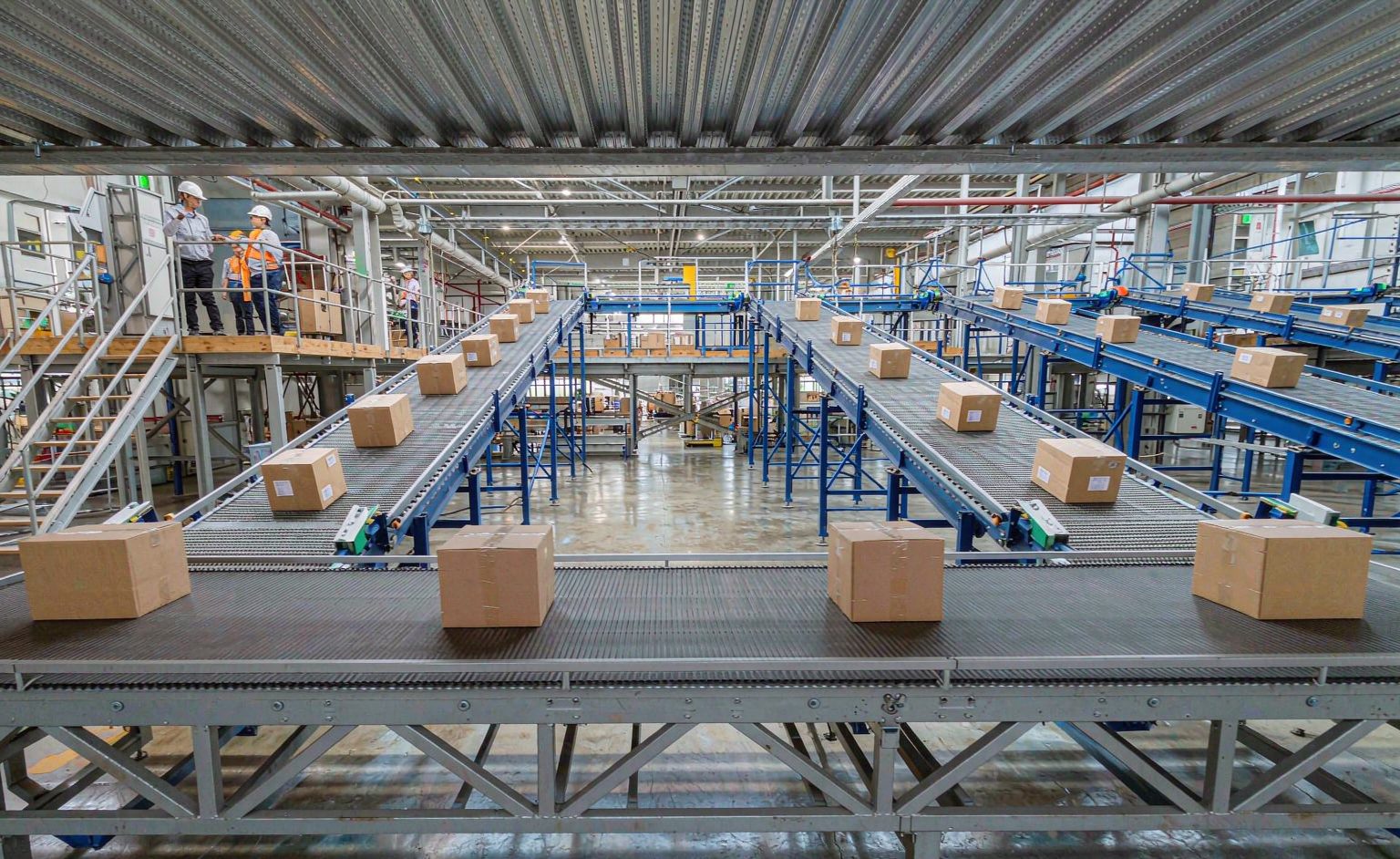
Fulfillment centers are often retrofitted into existing warehouse footprints. To maximize space efficiency, consider vertical layouts, such as installing conveyor networks on suspended mezzanines to leave the ground floor free for picking, packing, and staging operations.
3. Future-Proofing with Modular Software Integration
Ensure that your Warehouse Control System (WCS) utilizes open APIs and standard communication protocols (such as TCP/IP or Profinet) to allow seamless integration with your existing WMS. This software flexibility ensures that you can adjust routing paths, add new carrier zip codes, and scale your operations without needing to modify the physical sorter track.
—
Frequently Asked Questions
Q1: What is the difference between order-level sorting and batch-level sorting in e-commerce?
Order-level sorting processes completed, packed parcels directly for shipping carrier dispatch. Batch-level sorting processes loose, picked SKUs from batch-picking waves, routing individual items to consolidation stations (like put walls) to be grouped into multi-item consumer orders before final packaging.
Q2: How does a put wall system integrate with an automated conveyor line?
Picked items from batch waves travel along an incoming conveyor. A barcode reader scans each item, and the WCS activates light-to-put indicators on the put wall, directing the operator to the correct consolidation cubby. Once an order is complete, a light on the opposite packing side alerts a packer to box, label, and send the completed order to the shipping conveyor.
Q3: Why is peak-hour volume more important than daily average volume when sizing a sorting system?
E-commerce order profiles are highly volatile, with major surges occurring around daily carrier cutoff times or flash sales. If a system is designed for average daily volumes, it will bottleneck during these critical daily peak windows, causing missed carrier dispatches and delayed customer shipments.
Q4: Can a cross belt sorter handle both small bubble mailers and large corrugated cartons on the same line?
Yes. A cross belt sorter is a positive-displacement system where each parcel sits on an independent, motorized carriage belt. Because there are no open conveyor gaps or sliding friction transitions during travel, it can process ultra-light bubble mailers, flexible polybags, and heavy cardboard cartons simultaneously without risk of damage or system jams.
—
Plan Your E-Commerce Sorting Automation Project
Are you ready to eliminate manual bottlenecks, scale your daily throughput, and achieve high-speed sorting accuracy? Share your daily package volumes, peak hourly requirements, and warehouse CAD layouts with us.
The TrueliSort engineering team provides custom-tailored layout designs, throughput calculations, and detailed financial models to support your procurement process.
Contact a TrueliSort engineer to plan your project or email us directly at business@truelisort.com to get started.