
The fresh food e-commerce industry has experienced explosive growth over the past decade, driven by changing consumer habits, rapid urbanization, and increasing demand for same-day or next-day grocery delivery. From chilled dairy products and frozen meals to fresh produce and seafood, modern supply chains must now handle highly sensitive products under strict temperature control conditions.
However, fulfilling fresh food orders is significantly more complex than traditional e-commerce logistics. It requires maintaining a continuous cold chain, ensuring food safety compliance, minimizing handling time, and achieving extremely high order accuracy—all while keeping operational costs under control.
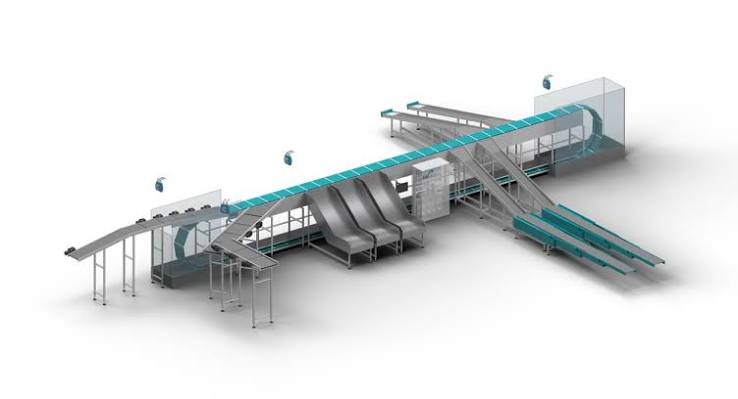
One technology has emerged as a critical enabler in this space: the cross-belt sorter system.
Originally developed for high-speed parcel distribution, cross-belt sorters are now being widely adopted in fresh food logistics centers. Their ability to handle high SKU complexity, support rapid order sorting, and maintain gentle product handling makes them uniquely suited for low-temperature environments.
This article explores how cross-belt sorter systems adapt to cold chain logistics, the technical and operational challenges they overcome, and the strategies that allow them to deliver high performance in refrigerated and frozen environments.
The Rise of Fresh Food E-Commerce and Its Logistics Demands
Fresh food e-commerce is fundamentally different from traditional retail logistics. Instead of durable goods, warehouses must handle perishable items that require strict environmental control and rapid movement.
Key characteristics of fresh food logistics:
- Strict temperature zones (ambient, chilled, frozen)
- High order fragmentation (many SKUs per order)
- Extremely short shelf life
- Frequent inventory replenishment
- High sensitivity to delays and temperature fluctuations
Unlike fashion or electronics fulfillment, delays of even a few minutes can compromise product quality. This makes automation not just beneficial—but essential.
Why Traditional Sorting Systems Fall Short in Cold Chain Operations
Before automation systems like cross-belt sorters became widely adopted, many cold chain warehouses relied on manual or semi-automated sorting methods.
These traditional systems struggle in low-temperature environments due to:
1. Human performance limitations in cold zones
Workers operating in chilled or frozen environments experience:
- Reduced dexterity
- Slower movement
- Higher fatigue levels
- Limited shift durations
This directly impacts sorting speed and accuracy.
2. High error rates under pressure
Fresh food orders often involve:
- Multiple temperature zones per order
- Similar-looking packaging
- Time-sensitive dispatch requirements
Manual sorting increases the risk of misplacement and order errors.
3. Inefficient handling of high SKU diversity
Supermarket-style grocery catalogs can include:
- Thousands of fresh SKUs
- Frequent substitutions
- Seasonal variations
Traditional systems cannot dynamically adapt to such complexity.
What Makes Cross-Belt Sorters Ideal for Cold Environments?
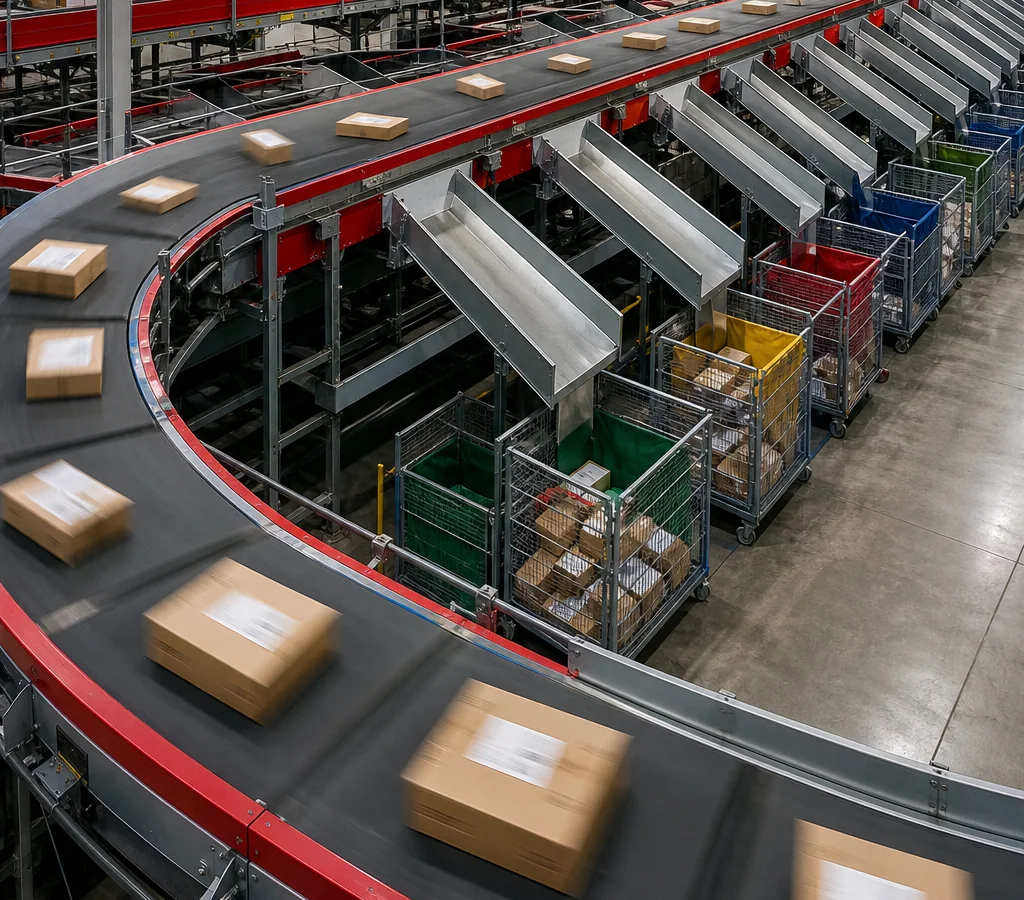
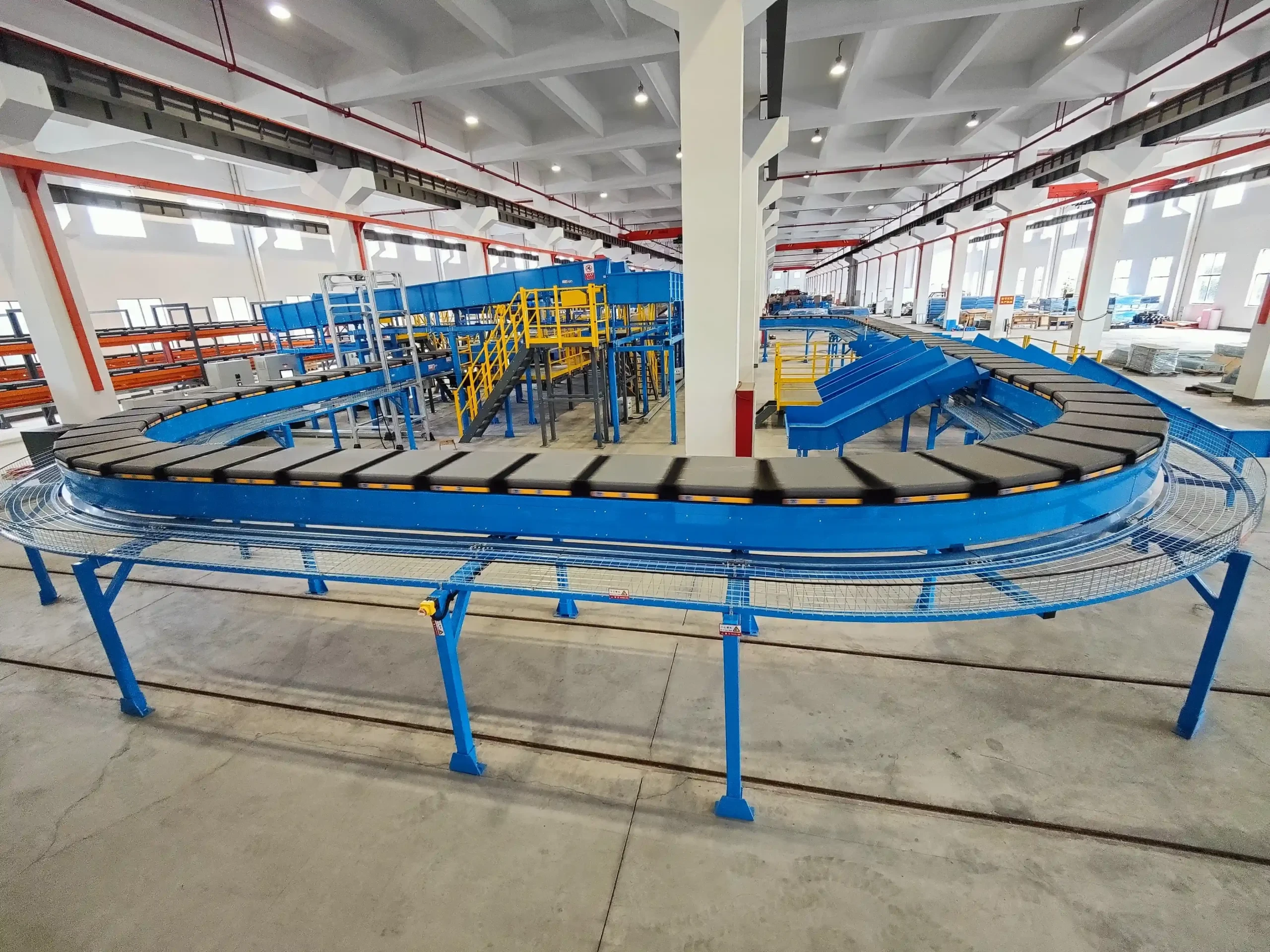
Cross-belt sorter systems are designed for precision, speed, and flexibility. Each carrier on the system features a small conveyor belt that can discharge items in both directions, enabling highly accurate sorting into multiple destinations.
But what makes them particularly effective in fresh food logistics is their adaptability to environmental constraints.
1. Temperature-Resistant Mechanical Design
Operating in low-temperature environments introduces unique mechanical challenges, including material brittleness, lubrication issues, and contraction of components.
Modern cross-belt sorter systems address this through:
Cold-resistant materials
- Reinforced polymers that maintain flexibility at low temperatures
- Stainless steel structures resistant to corrosion
- Specialized coatings that prevent ice formation
Low-temperature lubrication systems
- Food-grade lubricants designed for sub-zero operation
- Reduced viscosity oils that remain fluid in cold environments
- Automated lubrication cycles to maintain consistency
These design choices ensure stable operation in chilled (0–4°C) and frozen (-18°C or lower) environments.
2. High-Speed Operation with Minimal Exposure Time
In cold chain logistics, exposure time outside controlled environments must be minimized.
Cross-belt sorters reduce exposure by:
- Increasing sorting speed
- Reducing manual handling steps
- Enabling continuous flow processing
The faster an item moves through the system, the less risk there is of temperature deviation.
3. Gentle Handling of Perishable Goods
Fresh food items are often fragile, including:
- Fruits and vegetables
- Dairy products
- Packaged chilled meals
- Frozen items with brittle packaging
Cross-belt systems use controlled discharge mechanisms that:
- Prevent impact damage
- Reduce vibration stress
- Maintain product integrity
This is especially important for delicate produce like berries or packaged salads.
4. Multi-Zone Temperature Integration
Modern cold chain warehouses are divided into multiple temperature zones:
- Ambient zone (15–25°C)
- Chilled zone (0–4°C)
- Frozen zone (-18°C or lower)
Cross-belt sorters can be configured to operate across these zones by:
- Using insulated transfer points
- Integrating temperature-controlled induction stations
- Coordinating with refrigerated conveyor segments
This allows seamless movement between zones without breaking the cold chain.
The Real Challenge: Engineering Automation for Cold Chain Stability
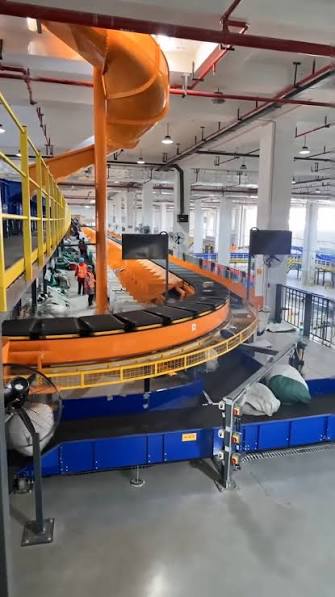
While cross-belt sorters are highly effective, adapting them to low-temperature environments requires solving several engineering challenges.
Challenge 1: Condensation and Ice Formation
When warm air meets cold surfaces, condensation occurs. In frozen environments, this can turn into ice buildup.
Risks include:
- Belt slippage
- Sensor malfunction
- Mechanical blockage
- Reduced sorting accuracy
Solutions:
- Enclosed airflow systems
- Dehumidified air circulation
- Anti-fog sensor housings
- Heated critical components (in controlled zones)
Challenge 2: Sensor Reliability in Low Temperatures
Optical sensors and scanners are essential for item tracking.
However, cold environments can cause:
- Lens fogging
- Signal interference
- Reduced scanning accuracy
Engineering responses:
- Heated sensor housings
- Anti-condensation coatings
- High-intensity LED scanning systems
- Redundant scanning checkpoints
Challenge 3: Conveyor Belt Performance at Low Temperatures
Belt elasticity and friction behavior change in cold environments.
Potential issues:
- Belt stiffening
- Reduced traction
- Increased wear rate
Solutions:
- Cold-resistant belt materials
- Precision tension control systems
- Temperature-compensated motor calibration
Challenge 4: System Energy Efficiency
Maintaining both refrigeration and automation systems increases energy demand.
To optimize efficiency, modern systems use:
- Energy recovery systems
- Zoned cooling strategies
- Smart standby modes for idle sections
- Variable-speed motors
Handling Multi-SKU Fresh Food Orders with Cross-Belt Systems
One of the most powerful advantages of cross-belt sorters is their ability to manage complex, multi-item grocery orders.
Example order complexity:
A single customer order may include:
- Fresh vegetables (chilled zone)
- Frozen meat (frozen zone)
- Dairy products (chilled zone)
- Packaged snacks (ambient zone)
Step-by-Step Order Processing Flow
Step 1: Item identification
Each product is scanned and assigned to an order ID.
Step 2: Temperature zone classification
Items are categorized by required storage temperature.
Step 3: Induction into sorting system
Items enter the cross-belt sorter from different zones.
Step 4: Real-time routing
The system assigns each item to its correct consolidation point.
Step 5: Order recombination
Items from multiple zones are merged at packing stations.
Why Flexibility Matters in Cold Chain Sorting Systems
Flexibility is not just a feature—it is a requirement in fresh food logistics.
Cross-belt sorters provide flexibility through:
Dynamic routing
The system can adjust item paths in real time based on:
- Order priority
- Inventory availability
- Delivery deadlines
Modular expansion capability
Facilities can scale systems as demand increases without redesigning the entire warehouse.
Multi-category handling
A single system can process:
- Fresh produce
- Frozen goods
- Packaged groceries
simultaneously.
Improving Order Accuracy in Fresh Food Fulfillment
Accuracy is critical in grocery delivery. A single mistake can lead to customer dissatisfaction or food waste.
Cross-belt systems improve accuracy through:
1. Automated scanning verification
Each item is scanned multiple times during the process.
2. Weight validation systems
Ensures correct item placement by verifying expected weight ranges.
3. AI-based exception detection
Identifies anomalies such as:
- Misrouted items
- Duplicate entries
- Missing SKUs
Cold Chain Compliance and Food Safety Considerations
Fresh food logistics must comply with strict food safety standards such as HACCP principles.
Cross-belt sorter systems support compliance by:
- Reducing human contact
- Minimizing contamination risks
- Maintaining controlled environments
- Ensuring traceability of each item
This improves both regulatory compliance and consumer trust.
Labor Transformation in Cold Storage Warehouses
Automation does not eliminate labor—it reshapes it.
Instead of manual sorting, workers focus on:
- System monitoring
- Exception handling
- Quality assurance checks
- Packaging and dispatch operations
This shift reduces physical strain while improving operational efficiency.
Cost Efficiency and Long-Term ROI
Although cross-belt sorter systems require significant initial investment, they provide long-term benefits:
- Reduced labor dependency
- Lower error-related losses
- Faster order processing
- Improved inventory turnover
- Higher customer satisfaction
For high-volume grocery operations, efficiency gains quickly offset implementation costs.
Common Implementation Mistakes in Cold Chain Automation
1. Underestimating temperature impact on equipment
Not all mechanical components are rated for frozen environments.
2. Poor zoning design
Inefficient layout increases transfer time and energy usage.
3. Insufficient system redundancy
Cold chain operations require backup systems to prevent downtime.
4. Lack of predictive maintenance
Ignoring early warning signs leads to costly breakdowns.
Future Trends in Cold Chain Sorting Technology
The future of fresh food logistics will likely include:
- Fully autonomous cold chain warehouses
- AI-driven demand forecasting integration
- Robotic induction systems
- Real-time temperature tracking per SKU
- Fully modular cross-belt platforms
These advancements will further reduce waste and improve delivery speed.
Final Thoughts
Fresh food e-commerce presents one of the most complex challenges in modern logistics. Maintaining product freshness, ensuring food safety, and meeting consumer expectations for speed requires highly advanced fulfillment systems.
Cross-belt sorter technology has proven to be one of the most effective solutions for this environment due to its speed, precision, and adaptability to multi-temperature operations.
Its ability to handle high SKU complexity while maintaining strict cold chain integrity makes it a foundational technology for modern grocery logistics.
As demand for fresh food delivery continues to grow, systems that combine automation, flexibility, and environmental resilience will define the next generation of supply chain infrastructure.
Cross-belt sorters are not just improving warehouse efficiency—they are reshaping the entire future of fresh food distribution.