
The global logistics industry has undergone a dramatic transformation over the past two decades. What was once a labor-intensive environment dominated by manual sorting, paper manifests, and repetitive physical handling has evolved into a highly automated ecosystem powered by robotics, data, and intelligent material handling systems.
At the center of this transformation is the cross-belt sorter—a technology that has fundamentally redefined how parcels are processed, routed, and delivered in modern distribution centers.
This article explores how logistics centers have shifted from manual operations to full automation, and how cross-belt sorting systems are reshaping efficiency, scalability, and competitiveness across the supply chain.
1. The Era of Manual Sorting: Labor-Driven Logistics
Before automation became widespread, logistics centers relied heavily on manual labor for sorting operations.
1.1 How Manual Sorting Worked
In traditional warehouses:
- Parcels arrived in bulk
- Workers manually read labels
- Items were carried or pushed to designated bins
- Trucks were loaded based on destination zones
This process was:
- Labor-intensive
- Slow and inconsistent
- Highly error-prone
- Difficult to scale
1.2 Limitations of Manual Systems
Manual sorting created several operational challenges:
High Error Rates
Misreads, fatigue, and human error led to frequent mis-sorts.
Limited Throughput
Each worker could only handle a limited number of parcels per hour.
Scalability Issues
Increasing volume required proportional increases in workforce.
Physical Strain
Repetitive lifting and movement led to high injury risks and turnover.
1.3 Seasonal Breakdown Pressure
During peak seasons such as:
- Holidays
- E-commerce sales events
- Promotional campaigns
manual systems often collapsed under volume spikes.
2. The Push Toward Automation in Logistics
The rise of e-commerce fundamentally changed expectations.
Customers began demanding:
- Same-day delivery
- Next-day shipping
- Real-time tracking
- Near-zero error rates
Manual systems could not keep up.
2.1 The Automation Imperative
Logistics providers needed systems that could:
- Process thousands of parcels per hour
- Operate continuously
- Reduce dependency on labor
- Improve accuracy and traceability
2.2 Early Automation Attempts
Before cross-belt sorters, facilities used:
- Basic conveyor belts
- Tilt-tray sorters
- Manual-assisted scanning systems
While improvements, these systems still had limitations in flexibility and accuracy.
3. The Emergence of Cross-Belt Sorter Technology
Cross-belt sorters represent a major leap in material handling automation.
They combine:
- High-speed conveyor transport
- Independent belt-driven carriers
- Precision ejection systems
- Real-time control software
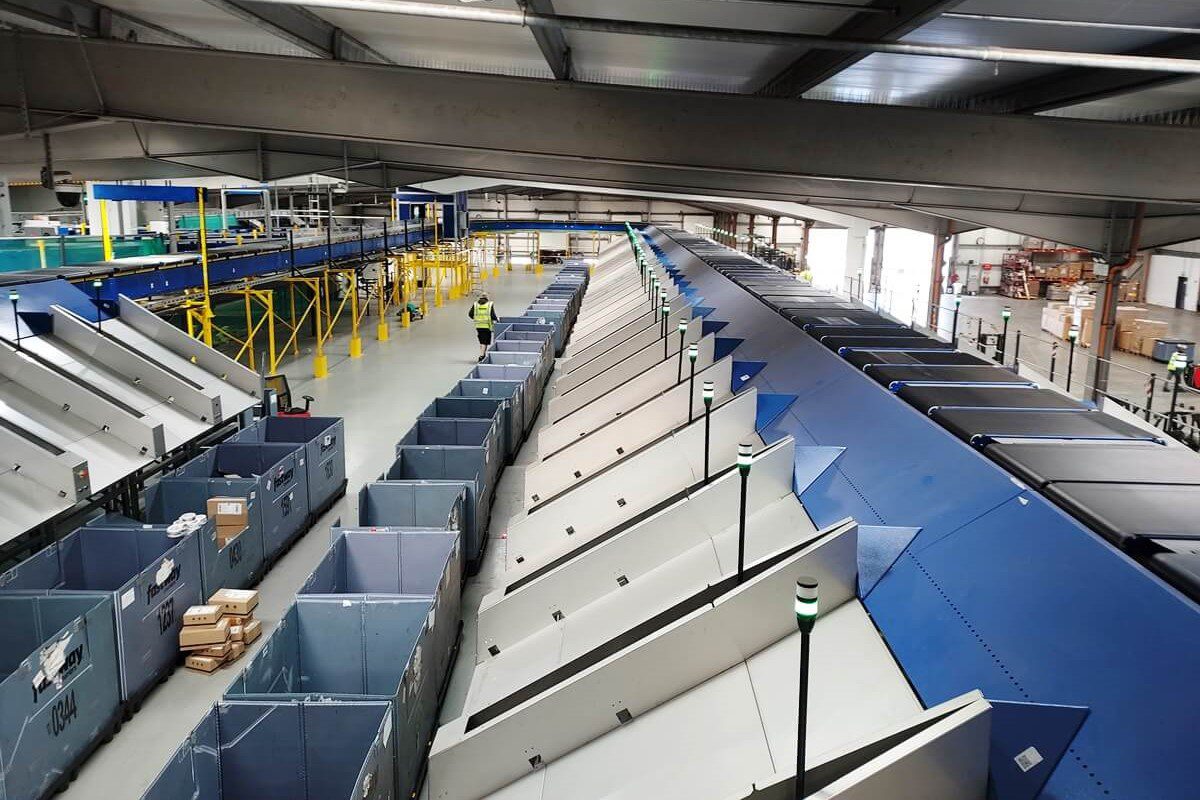
3.1 How a Cross-Belt Sorter Works
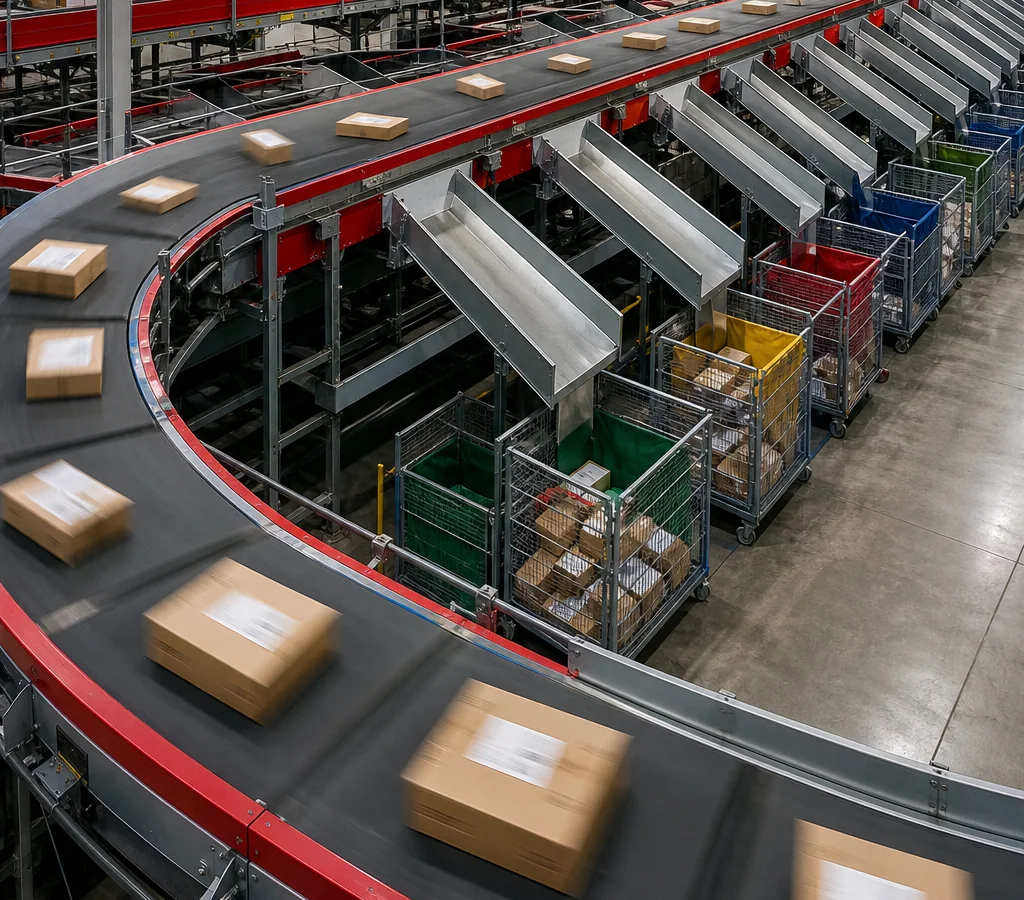
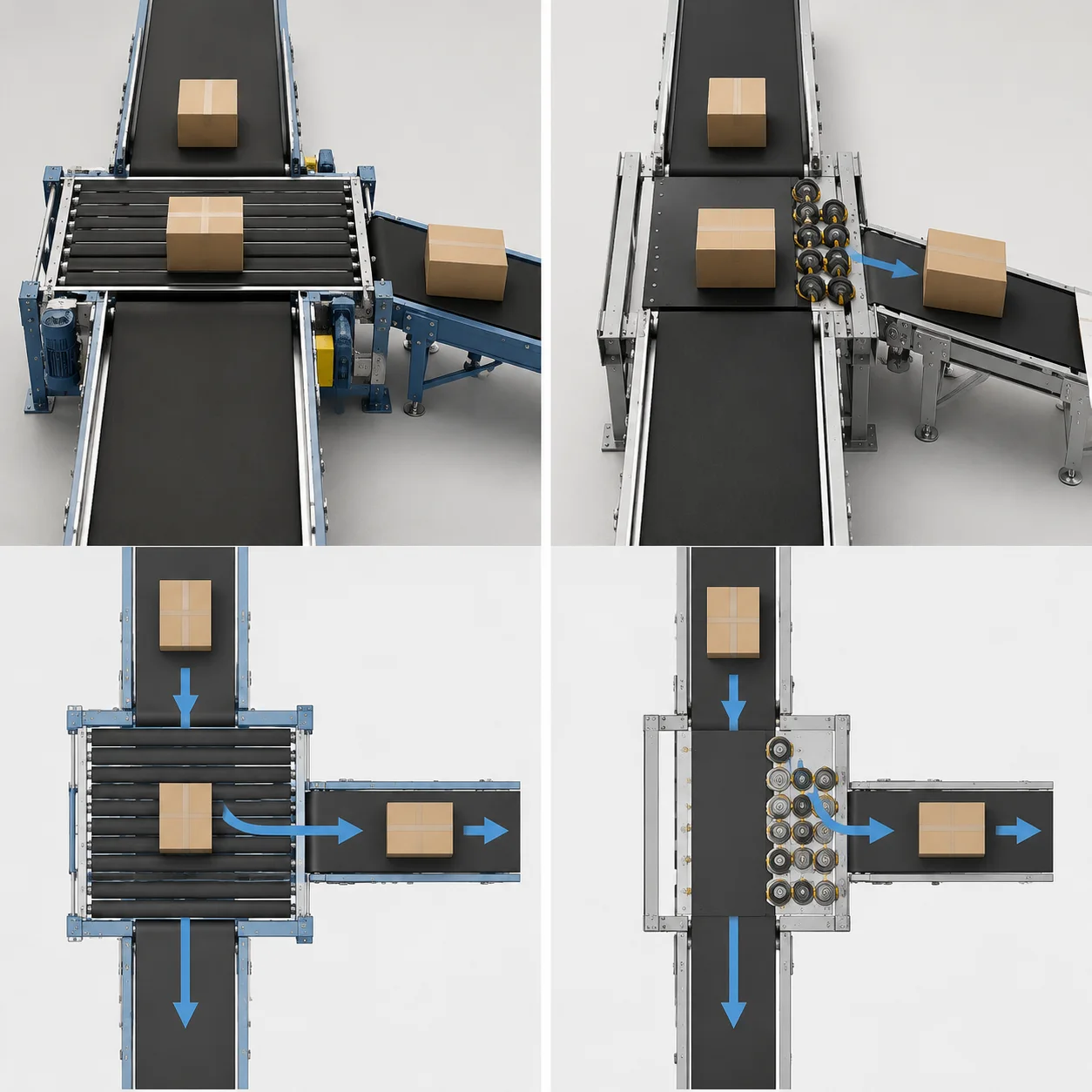
Each parcel is placed on a small individual carrier equipped with a mini conveyor belt.
The system:
- Scans the parcel
- Determines destination
- Rotates the small belt at the correct point
- Releases the parcel into a chute
This allows extremely precise, high-speed sorting.
3.2 Key Advantages Over Traditional Systems
- High throughput capacity
- Gentle handling of parcels
- Multi-directional sorting capability
- High accuracy rates
- Scalable modular design
4. How Cross-Belt Sorters Replaced Manual Sorting
The transition from manual labor to automation did not happen overnight. It occurred in stages.
4.1 Phase 1: Assisted Sorting
Workers still handled most tasks, but machines began to assist with:
- Scanning
- Transport
- Basic routing
4.2 Phase 2: Semi-Automated Sorting
Cross-belt systems started handling:
- High-volume routing
- Destination-based sorting
- Conveyor distribution
Human roles shifted toward monitoring and exception handling.
4.3 Phase 3: Fully Automated Sorting Centers
Modern logistics hubs now operate with:
- Minimal manual intervention
- Automated scanning and routing
- Real-time system optimization
Human workers focus on:
- System oversight
- Maintenance
- Quality control
5. The Structural Transformation of Logistics Centers
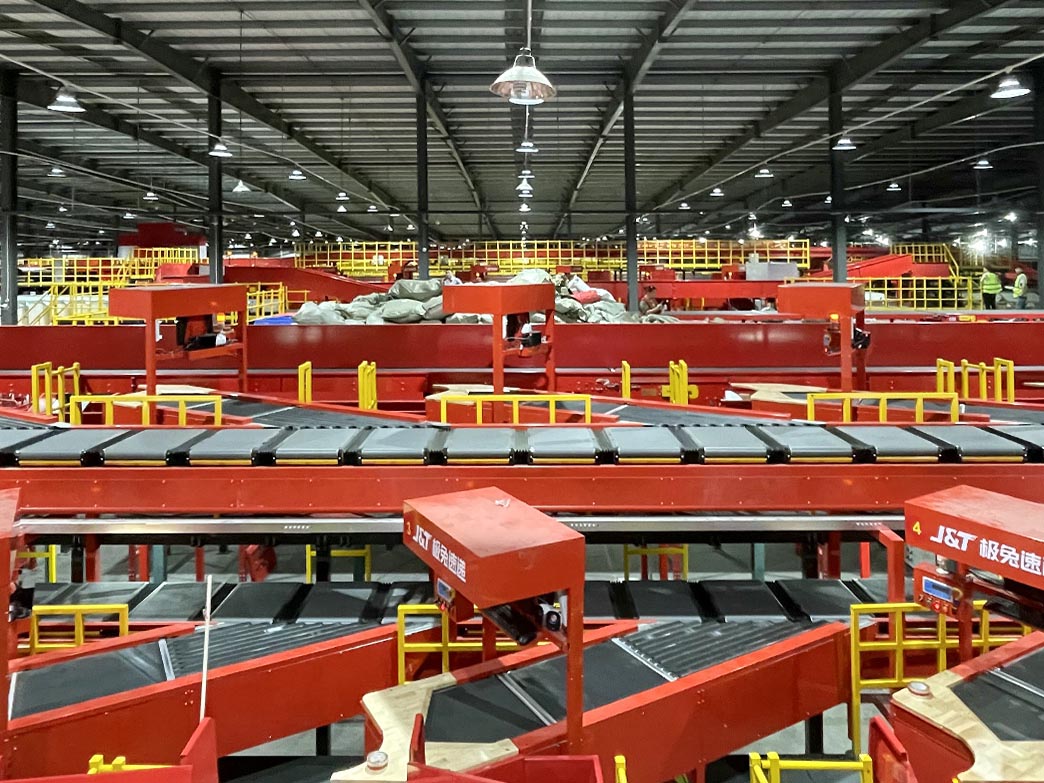
Cross-belt sorter adoption has reshaped warehouse design itself.
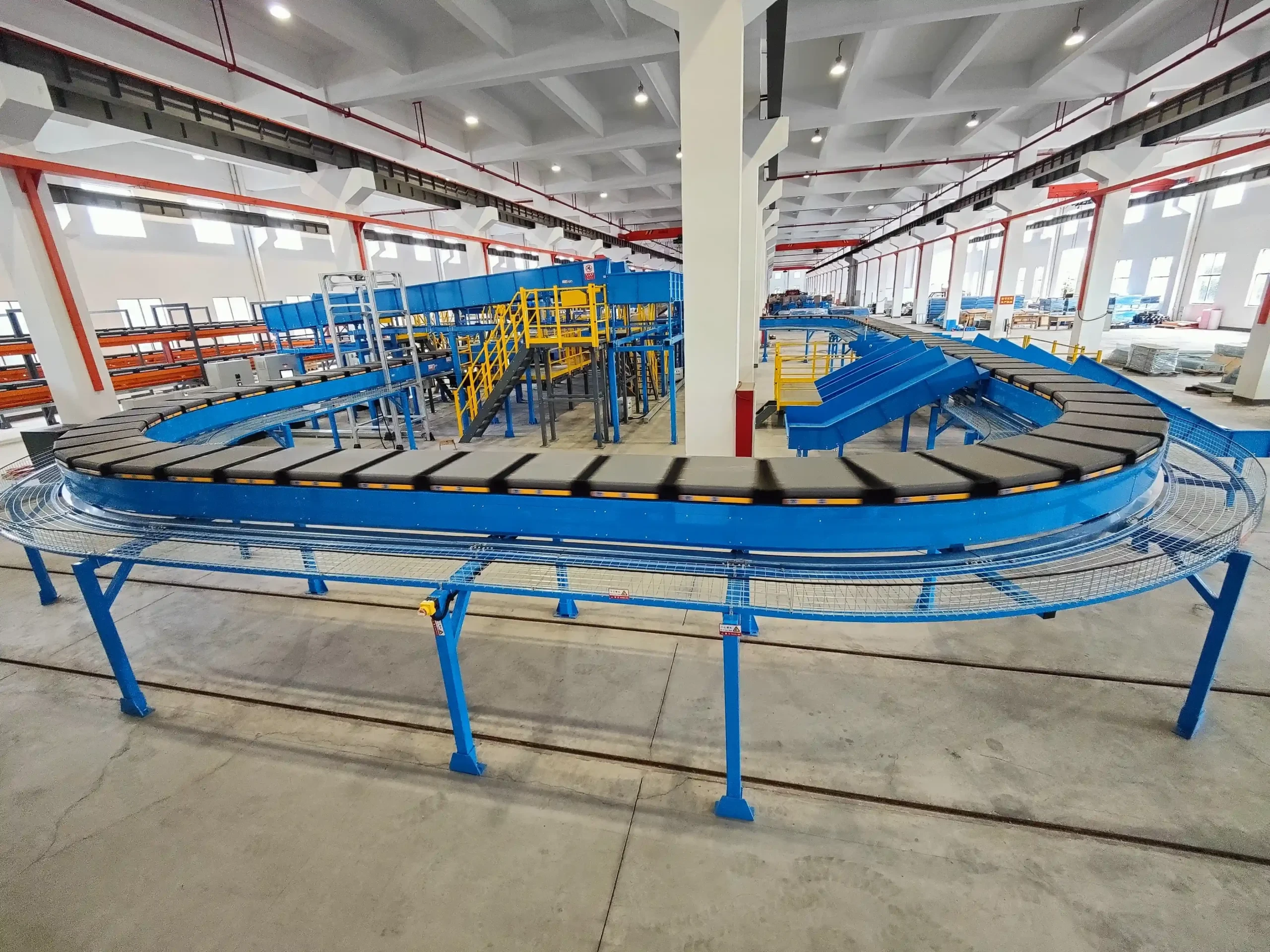
5.1 From Linear Layouts to Circular Flow Systems
Traditional warehouses used:
- Straight conveyor lines
- Fixed sorting zones
Modern systems use:
- Loop-based sorter structures
- Dynamic routing paths
- Centralized distribution hubs
5.2 Space Optimization
Automation allows:
- Vertical expansion of storage
- Compact sorting zones
- Reduced walking distances
This dramatically increases warehouse density efficiency.
5.3 Integrated Workflows
Instead of isolated departments, modern logistics centers integrate:
- Receiving
- Scanning
- Sorting
- Packing
- Dispatch
into one continuous flow.
6. The Role of Software in Modern Sorting Systems
Cross-belt sorters are not just mechanical systems—they are software-driven ecosystems.
6.1 Warehouse Control Systems (WCS)
The WCS manages:
- Parcel routing logic
- Conveyor synchronization
- Load balancing
- Error handling
6.2 Real-Time Decision Making
The system continuously decides:
- Where each parcel should go
- How to balance flow across chutes
- When to reroute items
6.3 Data-Driven Optimization
Modern systems collect:
- Throughput rates
- Sorting accuracy
- Jam frequency
- System bottlenecks
This data is used for continuous improvement.
7. Efficiency Gains: Why Cross-Belt Sorters Dominate
7.1 Throughput Revolution
A single cross-belt sorter can process:
- Thousands to tens of thousands of parcels per hour
This far exceeds manual capabilities.
7.2 Accuracy Improvement
Automated systems significantly reduce:
- Mis-sorts
- Lost packages
- Label reading errors
7.3 Labor Optimization
Instead of large sorting teams, facilities now require:
- Smaller technical teams
- Maintenance personnel
- System operators
7.4 24/7 Operation Capability
Unlike human labor, machines:
- Do not fatigue
- Do not require shift limitations in the same way
- Maintain consistent performance
8. Impact on Workforce Structure
Automation has not eliminated jobs—it has transformed them.
8.1 Decline of Manual Sorting Roles
Traditional roles such as:
- Parcel sorters
- Manual loaders
- Conveyor push operators
have significantly decreased.
8.2 Rise of Technical Roles
New roles include:
- Automation technicians
- PLC engineers
- Maintenance specialists
- Data analysts
8.3 Skills Shift Requirement
The workforce now requires:
- Mechanical understanding
- Electrical diagnostics
- Software literacy
- System thinking
9. Operational Challenges in Automated Sorting Centers
Despite advantages, cross-belt systems introduce new challenges.
9.1 System Complexity
More automation means:
- More interconnected components
- Higher dependency on software
- Greater risk of cascading failures
9.2 Maintenance Demands
Even small issues can impact performance:
- Sensor misalignment
- Belt wear
- Motor overheating
9.3 Initial Investment Costs
Cross-belt systems require:
- High upfront capital
- Infrastructure redesign
- Training investments
10. Maintenance Philosophy in Automated Logistics
To ensure reliability, modern facilities adopt a structured maintenance philosophy.
10.1 Predictive Maintenance
Using:
- Sensors
- Data analytics
- Machine learning
to predict failures before they occur.
10.2 Preventive Maintenance
Scheduled maintenance ensures:
- System stability
- Component longevity
- Reduced downtime
10.3 Condition-Based Monitoring
Systems are maintained based on:
- Real-time performance data
- Wear indicators
- Thermal and vibration signals
11. Real-World Impact on Logistics Performance
The adoption of cross-belt sorters has led to measurable improvements:
- Faster order fulfillment cycles
- Higher customer satisfaction
- Lower operational costs per parcel
- Improved scalability during peak seasons
12. Case Example: E-Commerce Fulfillment Center Transformation
Consider a mid-sized distribution center transitioning from manual sorting to automation.
Before:
- 150+ workers per shift
- High error rates during peak season
- Limited throughput scalability
After cross-belt automation:
- Workforce reduced by over 50% in sorting roles
- Throughput doubled or tripled
- Error rates significantly reduced
- Peak season stability improved dramatically
13. The Future of Cross-Belt Sorting Systems
The next evolution of logistics automation is already emerging.
13.1 AI-Driven Sorting Optimization
Artificial intelligence will:
- Predict parcel flow congestion
- Optimize routing dynamically
- Reduce energy consumption
13.2 Fully Autonomous Warehouses
Future facilities may operate with:
- Minimal human supervision
- Self-adjusting sorting logic
- Autonomous maintenance alerts
13.3 Integration with Robotics
Cross-belt systems will increasingly work alongside:
- Robotic picking arms
- Autonomous mobile robots (AMRs)
- Automated loading systems
14. Final Thoughts: A Structural Shift in Logistics History
The shift from manual sorting to cross-belt automation represents more than a technological upgrade—it represents a structural transformation in how logistics centers operate.
What was once dependent on human labor, physical endurance, and manual coordination is now driven by precision engineering, real-time data, and intelligent automation systems.
Cross-belt sorters have not only increased efficiency—they have redefined what is possible in logistics.
And as technology continues to evolve, these systems will become even more intelligent, more autonomous, and more deeply integrated into the global supply chain, shaping the future of how goods move around the world.