

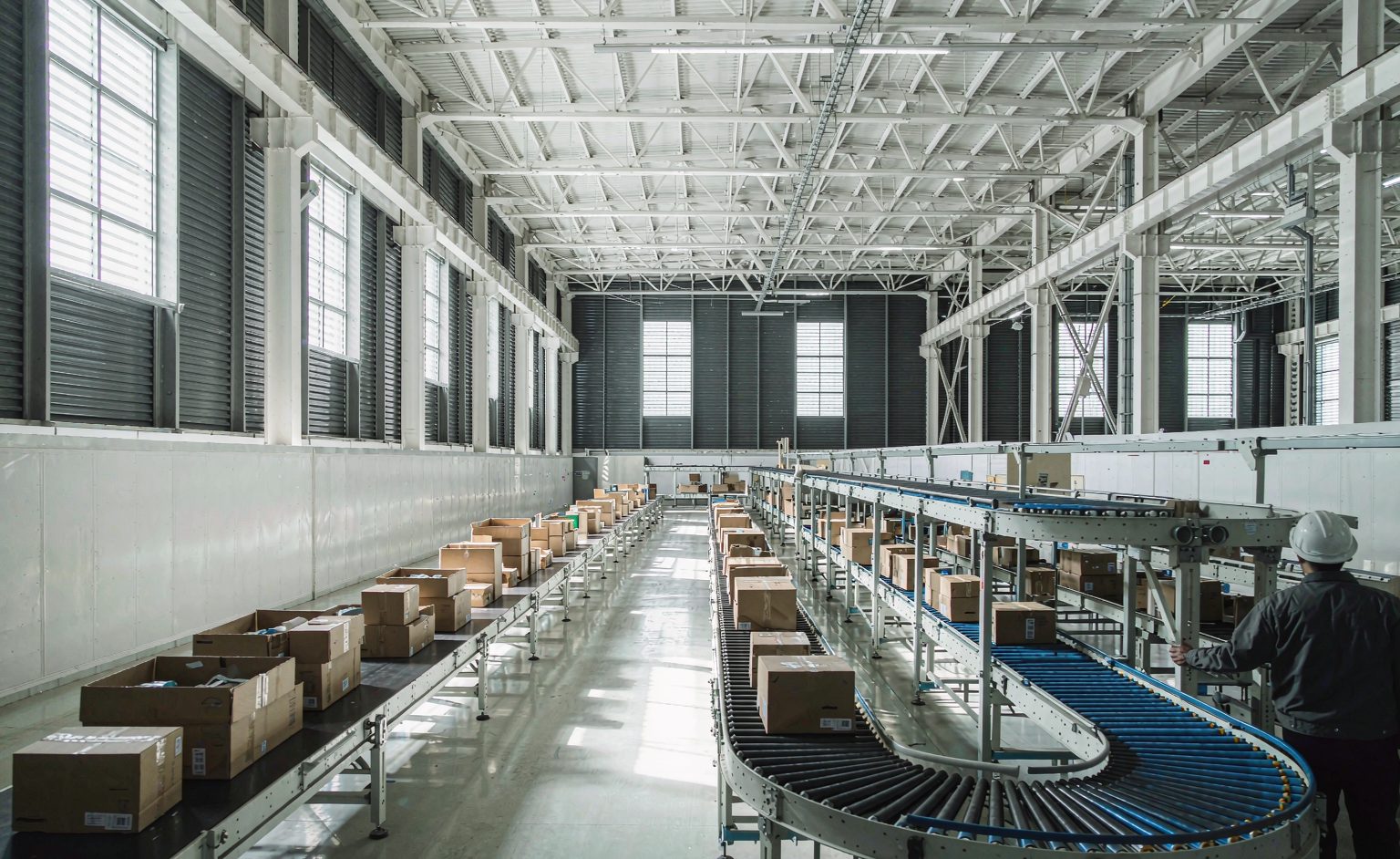
In recent years, the logistics industry has been experiencing a rapid transformation driven by technology and automation. E-commerce growth, same-day delivery expectations, and global supply chain complexities are pushing companies to rethink traditional operations.
Automated solutions such as **narrow belt sorters, cross-belt sorters, and DWS (dimensioning, weighing, scanning) systems** are no longer optional – they are becoming industry standards. These systems improve throughput, reduce labor dependency, and increase accuracy in parcel handling.
One of the key benefits is **scalability**. Automation allows logistics providers to manage peak seasons efficiently without compromising service levels. Furthermore, data integration from automated systems provides real-time visibility, helping companies optimize decision-making.
Looking forward, we can expect **AI-powered predictive analytics, robotics integration, and greener automation solutions** to further reshape logistics. Companies that adopt these technologies early will gain a significant competitive advantage in speed, cost efficiency, and customer satisfaction.
Automation Horizons: What Changes Now, Next, and Later
“Automation leading the way” is only useful on a timeline. Three horizons, three different buying decisions:
| Horizon | What arrives | Buying decision it affects |
|---|---|---|
| Now (0–2 years) | Mature loops, vision induction, software-defined destinations | Core capacity: buy proven rate, skip novelty |
| Next (2–5 years) | Deeper AI routing, fleet coordination, predictive parts | Interfaces: buy open systems that can absorb it |
| Later (5–10 years) | Higher autonomy, robot-sorter hybrids at scale | Floor plan: reserve power, data and space routes |
The horizon that punishes buyers most is “next” — not because the technology disappoints but because closed systems bought today cannot host it. A sorter whose destination logic lives in a proprietary black box will watch better routing algorithms arrive that it can never run; an open system simply updates. The future-proofing question is therefore not “what AI does it have?” but “where does its decision layer live, and who may change it?” — asked in that order, at contract time, while use still exists. Later-horizon readiness is cheaper than it sounds: conduit, switch capacity and floor loading are trivial at design time and disruptive at retrofit time. The smart-warehouse maturity path is in smart warehousing maturity levels, and the value these horizons protect in where sorting creates business value. Reference: industrial robotics and technological change.
The horizons also interact with each other in ways worth noting. Later-horizon autonomy depends on next-horizon interfaces, which depend on now-horizon openness — a chain that makes today’s contract the foundation of every future option. Operations sometimes ask whether waiting for maturity simplifies the chain; it does not, because the chain’s links are cumulative rather than sequential — a site that skips openness today cannot buy autonomy later at any price without rebuilding. The practical reading: horizons reward the operators who treat each one as preparation for the next, and punish those who treat them as separate purchases. Reference: systems integration and futures studies.
The Digital-Age Version of an Old Discipline
Sorting is an old discipline running on new instruments: the decisions are older than the warehouse, but the sensing and the software are new, and the digital-age version differs from its ancestors mostly in how fast the feedback loop closes. The digital-layer mechanics are in the digital-age sorting guide.