
As warehouses become faster, smarter, and more automated, one issue continues to challenge facility operators around the world:
Noise.
Modern distribution centers operate around the clock with conveyors, motors, scanners, sorters, forklifts, and packaging equipment constantly in motion. While automation improves efficiency and throughput, it can also create a loud and stressful working environment if acoustic control is overlooked.
Among the most important pieces of warehouse automation equipment today are cross-belt sorting systems. These high-speed sorting solutions play a critical role in eCommerce fulfillment centers, parcel hubs, logistics terminals, retail distribution centers, and manufacturing operations.
But despite their productivity advantages, cross-belt sorters can become major sources of operational noise if not properly engineered.
Excessive warehouse noise affects more than comfort.
It can impact:
- Employee concentration
- Workplace communication
- Safety awareness
- Worker fatigue
- Long-term hearing health
- Equipment maintenance
- Productivity levels
- Regulatory compliance
Fortunately, modern cross-belt sorting systems increasingly incorporate advanced noise-reduction technologies designed to create quieter, safer, and more efficient warehouse environments.
In this guide, we’ll explore:
- Why warehouse noise control matters
- How cross-belt sorting systems generate noise
- The main sources of sorter-related sound pollution
- Advanced noise-reduction technologies used in modern systems
- Structural and material innovations
- Motor and conveyor optimization techniques
- Acoustic enclosure strategies
- Maintenance practices that reduce noise
- Why quieter systems improve warehouse performance
Whether you manage a logistics facility, operate a fulfillment center, design warehouse automation systems, or evaluate material-handling equipment, understanding cross-belt sorter noise-control technology is increasingly important in today’s industrial environments.
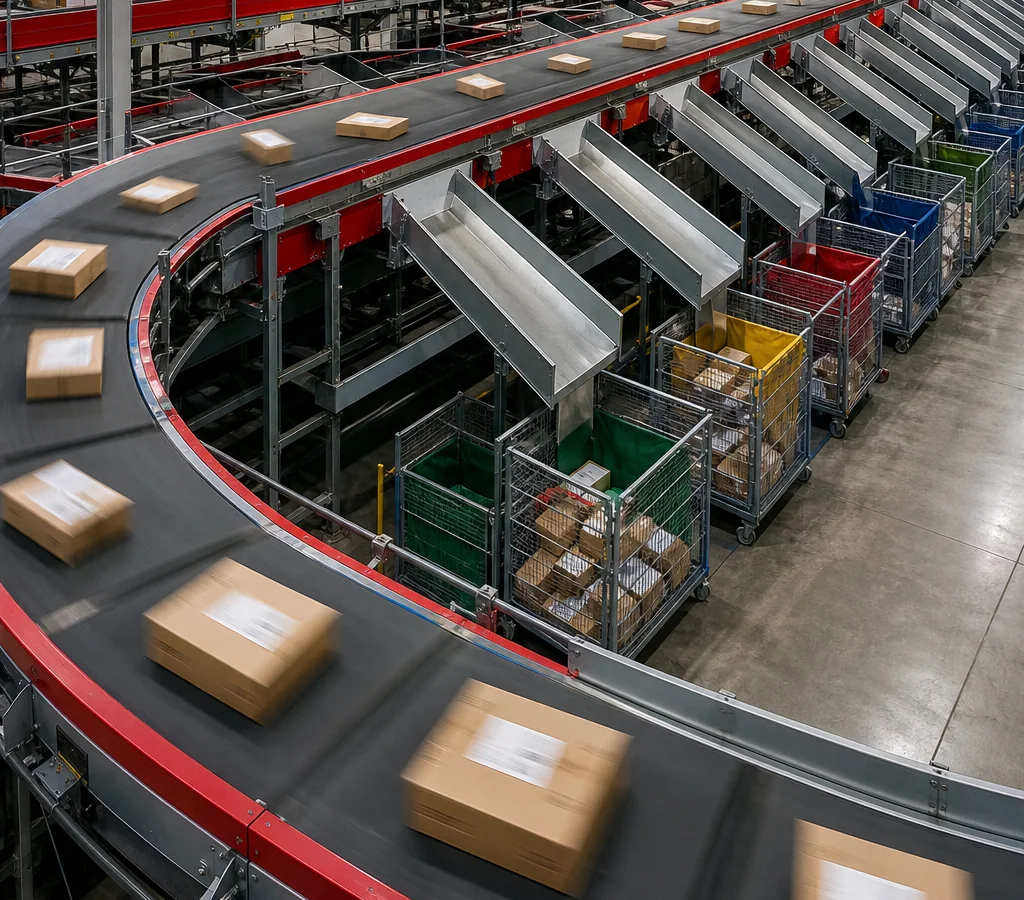
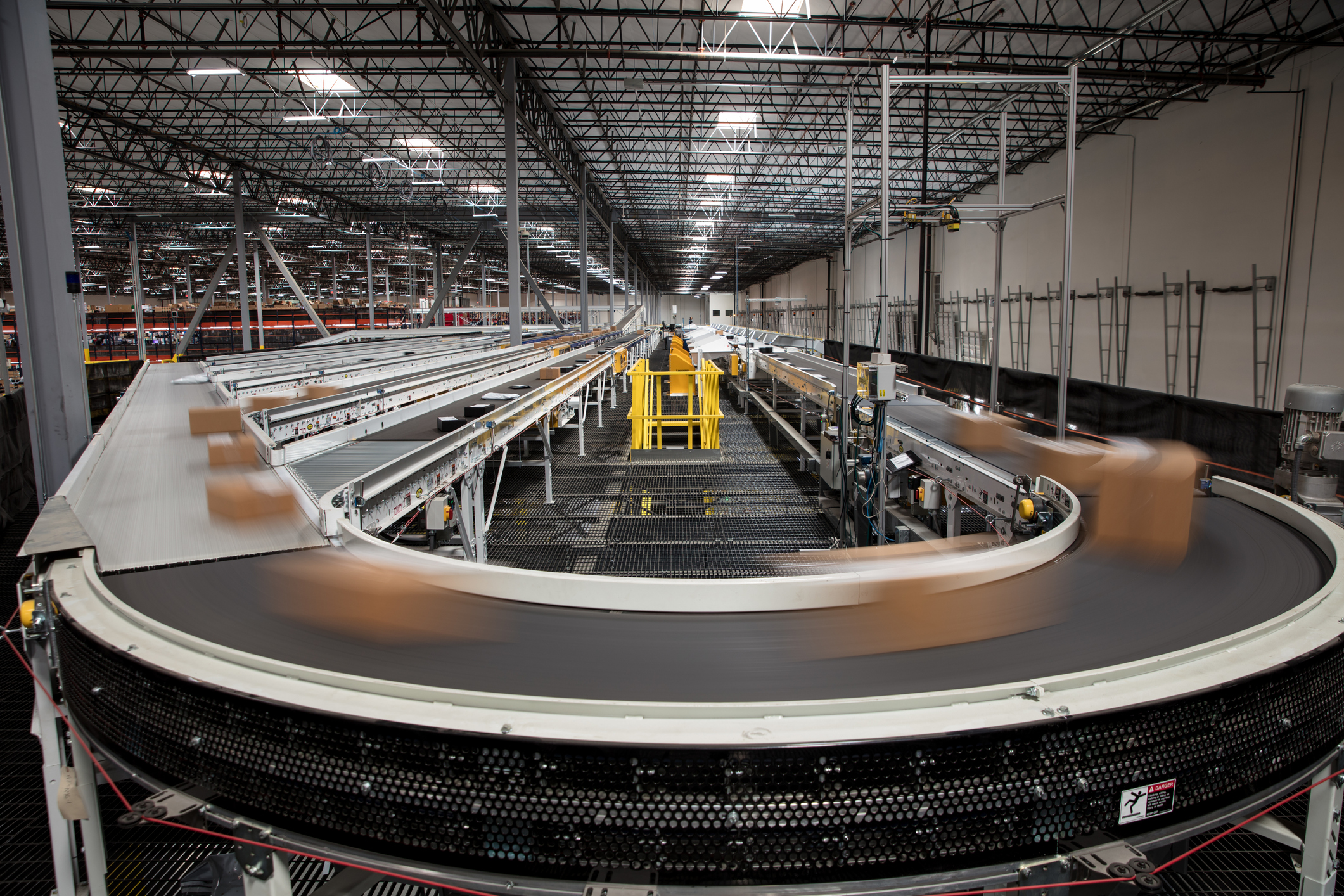
Packages blur as they rush past on the complex conveyor belt system that sorts them for delivery at a large fulfillment center.
Why Warehouse Noise Is Becoming a Bigger Issue
Warehouses are evolving rapidly.
Modern fulfillment operations demand:
- Faster order processing
- Higher sorting accuracy
- Continuous operation
- Increased throughput
- Dense automation layouts
As equipment speeds increase, overall facility noise often rises as well.
In large logistics centers, noise may come from:
- Conveyor systems
- Sortation equipment
- Roller transfers
- Motors
- Gearboxes
- Package impacts
- Forklift traffic
- Pneumatic systems
- Packaging machinery
Cross-belt sorters are especially important because they operate continuously at high speed while handling thousands of parcels per hour.
Why Noise Control Matters in Warehouse Environments
Some warehouse operators underestimate the importance of acoustic management.
However, excessive industrial noise creates multiple operational problems.
Worker Fatigue and Stress
Continuous exposure to loud mechanical noise increases mental fatigue.
Employees working near loud automation systems may experience:
- Reduced concentration
- Higher stress levels
- Mental exhaustion
- Reduced job satisfaction
Long shifts inside noisy facilities can negatively affect morale and productivity.
Communication Difficulties
Warehouse workers rely heavily on verbal communication for:
- Safety coordination
- Equipment alerts
- Operational instructions
- Team collaboration
High background noise can interfere with communication clarity.
This may increase operational risks.
Safety Concerns
Excessive noise may mask:
- Warning alarms
- Emergency signals
- Vehicle movement
- Mechanical failure sounds
Acoustic interference can contribute to workplace accidents.
Hearing Protection Regulations
Many countries enforce occupational noise regulations.
Facilities exceeding acceptable decibel levels may require:
- Hearing protection programs
- Additional safety measures
- Acoustic engineering upgrades
- Compliance documentation
Noise reduction supports regulatory compliance.
How Cross-Belt Sorting Systems Work
Before examining noise-control technologies, it helps to understand how cross-belt sorting systems operate.
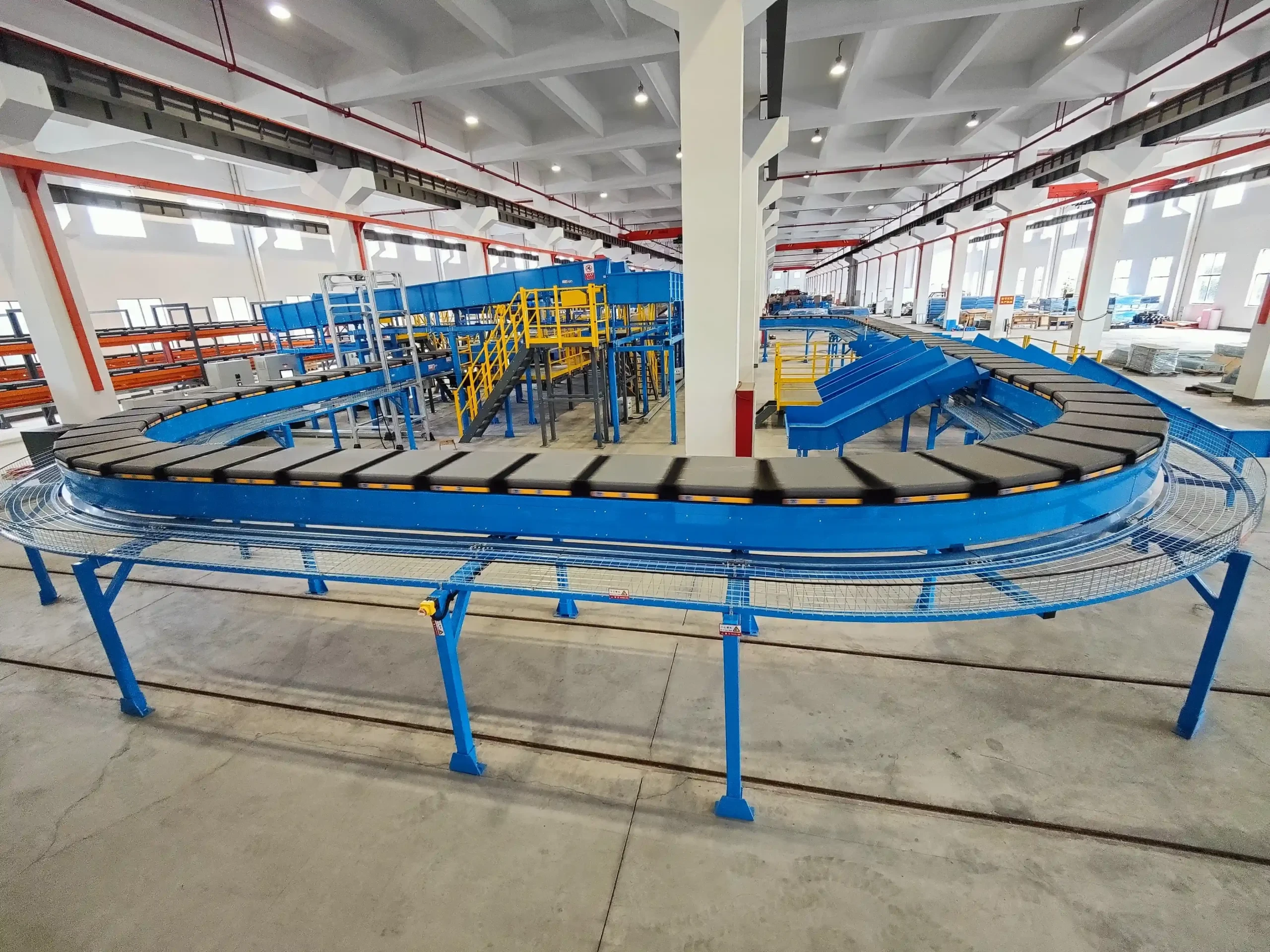
A cross-belt sorter consists of:
- A circulating conveyor loop
- Individual carrier trays
- Small conveyor belts mounted on each carrier
- High-speed package scanning and routing systems
Packages are placed onto moving carriers.
Each cross-belt carrier then transfers items sideways into designated destination chutes.
Cross-belt systems are widely used because they offer:
- High throughput
- Gentle package handling
- Accurate sorting
- Flexible routing
- Fast operational speeds
However, their continuous movement creates multiple noise-generation points.
Main Sources of Noise in Cross-Belt Sorting Systems
Noise inside sorting systems rarely comes from a single source.
Instead, multiple mechanical interactions combine together.
1. Motor and Drive Noise
Electric motors are one of the primary sound sources.
Noise may come from:
- Motor vibration
- Gear engagement
- Drive chain movement
- Cooling fans
- Electrical resonance
Older motor technologies often generate significantly more sound.
2. Conveyor Belt Friction
Continuous belt movement creates friction noise.
Factors influencing conveyor noise include:
- Belt material
- Roller quality
- Surface texture
- Speed
- Alignment accuracy
Poorly aligned belts often produce additional vibration and squealing.
3. Package Impact Noise
Parcels hitting chutes or transfer points generate sudden impact sounds.
Noise levels increase when handling:
- Hard packaging
- Metal products
- Heavy cartons
- Irregularly shaped goods
High-speed sorting amplifies impact intensity.
4. Roller and Bearing Vibration
Rollers and bearings operate continuously under load.
Worn or low-quality components may create:
- Rattling
- Grinding
- Vibration noise
- Resonance effects
Mechanical wear often increases sound over time.
5. Structural Resonance
Large steel structures can amplify vibration.
Without proper damping, warehouse frameworks may act like acoustic amplifiers.
This can spread noise across large operational areas.
Why Modern Cross-Belt Systems Prioritize Noise Reduction
Warehouse operators increasingly recognize that quieter systems offer long-term advantages.
Modern facilities now evaluate automation equipment based not only on:
- Throughput
- Speed
- Sorting accuracy
but also on:
- Acoustic performance
- Worker comfort
- Sustainability
- Energy efficiency
Noise optimization has become a competitive engineering priority.
Noise-Reduction Technologies Used in Cross-Belt Sorting Systems
Modern cross-belt sorters incorporate multiple engineering solutions designed to minimize sound generation.
1. Low-Noise Motor Technology
Modern systems increasingly use advanced motor designs.
Examples include:
- Brushless motors
- Servo motors
- Variable-frequency drives (VFDs)
- Direct-drive systems
These technologies reduce:
- Mechanical friction
- Vibration
- Electrical humming
Variable-speed control also allows smoother acceleration and deceleration.
This reduces sudden mechanical stress and sound spikes.
2. Precision Bearing Systems
High-quality bearings dramatically reduce operational noise.
Modern low-noise bearings feature:
- Precision machining
- Improved lubrication
- Reduced rolling resistance
- Better vibration control
Sealed bearings also reduce contamination-related wear.
3. Polyurethane and Soft-Coated Rollers
Traditional metal rollers can create harsh contact sounds.
Many modern systems now use:
- Polyurethane-coated rollers
- Rubberized surfaces
- Composite roller materials
These materials absorb vibration and reduce impact noise.
They also improve package handling smoothness.
4. Vibration Isolation Mounts
Vibration transfer is a major source of warehouse noise.
Isolation systems help prevent vibration from spreading into building structures.
Examples include:
- Rubber isolation pads
- Spring-mounted supports
- Dampening brackets
- Floating structural mounts
These technologies reduce resonance amplification.
5. Advanced Belt Materials
Conveyor belt composition significantly affects acoustic performance.
Modern low-noise belts may include:
- Multi-layer damping structures
- Low-friction surfaces
- Flexible polymer compounds
- Shock-absorbing materials
Optimized belt materials reduce friction and rolling noise.
6. Intelligent Speed Control Systems
High-speed equipment often becomes noisy during sudden acceleration changes.
Smart speed-control software helps optimize movement patterns.
Benefits include:
- Smoother starts and stops
- Reduced mechanical shock
- Lower vibration levels
- Improved synchronization
Automation software now plays an important role in acoustic management.
7. Acoustic Enclosures and Sound Barriers
Some facilities use acoustic shielding around high-noise zones.
Examples include:
- Sound-dampening panels
- Enclosed sorter sections
- Acoustic curtains
- Noise-control walls
These barriers absorb and contain sound energy.
Acoustic enclosures are especially useful in:
- Urban fulfillment centers
- Indoor logistics hubs
- Mixed-use industrial buildings
8. Modular Noise-Dampening Frames
Modern sorter frames increasingly integrate sound-control engineering directly into structural design.
Techniques include:
- Reinforced support geometry
- Internal damping layers
- Resonance-resistant frame construction
- Flexible connection points
These features reduce vibration propagation throughout the machine.
9. Soft-Drop Parcel Chutes
Package discharge points are major noise hotspots.
Modern systems reduce impact sounds through:
- Cushioned chute linings
- Curved package guides
- Soft-drop transfer zones
- Controlled parcel deceleration
Gentler package handling improves both noise levels and product protection.
10. Lubrication Optimization Systems
Poor lubrication increases friction and grinding sounds.
Modern maintenance systems use:
- Automated lubrication
- Smart monitoring sensors
- Predictive maintenance alerts
Proper lubrication reduces:
- Wear
- Vibration
- Friction-related noise
11. Predictive Maintenance Technology
Worn components often become noisy before failure occurs.
Modern cross-belt systems increasingly use:
- IoT sensors
- Vibration monitoring
- Acoustic diagnostics
- AI-driven maintenance analytics
These systems identify abnormal sound patterns early.
Preventive repairs reduce both downtime and noise escalation.
12. Low-Impact Transfer Design
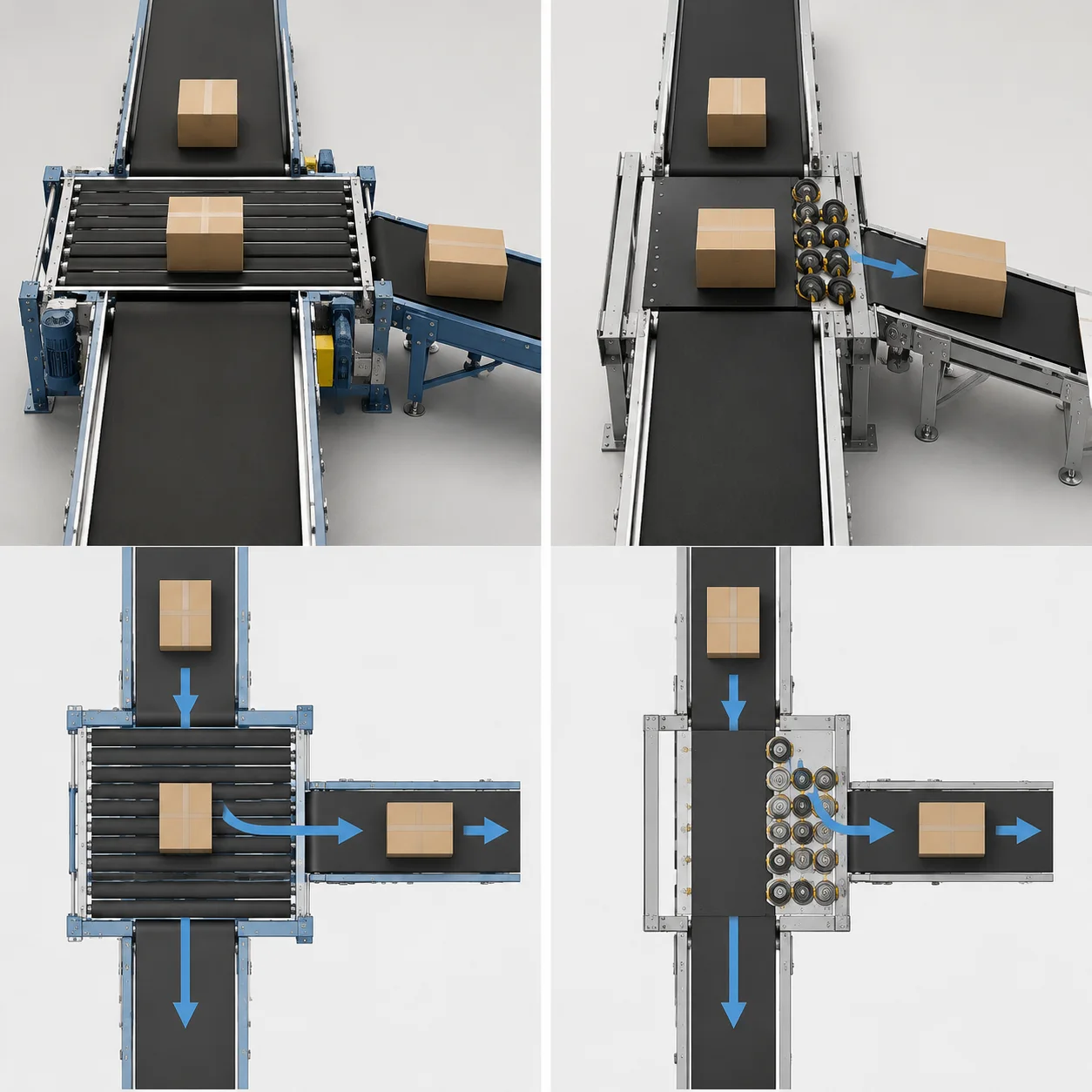
Transfer points between conveyors often create sudden sound spikes.
Modern engineering focuses on smoother transitions through:
- Optimized transfer geometry
- Reduced drop heights
- Controlled speed matching
- Flexible transfer materials
Smooth transitions improve acoustic performance significantly.
13. Noise-Absorbing Warehouse Materials
Noise control extends beyond the sorter itself.
Warehouse interiors may incorporate:
- Acoustic ceiling panels
- Sound-absorbing walls
- Anti-vibration flooring
- Noise-dampening insulation
Facility-wide acoustic planning improves overall sound management.
14. Airflow and Fan Noise Optimization
Cooling systems can generate significant background noise.
Modern systems reduce airflow-related sound through:
- Low-noise fans
- Optimized ventilation channels
- Variable-speed cooling systems
- Aerodynamic airflow engineering
Cooling efficiency and acoustic control now work together.
15. AI-Based Operational Optimization
Advanced warehouse management software can reduce unnecessary mechanical stress.
AI systems help optimize:
- Package flow timing
- Sorter load balancing
- Speed synchronization
- Congestion reduction
Smoother operational patterns often reduce cumulative noise generation.
The Relationship Between Noise Reduction and Equipment Longevity
Quieter systems are often healthier systems mechanically.
Excessive noise frequently indicates:
- Friction
- Misalignment
- Vibration
- Component wear
Reducing noise often improves:
- Equipment lifespan
- Energy efficiency
- Maintenance intervals
- Reliability
Acoustic engineering benefits both workers and machinery.
Why Quieter Warehouses Improve Employee Productivity
Research increasingly shows that workplace acoustics influence employee performance.
Quieter environments may help improve:
- Concentration
- Communication
- Error reduction
- Employee comfort
- Retention rates
This is especially important in labor-intensive fulfillment operations.
Noise Control in eCommerce Fulfillment Centers
The rise of eCommerce has increased warehouse automation intensity dramatically.
Modern fulfillment centers now process:
- Smaller orders
- Faster shipping cycles
- Continuous operations
- High parcel volumes
Cross-belt sorters are central to this infrastructure.
As facilities operate 24/7, long-term acoustic management becomes increasingly important.
Sustainability and Noise Reduction
Noise optimization also supports sustainability goals.
Efficient low-noise systems often consume less energy because they reduce:
- Friction losses
- Mechanical resistance
- Excess vibration
Sustainable warehouse design increasingly includes acoustic engineering considerations.
Future Trends in Cross-Belt Sorter Noise Reduction
Warehouse automation technology continues evolving rapidly.
Future innovations may include:
- AI-driven acoustic optimization
- Self-adjusting vibration control
- Smart noise-canceling infrastructure
- Advanced composite materials
- Ultra-quiet magnetic drive systems
- Real-time sound analytics
Noise control will likely become an even larger design priority.
How to Evaluate Noise Performance When Choosing a Cross-Belt Sorting System
Warehouse operators should evaluate several factors when comparing equipment.
Important considerations include:
- Decibel ratings
- Motor technology
- Bearing quality
- Structural damping design
- Maintenance requirements
- Acoustic certifications
- Energy efficiency
- Long-term wear performance
Noise performance should be considered alongside throughput and reliability.
Best Practices for Maintaining Low-Noise Warehouse Operations
Even advanced systems require proper operational management.
Perform Regular Maintenance
Routine inspections help prevent vibration-related noise increases.
Replace Worn Components Quickly
Failing bearings and rollers often become major sound sources.
Monitor Alignment
Misalignment increases friction and resonance.
Train Operators Properly
Incorrect usage can increase mechanical stress.
Use Predictive Monitoring Systems
Early detection prevents escalating acoustic problems.
Final Thoughts
Warehouse noise is no longer a minor operational concern.
As fulfillment centers become larger, faster, and more automated, acoustic management plays a critical role in:
- Worker comfort
- Safety
- Productivity
- Equipment reliability
- Regulatory compliance
Cross-belt sorting systems are among the most important technologies in modern logistics operations, but they can also become major noise generators without proper engineering.
Fortunately, today’s advanced sorter systems increasingly integrate sophisticated noise-reduction technologies such as:
- Low-noise motors
- Precision bearings
- Vibration isolation systems
- Smart speed controls
- Acoustic barriers
- Soft-drop transfer systems
- AI-based monitoring tools
The result is a quieter, safer, and more efficient warehouse environment.
For warehouse operators, investing in low-noise automation is not just about reducing sound levels.
It’s about improving the entire operational ecosystem — from worker well-being and communication to maintenance efficiency and long-term facility performance.
As automation technology continues evolving, noise control will remain a key factor in designing smarter, more sustainable, and more human-friendly logistics environments for the future.