
In today’s fast-moving footwear and apparel industry, logistics efficiency is no longer just an operational concern—it’s a defining factor for customer satisfaction, brand reputation, and profitability. With the explosive growth of e-commerce and omnichannel retail, distribution centers are under constant pressure to process a wider variety of products at higher speeds while maintaining accuracy and minimizing damage.
Among the many challenges faced by modern warehouses, sorting stands out as one of the most complex. Footwear and apparel items often come in a wide range of packaging types, including soft polybags, rigid shoeboxes, oddly shaped bundles, and even partially flexible cartons. These variations make automated handling particularly difficult, especially when items are fragile, irregular, or easily deformed.
This is where cross-belt sorting systems have emerged as a transformative solution. Known for their speed, precision, and adaptability, cross-belt sorters are uniquely suited to handle delicate and irregular packages with a level of care that traditional systems struggle to achieve.
In this in-depth guide, we’ll explore the sorting challenges specific to the footwear and apparel sector, examine how cross-belt systems work, and uncover the engineering principles that allow them to handle fragile and irregular packages gently and efficiently.
The Unique Sorting Challenges in Footwear and Apparel
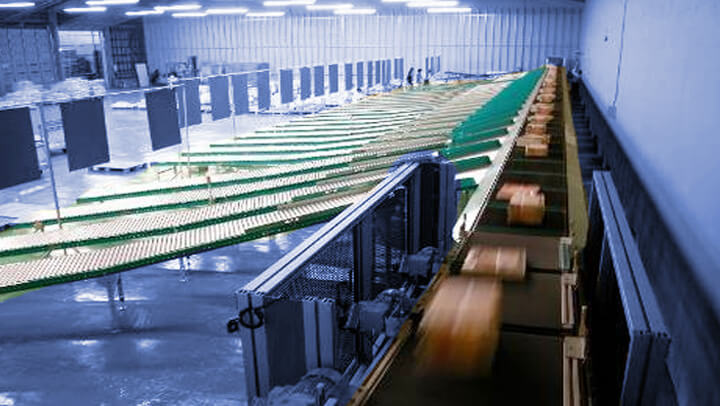
Unlike industries with standardized packaging, the footwear and apparel sector deals with high variability. This diversity introduces several operational complications.
1. Irregular Shapes and Sizes
Shoeboxes may seem uniform at first glance, but variations in brand, style, and packaging design can result in significant differences in dimensions. Apparel items, often shipped in flexible polybags, can shift shape depending on how they are packed.
Some items may include:
- Soft garments in plastic bags
- Rigid shoeboxes with varying thickness
- Bundled items wrapped in irregular forms
- Mixed-material packaging combining cardboard and plastic
Traditional conveyor systems are typically optimized for uniform cartons, making them less effective for handling such diversity.
2. Fragility and Deformability
Many apparel items are sensitive to pressure. For example:
- Folded garments can wrinkle or crease under stress
- Lightweight boxes can collapse if stacked improperly
- Decorative packaging can be easily damaged
Even footwear packaging, while more rigid, can suffer from corner crushing or lid displacement.
3. High Throughput Demands
E-commerce fulfillment centers often process tens of thousands of orders per hour. During peak seasons, such as holidays or promotional events, this number can surge dramatically.
Maintaining speed without compromising accuracy or product integrity is a constant balancing act.
4. SKU Explosion
The rise of fast fashion and product customization has led to a massive increase in SKUs (Stock Keeping Units). Each SKU may have unique packaging characteristics, further complicating sorting operations.
What Is a Cross-Belt Sorting System?
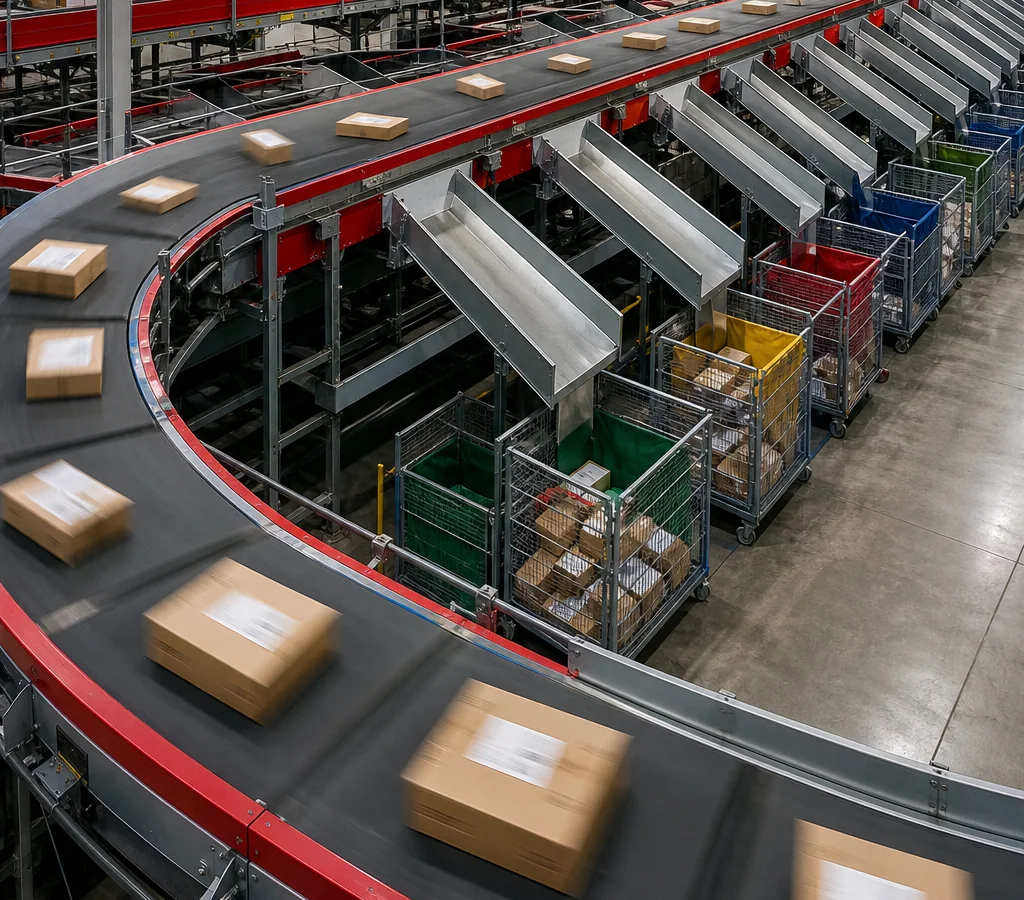
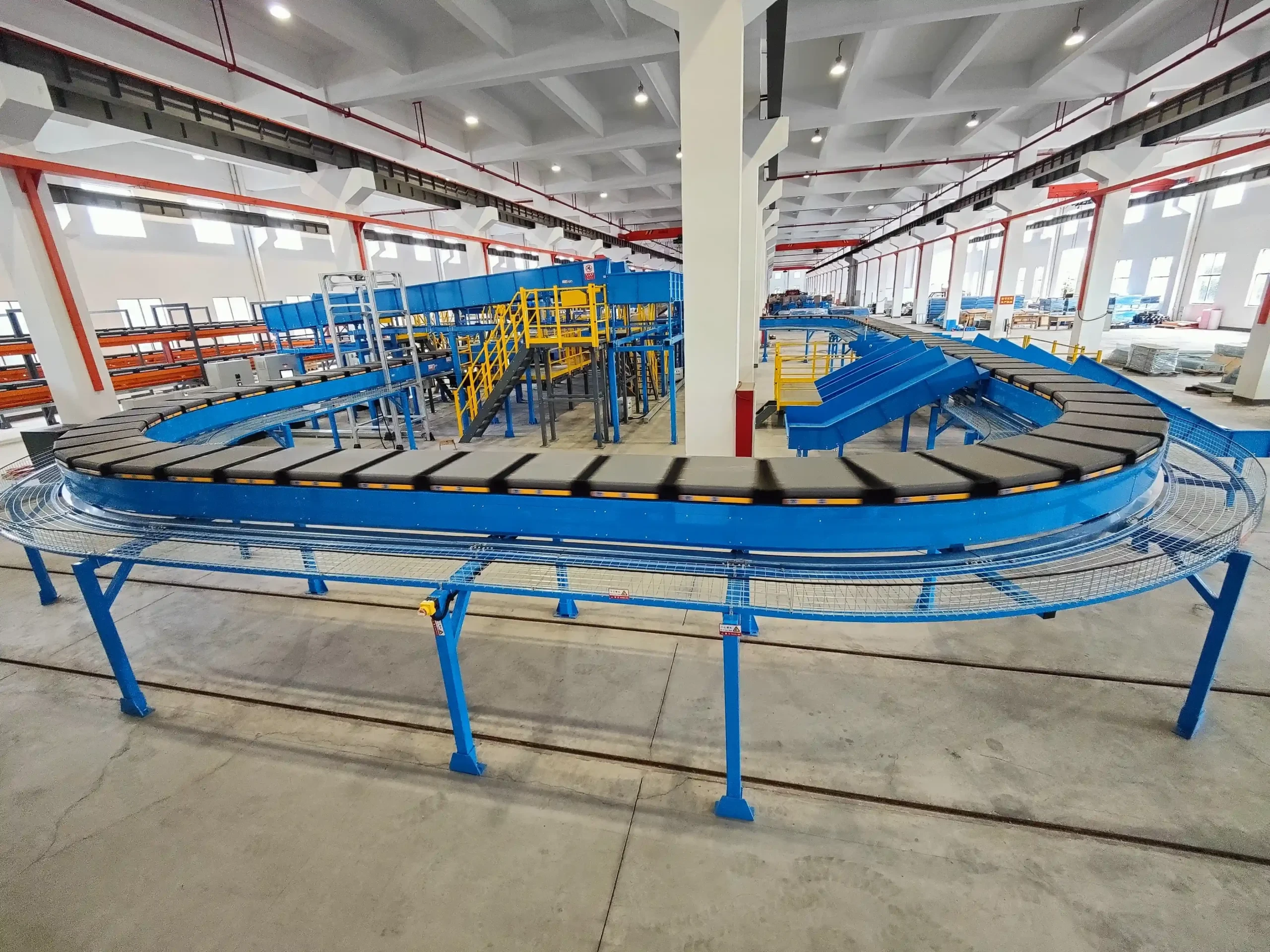
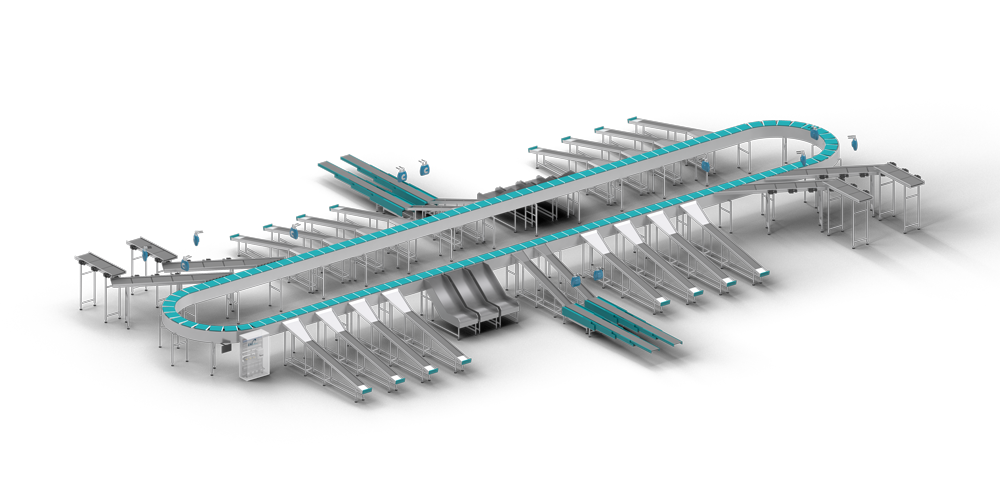
A cross-belt sorter is an automated material handling system designed to sort items quickly and accurately. It consists of a series of small conveyor belts (called carriers) mounted on a larger looped track.
Each carrier moves along the track and can discharge items to either side using its individual belt mechanism.
Key Components
- Carriers: Small platforms with integrated belts
- Main Track: A loop that transports carriers through the system
- Induction Stations: نقاط where items are placed onto carriers
- Discharge Chutes: Locations where items are diverted based on destination
The defining feature of a cross-belt system is its ability to gently transfer items using controlled belt motion rather than abrupt mechanical pushes.
Why Cross-Belt Systems Excel in Gentle Handling
Cross-belt sorters are particularly well-suited for fragile and irregular packages due to several engineering advantages.
1. Controlled Lateral Movement
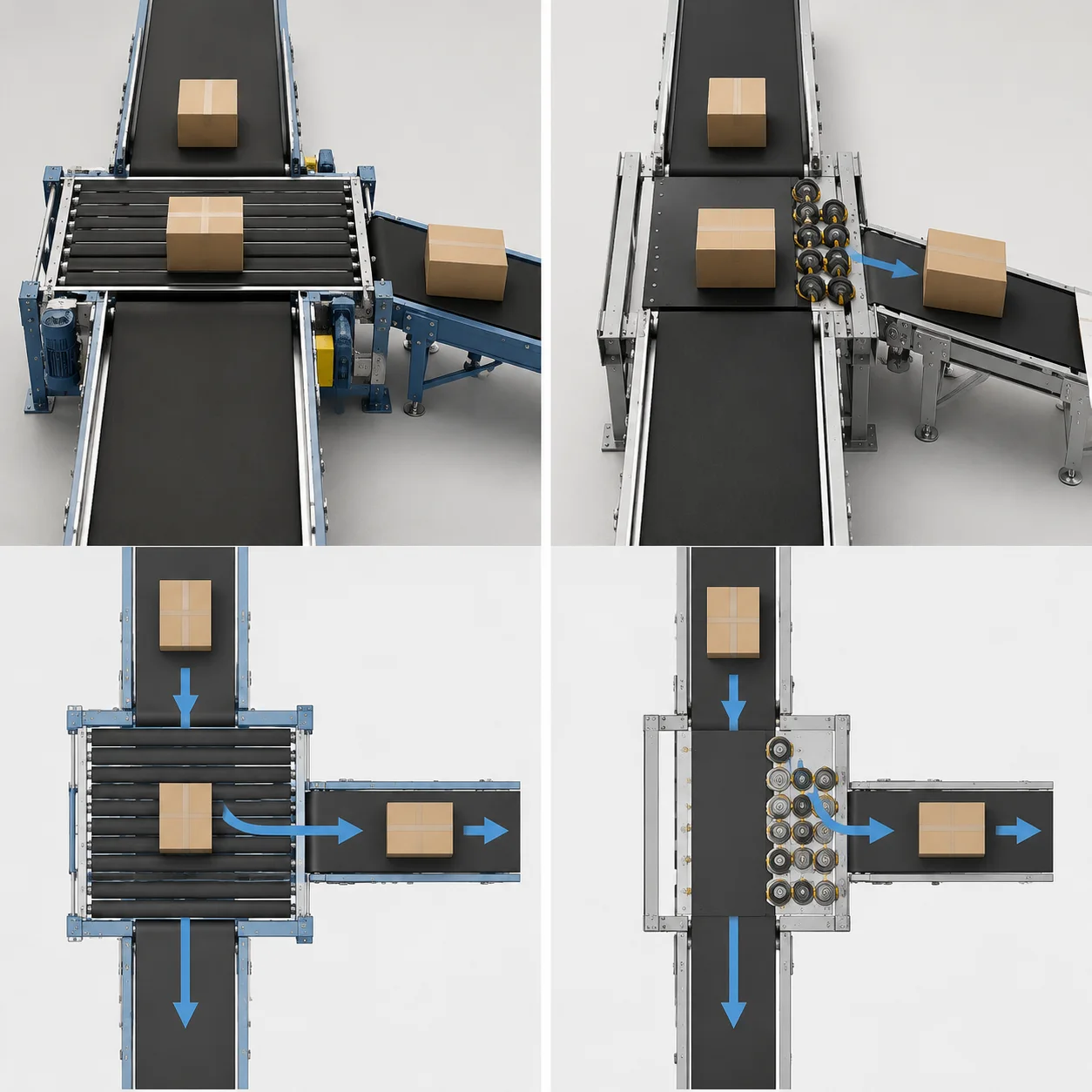
Unlike traditional pushers or tilt-tray systems, cross-belt sorters use a motorized belt on each carrier to move items sideways.
This allows for:
- Smooth acceleration and deceleration
- Minimal impact during discharge
- Precise control over item placement
For fragile apparel packaging, this gentle motion reduces the risk of deformation or damage.
2. Stable Item Support
Each item rests on a flat, stable carrier throughout its journey. This is especially important for irregularly shaped packages that might otherwise tip or shift.
The consistent support surface helps maintain item orientation and prevents rolling or sliding.
3. Adaptability to Different Package Types
Cross-belt systems can handle a wide range of items, including:
- Soft polybags
- Small cartons
- Irregular bundles
- Lightweight packages
This versatility makes them ideal for footwear and apparel operations where packaging diversity is the norm.
4. High Sorting Accuracy
Advanced control systems ensure that each item is routed to the correct destination with high precision. This reduces mis-sorts and the need for manual intervention.
Engineering Features That Enable Gentle Handling
To truly understand how cross-belt systems achieve delicate handling, it’s important to look at the underlying design elements.
1. Low-Friction Surfaces
Carriers are often designed with materials that reduce friction, allowing items to move smoothly without sticking or jerking.
2. Adjustable Belt Speed
The speed of each carrier’s belt can be fine-tuned based on the type of item being handled. Fragile items can be moved more slowly, while sturdier packages can be processed at higher speeds.
3. Intelligent Control Systems
Modern cross-belt sorters are integrated with advanced software that uses data from scanners and sensors to optimize sorting behavior.
This includes:
- وزن detection
- Dimension measurement
- Real-time tracking
These inputs allow the system to adjust handling parameters dynamically.
4. Gentle Induction Methods
The way items are placed onto carriers is just as important as how they are sorted. Cross-belt systems often use synchronized conveyors or robotic arms to ensure smooth induction without dropping or jolting items.
Handling Irregular Packages: Practical Strategies
Irregular packages present unique challenges, but cross-belt systems incorporate several strategies to manage them effectively.
1. Center-of-Gravity Alignment
Items are positioned on carriers in a way that aligns their center of gravity with the carrier’s center. This reduces the risk of tipping during movement.
2. Multi-Point Support
Some systems use wider carriers or additional support mechanisms to accommodate larger or oddly shaped items.
3. Dynamic Routing
Irregular items may be routed through specific paths within the system that minimize sharp turns or high-speed transitions.
Reducing Damage Rates in Real Operations
Implementing a cross-belt system can significantly reduce damage rates in footwear and apparel logistics.
Common Damage Issues Addressed
- Crushed shoebox corners
- Wrinkled garments
- Torn polybags
- Misaligned packaging
By minimizing impact forces and maintaining stable handling conditions, cross-belt sorters help preserve product quality from warehouse to customer.
Integration with Modern Warehousing Technologies
Cross-belt systems don’t operate in isolation. They are often part of a larger automated ecosystem.
Warehouse Management Systems (WMS)
Integration with WMS allows for:
- Real-time inventory tracking
- Order prioritization
- Data-driven decision-making
Vision Systems
Cameras and sensors can identify package characteristics and detect anomalies, further enhancing sorting accuracy.
Robotics
Robotic arms can assist with induction and exception handling, ensuring that even challenging items are processed efficiently.
Cost Considerations and Return on Investment
While cross-belt systems require a significant initial investment, their long-term benefits often outweigh the costs.
Key Benefits
- Reduced labor costs
- Lower damage rates
- Increased throughput
- Improved customer satisfaction
For businesses dealing with high volumes and diverse packaging, the efficiency gains can be substantial.
Best Practices for Implementation
To maximize the benefits of a cross-belt system, consider the following:
1. Conduct a Packaging Audit
Understand the range of package types in your operation and identify potential challenges.
2. Optimize Induction Processes
Ensure that items are introduced to the system in a controlled and consistent manner.
3. Train Staff
Even automated systems require skilled operators to monitor performance and handle exceptions.
4. Regular Maintenance
Keep the system running smoothly with routine inspections and maintenance.
Future Trends in Sorting Technology
The evolution of sorting systems continues, with innovations aimed at further improving efficiency and adaptability.
AI-Driven Optimization
Artificial intelligence is being used to analyze data and optimize sorting strategies in real time.
Sustainable Design
Energy-efficient components and eco-friendly materials are becoming more common.
Modular Systems
Flexible designs allow businesses to scale their operations as demand grows.
Conclusion
Sorting in the footwear and apparel industry is a complex challenge, driven by packaging diversity, fragility, and high throughput demands. Cross-belt sorting systems offer a powerful solution by combining speed, precision, and gentle handling.
Through controlled motion, stable support, and intelligent design, these systems can process even the most delicate and irregular packages with care. For businesses looking to enhance efficiency while protecting product quality, cross-belt technology represents a smart and future-ready investment.
As consumer expectations continue to rise, the ability to deliver products quickly and in perfect condition will remain a critical competitive advantage. By adopting advanced sorting solutions, companies can not only meet these expectations but exceed them—turning logistics into a true differentiator in the marketplace.