
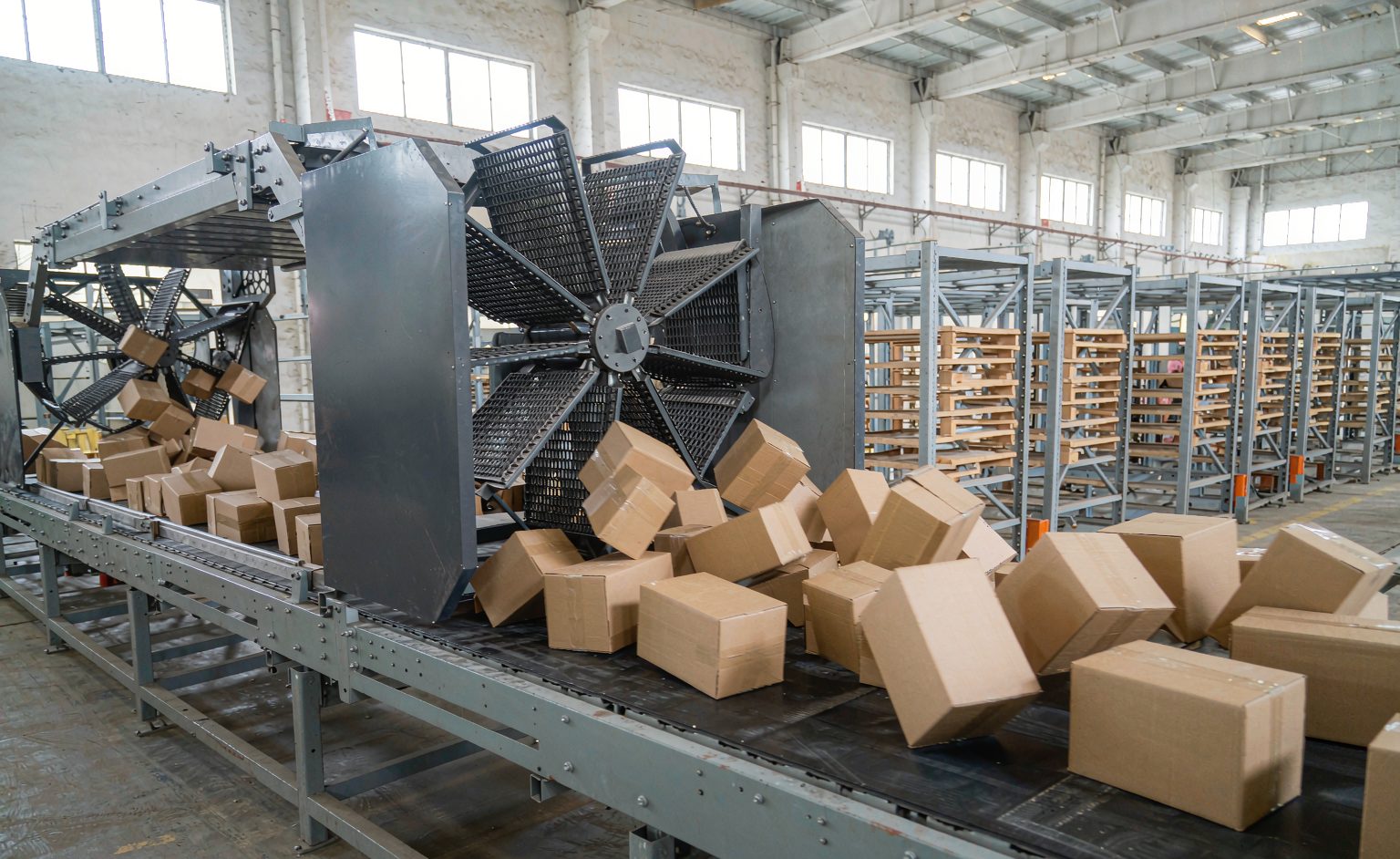
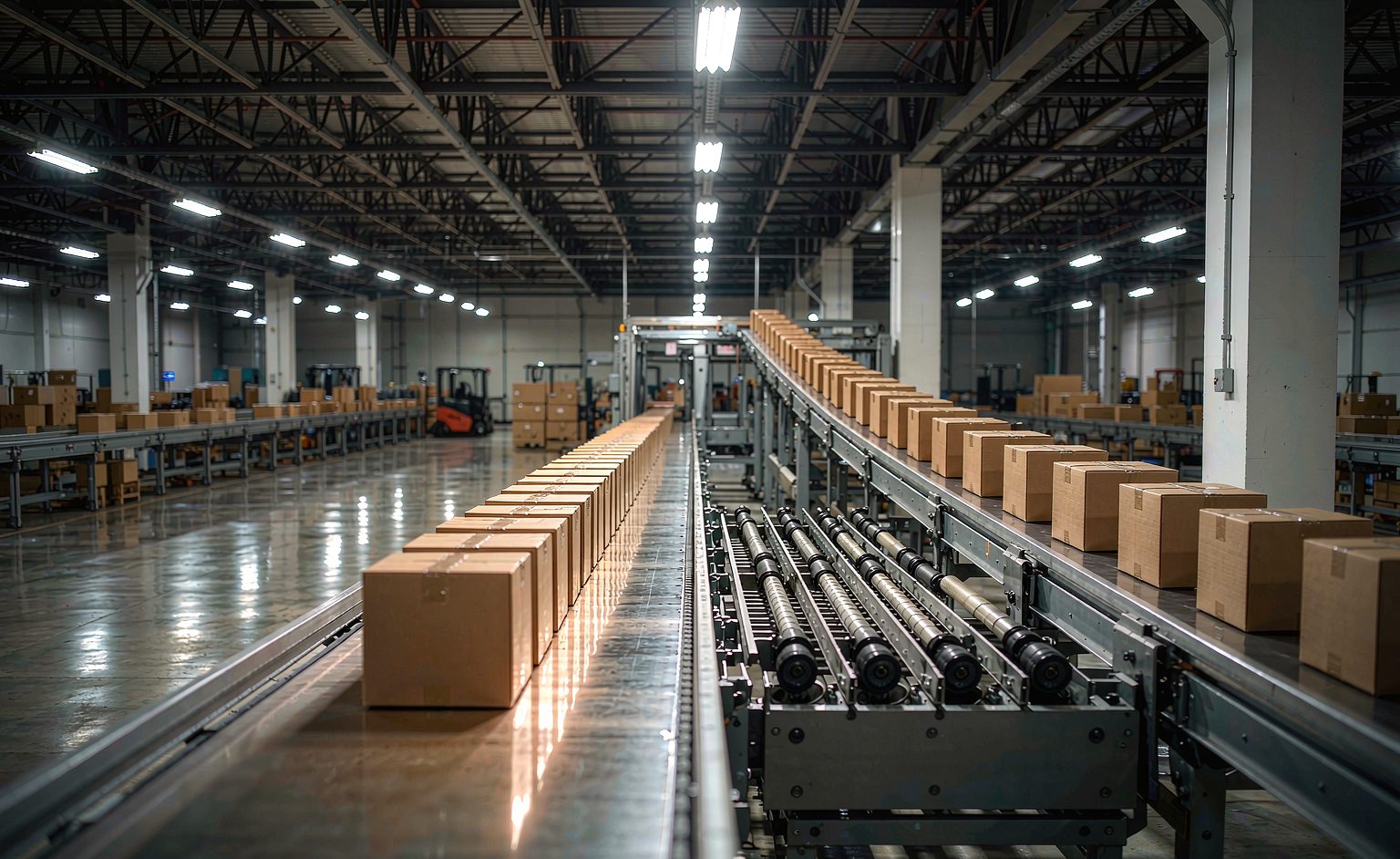
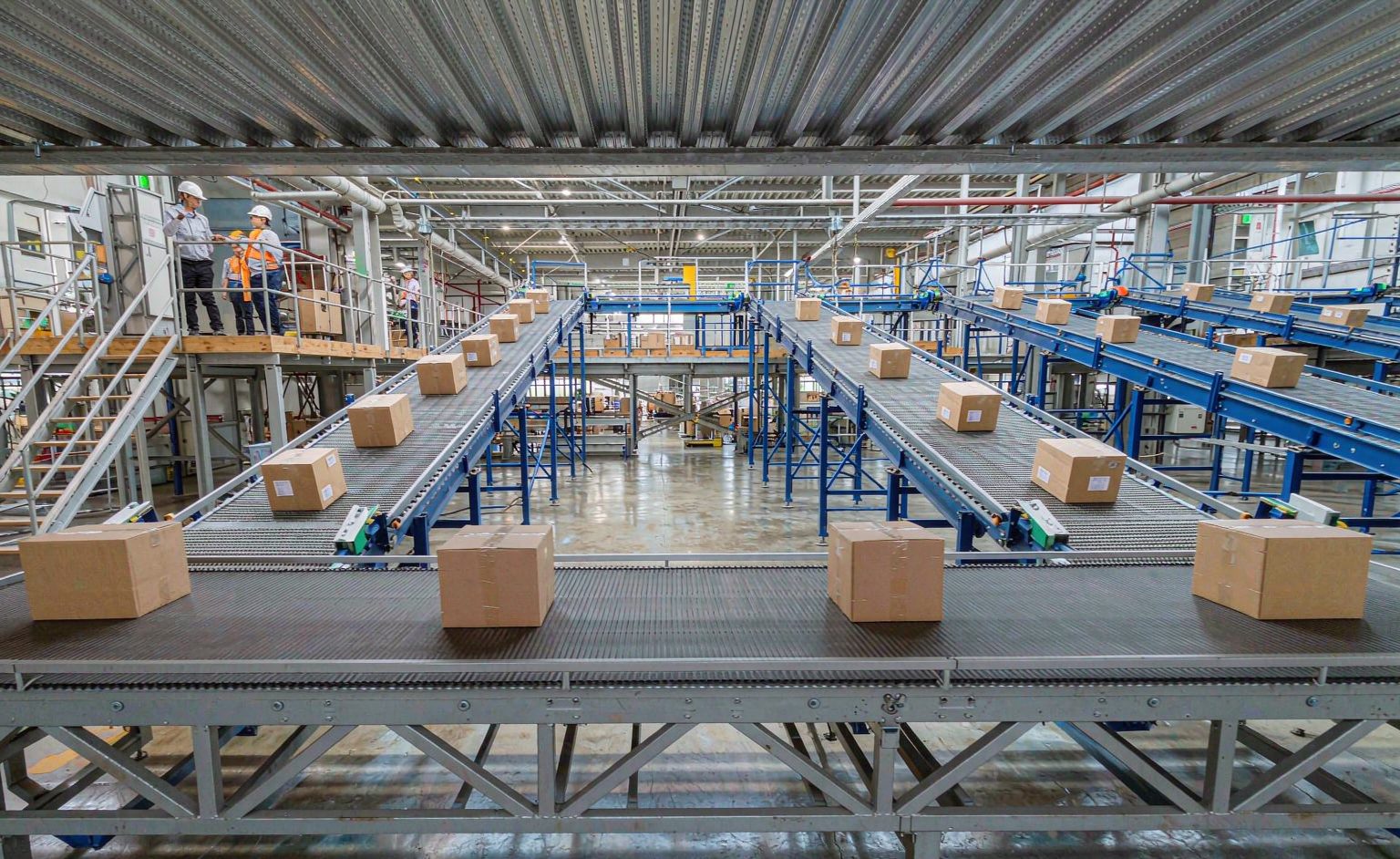
In the modern logistics ecosystem, few challenges are as intense—or as predictable—as the sudden surge of package volume during peak shipping periods. Whether it’s holiday shopping seasons, major promotional events, or global flash sales, parcel transit centers regularly face what industry professionals often call a “parcel tsunami”—a massive, fast-moving wave of inbound and outbound shipments that can overwhelm traditional handling systems.
At the center of how leading logistics hubs survive these spikes is a highly specialized automation system: the cross belt sorter.
Far from being just another conveyor technology, cross belt sorters function as the traffic control backbone of high-volume parcel distribution, allowing facilities to maintain speed, accuracy, and stability even under extreme operational pressure.
This article explores how cross belt sorting systems manage peak volume surges, why they outperform traditional sorting methods, and how they have become essential infrastructure in modern transit centers.
1. Understanding the “Parcel Flood” Problem in Transit Centers
A parcel transit center is designed to receive, process, sort, and redirect packages to their next destination. Under normal conditions, this is a highly efficient and controlled process.
However, during peak periods, everything changes.
Typical “parcel flood” scenarios include:
- Holiday shipping seasons (e.g., Black Friday, Christmas)
- Large-scale e-commerce sales events
- Flash promotions and limited-time drops
- Regional distribution spikes due to weather delays
- Cross-border shipment surges
During these events, volume can increase:
- 3x to 10x above baseline levels
- With unpredictable arrival clustering
- And highly mixed package types
This creates a system-wide challenge:
The rate of incoming parcels exceeds the system’s ability to sort them in real time.
Without advanced automation, this leads to congestion, delays, misrouting, and operational breakdown.
2. Why Traditional Sorting Systems Fail Under Peak Pressure
Before cross belt systems became widespread, many transit hubs relied on manual sorting or simpler mechanical systems.
These approaches struggle under high-volume conditions for several reasons:
2.1 Manual sorting bottlenecks
Human sorting is flexible but limited in speed and consistency.
During peak periods:
- Fatigue increases error rates
- Throughput becomes inconsistent
- Labor costs escalate rapidly
- Training new temporary workers is inefficient
2.2 Conventional conveyor limitations
Basic conveyor systems can move packages but lack intelligent routing.
Problems include:
- Fixed-direction flow
- Limited sorting flexibility
- High dependency on downstream manual intervention
- Congestion at junction points
2.3 Systemic collapse under uneven load
Most importantly, traditional systems fail not because of average load—but because of load imbalance.
When parcels arrive in bursts:
- Buffers overflow
- Downstream stations become blocked
- Entire lines slow down or stop
This is where cross belt sorters introduce a fundamentally different architecture.
3. What Makes Cross Belt Sorters Different?
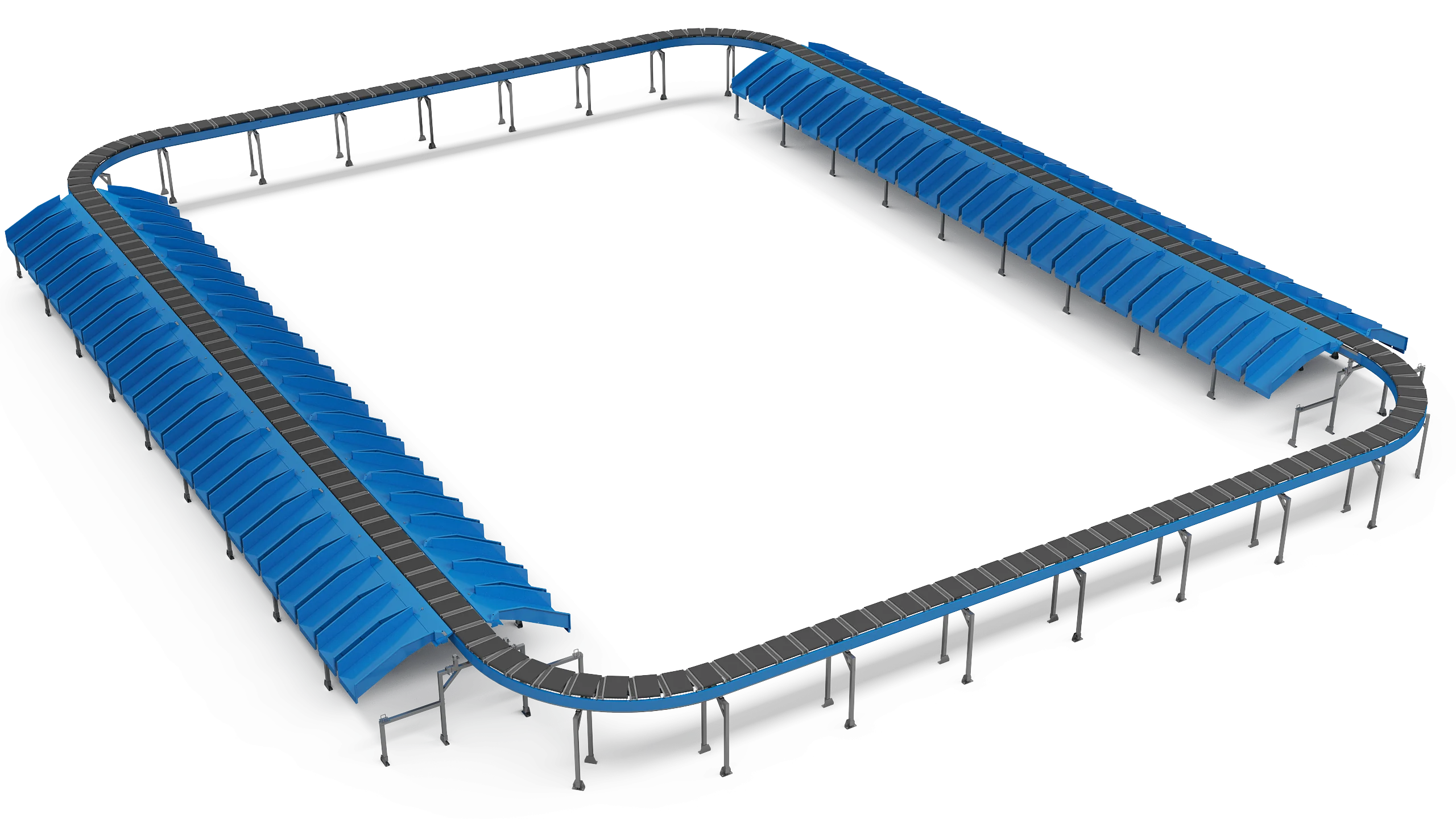
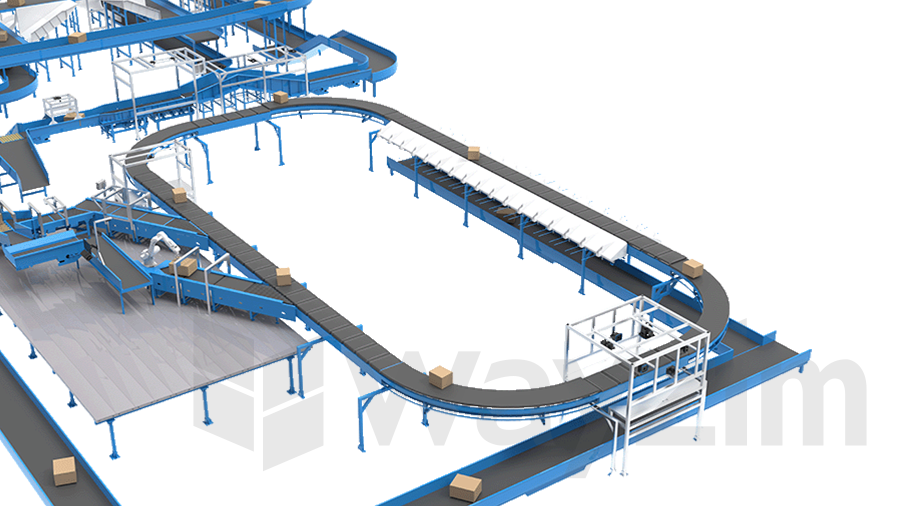
A cross belt sorter is an automated sorting system where each carrier contains a small, independently controlled conveyor belt.
When a parcel reaches its destination point, the mini belt ejects it sideways into the correct chute or line.
This design enables:
- Precise individual parcel control
- Continuous high-speed operation
- Multi-directional sorting capability
- Real-time routing flexibility
Unlike linear conveyor systems, cross belt sorters operate more like a dynamic routing grid than a simple transport line.
4. The Core Advantage: Controlled Chaos Management
During parcel floods, the key challenge is not movement—it is control.
Cross belt sorters solve this through what can be described as:
Structured flow management in chaotic conditions
Instead of allowing packages to accumulate in unpredictable ways, the system:
- Continuously distributes parcels
- Balances workload across multiple output points
- Prevents localized congestion
- Maintains constant system motion
Even when input flow is irregular, output remains stable.
5. Real-Time Routing Intelligence
Cross belt sorters are tightly integrated with warehouse and transportation management systems.
Each parcel is:
- Scanned upon entry
- Identified and categorized
- Assigned a destination dynamically
- Routed instantly through system logic
This real-time decision-making enables:
- Instant adaptation to volume spikes
- Dynamic rebalancing of output lanes
- Efficient use of available capacity
Instead of waiting for batch processing, parcels are handled continuously.
6. Buffering Strategy: Preventing System Overload
One of the most critical roles of cross belt systems is internal buffering.
During parcel surges, buffering helps:
- Absorb sudden spikes in volume
- Prevent downstream congestion
- Maintain continuous motion even under saturation pressure
Unlike static buffer zones in traditional systems, cross belt buffering is:
- Distributed
- Dynamic
- Self-regulating
This prevents a single failure point from cascading into system-wide shutdown.
7. High Throughput Without Loss of Accuracy
Speed alone is not enough in peak operations. Accuracy is equally important.
Cross belt sorters maintain high accuracy by:
- Individually controlling each parcel’s ejection point
- Using barcode or RFID-based tracking
- Minimizing human intervention points
- Synchronizing mechanical motion with digital instructions
Even under extreme volume conditions, they maintain:
- High sorting accuracy
- Low misrouting rates
- Consistent destination alignment
This is critical during peak seasons when rework costs escalate quickly.
8. Handling Mixed Parcel Types at Scale
Parcel flood events are not only about volume—they are also about diversity.
Transit centers must process:
- Small envelopes
- Irregular packages
- Fragile items
- Heavy boxes
- Multi-shape shipments
Cross belt systems are designed to handle this variability because:
- Each parcel is individually stabilized on a carrier
- Size variability has minimal impact on routing logic
- Mechanical ejection is controlled and precise
This flexibility is essential during e-commerce spikes where SKU variety increases dramatically.
9. Preventing Congestion Through Continuous Motion
One of the most important design principles of cross belt systems is continuous movement.
Unlike stop-and-go systems, cross belt sorters:
- Keep carriers moving at constant speed
- Avoid accumulation at decision points
- Reduce idle time across the system
This continuous flow prevents:
- Queue buildup
- Mechanical stress concentration
- Downstream bottlenecks
In high-volume environments, motion stability is equivalent to operational stability.
10. Load Balancing Across Multiple Output Channels
During parcel floods, one of the biggest risks is uneven distribution of workload.
Cross belt systems solve this through intelligent load balancing:
- Parcels are distributed across multiple chutes
- System monitors congestion in real time
- Routing logic adjusts dynamically
- Overloaded sections are temporarily bypassed
This ensures no single output line becomes a bottleneck.
11. System Resilience: Preventing Cascade Failure
In traditional systems, one blocked station can cause a chain reaction failure.
Cross belt systems are designed to avoid this through:
- Decentralized parcel control
- Independent carrier operation
- Flexible routing paths
- Distributed system architecture
If one section slows down, others continue operating normally.
This resilience is critical during extreme demand spikes.
12. Energy and Operational Efficiency Under Pressure
Peak periods typically increase energy consumption dramatically in conventional systems.
Cross belt sorters improve efficiency by:
- Reducing unnecessary re-handling
- Optimizing routing paths in real time
- Maintaining constant operational flow
- Minimizing idle motor load cycles
At scale, this results in more efficient energy use per parcel—even during maximum throughput periods.
13. Human Workforce Optimization During Peak Seasons
Even highly automated systems require human oversight, but cross belt sorters reduce pressure on labor forces by:
- Automating sorting decisions
- Reducing manual intervention
- Minimizing physical handling requirements
- Streamlining exception management
This allows workers to focus on:
- Problem resolution
- System monitoring
- Exception processing
- Quality assurance
Instead of being overwhelmed by volume, staff operate as system supervisors rather than manual sorters.
14. Scalability for Growing Parcel Volumes
E-commerce growth has made scalability a critical requirement.
Cross belt systems support scalability through:
- Modular system expansion
- Additional induction points
- Increased destination capacity
- Software-based routing upgrades
This allows transit centers to grow capacity without rebuilding entire infrastructure.
15. Real-Time Monitoring and Predictive Control
Modern cross belt systems integrate with digital monitoring platforms that track:
- Throughput rates
- System congestion levels
- Carrier utilization
- Energy consumption
- Error rates
During parcel floods, this data enables predictive adjustments, such as:
- Redistributing load before congestion occurs
- Adjusting speed dynamically
- Activating additional buffer capacity
This transforms the system from reactive to proactive control.
16. Why Cross Belt Sorters Have Become Standard in Transit Hubs
The adoption of cross belt systems is driven by three irreversible industry trends:
1. Increasing peak volume intensity
Parcel floods are becoming larger and more frequent.
2. Shorter delivery expectations
Faster shipping requires faster sorting.
3. Rising SKU and packaging complexity
Modern logistics must handle extreme variability.
Cross belt sorters address all three simultaneously, making them a foundational technology.
17. Common Misunderstandings About Peak Handling Systems
Despite widespread adoption, several misconceptions persist:
Misconception 1: “Just adding more workers solves peak problems”
Labor alone cannot match modern volume spikes.
Misconception 2: “Any conveyor system can handle peak loads”
Only intelligent routing systems maintain stability under extreme conditions.
Misconception 3: “Speed is the only important factor”
Stability and accuracy are equally critical during surges.
18. The Future of Peak Volume Handling
Next-generation systems will likely include:
- AI-driven dynamic routing optimization
- Real-time congestion forecasting
- Autonomous load redistribution
- Self-healing system architecture
- Digital twin simulation for peak planning
These advancements will further reduce the impact of parcel floods on logistics operations.
Final Thoughts: Turning Chaos Into Controlled Flow
Parcel flood events are inevitable in modern e-commerce. The question is not whether they will happen—but whether a system can handle them without collapsing.
Cross belt sorters provide a solution not by eliminating chaos, but by structuring it into a controlled, predictable flow.
They transform transit centers from fragile systems into resilient infrastructures capable of absorbing extreme demand spikes without losing accuracy or efficiency.
In a logistics world defined by volatility, cross belt sorting technology has become more than just an operational tool—it is the stabilizing force that keeps global parcel movement running when demand reaches its peak.