Fulfillment centers and third-party logistics (3PL) providers face intense pressure to balance speed, order accuracy, and labor efficiency. In modern e-commerce, a significant portion of consumer orders contain multiple items. While single-item orders can be picked, labeled, and shipped directly, multi-item orders require a dedicated staging step to consolidate different SKUs before they can be packaged.
Without an organized order consolidation strategy, workers spend excessive time walking between aisles to pick individual orders or manually sorting piles of mixed products, leading to bottlenecks and shipping errors. Implementing a modular, light-directed put wall system is the industry standard for resolving these consolidation challenges. This guide provides an engineering and procurement framework to help you evaluate when to implement a put wall system, compare manual and automated configurations, and select the right platform for your facility.
—
Put Wall Selection Matrix
To help guide your procurement process, the table below outlines how different put wall configurations compare across core performance and investment benchmarks.
| System Type | Typical Capacity (Items/Hour) | Labor Dependency | SKU Flexibility | WCS / WMS Integration | Relative CAPEX |
|---|---|---|---|---|---|
| Manual Put Wall (Paper/RF) | 100 – 180 | Very High (High manual search time) | Excellent (Any item fitting cubby size) | Basic (Standard scanning) | Low |
| Light-Directed Put Wall (PTL) | 350 – 500 | Medium (Operator is guided by LEDs) | Excellent (Flexible cubby partition design) | Intermediate (Real-time WCS tracking) | Medium-Low |
| Automated Put Wall (3D / Robotic) | 800 – 1,200+ | Low (Pneumatic/robotic transport to cubby) | Moderate (Limited by item weight & shape) | Advanced (PLC & dynamic routing database) | High |
Performance Note: Throughput and capacity metrics are based on standard material handling benchmarks. Actual operational performance is heavily influenced by the average number of items per order, barcode readability, and the physical organization of the upstream batch picking flow.
—
Section 1: What is a Put Wall System? Mechanics and Workflow
A put wall system is a modular, double-sided shelving framework divided into a grid of open compartments (cubbies), where each compartment represents an active customer order. It acts as a physical sorting and staging barrier between your picking and packaging zones.
The Standard Light-Directed (PTL) Put Wall Workflow:
- Inbound Scan: A “putter” receives a batch-picked tote containing mixed items. The operator scans an item’s barcode, registering it in the Warehouse Control System (WCS).
- Put Guidance: An LED light (or numerical display) illuminates next to the specific cubby assigned to that customer’s order. The operator places the item into the cubby and presses a confirmation button.
- Order Completion: The system tracks each item placed in the cubby. When the final item for an order is deposited, a light-to-pack signal is activated on the opposite, “pack” side of the wall.
- Pack and Ship: A “packer” pulls the items from the completed cubby, places them in a shipping container, seals it, and sends it onto the shipping conveyor for final dispatch.
By splitting the sorting and packing workflows into separate tasks, a put wall system allows employees to focus on repetitive actions without cross-contamination or backtracking, minimizing physical movement and maximizing accuracy.
—
Section 2: When to Choose a Put Wall: Key Operational Triggers
Investing in warehouse automation should always be a data-driven decision. Your engineering and finance teams should evaluate four primary operational variables before selecting a put wall system:
1. High Ratio of Multi-Item Orders
If your facility primarily processes single-item orders (e.g., subscription boxes or promotional single-product shipments), a put wall system is unnecessary. However, when multi-item orders represent more than 40% of your daily volume, a put wall is the most efficient method to consolidate items from different picking zones before packaging.
2. The Efficiency Gains of Batch Picking
In a manual warehouse, pickers spend up to 60% of their shifts simply walking between storage aisles. To reduce this travel time, facilities implement warehouse automation and distribution solutions such as *batch picking*, where pickers retrieve bulk quantities of various SKUs for hundreds of orders simultaneously. A put wall system is the essential counterpart to batch picking, providing the physical organization needed to quickly sort and group the mixed items back into individual customer orders.
3. Compact SKU Size Profile
Put walls are highly efficient for small-to-mid-sized SKUs such as cosmetics, apparel, packaged electronics, and pharmaceuticals. If your product mix contains heavy, bulky, or irregular items (such as car parts or large appliances), they cannot fit into standard cubbies and require manual floor-level pallet consolidation.

—
Section 3: Standard Manual Put Wall vs. Automated Put Wall
As fulfillment sorting technology matures, buyers must decide between traditional light-directed put walls and fully automated, mechanical systems.
1. Light-Directed (PTL) Put Walls: Flexible and Cost-Effective
These systems utilize static steel frames integrated with standard LED Light-to-Put modules. They are highly flexible and modular, allowing you to easily adjust cubby sizes by rearranging partitions as your SKU profiles change.
Standard PTL walls are exceptionally cost-effective, providing a rapid ROI for small-to-mid-sized operations. However, they still rely on human operators to physically walk alongside the wall and deposit items, which can limit throughput during extreme volume spikes.
2. Automated Put Wall Sorters (The High-Speed Mechanical Solution)
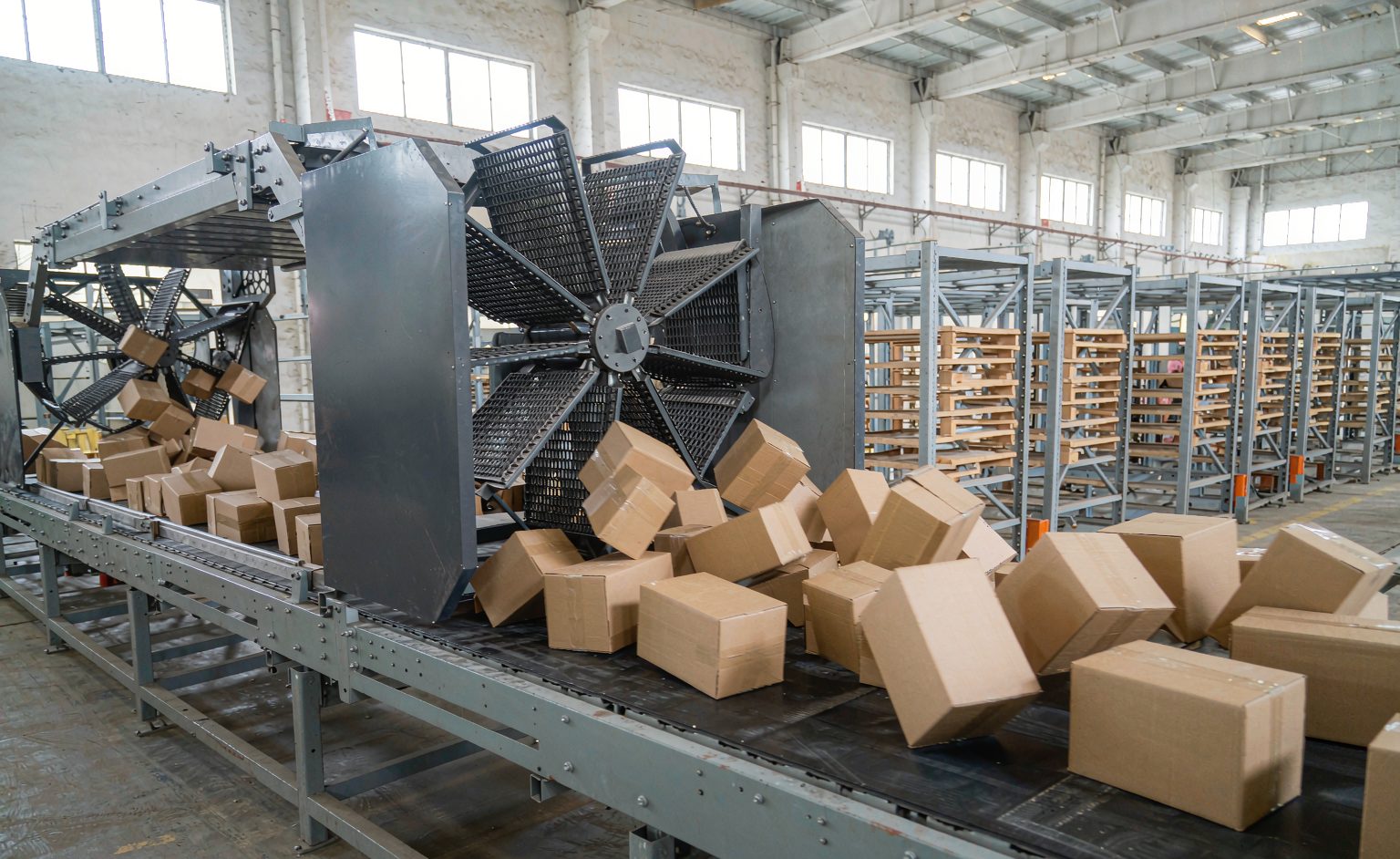
For high-volume operations, an automated put wall—such as the TrueliSort TR340-135 Put Wall Sorter—replaces manual putting with an integrated mechanical sorting conveyor. When an item is placed on the induction belt, the motorized conveyor track automatically carries the package and diverts it directly into its assigned consolidation cubby, completely eliminating human walking and scanning steps.
These automated platforms can achieve processing speeds exceeding 800 to 1,200 items per hour per zone. While the initial CAPEX is higher, the massive increase in sorting speed and reduction in labor dependency make automated put walls highly profitable for large-scale e-commerce hubs and regional 3PL networks.
—
Section 4: Key Technical Specifications to Evaluate
When selecting a put wall system, your engineering team should analyze several core technical parameters:
- Modular Partition Design: Ensure the steel frame allows you to easily adjust cubby sizes by rearranging horizontal and vertical dividers to accommodate changing product lines.
- Sensor-Directed Validation: Look for light modules equipped with integrated photo-eye sensors. These sensors automatically detect when an operator’s hand enters the cubby, confirming the put action without requiring the worker to press a physical confirmation button, saving crucial seconds on every cycle.
- WCS Data Parsing Capabilities: The Warehouse Control System (WCS) must feature robust APIs to communicate with your existing WMS, parsing barcode, order ID, and cubby status data with latencies under 20ms to support high-speed tracking.
—
Section 5: Step-by-Step Implementation Checklist for B2B Buyers
Use this structured checklist to guide your team through the evaluation and procurement process:
📋 Put Wall System Procurement Checklist
- Analyze Order Profiles: Verify that multi-item orders represent more than 40% of your daily volume.
- Define SKU Parameters: Catalog the physical dimensions and weights of your standard SKUs to determine optimal cubby sizes.
- Calculate Hourly Throughput Targets: Define your required sustained hourly processing rate to determine the number of put wall zones and operators needed.
- Evaluate Software Integration: Ensure your WMS can support real-time APIs for light-directed or conveyor-driven WCS control.
- Plan Physical Floor Layout: Ensure you have sufficient aisle space on both sides of the wall for operators, packing materials, and takeaway conveyors.
- Assess Supplier Support: Choose a manufacturer that provides comprehensive engineering layout design, on-site installation, and technical support.
—
Frequently Asked Questions
Q1: What is the typical worker productivity rate at a manual put wall versus an automated put wall?
At a standard manual put wall with light-directed sensors, a skilled “putter” can process 350 to 450 items per hour, while a “packer” completes 150 to 220 multi-item orders per hour. In contrast, an automated put wall or 3D put wall system utilizing robotic or localized pneumatic shuttle diverts can achieve processing rates exceeding 1,000 items per hour, minimizing human walking and scanning steps.
Q2: What ratio of multi-item orders justifies the investment in a put wall system?
A put wall system is mathematically justified when multi-item orders represent more than 40% of your daily order volume. If your facility primarily processes single-item orders, direct-to-conveyor or cross-belt shipping routing is more cost-effective, as there is no need for item consolidation.
Q3: How does a put wall system integrate with a warehouse WMS?
Integration is managed by the Warehouse Control System (WCS). When a batch-picked item’s barcode is scanned, the WCS queries the WMS for the active order ID. The WCS then translates this mapping into physical hardware signals, lighting up the target cubby on the put side. Once all items in a cubby are confirmed, the WCS triggers a light-to-pack signal on the opposite side.
Q4: What physical SKU parameters limit the use of a put wall system?
The primary physical limitations are cubby dimensions and SKU weight. Put walls are highly efficient for small-to-mid-sized items such as cosmetics, apparel, and packaged electronics. Extremely heavy, bulky, or irregular goods (such as auto tires or large appliances) cannot fit into standard cubbies and require manual floor-level pallet consolidation.
—
Compare Sorting Equipment for Your Operation
Are you looking to install a new high-efficiency put wall or transition to fully automated parcel sorting? Our engineering team can help you analyze your order profiles, calculate required throughput, and design a custom layout to maximize space efficiency.
TrueliSort is a manufacturer and system solution provider specializing in customized parcel sorting systems, offering factory-direct design, manufacturing, and on-site support.
Contact the TrueliSort engineering team or email us directly at business@truelisort.com to discuss your project parameters.