


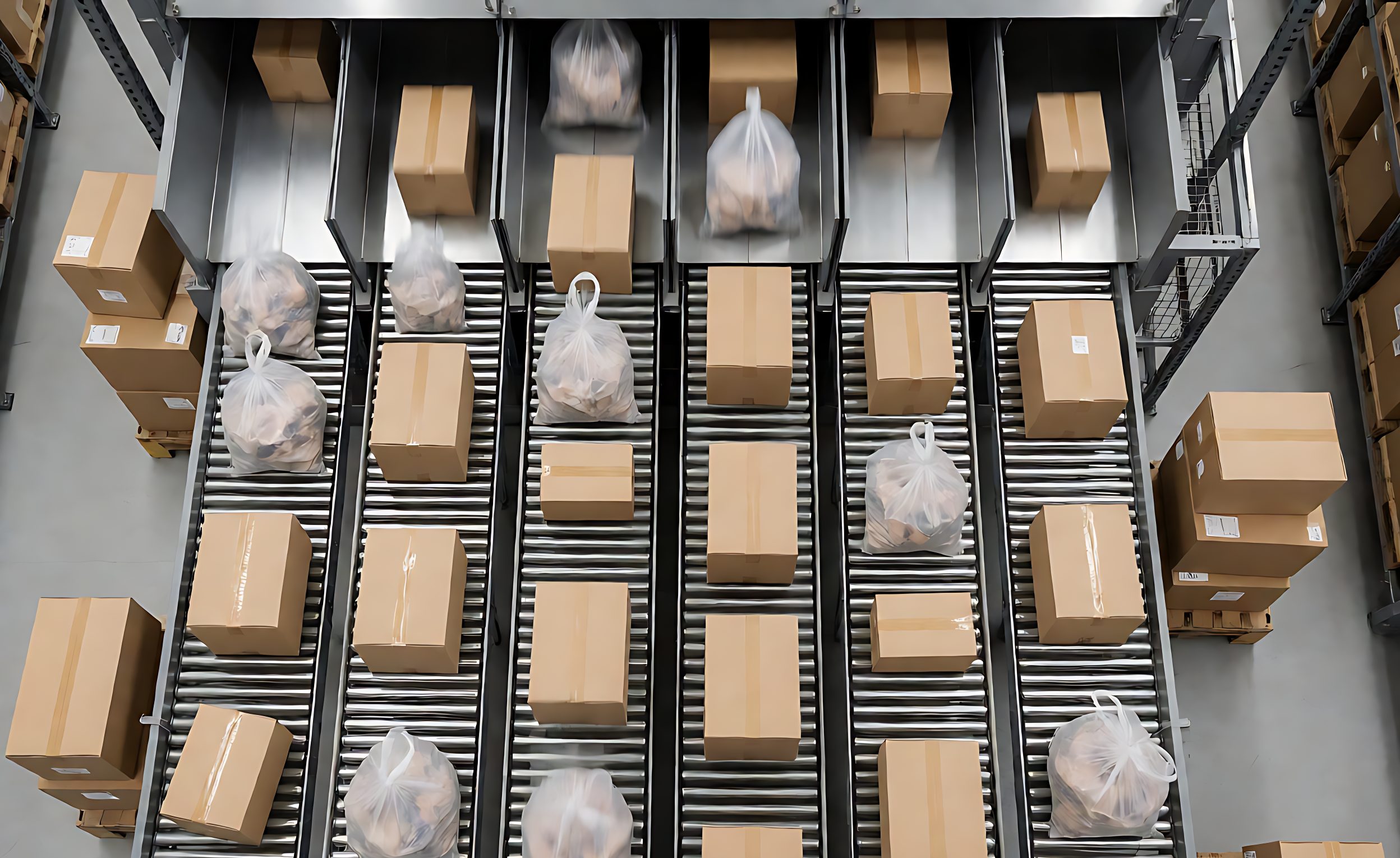
Ask any operations director whether the chute count still fits three years after commissioning and the honest answer is frequently no. Destinations arrive faster than forecast: a new carrier, a split service area, or a customer asking for store-level instead of hub-level sortation. Each request is small; together they exhaust a number frozen when the layout drawing was signed.
Chute density – the destinations you can fit and clear per meter of loop – is one of the few genuinely strategic numbers in a sortation specification. This article sets out what produces it, what limits it, and how much expansion capacity to insist on before the steel is cut.
What Chute Density Really Measures
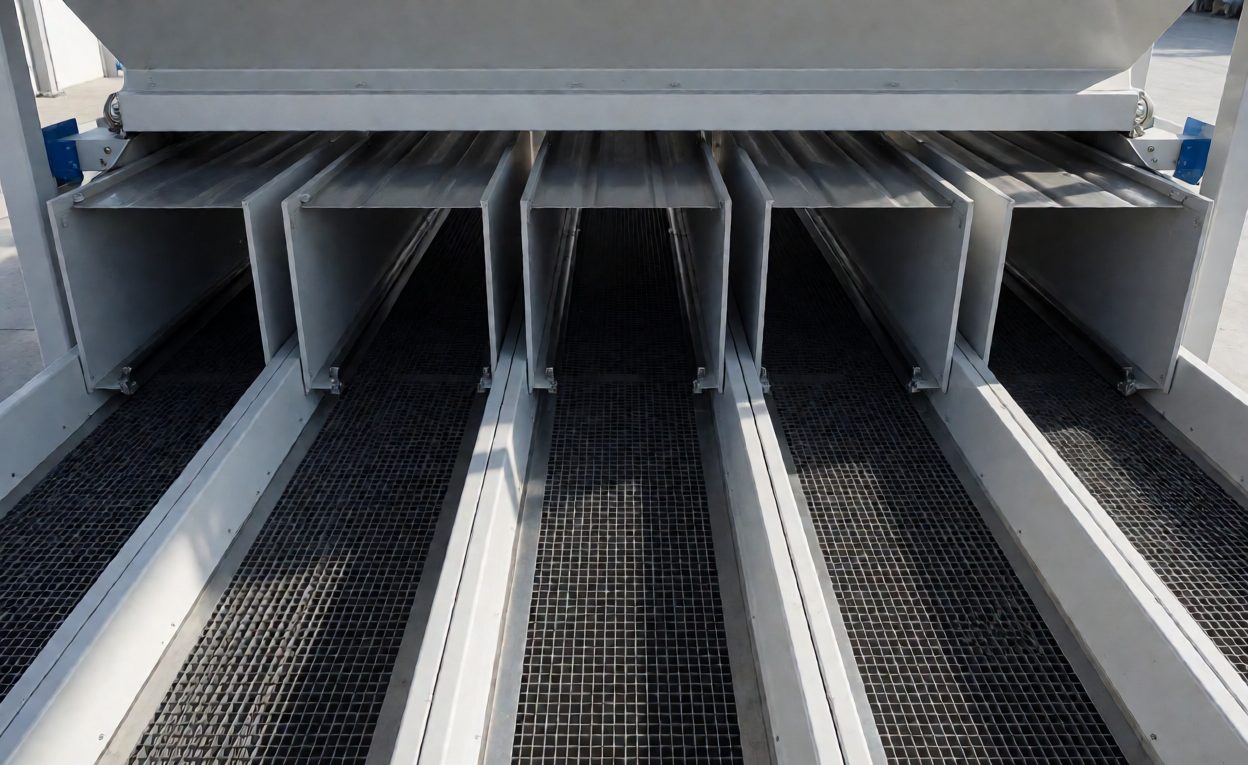
Density is not simply chutes divided by loop length. The usable figure is chutes that can receive parcels and be emptied divided by the loop length that can actually host them. Three deductions turn the theoretical number into the real one. Curved sections of the loop are usually unusable for discharge because the carrier must be aligned with the chute mouth. Induction zones, rejects, transfer points and access walkways consume linear meters. Finally, takeaway space – the aisle behind the chute – is consumed at a different rate than chute spacing, and it is usually the tighter constraint.
A loop advertised with a nominal pitch rarely achieves it end to end, and the difference between nominal and achievable is where most destination shortfalls originate.
What Physically Caps the Count
Four limits operate at once, and different limits bind on different projects:
- Carrier pitch: discharge points cannot be closer than the mechanical spacing required for a clean transfer, governed by parcel size and belt geometry.
- Takeaway geometry: a container or chute bag needs width, and a person or tugger needs to reach it. Stack two chutes per container position too aggressively and you gain destinations but lose the ability to clear them at peak.
- Access and safety: egress routes, fire lanes, guarding and maintenance access consume frontage that looks available on a plan drawing.
- Structure and services: mezzanines, columns, power drops and sprinkler zones all remove usable loop segments, usually after the first layout revision.
The practical consequence is that density is decided less by the sorter technology than by the building and the takeaway method. Two identical machines can have thirty percent different real capacity in two different layouts.

The Logical Limits Nobody Counts
Even with physical space spare, three invisible ceilings stop destination growth before the physical one does. The first is the control system’s destination table: the maximum number of active sort destinations the controller can hold and the addressing scheme used to map them. The second is host mapping – the way your WMS or TMS expresses destinations, and whether route, service level and carrier are combined into one sort code or stacked into several. The third is takeaway labour: beyond a certain number of open destinations, each one receives too few parcels for the container route to be worth running.
Check all three before assuming spare chutes equal spare capacity. A machine with two hundred chutes and a hundred-and-eighty-destination table is a hundred-and-eighty-chute machine.
Allocation Strategies That Buy Capacity
When destinations outrun chutes, four tactics extend the machine’s reach without new steel:
- Shared chutes, where several destinations discharge into one container that is sorted later downstream or off-line, effective when those destinations share a transport lane.
- Wave or batch allocation, assigning the same physical chute to different destinations across successive sort windows, which requires disciplined container labelling but multiplies effective destinations by the number of waves.
- Double-deck or two-tier takeaway, using vertical space where the aisle cannot be widened.
- Off-line finishing, sorting coarsely on the loop and finely at a put wall or manual station downstream.
Each tactic trades machine simplicity for operational discipline. Wave allocation in particular suits operations with clean waves and fails in continuous-flow ones.
How Much Spare Capacity to Specify
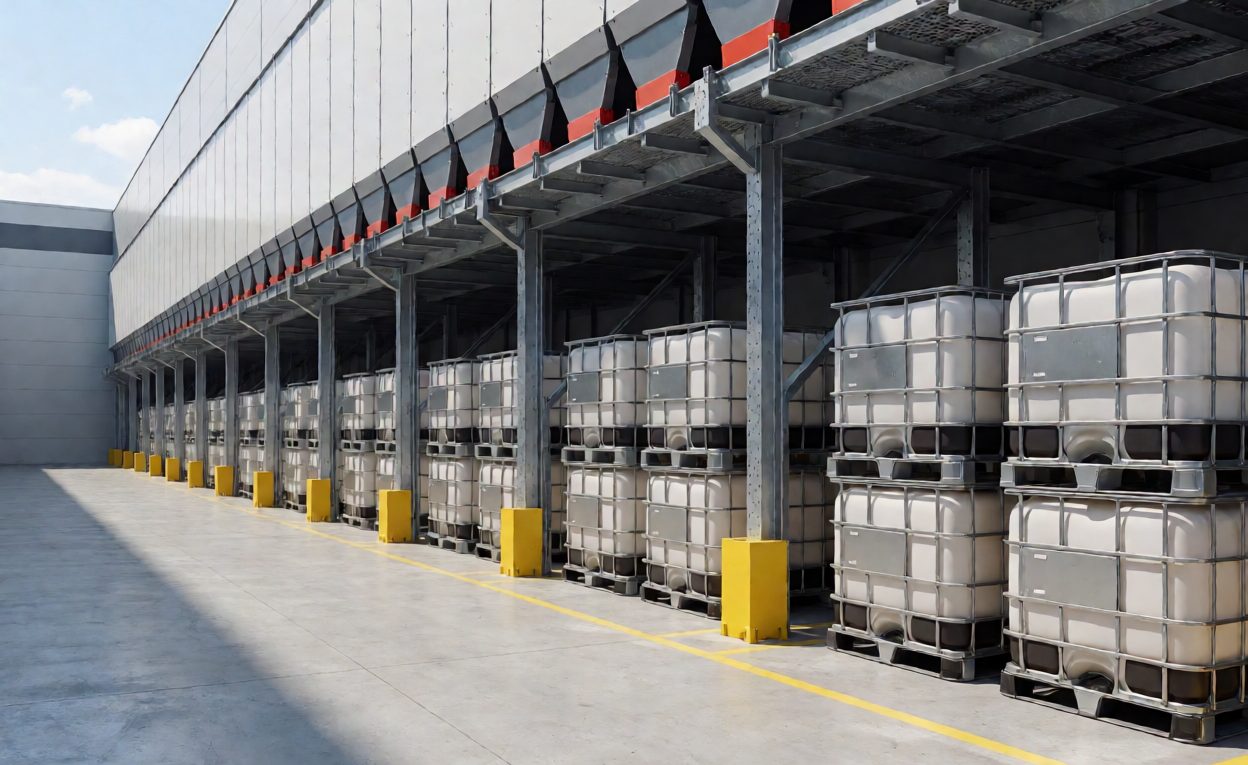
The useful discipline is to specify two numbers: destinations required today, and destinations the network plan expects five years out. Buy loop length and structural provision – power, controls spare capacity, takeaway aisle width – for the second number, and fit chute modules for the first plus a margin. Modules are comparatively cheap to add later; loop length, bay width and control capacity are not.
A common target is ten to twenty percent spare chute positions where the building allows it. Decide it now, because after installation the only lever left is re-allocating destinations, and eventually the request arrives that reallocation cannot absorb.
Technical Background
The mechanical spine that carries receives parcels past fixed discharge points is the conveyor system, and its geometry largely dictates achievable discharge pitch. The space consuming most of a loop’s value sits inside the warehouse itself, where columns, aisles and sprinkler zones compete with the sorter for frontage. Future additions are much cheaper when the design embraces modular design, since adding a repeatable unit is an installation task rather than a civil project.
Density decisions are locked in very early, alongside the rest of the layout, so they belong inside sortation warehouse layout planning and the parcel sorting layout design guide. Since demand growth is usually seasonal, the growth path is set out in modular expansion planning for peak season, and initial sizing is treated in the chute count and budget buying guide.
Frequently Asked Questions
How many chutes fit per meter of loop?
It depends on carrier pitch and takeaway method rather than on any single rule; curved sections and induction zones remove roughly a quarter of nominal loop length in most layouts.
What limits destination count most often?
Takeaway geometry. Containers and the aisle behind them need more frontage than the chute itself, before egress and clearing access are counted.
Can chutes be added after installation?
Physically often yes, if loop length and control table capacity were reserved. It is a planned scope item, not an afterthought.
What is wave allocation?
Reusing the same physical chute for different destinations in successive sort windows, multiplying effective destinations while requiring disciplined container handling.
Does shared chuting hide errors?
It can. Sharing mixes destinations in one container, so any later separation step needs its own scanning to keep accuracy visible.
How much spare capacity should I buy?
Structural provision for the five-year network plan, chute modules for today plus roughly ten to twenty percent margin where the building allows.
Is double-deck takeaway worth it?
When the aisle cannot be widened and parcels are light enough for a second tier, yes – it trades walking distance for destination count.