


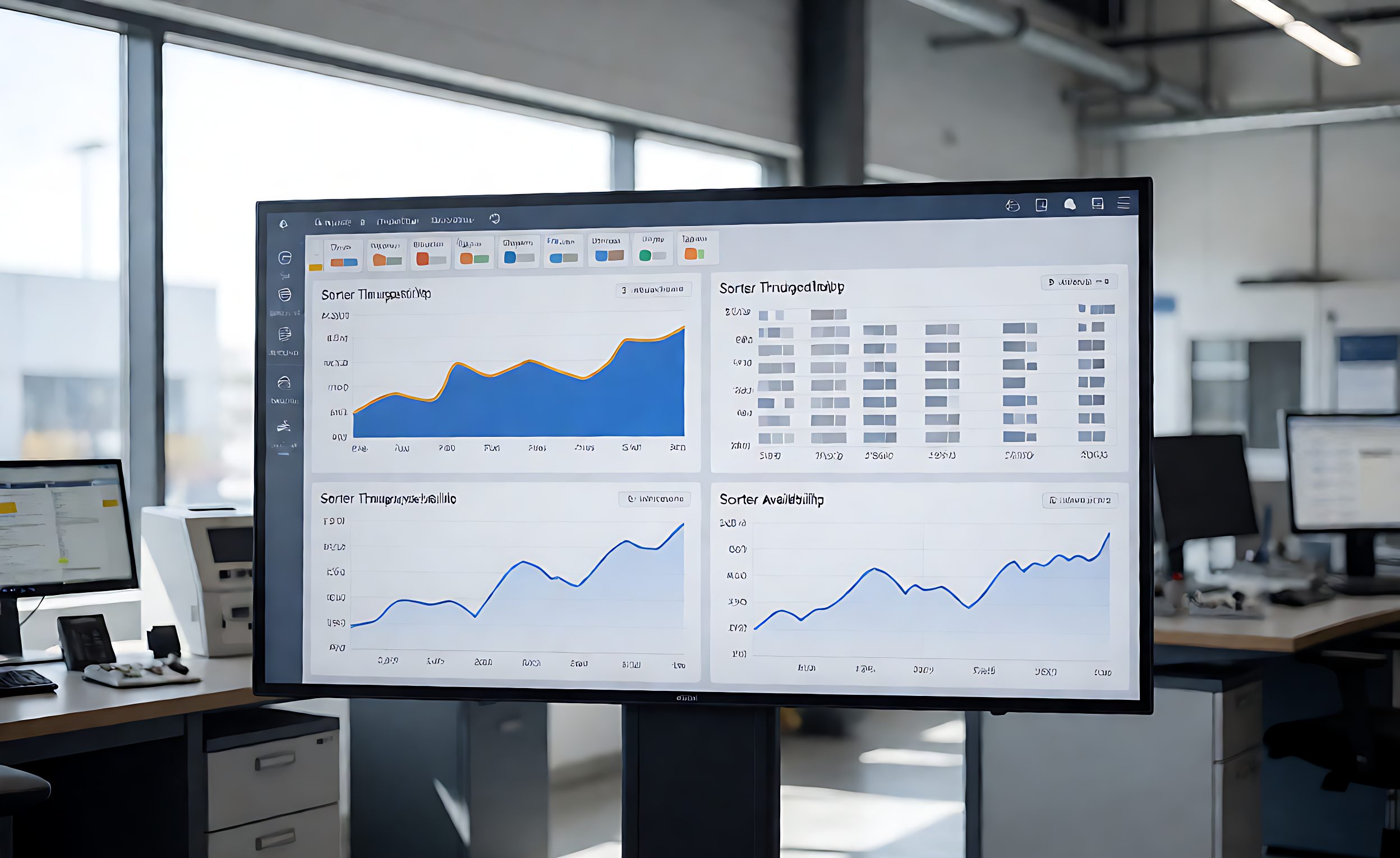

No sortation system reads every parcel. Labels face the wrong way, film wraps obscure codes, some parcels arrive with no label at all, and printing quality defeats even good scanners occasionally. The industry’s normal no-read rate sits in the low single digits, and every one of those parcels has to go somewhere. Where it goes – and what happens next – is the rejection and recirculation design, and it is one of those elements that separates a sorter which runs cleanly from one that generates a daily queue of exceptions and a person permanently assigned to apologising for them.
Rejection handling is a design topic, not an operating tweak. The decisions – loop or spur, secondary scan or manual station, how much recirculation capacity to build – are made at layout stage and lived with for the machine’s life.
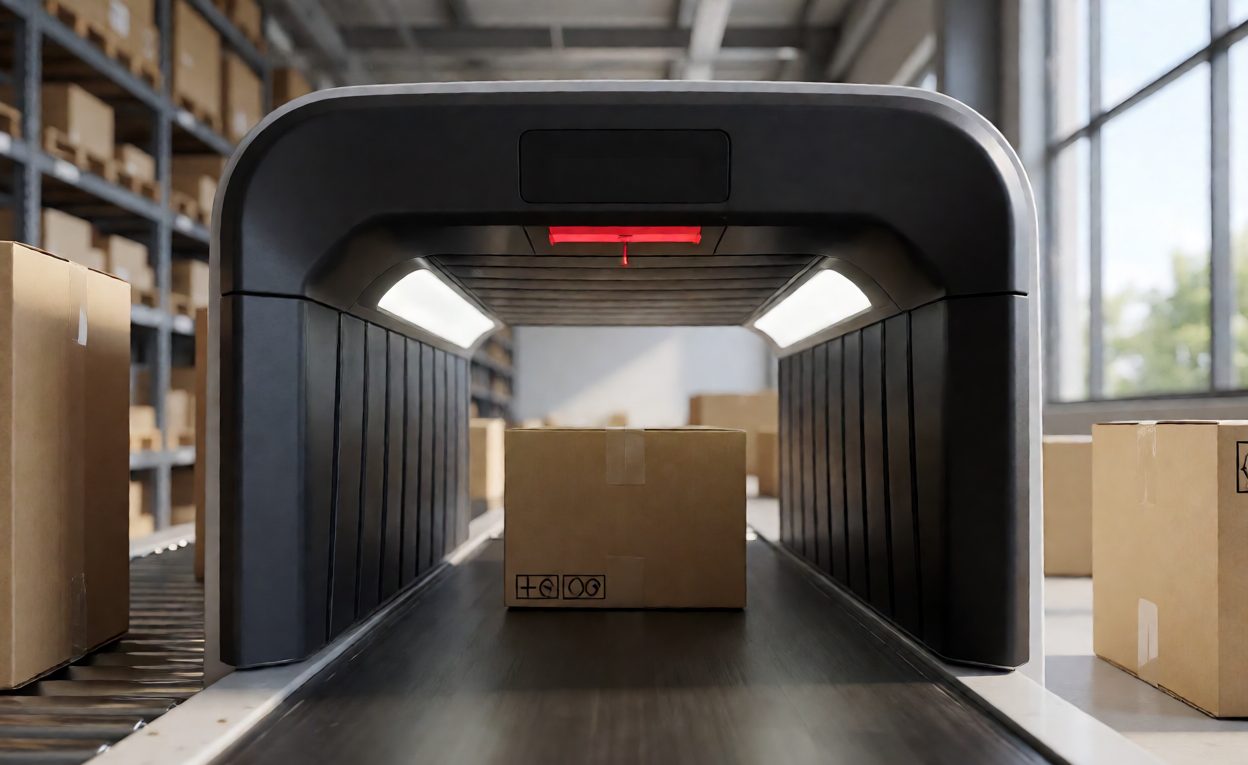
Why Parcels Go Unread
Understanding the causes points directly at the cures. No-reads fall into a few buckets:
- Orientation: the label faces up-side-down, sideways or away from the scanner window. This is usually the largest single cause.
- Occlusion: stretch wrap, over-labels, damage or a second label covering the code.
- Print quality: low contrast, small codes or thermal fade on aged labels.
- No label: the parcel is genuinely unidentified – a missed labelling step upstream.
The first two are design-solvable; the third is partially so; the fourth is an upstream process failure that no sorter can fix but a well-designed rejection path can at least contain cleanly. The distinction matters because a site chasing a low no-read rate through scanner upgrades while its real problem is orientation will spend money and keep the rate.
The Rejection Loop: Design Options
Three architectures cover the field. The simplest is a rejection spur: no-reads divert to a lane where an operator re-orients and re-inducts them. Cheap and understandable, but it interrupts operator flow and the lane fills fast at peak. The second is recirculation with secondary scanning: unread parcels loop back and pass additional scan windows at different angles, giving the system several chances before involving a person. The third is a hybrid – recirculate a defined number of attempts, then divert to a staffed resolution station for the stubborn remainder.
The hybrid is what most high-volume operations converge on, because it matches effort to the actual distribution of causes: orientation problems solve themselves on a second pass with a different scanner angle, while no-label parcels never will and should reach a human quickly. The design parameters are the number of recirculation attempts, the scanner geometry on each pass, and the position and capacity of the resolution station.

Sizing Recirculation Without Starving Throughput
Recirculated parcels consume loop capacity. Each no-read parcel that goes around again occupies the same carrier space as a first-pass parcel, so at high no-read rates the effective throughput of the machine falls even though the loop is running at speed. The sizing question is therefore: at your worst realistic no-read rate – peak season, damaged freight days, not the vendor’s demo figure – does the loop still deliver contracted throughput with recirculation running?
A useful planning rule is to size the system so that recirculation at the expected rate consumes a small single-digit share of loop capacity, and to model the degraded case at, say, a four or five percent no-read rate before committing the layout. The DWS layer that produces the reads in the first place – dimensioning, weighing and scanning as an integrated stage – is covered in the DWS system explained, and the accuracy practices that complement the mechanical design are in no-read and misort reduction.

Design Choices That Cut the No-Read Rate
Before the loop absorbs no-reads, several upstream choices reduce them at source:
- Induction discipline: labels-up feeding rules at the induct station, with visual standards operators can actually follow at speed.
- Scanner geometry: multiple scan windows at different angles on the first pass, which converts orientation from an operator problem into a physics problem with a solution.
- Upstream labelling standards: label position rules agreed with senders, and print quality checked at the point of label application rather than at your scan window.
- Parcel presentation: singulation quality ahead of the scanner matters – parcels arriving shingled and overlapping read worse than cleanly separated ones, which ties induction design directly to read rates.
The last point is worth stating plainly: read rate is designed at the induct end as much as at the scanner. The feeding and separation practices that set it up are covered in the parcel singulator guide, and the station-level choices are in induction station design and labour planning.
Technical Background
The technology doing the reading is the barcode, whose decodability depends on print contrast, resolution and angle of capture. The broader family of techniques for reading, weighing and identifying parcels automatically is automatic identification and data capture, of which the sorter’s scan tunnel is one deployment. And the mechanical system carrying parcels past the scanners and around the recirculation path is a conveyor system, whose capacity arithmetic is what recirculation consumes.
Rejection handling also has an operating dimension that the design should anticipate: someone owns the resolution station, and the plan for who, at what volume, and with what authority to correct labels connects back to the staffing model in operator staffing and shift model planning. A rejection path designed without a staffing plan produces either a queue or an improvised job; designed with one, it produces a controlled exception process that holds the sortation accuracy the machine was bought for.
Frequently Asked Questions
What is a normal no-read rate?
Well-run operations hold it in the low single digits. Sustained rates above that usually point to orientation or labelling practice rather than scanner hardware.
Should no-read parcels recirculate or divert immediately?
Most high-volume sites use a hybrid: recirculate for a defined number of automated attempts, then divert to a staffed resolution station.
How many recirculation attempts are sensible?
Enough to let secondary scan angles resolve orientation problems – typically two to three passes – but few enough that genuinely unidentified parcels reach a human quickly.
Does recirculation reduce throughput?
Yes. Recirculated parcels consume loop capacity like any other parcel, so the sizing must model throughput at the worst realistic no-read rate, not the average one.
What reduces no-reads at source?
Labels-up induction discipline, multi-angle scanner geometry on the first pass, upstream labelling standards and clean singulation before the scan window.
What about parcels with no label at all?
No scanner can help. They should reach the resolution station quickly, where staff log, investigate and correct them as a controlled exception.
Who staffs the rejection process?
A named role with defined volume expectations and authority to correct labels, planned as part of the shift model rather than improvised daily.