
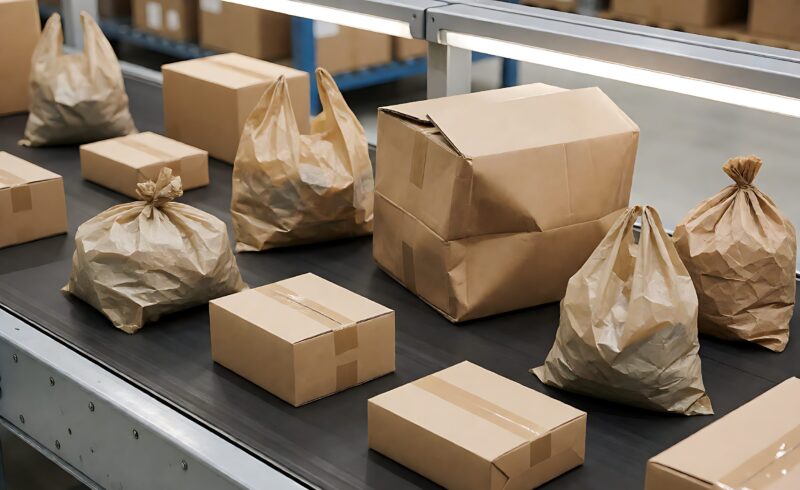
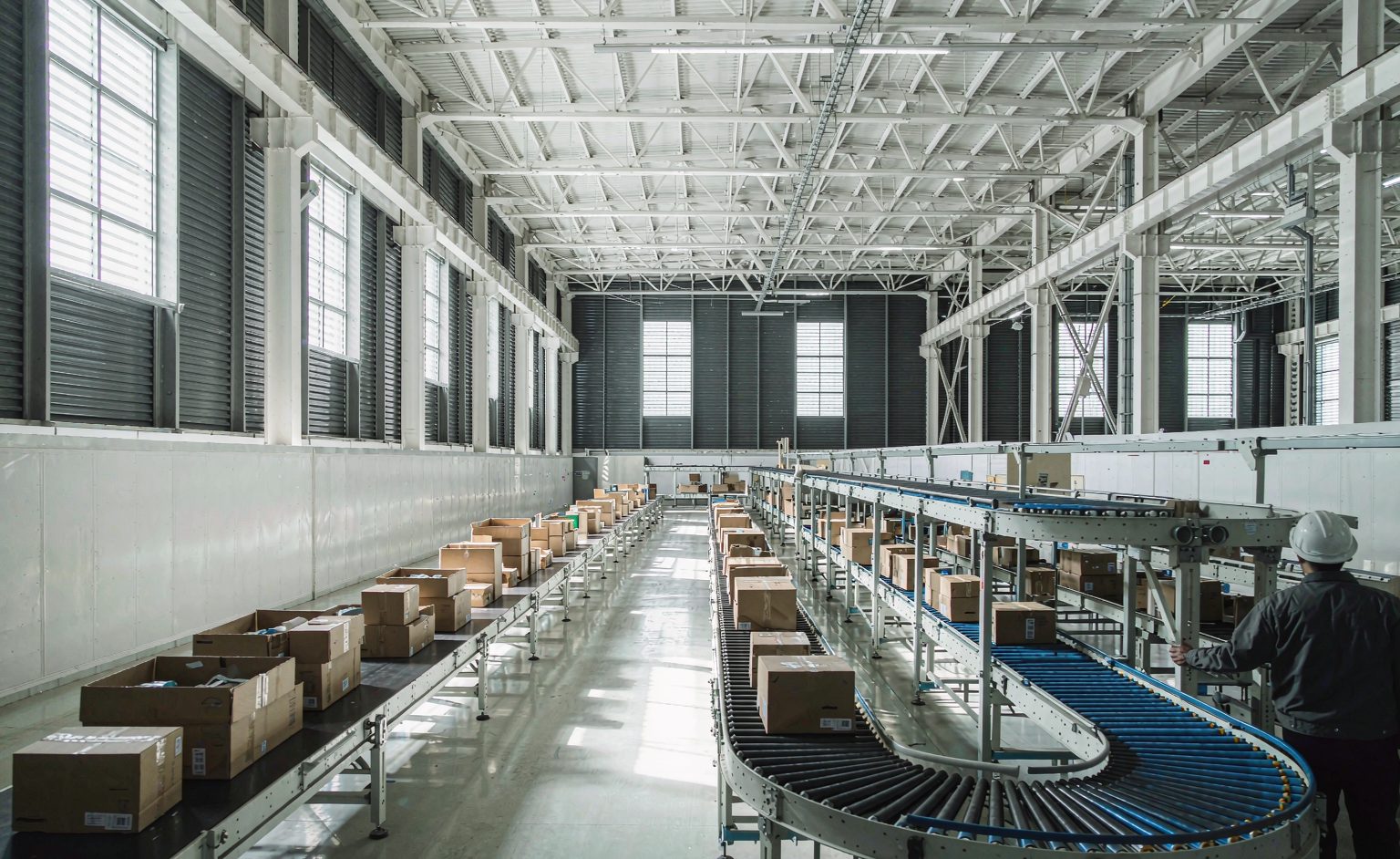
In today’s warehouses and distribution centers, flexibility has become a key factor in building smarter logistics operations. Unlike traditional fixed conveyor systems, flexible conveying and sorting technology is designed to adapt to changing layouts and fluctuating business demands, making it an ideal solution for both peak seasons and daily operations.
Key Benefits of Flexible Conveying & Sorting Systems:
Space Optimization – Equipment such as spiral chutes and telescopic belt conveyors maximizes both vertical and horizontal space utilization.
Cost Efficiency – Reduces reliance on manual labor while minimizing damage and operational errors.
Improved Customer Experience – Faster and more accurate order fulfillment ensures timely delivery and higher customer satisfaction.
With the integration of artificial intelligence (AI) and the Internet of Things (IoT), sorting systems are evolving to become smarter and more efficient. This transformation empowers businesses to achieve true end-to-end automation and maintain competitiveness in an increasingly dynamic logistics market.
At TRUELISORT, we deliver customized solutions that combine advanced conveying and sorting technologies to meet the unique needs of our global partners.
Flexible Conveying: The Sorter’s Unsung Partner
Sorting takes the headlines, but flexible conveying decides whether the sorter gets fed. The division of labour, made explicit:
| Conveying role | What it does for the sorter | Where it fails without design |
|---|---|---|
| Accumulation | Buffers surges so induction never starves | Backpressure jams upstream processes |
| Merge | Blends multiple infeeds at controlled gaps | Gaps collapse; singles become clumps |
| Transport | Moves between zones at line speed | Speed mismatch starves or floods the loop |
| Divert-out | Carries sorted flow to staging without backpressure | Full containers back up into the sorter |
The merge row is where flexible conveying earns its name. Multiple infeeds — parcel sorting plus returns plus replenishment — must join the loop with gaps wide enough to scan and space to divert, and that orchestration is a conveying discipline, not a sorter feature. Sites that buy a brilliant sorter and budget-grade conveying discover the pairing’s arithmetic the hard way: the loop’s nameplate rate assumes a fed loop, and a starving feeder converts capital into idle loops. The divert-out row hides the reciprocal lesson — a sorter whose outflow backs up against full containers recirculates everything, wearing the loop to process nothing. Flexible conveying is therefore not the supporting cast of a sorting project but its co-star, and quotations that treat it as a line item deserve the same design scrutiny as the loop itself. The backbone view of this partnership is in five flows, one backbone, and the induction dependency in anatomy of a sorting solution. Reference: conveyor belting and materials transport.
Conveyor and sorter integrate twice: mechanically at the transfer, and logically at the control protocol. The second integration ages worse — firmware updates on either side can quietly reinterpret a handshake. Sites that pin protocol versions and re-test after every update avoid the mysterious Monday-morning failures this looseness produces. Reference: protocol discipline and interface contracts.
The Warehouse-Scale View
Zoom out from the sorter and the warehouse-scale picture appears: induction feeds, singulation, sortation, dispatch waves — a chain whose rate is its slowest honest link. The warehouse-level framing of that chain, and where sorting sits inside it, is in the warehouse automation solutions.