

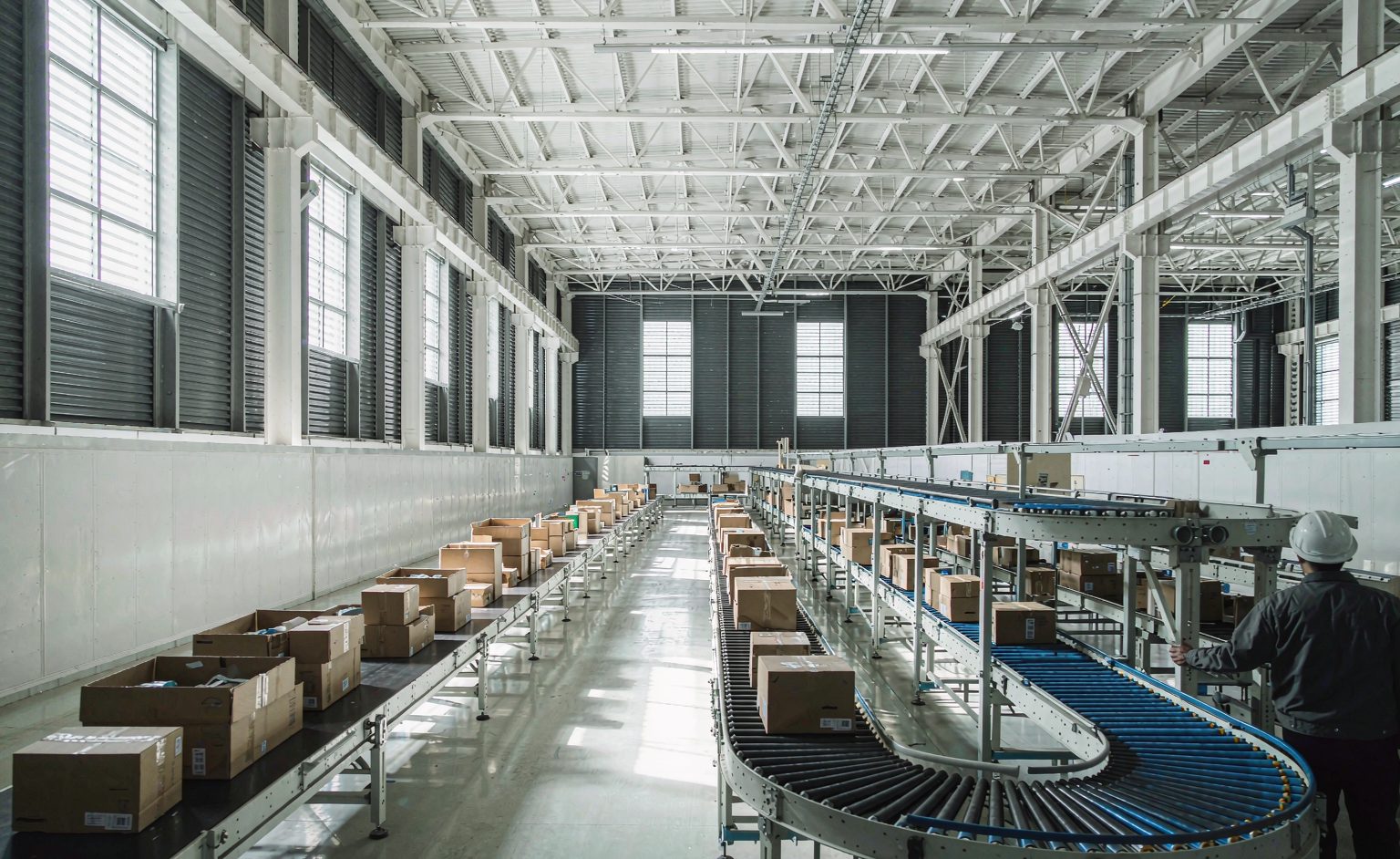
As global parcel volumes continue to rise, logistics automation is no longer a competitive advantage — it has become a fundamental requirement for operational survival. From e-commerce warehouses to postal distribution centers, companies are accelerating investments in smarter, more reliable automated systems that reduce labor dependency and increase throughput.
1. Integration Over Isolation
The industry is moving away from standalone machines and toward fully integrated systems. Modern facilities are connecting conveyors, sorting machines, OCR modules, DWS units, and warehouse management systems (WMS) into one intelligent network. This unified approach allows real-time data sharing, faster decision-making, and minimized human interruption.
2. AI-Driven Accuracy
Artificial intelligence is rapidly reshaping parcel identification and routing. Vision systems can now read complex labels, detect damaged packages, and analyze parcel dimensions more accurately than manual operations. AI-powered sorting decisions reduce error rates and maintain consistent high-speed throughput, even during peak seasons.
3. Flexibility for Multichannel Fulfillment
With the rise of omnichannel retail, automation equipment must adapt to diverse product sizes, packaging types, and delivery timeframes. Modular sorting systems — such as cross-belt sorters, narrow-belt sorters, and wheel diverters — are becoming popular because they allow warehouses to scale quickly without redesigning the entire layout.
4. Sustainability Through Smart Engineering
Energy-efficient motors, regenerative braking, low-friction conveyors, and intelligent software scheduling are helping reduce power consumption. Environmentally friendly designs not only lower operational costs but also support global sustainability goals.
5. Faster Deployment, Lower Risk
Modern logistics providers look for solutions that can be deployed quickly and expanded in phases. Pre-assembled modules, digital twins, and remote commissioning tools are driving shorter installation times and reducing project risks.
Conclusion
Automation is reshaping the logistics industry at a remarkable pace. Companies that invest early in intelligent sorting, high-performance conveyors, and integrated data systems will be best positioned to meet the rising expectations of speed, accuracy, and flexibility. As technology evolves, the focus will continue to shift toward smarter, greener, and more connected supply chains.
Speed, Accuracy, Intelligence: The Three-Legged Stool
Logistics automation’s future rests on three legs, and the stool tips when any leg is ignored:
| Leg | What it delivers | Failure when over-weighted |
|---|---|---|
| Speed | Throughput at peak | Fast errors, faster rework |
| Accuracy | Promises kept per parcel | Beautifully precise at half the rate |
| Intelligence | Adaptation between peaks | Insight without throughput to apply it |
The over-weighting column is where buying mistakes live. Speed bought alone produces the fastest mis-sorts in the industry; accuracy bought without rate caps the business at the sorter’s ceiling no matter how many downstream hands are added; intelligence layered on either without the data discipline to feed it becomes dashboards nobody trusts. The stool also ages unevenly — speed is bought once, accuracy is maintained continuously, and intelligence compounds only where the first two are stable — which is why the buying sequence matters as much as the buying list. Operations that stand on all three find their competition is no longer other warehouses but the customer’s rising expectations, and that is a race worth being in. The intelligence layer’s mechanics are in how systems get smarter, and the efficiency baselines in the numbers that moved. Reference: automation fundamentals and logistics performance.