
The modern logistics industry is under enormous pressure.
Global e-commerce growth, rising labor costs, same-day delivery expectations, SKU proliferation, and increasingly complex supply chains are forcing warehouses and distribution centers to evolve faster than ever before. Traditional manual sorting systems can no longer keep pace with the speed, precision, and scalability demanded by modern commerce.
At the center of this transformation is one of the most important technologies in automated material handling:
Cross-belt sorting systems.
Once considered high-end equipment reserved for massive logistics hubs, cross-belt sorters are now becoming foundational infrastructure across industries ranging from e-commerce and retail to pharmaceuticals, manufacturing, fashion, cold chain logistics, and parcel delivery.
But the real story is not today’s systems.
The real transformation is happening in the next generation of cross-belt sorting technology—systems powered by AI, machine vision, predictive analytics, robotics integration, intelligent software orchestration, and highly adaptive automation architecture.
These innovations are not simply making warehouses faster. They are fundamentally changing how fulfillment centers are designed, operated, staffed, and optimized.
This article explores how next-generation cross-belt sorting systems will reshape the future of warehouse logistics in the coming years.
1. Why Sorting Has Become the Core Bottleneck in Modern Logistics
Warehouse automation has advanced dramatically in recent years.
Today’s facilities may already include:
- Autonomous mobile robots
- Smart conveyor systems
- Automated storage systems
- AI inventory forecasting
- Robotic palletizing
Yet despite these improvements, sorting remains one of the most operationally demanding processes inside fulfillment centers.
Why?
Because sorting sits at the intersection of:
- Speed
- Accuracy
- Order complexity
- Labor dependency
- Real-time routing decisions
Every parcel, carton, polybag, or product must move to the correct destination rapidly and accurately.
As order volumes increase, manual sorting becomes unsustainable.
2. What Is a Cross-Belt Sorting System?
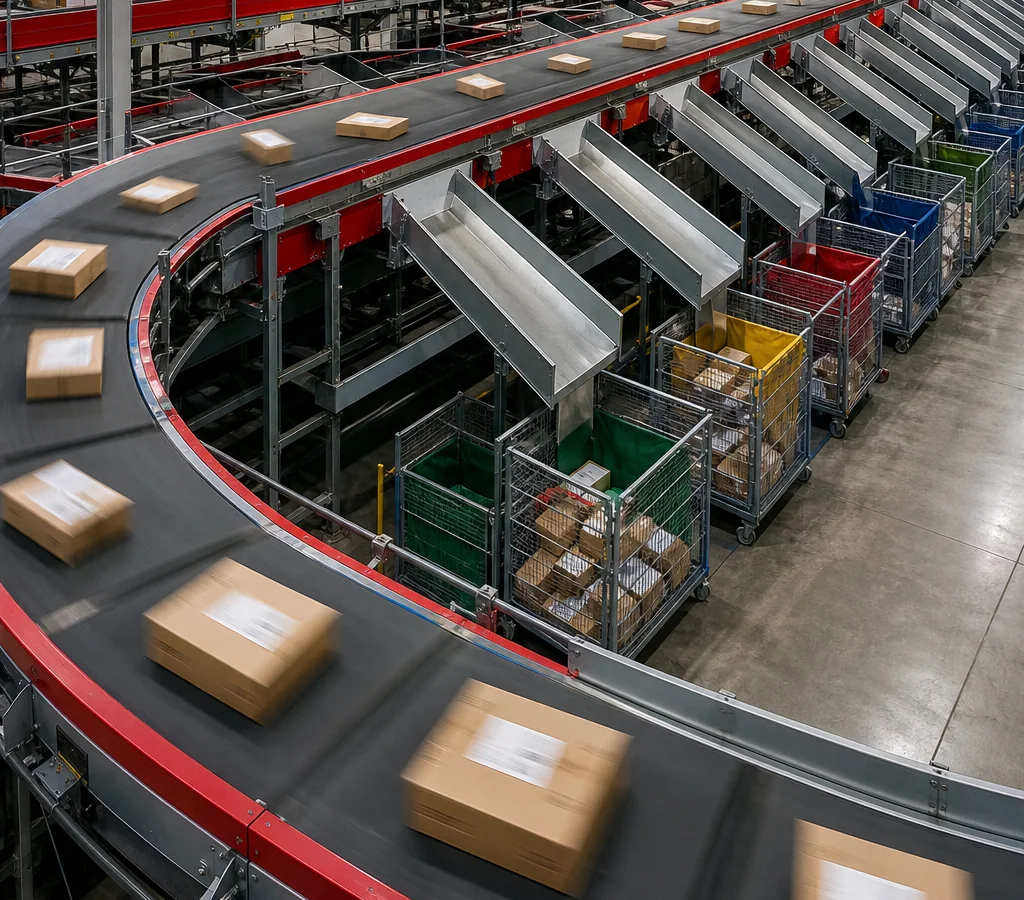
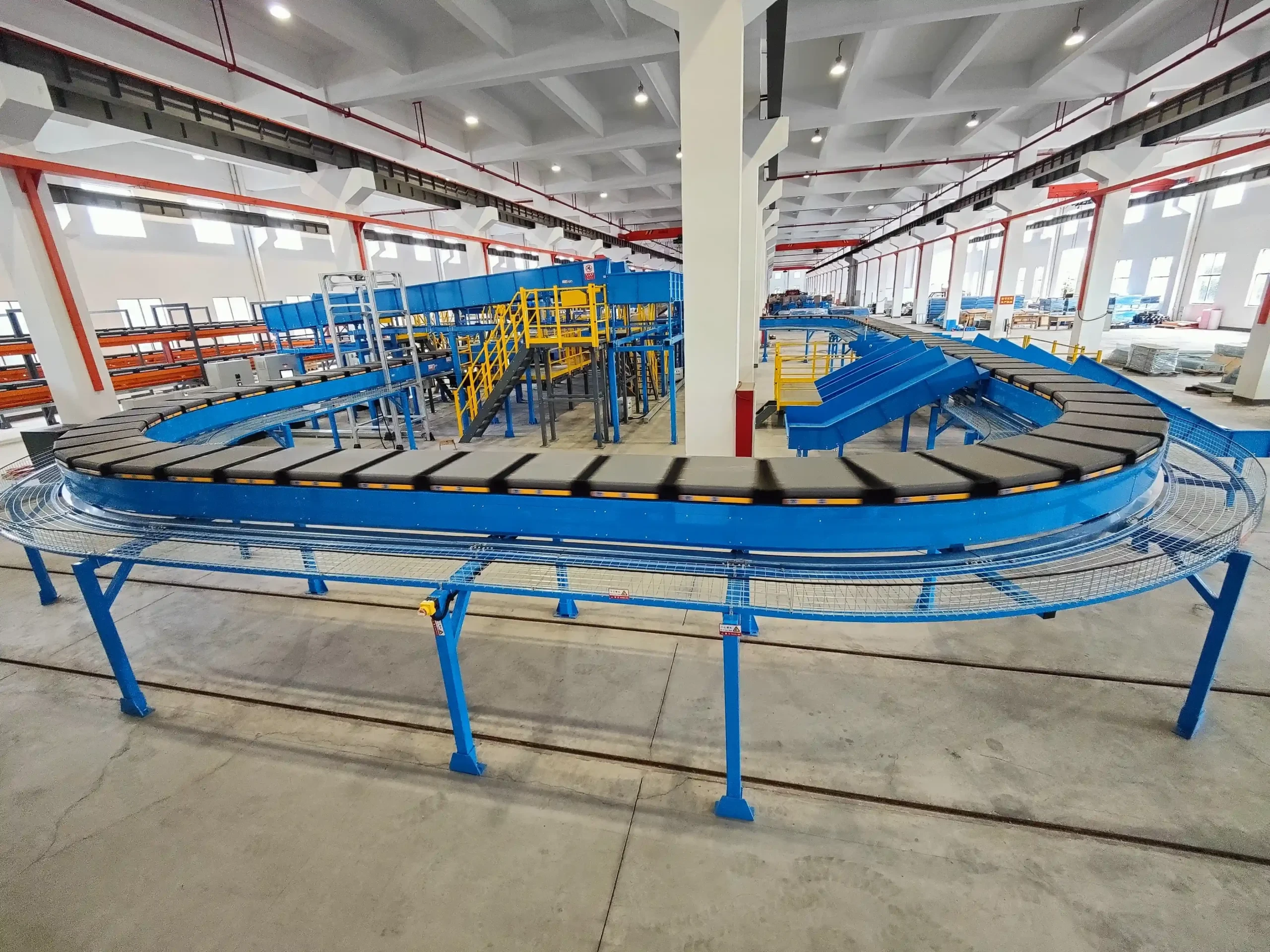
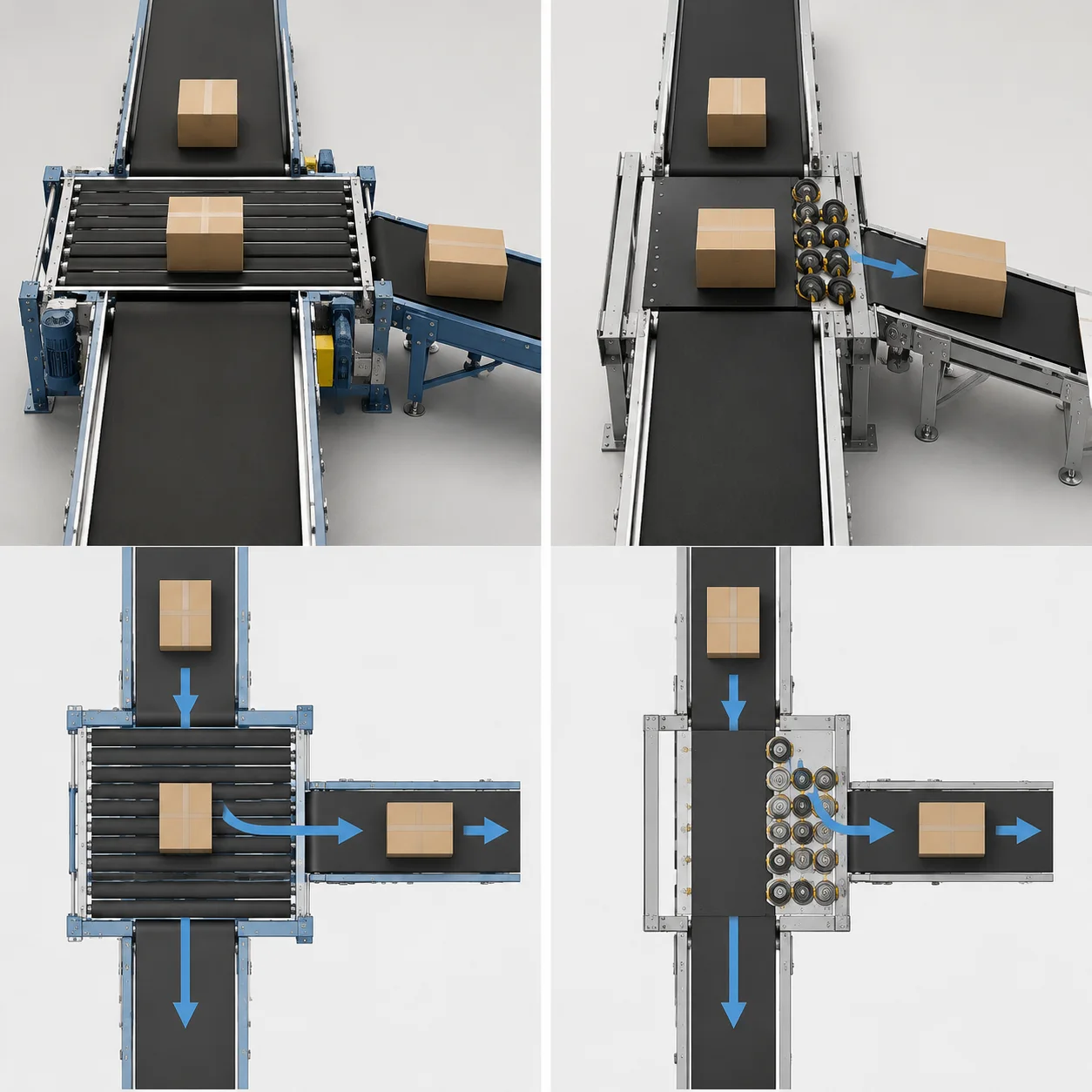
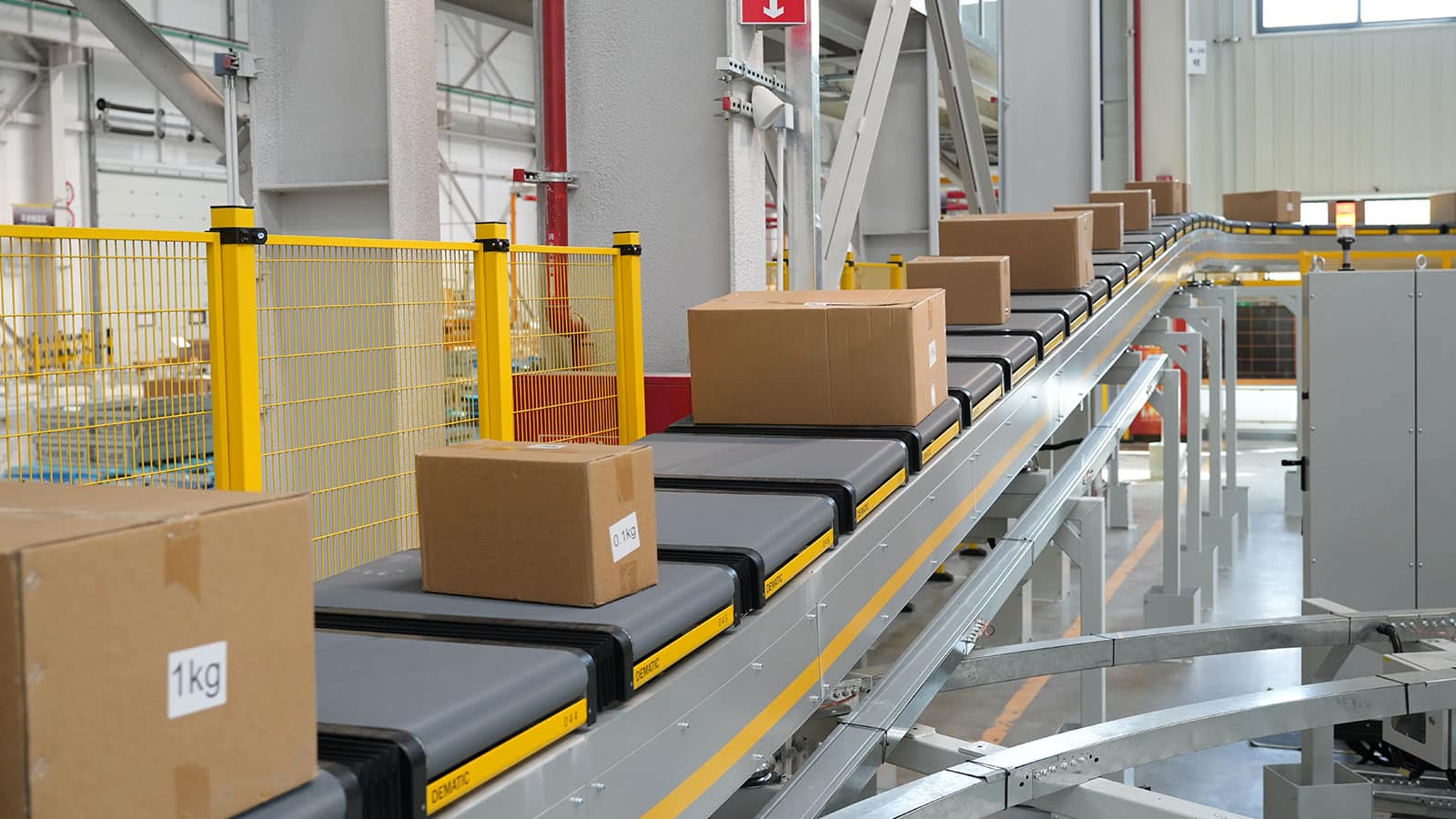
A cross-belt sorter is an automated material handling system designed to transport and divert items efficiently to designated destinations.
The system typically includes:
- Carrier units moving on a loop
- Small conveyor belts mounted on each carrier
- Automated discharge control
- Intelligent routing software
Each carrier independently transfers products into specific chutes, lanes, or containers.
Why cross-belt systems became popular
Compared to older sorting technologies, cross-belt sorters offer:
- Higher accuracy
- Gentler product handling
- Faster throughput
- Better adaptability
- Multi-size product compatibility
This makes them ideal for modern e-commerce environments.
3. The E-Commerce Explosion Changed Everything
The growth of online shopping radically altered warehouse requirements.
Traditional retail distribution focused on:
- Large batch shipments
- Predictable SKU movement
- Pallet-based fulfillment
Modern e-commerce requires:
- Massive SKU diversity
- Small individual orders
- Rapid fulfillment cycles
- High return volumes
- Continuous operational flexibility
Cross-belt sorting systems became essential because they can handle highly dynamic order environments efficiently.
4. Why Traditional Sorting Systems Are Reaching Their Limits
Conventional sorting technologies face growing challenges.
Older systems often struggle with:
- Irregular package shapes
- Lightweight parcels
- Fragile items
- Variable order density
- Real-time routing complexity
As fulfillment environments become more unpredictable, static systems lose efficiency.
Next-generation systems focus on adaptability
Future sorting platforms are designed to:
- Learn dynamically
- Reconfigure intelligently
- Respond in real time
- Optimize continuously
This is where AI begins transforming logistics operations.
5. AI-Driven Sorting Intelligence
Artificial intelligence is becoming one of the biggest drivers of warehouse evolution.
In next-generation cross-belt systems, AI is used for:
- Flow optimization
- Congestion prediction
- Routing prioritization
- Failure prevention
- Dynamic load balancing
Real-time decision-making
Instead of relying solely on fixed logic rules, AI-enabled systems can analyze:
- Current throughput
- Destination congestion
- Carrier availability
- Order urgency
- Equipment health
and continuously optimize operations.
Example:
If one chute becomes overloaded, the system may automatically:
- Redistribute flow
- Adjust carrier spacing
- Prioritize urgent shipments
- Prevent bottlenecks
This creates adaptive logistics ecosystems.
6. Machine Vision Is Expanding Sorting Capabilities
Machine vision technology is dramatically improving product identification and handling precision.
Modern systems increasingly use:
- High-speed cameras
- 3D imaging
- AI image recognition
- Barcode and OCR scanning
Benefits of advanced vision systems
Machine vision allows sorters to:
- Identify damaged packages
- Detect label issues
- Measure dimensions automatically
- Handle irregular products
- Improve tracking accuracy
This reduces human intervention dramatically.
7. The Rise of Fully Data-Driven Warehouses
Future sorting systems will not operate independently.
They will function as part of interconnected warehouse intelligence networks.
Cross-belt systems will integrate with:
- Warehouse management systems (WMS)
- Warehouse execution systems (WES)
- Robotics platforms
- Inventory forecasting engines
- Transportation management systems (TMS)
This creates synchronized operational ecosystems.
Why integration matters
Sorting efficiency depends on upstream and downstream coordination.
Future systems optimize:
- Picking flow
- Inventory positioning
- Shipping prioritization
- Labor allocation
simultaneously.
8. Throughput Expectations Will Continue Rising
Consumer expectations are accelerating.
Same-day and next-day delivery models require warehouses to process enormous order volumes continuously.
Future cross-belt sorters are expected to achieve:
- Higher carrier density
- Faster transport speeds
- Lower error rates
- More compact footprints
without sacrificing reliability.
The challenge is balance
Increasing speed alone is not enough.
Systems must also maintain:
- Product integrity
- Operational stability
- Energy efficiency
- Maintenance accessibility
9. Robotics Integration Will Reshape Fulfillment Architecture
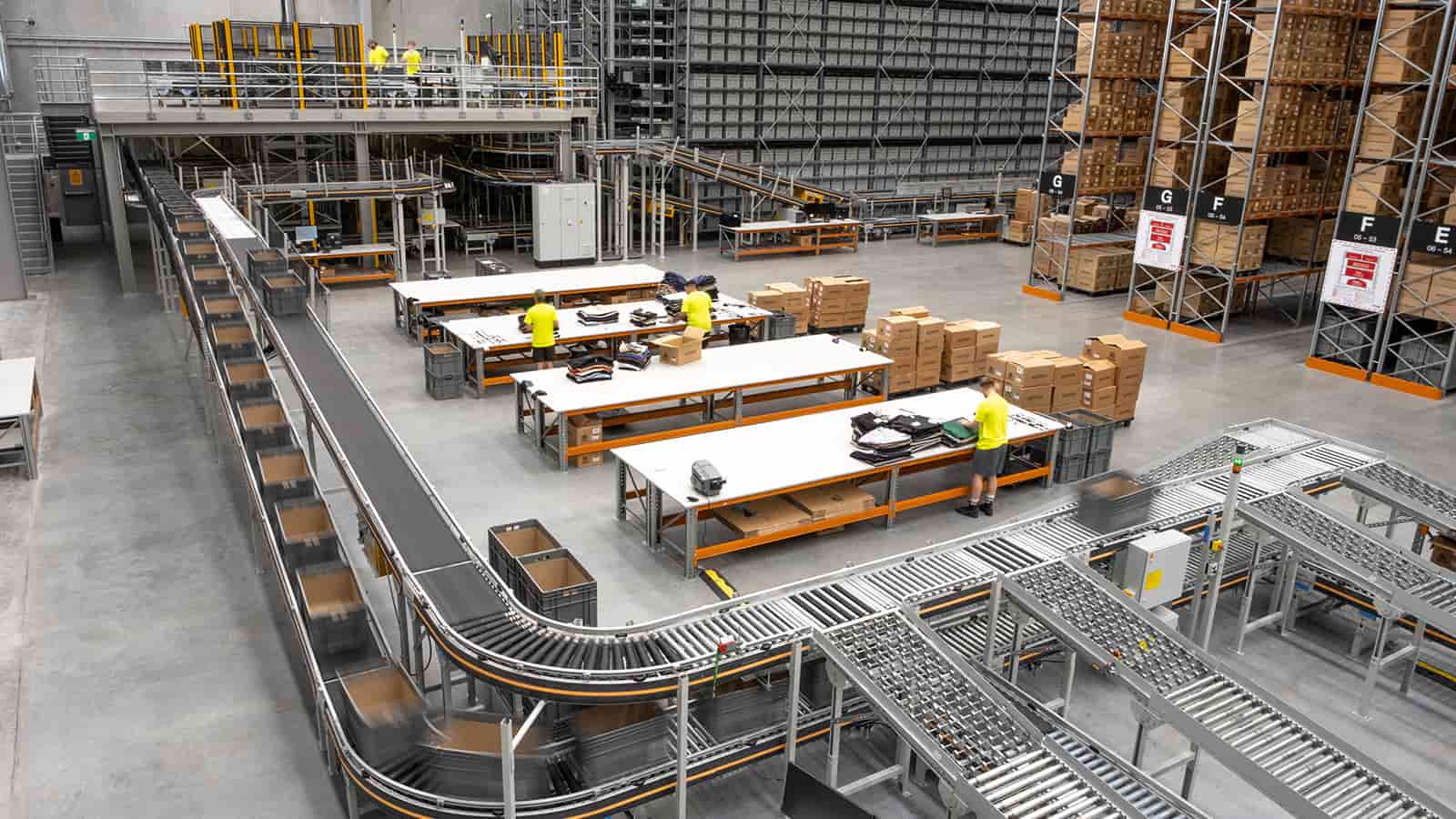
Next-generation warehouses increasingly combine:
- Robotic picking
- Autonomous transport
- Automated sorting
into unified workflows.
Cross-belt sorters as robotic coordination hubs
Future systems may dynamically communicate with:
- AMRs (autonomous mobile robots)
- Robotic arms
- Smart conveyors
- Automated packaging stations
This creates seamless material flow.
Example workflow
- Robot picks item
- Item transferred automatically to sorter
- AI assigns routing priority
- Cross-belt carrier delivers item
- Packaging automation completes shipment
Minimal human handling required.
10. Predictive Maintenance Will Reduce Downtime
Downtime is one of the most expensive problems in automated logistics.
Traditional maintenance models rely heavily on:
- Scheduled inspections
- Reactive repairs
Future systems increasingly use predictive maintenance.
Smart sensors monitor:
- Motor vibration
- Bearing wear
- Belt tension
- Temperature fluctuations
- Carrier alignment
AI systems analyze patterns to predict failures before breakdowns occur.
Benefits include:
- Reduced downtime
- Lower maintenance costs
- Longer equipment lifespan
- More stable throughput
11. Energy Efficiency Is Becoming a Strategic Priority
As warehouses scale automation, energy consumption becomes increasingly important.
Future sorting systems are being designed for:
- Lower power consumption
- Intelligent motor control
- Dynamic speed adjustment
- Regenerative braking systems
Why energy optimization matters
Large fulfillment centers operate continuously.
Even small efficiency improvements create significant savings over time.
Sustainability is also becoming a competitive business requirement.
12. Modular System Design Will Increase Flexibility
Traditional large-scale sorting systems often required:
- Massive upfront investment
- Long installation periods
- Complex facility redesigns
Future systems are moving toward modular architecture.
Modular cross-belt systems allow:
- Gradual expansion
- Easier upgrades
- Faster deployment
- Flexible scalability
This benefits mid-sized businesses entering warehouse automation.
13. Smaller Warehouses Will Gain Access to Advanced Automation
Historically, advanced sorting systems were accessible mainly to giant enterprises.
But technology costs are gradually decreasing.
Future trends include:
- Compact sorter models
- Lower implementation barriers
- Cloud-based control systems
- Robotics-as-a-service models
This democratizes automation.
Small and mid-sized operations can compete more effectively
Automation is no longer limited to mega-warehouses.
14. Real-Time Data Visibility Will Become Standard
Future logistics leaders will expect complete operational transparency.
Next-generation sorting systems will provide:
- Live throughput monitoring
- Heat maps
- Congestion visualization
- Performance analytics
- Error tracking dashboards
This enables faster operational decisions.
Data visibility improves:
- Labor planning
- Bottleneck analysis
- Carrier utilization
- Shipping accuracy
- Capacity forecasting
15. Labor Roles Will Shift, Not Disappear
A common fear surrounding automation is workforce replacement.
In reality, warehouse labor roles are evolving.
Repetitive manual sorting decreases
But demand grows for:
- Automation technicians
- System operators
- Robotics specialists
- Data analysts
- Maintenance engineers
Future warehouses require more technical skill sets.
Human oversight remains critical
Automation improves efficiency, but human judgment still matters for:
- Exception handling
- Strategic planning
- Operational optimization
16. Cross-Belt Systems Will Improve Reverse Logistics
Returns management is becoming a major logistics challenge.
E-commerce returns generate:
- Complex sorting requirements
- Product condition variability
- High labor demand
Future cross-belt systems will increasingly support:
- Reverse logistics automation
- Condition-based routing
- Smart inspection integration
This improves return processing efficiency.
17. AI Routing Will Support Dynamic Delivery Prioritization
Not all shipments carry equal urgency.
Future systems will prioritize dynamically based on:
- Delivery deadlines
- Transportation schedules
- Customer value
- Shipping method
- Carrier availability
AI-driven prioritization improves delivery performance.
18. Cold Chain Logistics Will Benefit Significantly
Cold chain operations require:
- Speed
- Precision
- Temperature integrity
Next-generation sorters help minimize:
- Product exposure time
- Handling delays
- Human contact
This is especially important for:
- Pharmaceuticals
- Fresh food
- Biotech products
19. Sustainability and Environmental Impact
Future warehouse automation strategies increasingly prioritize sustainability.
Cross-belt systems can reduce:
- Packaging damage
- Waste generation
- Energy inefficiency
- Transportation delays
Optimized logistics also reduce carbon emissions indirectly through:
- Better routing
- Faster processing
- Reduced re-shipping
20. The Future Warehouse Will Be an Intelligent Ecosystem
The future of logistics is not about individual machines.
It is about interconnected intelligent ecosystems where:
- AI predicts demand
- Robotics handle transport
- Smart sorters route dynamically
- Sensors monitor performance
- Software coordinates everything in real time
Cross-belt sorters will become central nervous systems within these highly automated environments.
Challenges Still Exist
Despite enormous potential, several challenges remain.
High initial investment
Advanced automation still requires significant capital.
Integration complexity
Older facilities may struggle to integrate modern systems.
Technical expertise requirements
Automation increases demand for specialized talent.
Cybersecurity risks
Connected logistics systems require strong digital protection.
However, the long-term trend remains clear
Warehouse operations are becoming increasingly intelligent, automated, and data-driven.
Conclusion: Next-Generation Cross-Belt Sorting Will Redefine Warehouse Logistics
Cross-belt sorting technology is evolving from a mechanical handling system into an intelligent logistics orchestration platform.
The next generation of systems will combine:
- AI optimization
- Machine vision
- Robotics integration
- Predictive analytics
- Real-time operational intelligence
This transformation will fundamentally reshape:
- Fulfillment speed
- Warehouse architecture
- Labor structure
- Supply chain responsiveness
- Operational scalability
In the coming years, the competitive advantage in logistics will increasingly belong to companies capable of building flexible, intelligent, high-speed fulfillment ecosystems.
And at the center of many of those ecosystems will be next-generation cross-belt sorting technology—quietly moving millions of products with precision, adaptability, and efficiency that traditional warehouses could never achieve.