
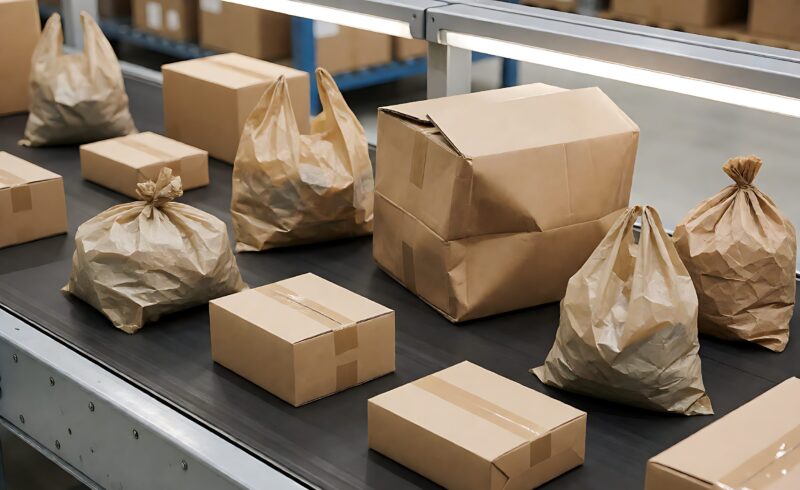
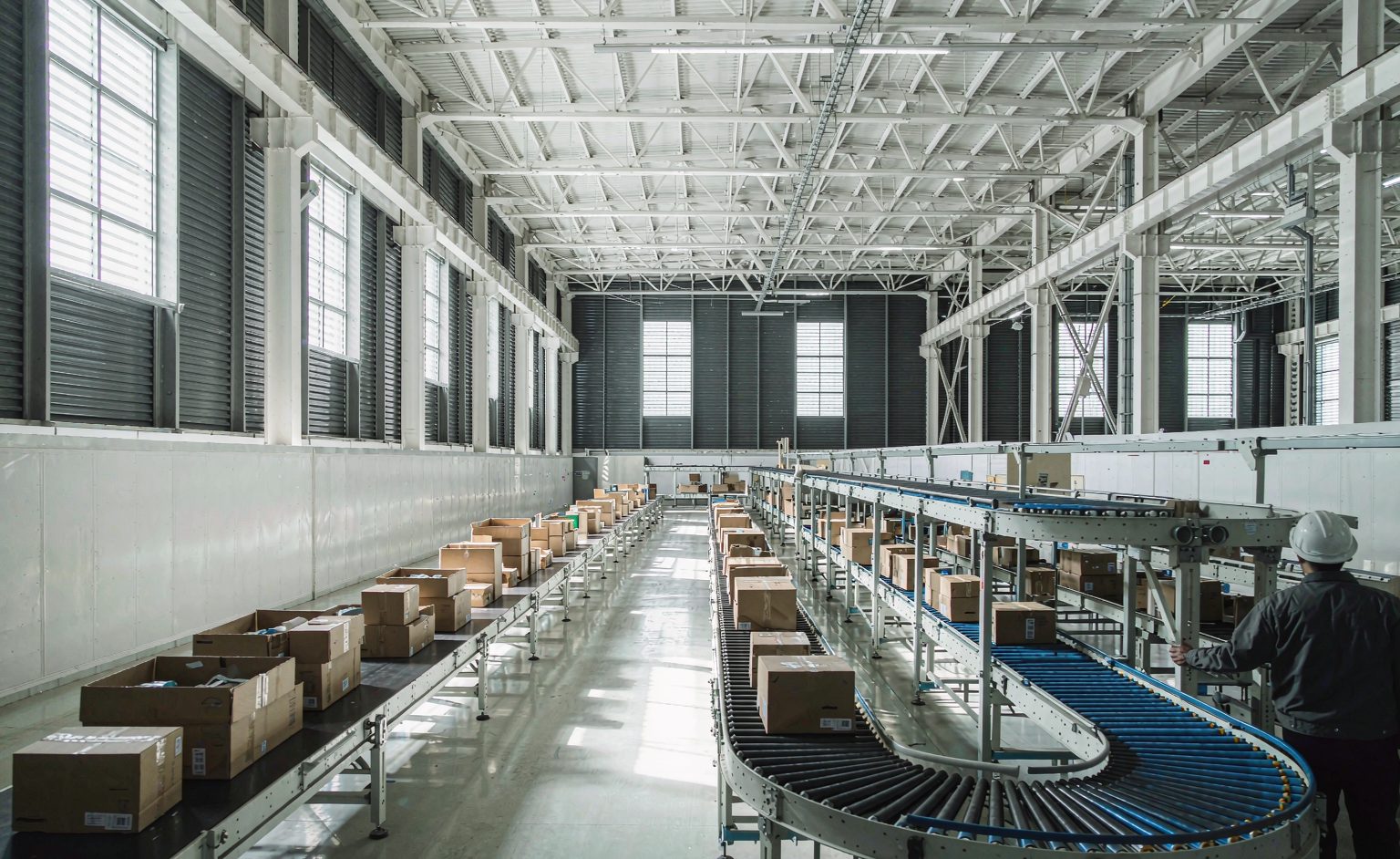
In the era of digital transformation, the logistics industry is moving rapidly toward automation and intelligence. Smart warehouses have become the backbone of modern supply chains, enabling faster, more accurate, and cost-effective operations. Among all warehouse automation solutions, sorting systems play a crucial role in improving efficiency and accuracy.
A smart sorting system integrates mechanical design, sensors, vision recognition, and intelligent control to handle high-speed parcel sorting. Compared with traditional manual operations, automated sorting can process thousands of parcels per hour, significantly reducing labor costs and human errors.
For example, wheel sorters, cross-belt sorters, and narrow-belt sorters are widely used in e-commerce, express delivery, and distribution centers. These systems can automatically identify barcodes or QR codes, detect parcel sizes and weights, and direct each item to the correct destination with high precision.
Moreover, with the integration of IoT and AI technologies, modern sorting systems can provide real-time data tracking, predictive maintenance, and system optimization. This allows warehouse managers to monitor performance remotely and make data-driven decisions to improve throughput and reduce downtime.
As global e-commerce continues to expand, the demand for faster and smarter logistics will only grow. Investing in efficient sorting solutions is no longer optional—it’s essential for staying competitive in today’s fast-paced market.
At TRUELISORT, we are committed to delivering innovative sorting solutions that empower smart warehouses worldwide, helping our partners achieve higher efficiency and seamless automation.
The Sorter as the Warehouse’s Nervous System
Warehouses are usually drawn as boxes and arrows. A closer analogy for the sorter is neurological — it senses, transmits and triggers:
| Nervous function | Sorting equivalent | Warehouse behaviour it enables |
|---|---|---|
| Sensation | Barcode, weight, dimension capture | Inventory truth without counting |
| Reflex | Routing rules executed in milliseconds | Flow continues through disturbances |
| Proprioception | Live rate, choke and chute telemetry | Managers feel the operation’s posture |
| Memory | Accumulated exception and profile history | Rules improve from experience |
The proprioception row names the quiet change long-time operators report most: before telemetry, problems were discovered by walking and asking; after, the operation’s state is felt from a screen the way a healthy body feels its own position — continuously and without effort. The memory row is the frontier: warehouses whose sorting history is structured enough to learn from are beginning to answer questions they could never previously pose, such as which profile changes predicted choke congestion two weeks out. Reframing the sorter as nervous system also corrects an organisational mistake — treating it as end-of-line machinery rather than as the shared infrastructure every other function’s data flows through. Buildings designed around a nervous system differ from buildings that bought one later; warehouses are the same. The warehouse-scale design view is in sorting in the digital age, and the intelligence layers in how systems get smarter. Reference: warehouse management systems and sensor networks.
The nervous-system analogy also draws the automation boundary honestly: reflexes belong to the sorter, reflection to the people. Decisions that recur identically — route, divert, flag — migrate inward over time; decisions that require judgement stay at the synapse, where the human and the machine meet. Reference: cybernetic control and feedback loops.