
In today’s fast-paced e-commerce and logistics environment, speed is no longer enough. Customers expect fast delivery, but they also expect accuracy—orders must arrive correctly, every time, without exceptions. A single mis-sorted package can trigger customer complaints, return costs, reverse logistics expenses, and damage to brand reputation.
Behind the scenes of modern fulfillment centers, one technology has become a cornerstone of high-accuracy parcel handling: the cross-belt sorting system.
Often described as one of the most advanced automated sorting solutions in logistics engineering, cross-belt sorters combine mechanical precision, intelligent control systems, and high-speed conveyor dynamics to move thousands—or even tens of thousands—of parcels per hour with remarkable accuracy.
But what makes these systems so effective? How do they reduce mis-sort rates to extremely low levels even under high operational pressure? And why are major logistics providers, e-commerce giants, postal networks, and third-party logistics companies increasingly relying on them?
This in-depth guide explores the engineering principles, operational logic, and real-world advantages of cross-belt systems—and reveals how they achieve near-perfect sorting accuracy in modern distribution environments.
The Growing Importance of Sorting Accuracy in Logistics
The global logistics ecosystem has undergone a dramatic transformation in recent years. Driven by e-commerce expansion, omnichannel retail, and same-day delivery expectations, fulfillment centers are processing more parcels than ever before.
In this environment, sorting accuracy has become just as important as speed.
A mis-sorted package can lead to:
- Delayed deliveries
- Incorrect shipments
- Increased return handling costs
- Customer dissatisfaction
- Additional transportation expenses
- Warehouse inefficiencies
Even a small error rate can scale into thousands of mistakes per day in large distribution centers.
This is why automation technologies such as cross-belt sorters have become essential infrastructure rather than optional upgrades.
What Is a Cross-Belt Sorting System?
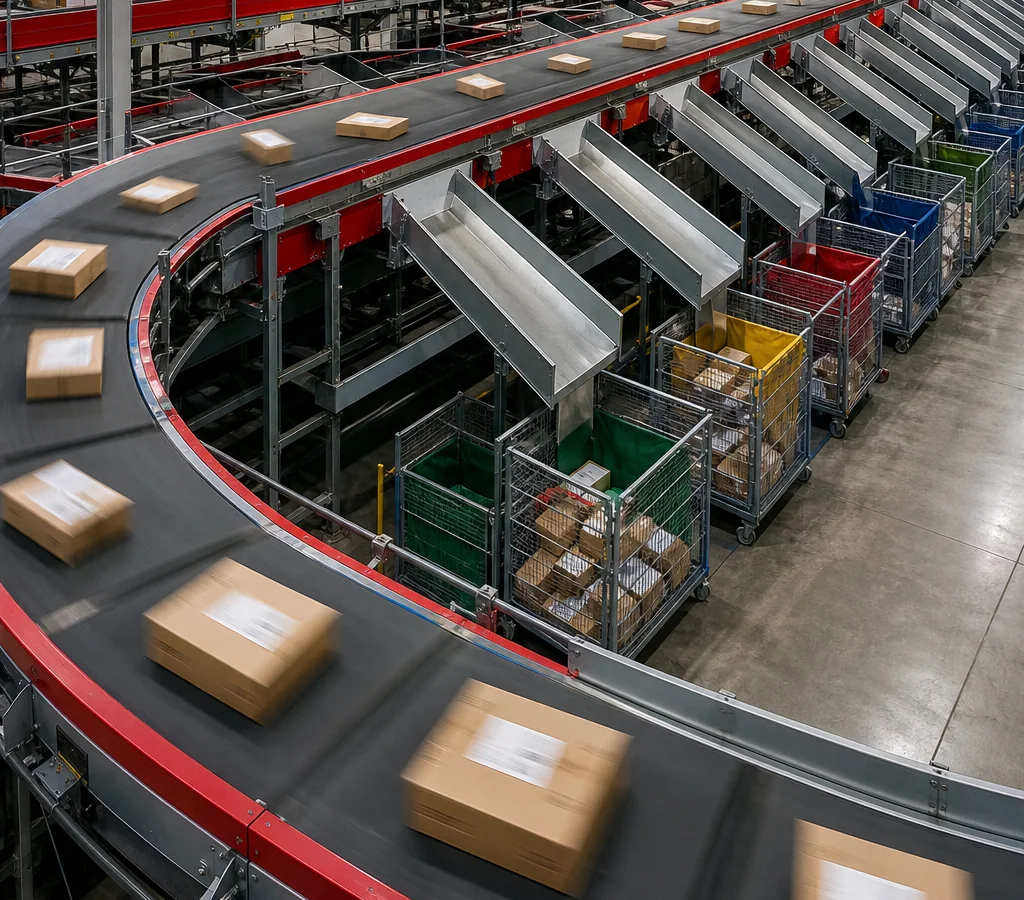
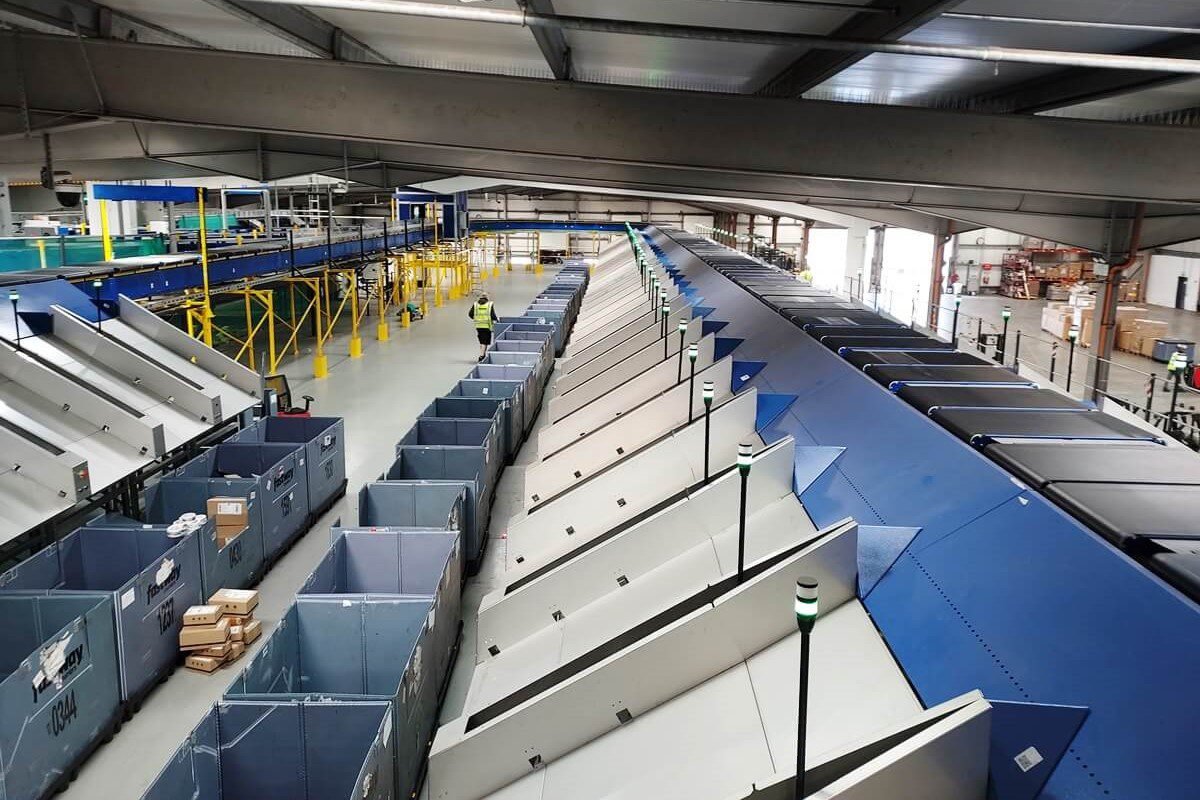
A cross-belt sorter is a high-speed automated sorting system used to distribute items into designated destinations.
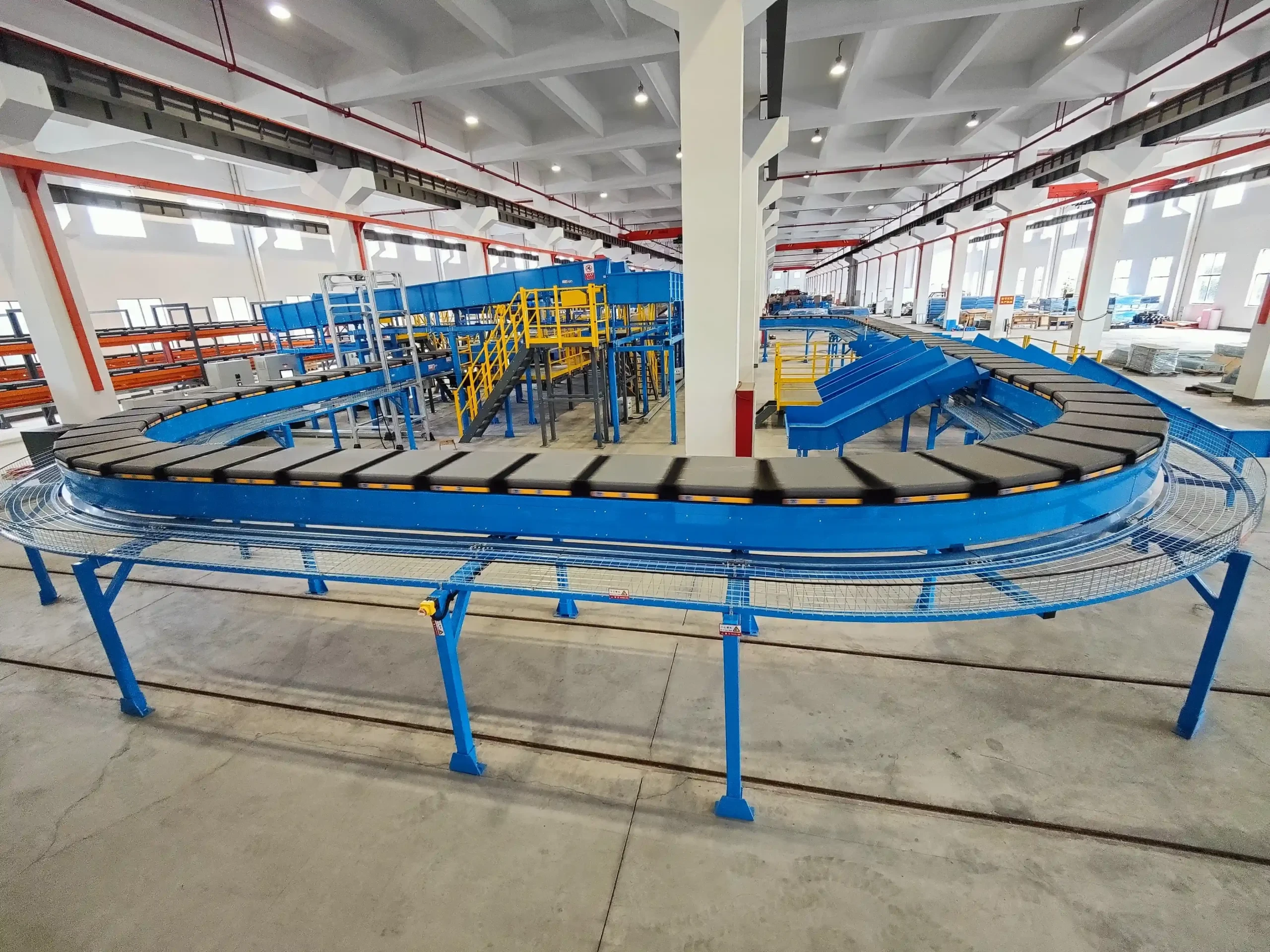
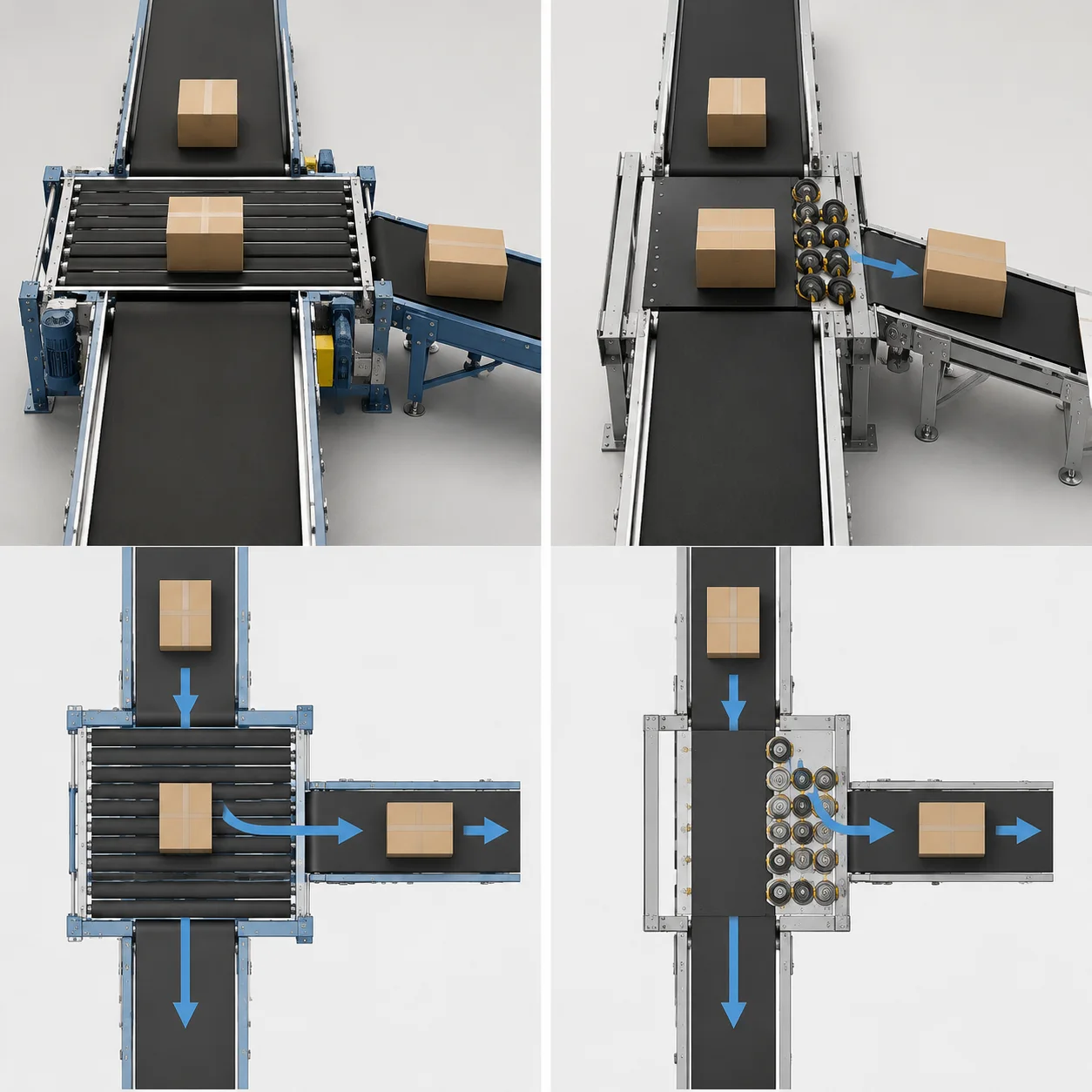
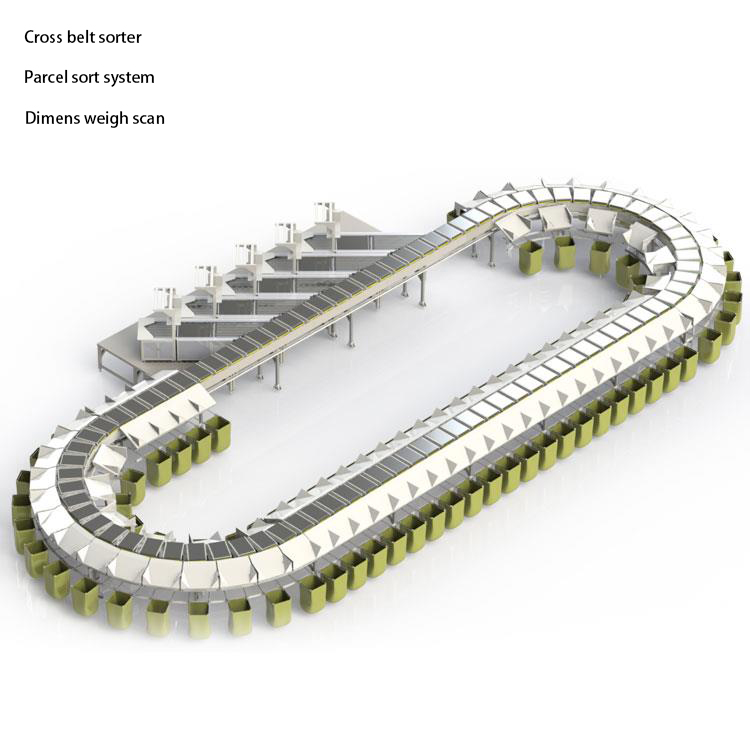
It consists of a continuous loop of conveyor carriers, each equipped with a small, independently controlled belt (called a “cross belt”). These belts can move items laterally off the main conveyor line into designated chutes or bins.
Unlike traditional tilt-tray or chute-based systems, cross-belt technology provides:
- Greater control over individual item movement
- Higher sorting accuracy
- Reduced mechanical impact on parcels
- Improved handling of diverse package types
Each carrier acts as an independent transport unit, capable of receiving a package, carrying it through the system, and discharging it precisely at the correct destination point.
Core Components of a Cross-Belt System
A typical cross-belt sorter includes several integrated components:
1. Infeed System
This is where parcels enter the sorter.
Packages are scanned, weighed, and aligned before being placed onto individual carriers.
2. Carriers with Cross Belts
Each carrier contains a small belt that moves perpendicular to the main travel direction.
This allows precise lateral discharge of parcels.
3. Drive System
A central motor or distributed drive system keeps the entire loop moving at consistent speed.
Synchronization is critical for accuracy.
4. Scanning and Identification Units
These include:
- Barcode scanners
- QR code readers
- RFID sensors
- Vision systems
They ensure each parcel is correctly identified before sorting.
5. Control Software
The system’s “brain” assigns destinations and controls discharge timing.
Advanced algorithms determine:
- Optimal routing
- Carrier allocation
- Flow balancing
- System load management
6. Discharge Chutes
These are destination points where packages are directed.
Each chute corresponds to a specific zone, route, or customer destination.
How Cross-Belt Systems Achieve High Sorting Accuracy
The key to minimizing mis-sorts lies in precision control at every stage of the process.
Step 1: Accurate Item Identification
Before a package enters the sorter, it must be correctly identified.
Modern systems use high-speed scanning technologies that can read labels in milliseconds.
This ensures:
- Correct destination assignment
- Reduced manual input errors
- Real-time tracking updates
If identification fails, the system can automatically divert the item for manual inspection rather than risk a mis-sort.
Step 2: Intelligent Carrier Assignment
Once identified, each parcel is assigned to a specific carrier.
The system calculates:
- Distance to destination chute
- Carrier position
- System load balance
- Timing constraints
This dynamic assignment prevents congestion and ensures smooth flow.
Step 3: Controlled Acceleration and Movement
Unlike conventional conveyors that rely on passive movement, cross-belt systems use actively controlled carriers.
This allows:
- Stable parcel transport
- Reduced vibration
- Precise positioning
Even fragile or irregularly shaped items remain stable during transit.
Step 4: Precise Discharge Timing
The most critical stage in sorting accuracy is discharge.
Each carrier must release its parcel at the exact moment it passes the correct chute.
The system synchronizes:
- Carrier position sensors
- Belt activation timing
- Conveyor speed
- Package orientation
Even a fraction of a second of deviation can cause a mis-sort, so timing control is extremely precise.
Step 5: Continuous System Feedback
Modern cross-belt systems include real-time monitoring.
Sensors track:
- Carrier speed
- Package position
- Discharge success rate
- System congestion
If an error is detected, the system can automatically correct routing or flag exceptions.
Why Cross-Belt Systems Reduce Mis-Sort Rates
Several design features contribute to extremely low error rates.
1. Individual Carrier Control
Each item is handled independently.
This eliminates the cascading errors common in batch sorting systems.
2. Reduced Human Intervention
Automation minimizes manual handling, which is one of the biggest sources of sorting errors.
3. High-Precision Sensors
Advanced scanning systems ensure accurate destination assignment.
4. Predictive Software Logic
Modern control systems use predictive algorithms to anticipate flow issues before they occur.
5. Mechanical Stability
Smooth conveyor motion reduces the risk of item displacement during transport.
Handling a Wide Range of Parcel Types
One of the strengths of cross-belt systems is versatility.
They can handle:
- Small parcels
- Irregular shapes
- Soft packages
- Rigid boxes
- Lightweight items
- Medium-weight shipments
Unlike some older systems, cross-belt sorters are not limited to uniform package types.
Cross-Belt Systems vs. Traditional Sorting Technologies
To understand the advantages, it is useful to compare cross-belt systems with older technologies.
Tilt-Tray Sorters
Tilt-tray systems use trays that tilt to release items.
While effective, they have limitations:
- Less precise control
- Higher impact on fragile items
- Mechanical wear over time
Cross-belt systems offer more controlled discharge and better accuracy.
Chute-Based Sorting
Manual or semi-automated chute systems rely heavily on human input.
Disadvantages include:
- Higher error rates
- Slower throughput
- Labor dependency
Cross-belt systems significantly outperform chute-based methods in both speed and accuracy.
Sliding Shoe Sorters
These systems push items sideways using sliding shoes.
While fast, they may struggle with delicate or irregular items.
Cross-belt systems provide gentler handling.
Real-World Applications of Cross-Belt Systems
Cross-belt sorters are widely used in modern logistics networks.
E-Commerce Fulfillment Centers
Used for:
- Order consolidation
- Rapid shipping
- Returns processing
Postal and Parcel Networks
Used by national postal systems to handle millions of daily parcels.
Third-Party Logistics (3PL)
Supports multi-client warehousing operations.
Retail Distribution Centers
Ensures stores receive accurate inventory shipments.
Airport Baggage Handling (Adapted Systems)
Some high-end baggage systems use similar principles.
Key Factors That Influence Sorting Accuracy
Even advanced systems require proper configuration to maintain performance.
1. Label Quality
Poor barcode printing can lead to scanning errors.
2. System Speed Calibration
Incorrect speed settings can disrupt timing accuracy.
3. Maintenance Frequency
Dust, wear, and mechanical misalignment can reduce performance.
4. Software Updates
Control algorithms must remain optimized for evolving workloads.
5. Operator Training
Even automated systems require skilled supervision.
The Role of AI and Machine Learning
Modern cross-belt systems increasingly integrate artificial intelligence.
AI enhances:
- Load balancing
- Predictive maintenance
- Error detection
- Throughput optimization
Machine learning models analyze historical sorting data to improve future performance.
Over time, systems become more efficient and accurate.
Benefits Beyond Accuracy
While minimizing mis-sorts is the primary goal, cross-belt systems offer additional benefits.
Increased Throughput
Systems can process thousands of parcels per hour.
Reduced Labor Costs
Automation reduces dependency on manual sorting labor.
Improved Space Utilization
Compact system design allows efficient warehouse layouts.
Enhanced Scalability
Systems can be expanded as demand grows.
Lower Operational Risk
Fewer manual touchpoints reduce error and damage risk.
Sustainability Advantages
Efficient sorting contributes to:
- Reduced energy waste
- Optimized transportation routes
- Lower carbon footprint per package
Challenges and Limitations
Despite their advantages, cross-belt systems are not without challenges.
High Initial Investment
Installation costs can be significant.
Complex Maintenance Requirements
Advanced systems require skilled technicians.
System Downtime Sensitivity
Breakdowns can temporarily disrupt operations.
Space and Infrastructure Requirements
Facilities must be designed to accommodate system loops and support structures.
Future Trends in Cross-Belt Sorting Technology
The future of logistics automation is evolving rapidly.
Key trends include:
Fully Autonomous Warehouses
Minimal human involvement in sorting operations.
AI-Driven Decision Systems
Real-time optimization of parcel flow.
Robotics Integration
Collaboration between conveyors and robotic picking systems.
Cloud-Based Control Systems
Remote monitoring and diagnostics.
Energy-Efficient Designs
Reduced power consumption per parcel.
Conclusion
Cross-belt sorting systems represent one of the most advanced solutions in modern logistics automation. By combining precise mechanical engineering, intelligent software control, and real-time sensor feedback, these systems achieve exceptionally low mis-sort rates even under high-speed, high-volume conditions.
Their ability to independently control each parcel, accurately identify destinations, and execute precise discharge timing makes them far superior to many traditional sorting methods.
As global demand for faster and more accurate delivery continues to rise, cross-belt systems will play an increasingly critical role in shaping the future of warehousing and distribution.
For logistics operators seeking to reduce errors, improve throughput, and scale operations efficiently, cross-belt technology is not just an upgrade—it is becoming a foundational requirement for competitive performance in the modern supply chain.