

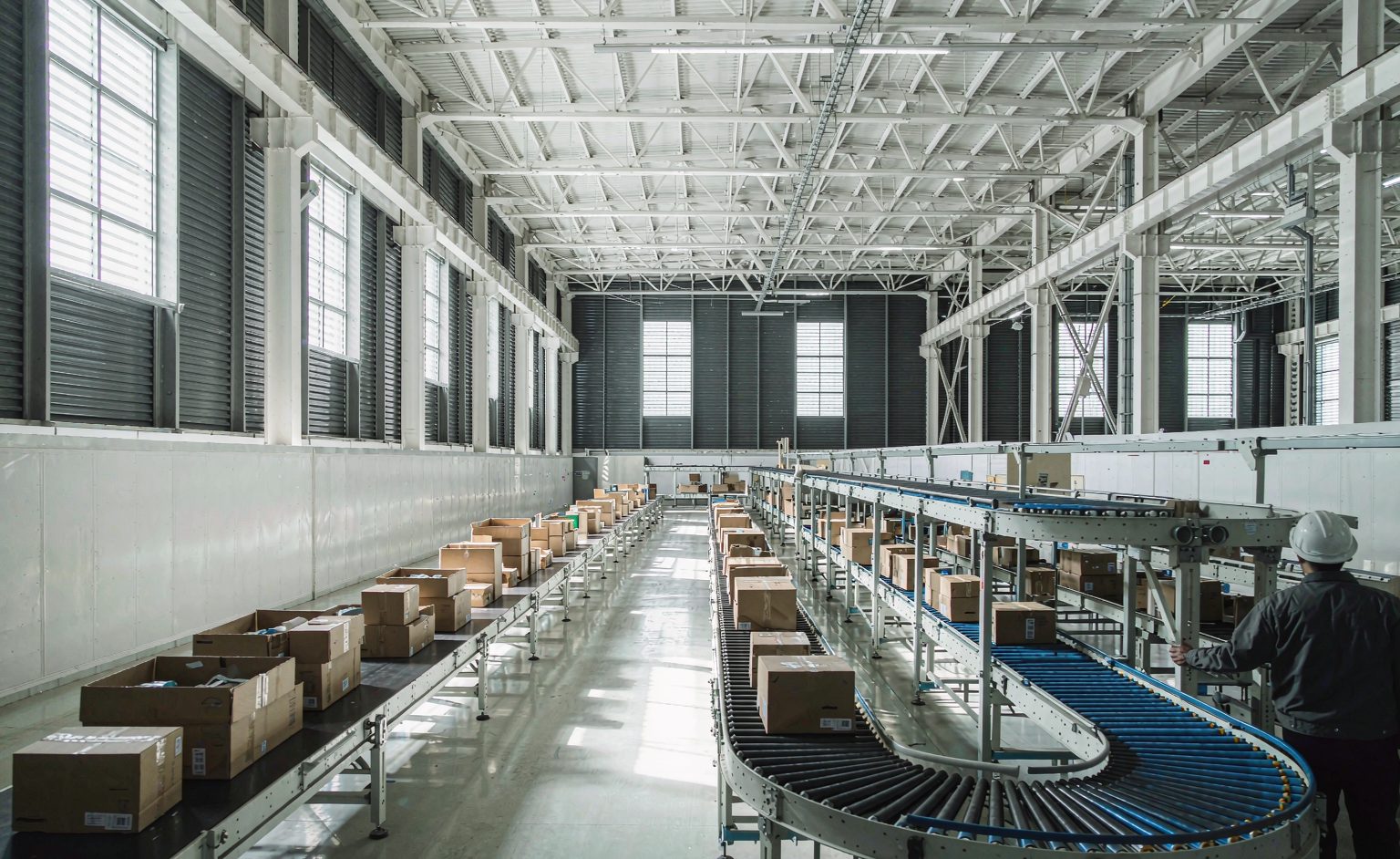
Over the past decade, the logistics industry has been undergoing an unprecedented transformation. With the rapid growth of cross-border e-commerce, on-demand delivery, and global supply chains, automation technology has become the key driver for logistics companies to improve efficiency and competitiveness.
Automated sorters, intelligent warehousing systems, and DWS (Dynamic Weighing and Scanning) equipment are now widely used in express delivery, e-commerce, and 3PL distribution centers. These solutions not only accelerate sorting speed but also significantly reduce dependence on manual labor, ensuring stable operations even during peak seasons.
Looking ahead, artificial intelligence, big data, and robotics will be more deeply integrated into logistics operations. For example, AI-driven demand forecasting combined with automated sorting systems is already being applied by industry leaders. As the cost of these technologies decreases, small and medium-sized enterprises will also benefit from the advantages of logistics automation.
Regional Adoption: The Same Trend at Different Speeds
Logistics automation is a global trend with a local clock. The same sorting technology lands differently across regions, and the differences matter to anyone selling or buying across borders:
| Region | Adoption driver | Typical entry system |
|---|---|---|
| Europe | Labour regulation and cost | Compact cross-belt, brownfield retrofits |
| North America | Peak volume and service promises | Large-scale loops with deep automation |
| Southeast Asia | E-commerce growth rates | Modular mid-rate sorters, expandable |
| Middle East | Hub positioning between continents | High-rate transit sorting, carrier-driven |
Regional differences trace back to economics, not sophistication. Where labour is scarce and expensive, automation arrives as a necessity and retrofits dominate; where volume is exploding, automation arrives as capacity and greenfield speed matters more. Suppliers who ship the same reference design everywhere lose to those who re-profile for the destination market — parcel mix, ceiling heights, power quality and maintenance culture all differ. The buyer-side lesson is to weight vendor references from your own region above global logos: a system proven in Rotterdam may need real re-engineering for Jakarta. The technology layers behind these systems are in where innovation lands in equipment, and the demand mechanics in what drives automated sorting demand. Reference: freight forwarding and warehouse infrastructure.
One further regional nuance deserves attention when reading the table: entry systems migrate. Compact cross-belts first proven in European retrofits now anchor Southeast Asian greenfields at a fraction of their original cost, because modularity travelled with the design. Buyers who track these migrations buy proven technology at the previous region’s prices — the quiet arbitrage of logistics equipment. The discipline is to verify that the migrating design carries its supporting ecosystem: local service capability, spare parts stock, and control software familiar to your market’s engineers. Hardware that travels without its support network is a discount that invoices later. Reference: technology transfer and supply chain networks.
The Global Lens
Read against the global landscape, this piece gains a second layer: the same automation logic is being adopted at three different speeds across regions, and the constraints that shape a European retrofit differ from a greenfield build. The regional adoption speeds puts those speeds side by side, and the direction they all point is the same one this article traces.