
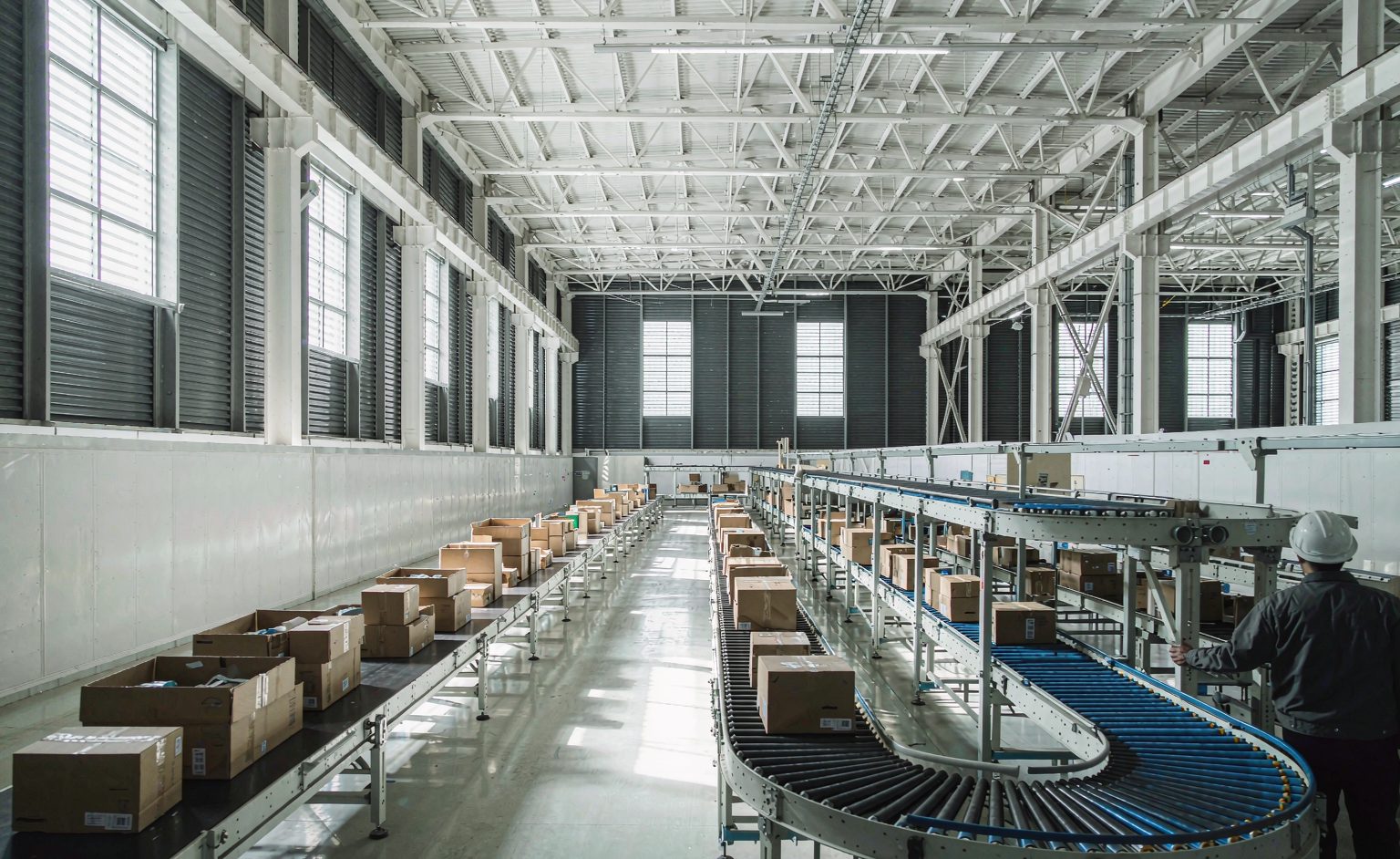


The logistics industry is undergoing rapid transformation, driven by e-commerce growth, rising customer expectations, and global supply chain challenges. Companies are investing in automation, digital platforms, and data-driven decision-making to improve efficiency and reliability.
Automated sorting systems, robotics, and AI-powered solutions are reducing manual labor, speeding up parcel handling, and minimizing errors. At the same time, digital tracking and warehouse management systems are enhancing visibility across the supply chain, ensuring that goods reach customers faster and with greater accuracy.
Sustainability is another key focus. Many logistics providers are adopting eco-friendly packaging, electric vehicles, and optimized routing strategies to reduce carbon emissions. This shift not only supports environmental goals but also improves long-term cost efficiency.
As global trade continues to expand, the logistics industry will play an increasingly critical role in connecting businesses and consumers. Companies that embrace innovation and adaptability will be best positioned to thrive in this evolving landscape.
Efficiency Is a Chain: Where It Actually Breaks
Modern logistics efficiency is a chain of hand-offs, and it breaks at hand-offs before it breaks anywhere else. Six links, six failure points:
| Link | What breaks there | What holds it |
|---|---|---|
| Inbound to dock | Trailers queue; labour idles | Dock scheduling tied to volume curve |
| Dock to sort | Unsingulated parcels starve induction | Staging discipline and pre-singulation |
| Sort to stage | Chutes fill; loop recirculates | Container swap without stop |
| Stage to load | Mismatch of lane to carrier arrival | Load plan synced to departure board |
| Load to line-haul | Missed cut-offs cascade a full day | Departure buffer rehearsed at peak |
| Any link | Data mismatch, silent mis-sorts | One label standard, one scan event |
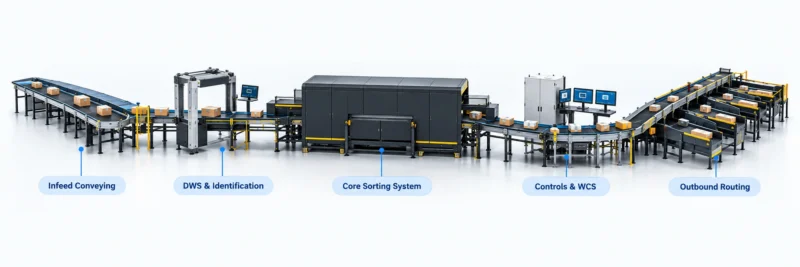
The second link quietly causes more automation disappointment than any other: a sorter is only as fast as the singulation feeding it, and staging discipline is labour culture, not capital. Sites that automate the loop before fixing staging buy expensive equipment that idles politely. The chain view also reframes vendor conversations — the useful question is not “what rate?” but “what rate at my staging reality?”, and the vendor who asks to see your inbound process before quoting is the one who has watched this movie. Efficiency projects succeed when they treat the chain as one system and spend on the weakest link first, whatever the equipment catalogue says. The induction half of this chain is dissected in sorting solution anatomy, and the demand side in rising demand for automated sorting. Reference: supply chain operations and container logistics.
The chain metaphor also explains how small delays travel. An upstream hiccup that costs five minutes at induction can cost an hour at the dock if no buffer absorbs it — variability amplifies as it moves downstream, the same arithmetic that produces the bullwhip effect in supply chains. Operations that map their break points therefore place their buffers deliberately: capacity held where amplification starts, not spread evenly where it looks tidy. Reference: the bullwhip effect and buffer stock logic.
Priced In, Not Promised
The value described here becomes real only when it is measured: throughput per shift, accuracy per thousand, labour hours reallocated, promises kept per wave. Operations that instrument all four registers convert the claims in this article into a baseline their next vendor must beat — the measurement frame lives in the value measurement frame.