


Energy rarely decides a sortation investment, and it often decides whether the operating case holds up afterwards. A line running two shifts consumes a meaningful amount every month, and the difference between an efficient configuration and a Wasteful one compounds quietly for years. Buyers who model only capital cost and labour find the gap later, in an operating budget nobody attributed to the machine.
The fix is measurement before commitment. Consumption is measurable on an existing line, and it is estimable on a proposed one if the estimate is built from components rather than from a headline figure.
Where the Energy Goes
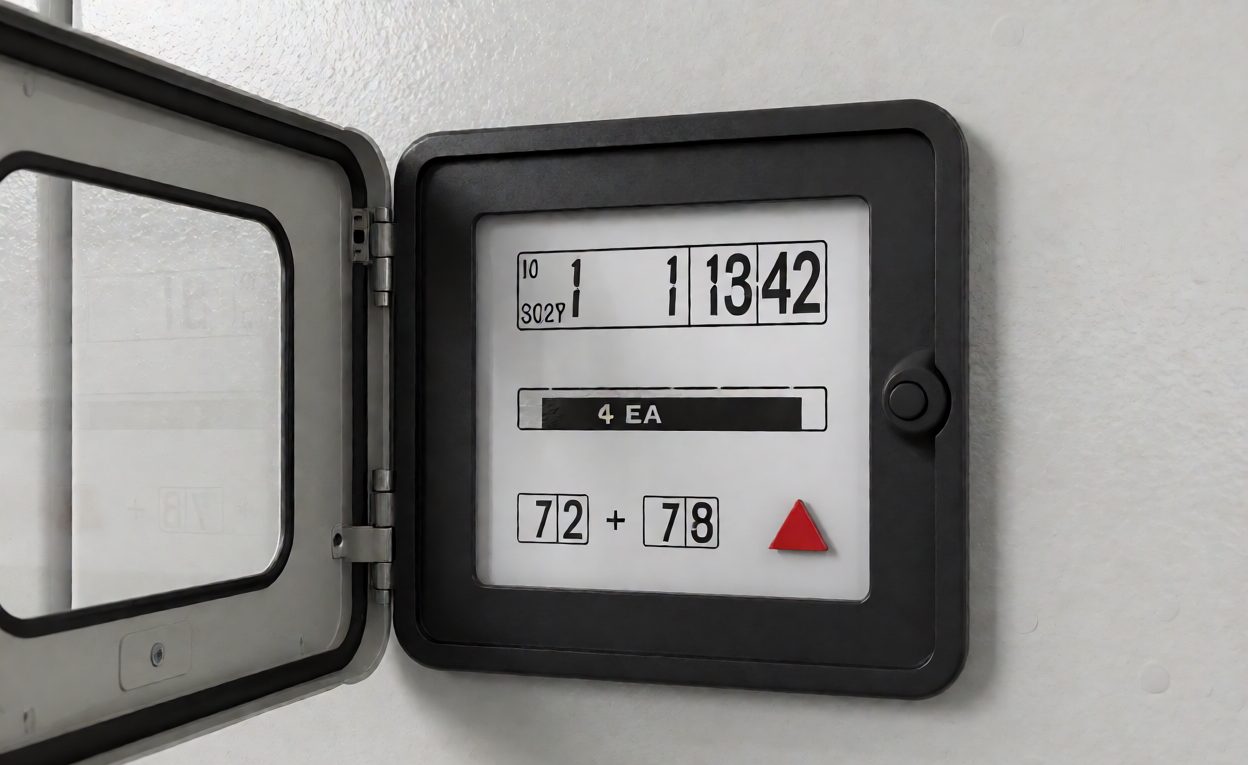
Four consumers account for most of it:
- Motors and drives, which dominate. Conveyor and sorter drives consume in proportion to load, acceleration duty and how much of the day they run under power rather than idle.
- Compressed air, where pneumatic diverters or actuators are used. Air is one of the most expensive utilities per unit of useful work, and leaks are a persistent, invisible cost.
- Controls, scanners and computing, which are relatively small individually and constant rather than variable.
- Facility load – lighting and heating in the sort hall – which is often larger than the machine and frequently excluded from the machine’s business case, which is a mistake when comparing options.
Measuring Rather Than Estimating
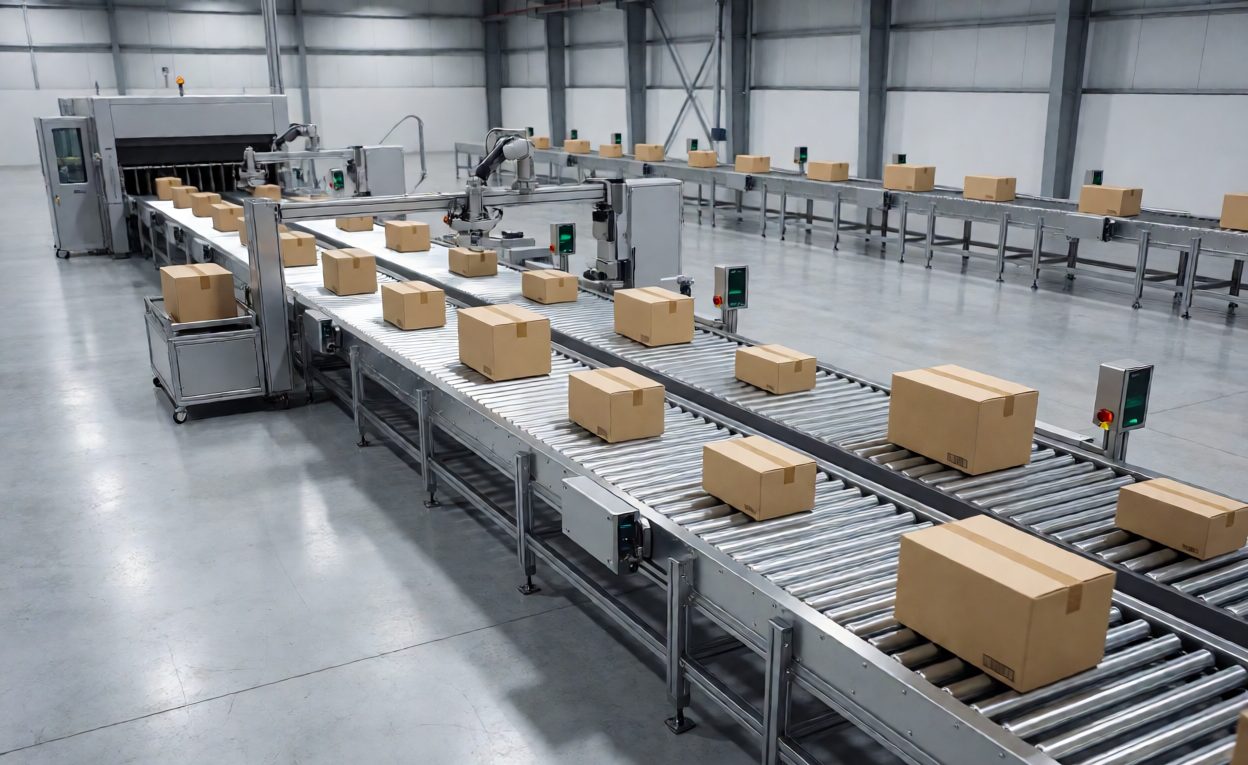
If a comparable line exists, meter it. Sub-metering the sorter’s supply over a representative week – including a peak day and a quiet day – produces a real number and, more usefully, reveals the difference between running and idle consumption. That difference is what operational changes can address.
Measure at three states: line running at typical throughput, line powered but idle, and line in standby or off. Many sites discover the idle figure is a large share of total consumption, which turns a behavioural change – powering down during breaks – into a genuine saving.
For a proposed line, ask the supplier for consumption at defined throughput rather than a nameplate rating. Nameplate is the maximum a motor could draw, not what it will draw, and sizing a business case on nameplate overstates cost just as badly as ignoring it understates cost.
Turning It Into Cost Per Parcel
The useful metric is energy cost per thousand parcels, computed as consumption in kilowatt-hours over a period, multiplied by the tariff, divided by parcels sorted. Two refinements make it decision-grade: use the tariff actually paid including any demand or peak charges, and separate fixed from variable consumption so the marginal cost of extra volume is visible.
That separation matters for peak planning. If most consumption is fixed, doubling throughput at peak barely increases energy cost and the marginal economics look attractive. If most is variable, peak volume carries a real marginal cost that should appear in the peak-season business case.

Technical Background
The measure is energy efficiency – useful output per unit of energy – rather than absolute consumption, because a faster line may legitimately use more. Where pneumatics are involved, compressed air is the relevant utility and one of the costliest per unit of work. Billing is based on metered kilowatt-hours, often with demand charges that penalise short peaks rather than total volume.
Questions to Put to a Supplier
Ask for four numbers: consumption at the throughput you will actually run, idle consumption, the split between electrical and pneumatic demand, and what design choices affect each. The last question is the informative one – a supplier who can say what drives consumption understands it, and one who cannot is quoting a figure.
Then include energy in the comparison rather than in the footnotes. Over a five-year model, the difference between two configurations on energy can be a material fraction of the capital difference, and it is the kind of saving that requires no behavioural change to realise.
Energy is one input to the cost model in the five-year total cost model and to ROI and payback. Drive technology differences are discussed in linear motors versus traditional drives, efficiency context in energy-efficient sorting systems, and component background in sorter components explained.
Compressed Air: The Line Item Everyone Forgets
On sorters with pneumatic diverters or air-actuated chutes, compressed air is frequently a larger operating cost than the electricity driving the loop. Air is expensive per unit of useful work, and leaks are invisible.
- Measure at the point of use: a flow meter on the sorter’s air supply separates machine consumption from system-wide losses.
- Leak baseline: record consumption during a planned stop; non-zero flow with no actuation is leakage.
- Actuation count: air use scales with the number of diverter operations, so a rate increase raises air cost even when the machine is unchanged.
Including air in the model can change supplier comparisons, because designs differ substantially in how much pneumatic actuation they use. A machine with electric actuation may cost more to buy and less to run, and only a model that includes both energy streams will show it. The same point applies to any ancillary load – lighting, heating in the sort hall, or extraction – that is switched on whenever the line runs.
The measurement discipline is the same as for electricity: a defined window, a stated parcel rate, and a note of ambient conditions. One-off spot readings are not comparable between sites and should not be used to build a business case. Where a supplier quotes consumption without stating the test window and the parcel mix, treat the figure as indicative and ask for the basis.
FAQ
How much energy does a sorter use?
It depends on throughput, duty cycle and whether pneumatics are involved. Measure at your actual throughput rather than relying on nameplate ratings.
Why measure idle consumption?
Because it is often a large share of the total, and it is the part that operational changes such as powering down during breaks can reduce.
Is compressed air significant?
Where used, yes. It is expensive per unit of useful work and leaks are a persistent hidden cost.
What metric should I use?
Energy cost per thousand parcels, using the tariff actually paid including demand charges.
Fixed or variable consumption – why does it matter?
It determines the marginal cost of peak volume, which changes the economics of peak-season throughput.
Should facility load be included?
Yes when comparing options, because lighting and heating in the sort hall can exceed the machine’s own consumption.
What should I ask a supplier for?
Consumption at your throughput, idle consumption, the electrical versus pneumatic split, and what design choices drive each.