


A sortation line does not usually stop because nobody knows how to fix it. It stops because the part is not on site and the supplier’s lead time is measured in weeks. The failure is a purchasing decision made months earlier, when a spares list was either copied from a generic template or left to the maintenance team’s memory.
Building a critical spares list is a classification exercise: what fails, what happens when it does, and how long replacement takes. That is enough to decide what to hold and what to order on demand.
Classify by Consequence and Lead Time
Every part sits in one of four boxes:
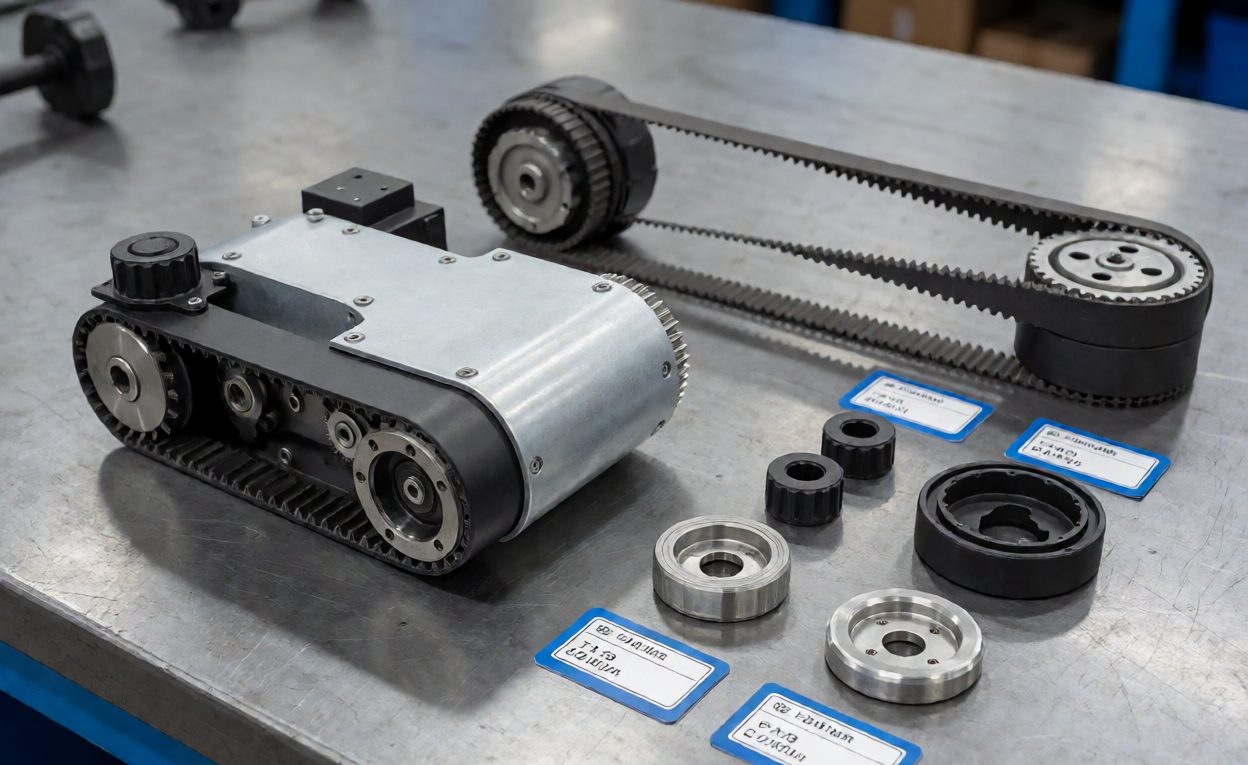
- High consequence, long lead: hold on site. These are the parts that stop the line and cannot be sourced quickly – specific drive modules, control boards, custom-machined items.
- High consequence, short lead: hold a minimum, or rely on a supplier stocking agreement with a defined response time.
- Low consequence, long lead: hold one, because the cost of waiting eventually matters even if the failure is not immediately stopping.
- Low consequence, short lead: order on demand. Standard bearings, fasteners and belts usually belong here.
The classification should be reviewed against actual failure data rather than against intuition. Most sites discover that the parts they hold are not the parts that fail, because the original list was built from a supplier’s generic recommendation rather than from their own history.

What Most Sites Under-Hold
Four categories are consistently under-stocked, usually because they look like commodity items until the line stops:
- Control and sensing components specific to the machine – a generic sensor is not a substitute for the one the control system expects.
- Drive and motor modules where the spare has to be a particular rating or firmware version.
- Custom mechanical parts with long manufacturing lead: machined brackets, special belts, bespoke chute liners.
- Consumables with a wear rate, where the question is not whether to hold them but how many per month.
Avoiding the Opposite Error
Over-holding is also expensive, and it produces a slower failure: a storeroom full of parts for a machine configuration that no longer exists. Two controls prevent it. Tie every held part to a specific machine and revision, and review the list whenever the configuration changes. Then set a review date – spares for a machine being decommissioned should be identified before the machine goes, not after.
Consignment or supplier-held stock is a legitimate middle path for expensive, slow-moving, high-consequence parts. It converts a capital cost into an availability commitment, and the term to negotiate is response time rather than price.

Technical Background
Held components are spare parts, held to restore function after a failure. Which ones matter is determined by failure intervals and by the consequence of the stoppage, not by unit cost. The holding itself is inventory, and it carries the same carrying-cost logic as any other stock – which is why holding everything is as wrong as holding nothing.
Building the List
Start from the supplier’s recommended list, then correct it with your own failure history and with the lead time for each line. Record for every part: machine and revision, consequence if unavailable, lead time, whether it is held or on agreement, and the last time it was actually used.
Then test the list against a scenario rather than a spreadsheet. Pick the three most damaging stoppages your line could suffer and check whether the part is on the shelf or in a supplier’s warehouse. That exercise finds gaps faster than any review.
Spares planning connects to the maintenance programme in the cross-belt sorter maintenance checklist and to fault handling in common failures and troubleshooting. Cost context is in the five-year cost model, component background in sorter components explained, and supplier terms in selecting a sorter manufacturer.
Obsolescence: Why Spares Lists Go Stale
A spares list written at commissioning is accurate for about two years. After that, component revisions, firmware changes and supplier substitutions quietly invalidate part numbers, and the list describes a machine that no longer exists.
- Review trigger: tie review to events rather than to the calendar – a control upgrade, a drive replacement, or a supplier end-of-life notice.
- Part number discipline: record the revision actually installed, not the one printed in the original manual.
- Substitution rules: agree in advance which alternative parts are acceptable, so a substitution made during an outage does not later become a warranty argument.
The cost of staleness is paid in a specific way: an outage occurs, the correct part is ordered from the list, and it does not fit. That is why the list belongs with the maintenance records rather than in a procurement folder, and why the review belongs to whoever signs off modifications.
One practical safeguard is consignment stock: parts that remain the supplier’s property until used, replenished on a defined cycle. This removes obsolescence risk for expensive, slow-moving items while keeping them physically on site. It is not free – suppliers price the arrangement – but it is usually cheaper than owning a part that is superseded before it is ever fitted. Where the agreement also covers the response commitments discussed in the warranty and service SLA, the two documents should reference the same part numbers so that a service call and a spares order never diverge.
FAQ
How do I decide what to hold?
Classify by consequence of failure and by lead time. High consequence and long lead means hold on site; the rest can often be sourced or placed on agreement.
Why do held spares not match failures?
Because the list came from a generic supplier recommendation rather than from the site’s own failure history and lead-time data.
Which parts are usually under-held?
Machine-specific controls and sensors, particular drive modules, custom machined parts, and consumables with a known wear rate.
Is consignment stock worth it?
For expensive, slow-moving, high-consequence parts, yes – negotiate response time rather than price.
How do I avoid obsolete spares?
Tie each part to a machine and revision, and review the list whenever configuration changes or a machine is retired.
Should generic substitutes be accepted?
Rarely for control and sensing parts, where the control system expects a specific component behaviour.
How should I test the list?
Walk through the worst realistic stoppages and check whether the required part is actually on site.