

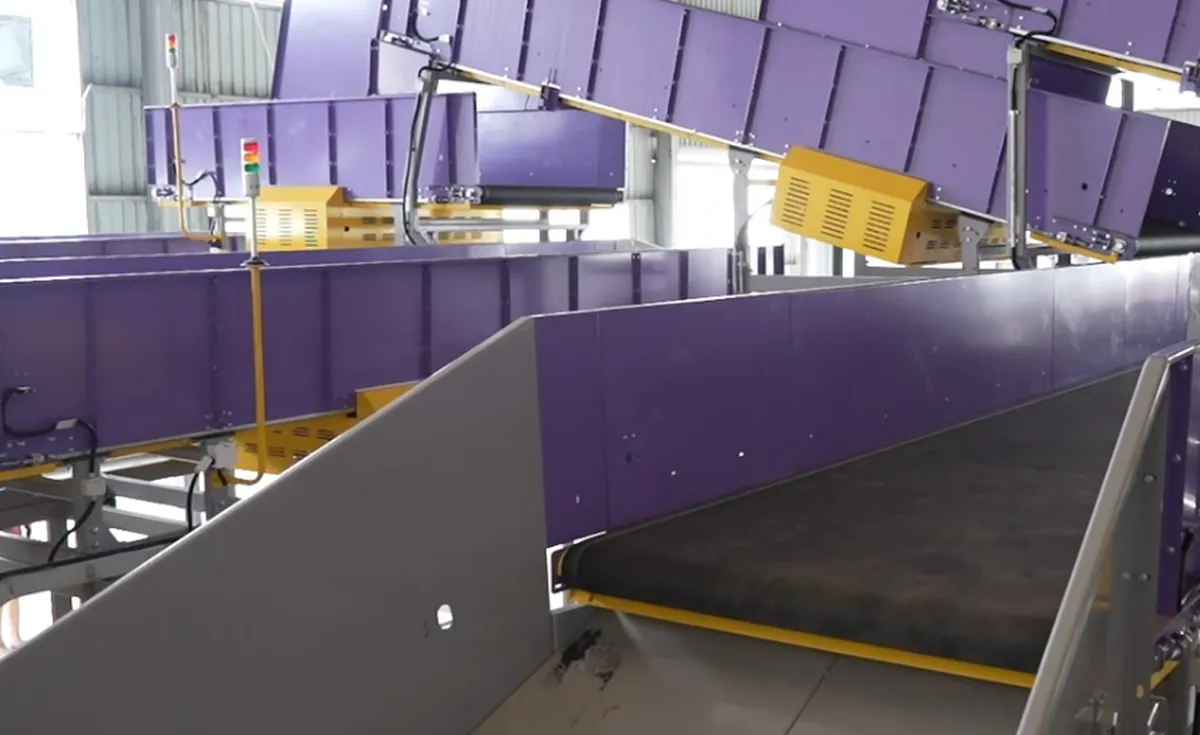
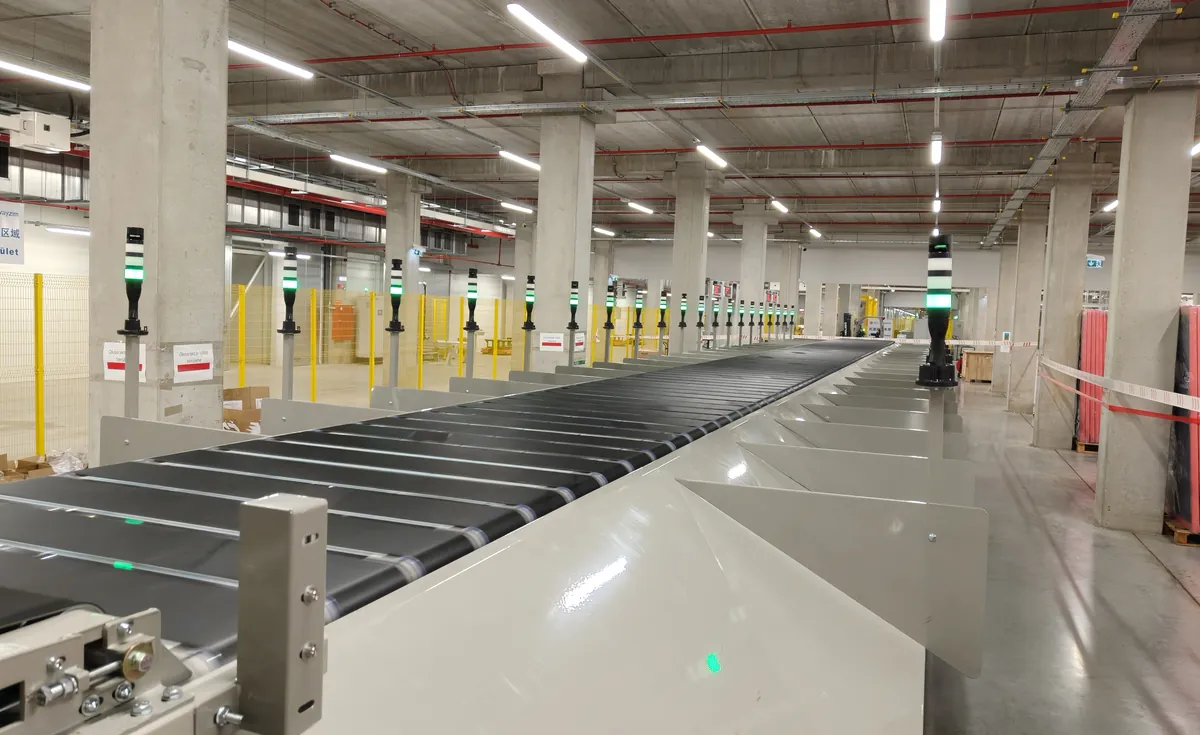
In today’s fast-paced logistics industry, sorting technology plays a decisive role in ensuring the smooth flow of goods from warehouses to end customers. With the rapid growth of e-commerce and international trade, traditional manual sorting methods can no longer meet the demand for speed, accuracy, and scalability. Why Sorting Matters Efficient sorting is the backbone of logistics operations. It directly affects delivery times, operational costs, and customer satisfaction. From parcels in courier networks to bulk goods in distribution centers, automated sorting solutions reduce bottlenecks and help companies stay competitive. Key Technologies Shaping the Industry 1. Automated Conveyor Systems – smoothly move goods with minimal manual handling. 2. Cross-Belt and Wheel Sorters – Enable fast and precise parcel distribution. 3. DWS Systems (Dimensioning, Weighing, Scanning) – Provide accurate package data for billing and routing. 4. AI and Vision Technology – Enhance recognition, reduce errors, and optimize sorting logic. Benefits for Businesses Higher throughput: Handle thousands of parcels per hour. Reduced labor costs: Automation minimizes repetitive manual tasks. Scalability: Systems can be expanded as order volumes grow. Data-driven operations: Real-time monitoring improves decision-making. Looking Ahead As logistics continues to evolve, smart sorting solutions will be at the heart of next-generation supply chains. Companies that embrace automation today are better positioned to deliver faster, more reliable, and more cost-effective services tomorrow. At TRUELISORT, we are committed to developing innovative sorting systems that meet the dynamic needs of global logistics.
Efficiency’s Next Chapter: From Speed Limits to Flexibility Premiums
The last chapter of logistics efficiency was written in speed. The next is written in flexibility — and it re-prices everything:
| Speed-era asset | Flexibility-era equivalent | Why the premium moved |
|---|---|---|
| Peak nameplate rate | Time to re-profile destinations | Peaks vary; changes are weekly |
| Fixed high-speed lines | Software-adjustable divert logic | Product mixes shift seasonally |
| Single-channel optimisation | Multi-profile handling in one flow | Channels blend in every order file |
| Manual exception benches | Flag-and-route exception paths | Recovery speed is the differentiator |
The premium moved because the environment stopped holding still. A rate number won in January at one parcel mix says little about October’s mix, but a system that re-profiles in an afternoon wins every month’s actual mix — and the buyers who understood this shift negotiate differently, asking for change-time demonstrations alongside rate demonstrations. The re-pricing reaches the balance sheet too: flexibility-heavy systems hold value better, because their capability generalises across the business’s evolution while a speed-specialised line matches only the demand shape it was built for. None of this retires the speed requirement — throughput remains table stakes — but the tie-breaker in modern evaluations has decisively moved to how gracefully a system absorbs change. The smart-solutions layer enabling it is in smart logistics solutions, and the industry-wide reshaping in automation reshaping logistics. Reference: Industry 4.0 and throughput.
The flexibility premium also becomes negotiable once change costs are explicit: ask each vendor what a destination change, a profile change and a rule change cost — in money and in elapsed days — and the options pricing writes itself. Systems whose changes are cheap are structurally more valuable, and the quote reveals which. Reference: activity-based costing and real options logic.