
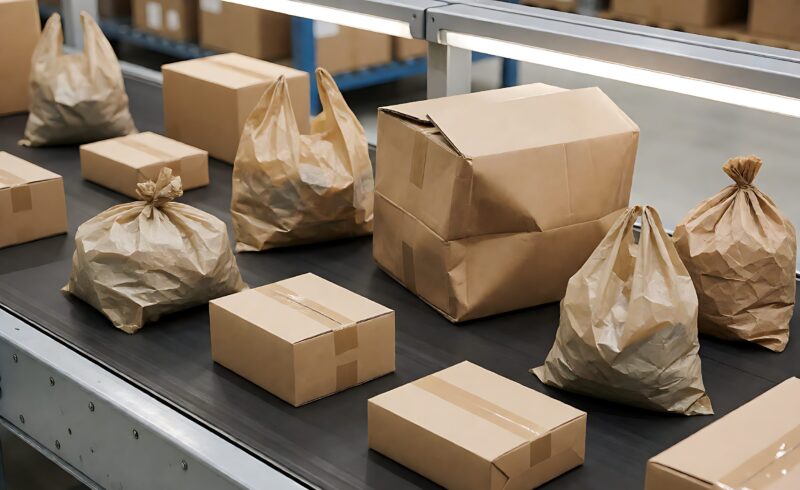
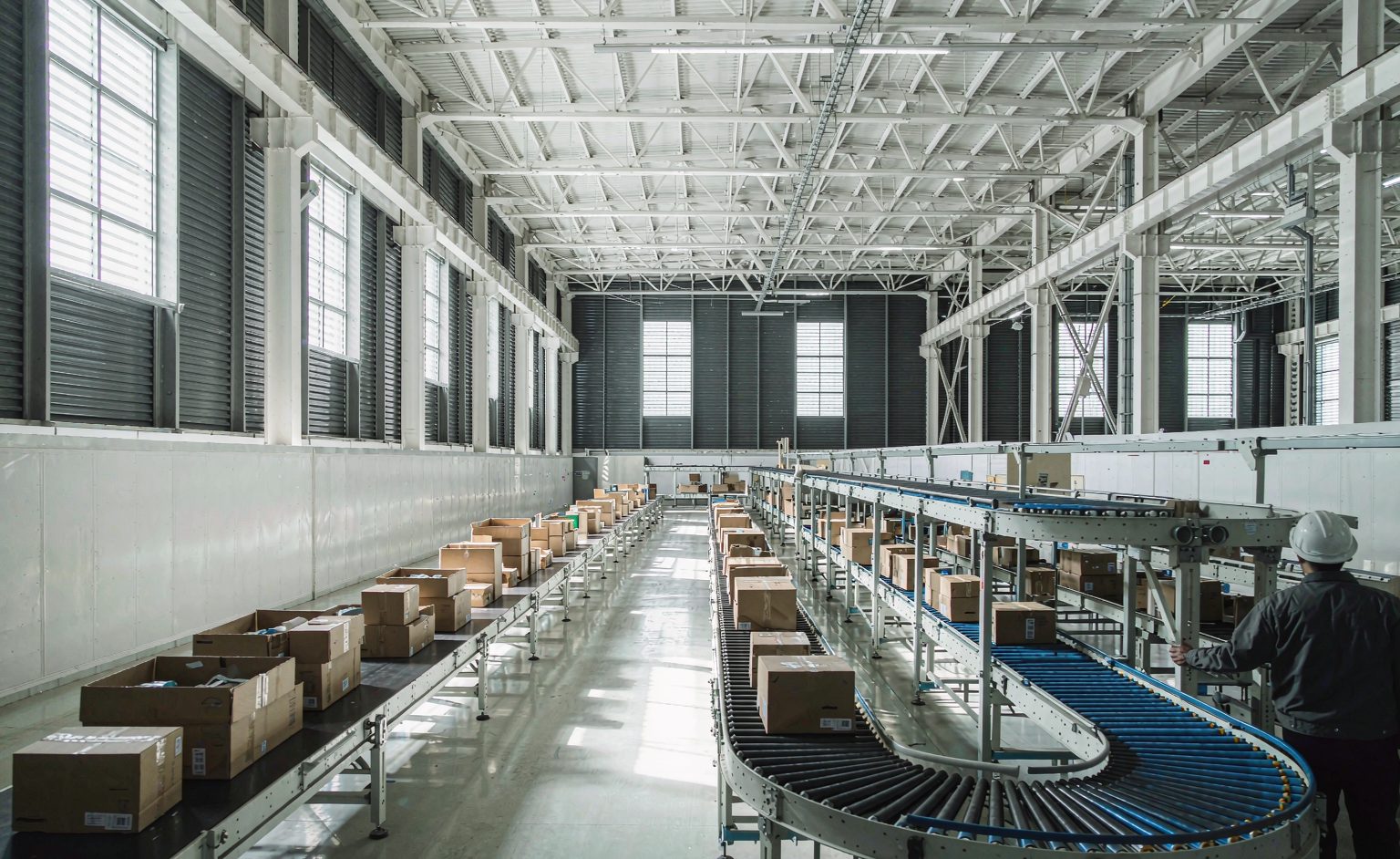
Sorting systems are used to sort items in warehouses or distribution centers based on their destinations. Random flows of items are sorted into orders ready for shipping. The destination depends on the type of company or application within the supply chain. For example, an outbound sorter for postal or courier companies often sorts by routes or postal code to gather all items for one driver. However, retail companies sort the items per store. When looking at e-commerce orders, items can be sorted on order level.
Within the supply chain, the sorter can be used for various applications to bring more efficiency. Typical stages within the supply chain where a sorter can be used include inbound, return, outbound or shipping.

Benefits of a sorter
- Increase efficiency
- Allow faster scaling of your operation
- Relieve operators
- Decrease the number of sorting errors
- Lower operational or service related costs
- Decrease lead times
Manual, semi-automatic or automatic sorting
Sorters come in a large variety. Automatic sorters range from conveyor-based sorters like the cross-track sorter to carrier-based sorter like the slide tray sorter or bomb-bay sorter. Based on aspects like the required capacity and the available budget, the choice might be made to select a manual sorting system or (semi-)automatic sorting system. The full list of sorter types is endless and constantly evolving, but most common types include:
(Semi-)automatic sorting
- Split tray sorter (bomb-bay sorter)
- Slide tray sorter
- Vertical sorter (LR-sorter)
- Cross-track sorter
- Tilt tray sorter
- Pop-up sorter
- Pusher sorter
Manual sorting
- Put-to-light (sort-to-light)
- Scan-to-sort
- Touch-to-sort
- Screen-to-sort
The process
Sorters do have one thing in common, namely the process that they support and the steps they take to fulfil that process. It starts with the infeed of items, also known as picking. The items are gathered from the warehouse, inventory or couriers and are transported to the induction zone. The items are then identified and fed into the sorter, a process that can be executed manually or automatically. The image above shows a manual induction zone where operators scan the products before putting them directly into the sorter. The image below shows an example of automatic induction with a paddle belt. Operators receive a constant flow of items via the paddle belt and put the items on a conveyor, on which items are automatically scanned before entering the sorter. Final stage is ofcourse the sorting of the product to a specific destination based on the predefined parameters.

The Core Components of Any Sorting System
Strip the marketing away and every sorter is four subsystems. Understanding them is what lets you compare two vendors’ quotes on equal terms.
| Subsystem | Job | Where cost hides |
|---|---|---|
| Induction | Present parcels single-file, gap-controlled | Manual feed labour |
| Identification | Read label / barcode / RFID | Scan redundancy for dirty labels |
| Diverter | Move parcel to its lane | Wear parts, speed rating |
| Control | Map reads to lanes, log exceptions | Integration with WMS |
How Throughput Is Actually Calculated
“20,000 sorts per hour” is a laboratory number. Real capacity is gated by induction rate and label-read rate: if induction only presents 12,000 items/hour, the diverter’s 20k rating is irrelevant. Always ask for the figure at your own label quality and parcel mix.
Frequently Asked Questions
Is a sorter the same as a conveyor?
No. A conveyor moves goods; a sorter also decides where each one goes. A conveyor system without divert logic is transport, not sorting.
Can I add a sorter to an existing conveyor?
Often yes, but induction and identification must be added at the right point, and the existing line’s speed must match the diverter’s minimum gap. Retrofit feasibility is a site survey, not a catalogue answer.
See how these components combine in our cross-belt sorter systems guide and the scability design notes.