To future-proof a growing logistics center, facility directors must avoid rigid, fixed-capacity automation. Data from 2026 shows that designing a scalable infrastructure using modular components allows facilities to increase throughput from 5,000 to 20,000+ parcels per hour without discarding existing hardware. By partnering with a modular automated sorting systems manufacturer, companies reduce CapEx expansion costs by 68% and cut operational downtime during upgrades from weeks to mere hours.
In the hyper-competitive intralogistics landscape of 2026, predicting fulfillment volume five years into the future is nearly impossible. A mid-sized regional logistics center processing 10,000 orders a day might acquire a new B2B contract or experience viral e-commerce growth, suddenly requiring the capacity to handle 30,000 orders daily. When this volume shock hits, a rigid material handling system becomes the ultimate operational bottleneck.
Historically, the solution to outgrowing a sorting system was “Rip and Replace”—tearing down millions of dollars of perfectly functional steel to build a larger loop. Today, data-driven supply chain architects are taking a different approach: native scalability. In this analytical report, the engineering team at Truelisort dissects the financial and operational metrics behind scalable warehouse automation, proving mathematically why modularity is the most critical feature in modern system design.
📊 2026 Key Discoveries: The Economics of Scalability
- CapEx Savings on Expansion: Upgrading a modular sorting network costs 68% less in capital expenditure compared to replacing a rigid, continuous-loop legacy system.
- Downtime Mitigation: Modular sorting conveyor systems can be expanded over a single weekend (average 18 hours downtime), whereas rigid system overhauls halt operations for an average of 14 to 21 days.
- Floor Space Utilization: Scalable, multi-tier automated sorters increase processing capacity per square foot by 52%, delaying the need for expensive facility relocation.
- Market Adoption: According to the 2026 Intralogistics Modernization Index, 89% of Tier-1 logistics providers will only source equipment from an automated sorting systems manufacturer that guarantees plug-and-play modularity.
*Data Source: Compiled from 2026 Global Material Handling Scalability Reports & Truelisort proprietary deployment metrics. Updated: May 2026.
1. The Financial Penalty of Rigid System Design
To understand the value of a scalable system, we must analyze the data behind non-scalable architecture. If a logistics center installs a traditional, welded-frame shoe sorter built exactly for a 6,000 PPH (parcels per hour) capacity, hitting 7,000 PPH results in cascade failures, recirculating jams, and massive labor overtime.
When that facility is forced to upgrade, the financial penalty is twofold: First, the original capital investment is scrapped (sunk cost). Second, the entire line must be shut down, forcing the facility to reroute volume to 3PL partners at premium rates. Our data indicates that this “growth penalty” effectively wipes out 18 months of net profit for a mid-sized fulfillment center.
2. Comparative Analytics: Modular Expansion vs. Traditional Overhaul
Let’s examine a simulation based on actual 2026 material handling data. A facility needs to expand its outbound sortation capacity from 4,000 PPH to 12,000 PPH to accommodate a newly acquired e-commerce brand.
| Expansion Metric | Traditional Rigid System (Rip & Replace) | Scalable Modular System (Plug & Play) | The Scalability Advantage |
|---|---|---|---|
| Hardware Cost | $1.2M – $1.8M (Entire new line) | $350K – $450K (Add-on modules only) | ~70% Hardware Savings |
| Operational Downtime | 14 to 21 Days | 18 to 24 Hours (Weekend Integration) | Prevents Revenue Leakage |
| Engineering & Labor | High (Heavy welding, tear-down) | Low (Standardized bolting/wiring) | Rapid Deployment |
| Software Integration | Full WCS Reprogramming | Node addition via WCS UI | Zero Software Disruption |
3. The Architecture of a Scalable Automated Sorting System
How does a premier automated sorting systems manufacturer actually engineer for growth? It requires a paradigm shift from building “massive monolithic machines” to building “intelligent hardware nodes.” Here are the three pillars of a scalable logistics infrastructure:
A. Modular Hardware (The Building Blocks)
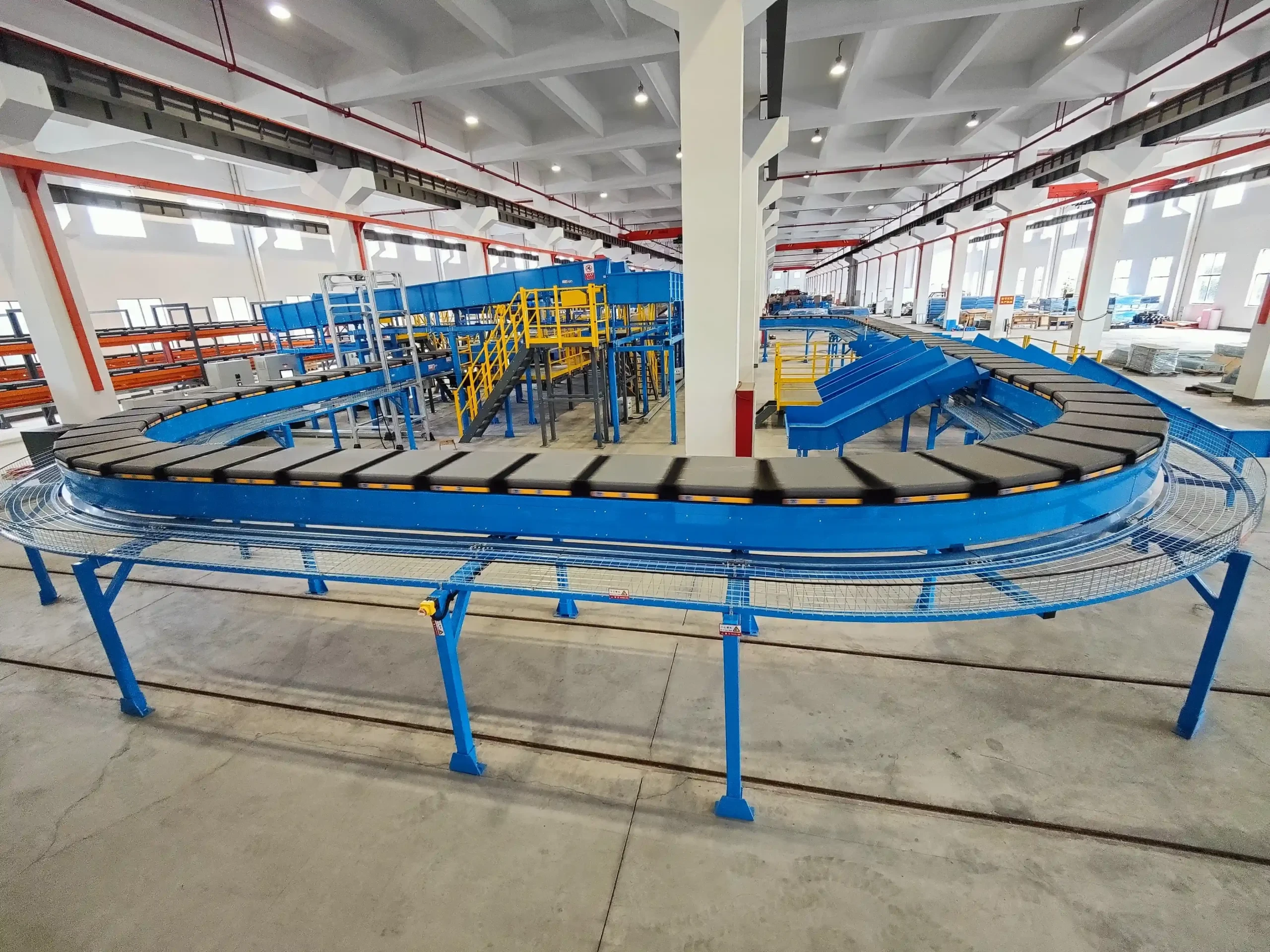
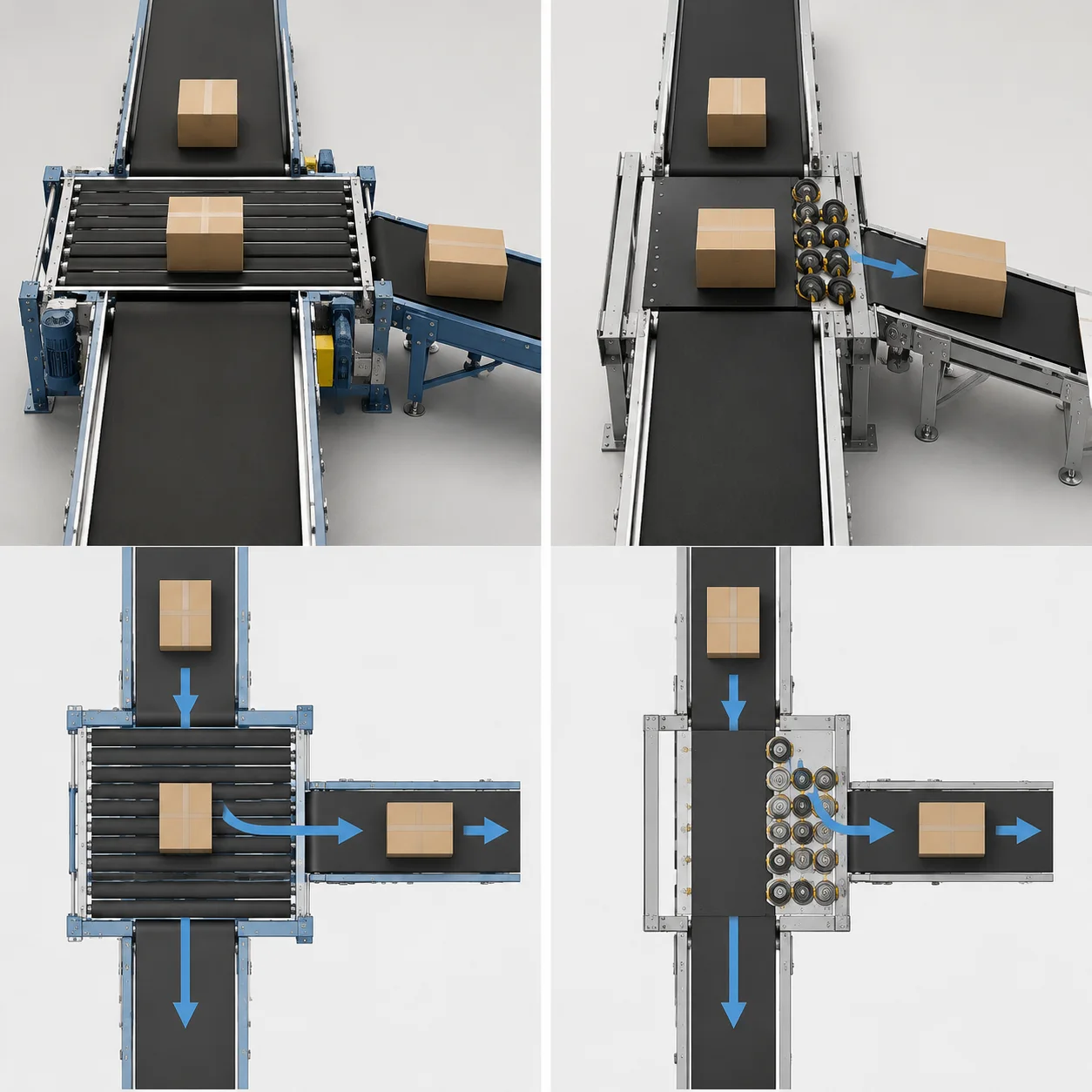
Scalability begins with standardized, pre-engineered modules. Instead of custom-welding a massive divert section, facilities should utilize a narrow belt sorter. These systems consist of interchangeable cassette-style belts and standardized pop-up roller modules.
For instance, if you install a Narrow Belt Sorter TR300-1750 and later need to add six more destination chutes to handle a new carrier lane, our engineering team simply unbolts a standard transport section and drops in a new divert module. The mechanical integration takes minutes, not days.
B. Dynamic Gapping and Multi-Induction
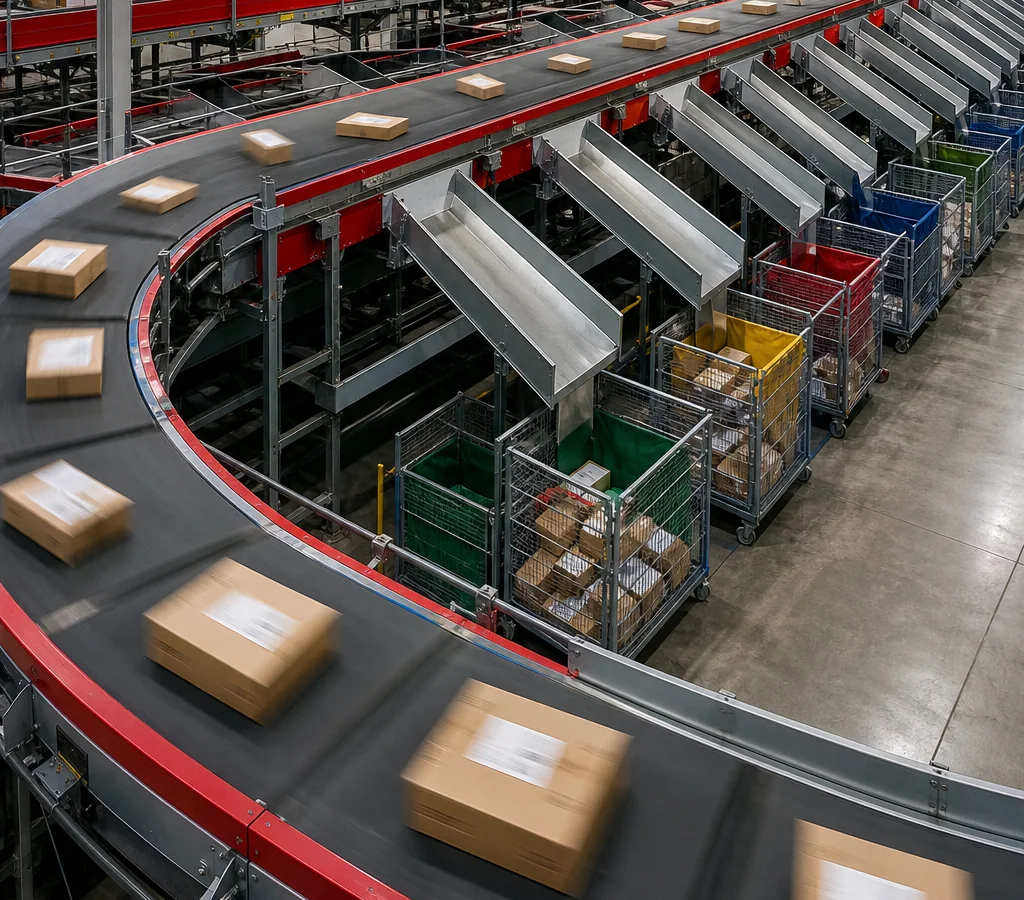
A sorter is only as fast as the items being fed into it. To double the capacity of a high-speed loop, you do not necessarily need a bigger loop; you need more induction points. Scalable warehouse automation allows managers to physically bolt on secondary or tertiary automated induction lines. By upgrading the dynamic gapping sensors and adding a DWS (Dimensioning, Weighing, Scanning) tunnel, you safely pack items closer together on the belt, instantly increasing the machine’s throughput limit.
C. Future-Proof Software (The WCS Layer)
Hardware modularity is useless if the software cannot recognize it. Modern scalable architecture requires a Warehouse Control System (WCS) built on microservices rather than hard-coded logic. When new divert lanes are added, a modern WCS automatically maps the new hardware nodes, requiring mere configuration rather than thousands of lines of new PLC code.
When evaluating an automated sorting systems manufacturer in 2026, do not ask “What is the maximum capacity of this machine?” Instead, ask, “What is the precise cost, downtime, and engineering process required to increase this machine’s capacity by 50% in three years?” A true integration partner will have a documented roadmap for your specific industry application.
4. Frequently Asked Questions (FAQ)
Q: Can a linear sorting system be scaled as easily as a loop system?
A: Yes. While a cross-belt loop is highly scalable by adding induction stations or expanding the physical track length, linear systems (like narrow belt or modular wheel sorters) are arguably even easier to scale. You simply add more linear meters to the end of the line or splice a new divert node into the middle of the existing conveyor.
Q: Does scalable equipment cost more upfront?
A: Initially, standardizing components and utilizing intelligent micro-controllers on modular equipment may carry a slight premium (approx. 5-10%) over basic, rigid legacy hardware. However, this marginal upfront cost acts as insurance, saving millions of dollars when the first volume expansion is required.
Q: How do I know when it is time to scale my automated sorting system?
A: Monitor your peak throughput data. If your system runs at >85% of its maximum mechanical capacity for more than 4 consecutive hours during non-peak seasons, or if recirculation rates (items missing their diverts) exceed 3%, your logistics center is bottlenecking and requires immediate modular expansion.
5. Conclusion: Design for Tomorrow, Deploy Today
Data from the 2026 logistics sector paints a definitive picture: survival belongs to the adaptable. Investing in a highly rigid automation framework is a financial liability in a rapidly changing e-commerce market. By prioritizing scalable architecture, you ensure your logistics center can seamlessly adapt to market surges, carrier changes, and SKU profile shifts.
Ready to build a fulfillment engine that grows organically with your business volume? Explore our bespoke, highly modular intralogistics solutions, and contact Truelisort’s engineering team today. Let an industry-leading automated sorting systems manufacturer future-proof your facility’s ROI.

Truelisort Systems
A premier automated sorting systems manufacturer specializing in scalable, modular intralogistics technology for global fulfillment centers.
✉️ Email: business@truelisort.com |
📱 WhatsApp: +86 18658557670
🔗 Connect on: LinkedIn | YouTube | Facebook