


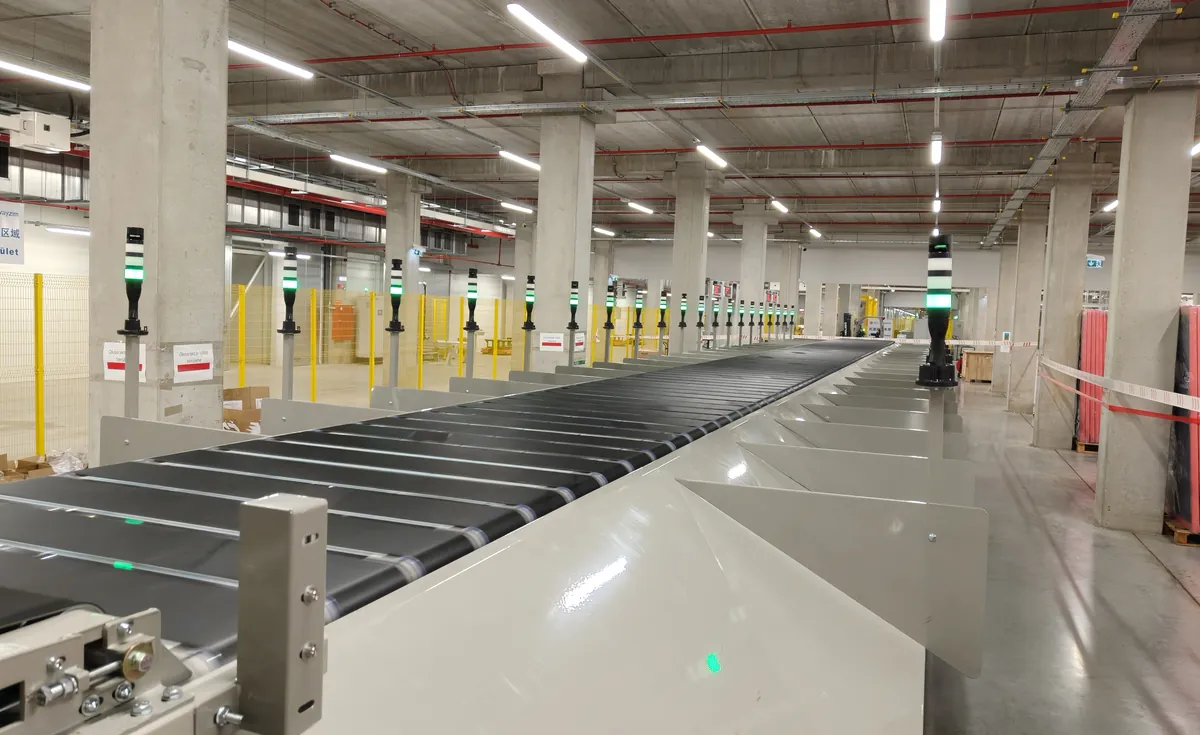
As e-commerce volumes continue to soar, the demand for high-speed, high-accuracy parcel sorting has never been greater. Manual sorting methods are simply not sustainable when dealing with thousands of parcels per hour. That’s where automated sorting solutions come in.
Modern sorting systems—such as cross-belt sorters, linear sorting machines, and spiral chute conveyors—are reshaping the way goods move through distribution centers. These systems combine sensors, barcode readers, and AI-powered logic to identify, route, and dispatch packages with minimal human intervention.
Increased throughput, reduced error rates, and lower labor costs are just a few of the benefits. Some systems even allow integration with DWS (dimension, weight, scanning) units and telescopic conveyors to streamline inbound and outbound logistics.
In the coming years, we can expect to see even more compact, modular, and energy-efficient designs that cater to facilities of all sizes. Businesses that embrace these technologies are setting the stage for sustainable growth and operational excellence.
Keywords: parcel sorting, e-commerce fulfillment, warehouse automation, DWS system, logistics innovation
The Fulfilment Game Changer: Four Numbers on Peak Day
Parcel sorting automation earns “game changer” on exactly four numbers, best examined on the year’s worst day:
| Peak-day number | Manual operation | Automated operation |
|---|---|---|
| Last safe cut-off | Pulled forward as volume reveals itself | Held at planned hour; rate is known |
| Overtime hours | Double shifts, agency surge | Nameplate absorbs the curve |
| Error-driven re-ships | Cluster on the worst days | Flat; accuracy is volume-independent |
| Next-day recovery | Backlog eats into normal trade | Standard profile resumes at open |
The recovery row is the one that compounds across a season. A peak day that borrows from the next day leaves the operation chasing its own backlog through the busiest trading window; a peak day that stays inside the plan means every day starts even. Over a ten-peak season, that difference decides whether the operation ends December exhausted or intact — and whether the customer experience data for the quarter reads like a dip or a plateau. Holding last safe cut-off also has a revenue echo that finance sees directly: every promotion-day order taken an hour later is revenue that manual cut-offs would have deferred or lost. Game changer, in the end, is not the sorter’s speed but the operation’s predictability — the same quality customers reward with repeat orders. The order profiles driving these peaks are in four order profiles, four problems, and the peak rehearsal discipline in the four curves. Reference: parcel delivery and peak season operations.
Peak-day numbers deserve a ceremony afterwards, not just a sigh of relief. The after-action review held within a week — while memory is honest — converts the day’s exceptions into next year’s design inputs: which chutes overflowed, which profiles bent, which crew saved the hour. Operations that institutionalise the review buy their next peak’s improvements at the price of a meeting. Reference: after-action reviews and continuous improvement.
The E-commerce Ledger
For e-commerce operations specifically, the arithmetic here compounds across peak season: accuracy rates multiply through thousands of parcels per hour, and small percentage gains become hundreds of saved re-ships. The parcel-level economics are quantified in the parcel sorting economics, where the decisive shift framing gets its numbers.