
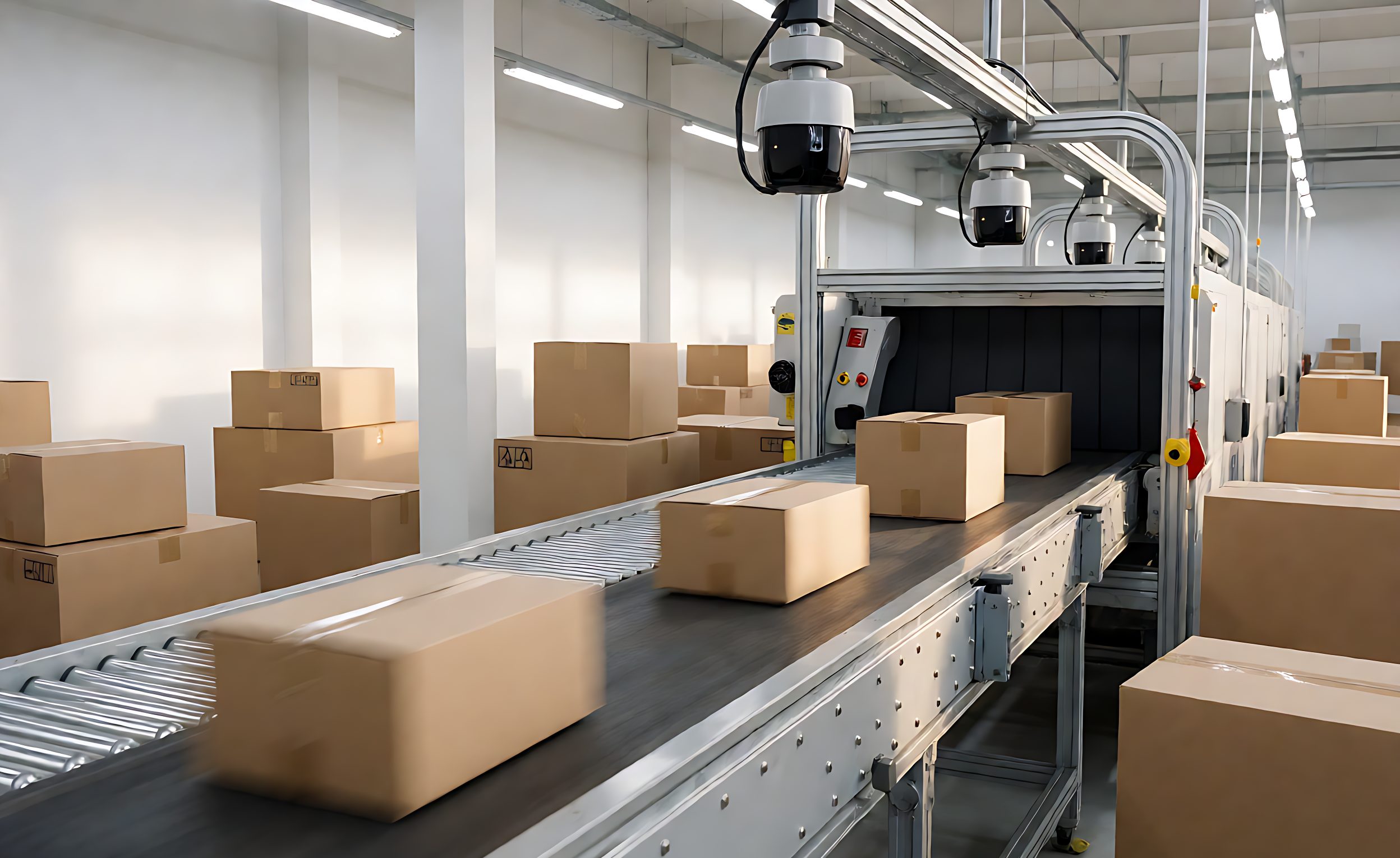

A sortation line consumes electricity and returns almost all of it to the building as heat. That is not a defect; it is physics. But it has a planning consequence that gets missed surprisingly often: the HVAC design for a sort hall has to absorb a machine-sized heat load, and if that load enters the design after the ventilation layout is fixed, the fixes available are the expensive ones – bigger units, new ductwork, or a hot sort hall in summer that operators compensate for with portable fans and complaints.
Heat belongs in the warehouse planning conversation at the same stage as power and floor loading: early, with numbers, and with the supplier’s commitment on where the heat actually appears.
Where the Heat Comes From
Four sources account for nearly all of it:
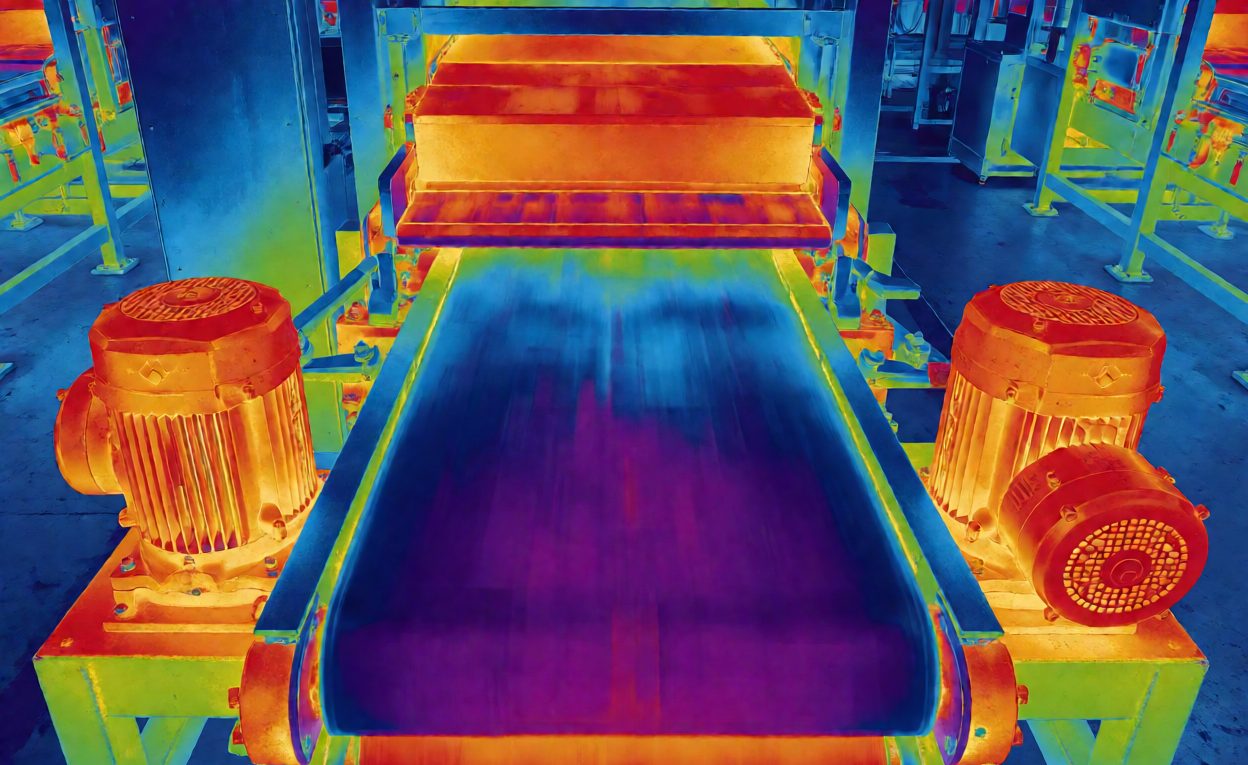
- Drives and motors, the largest contributor. Motor losses convert a share of every kilowatt drawn into heat at the motor body, along the loop, all day.
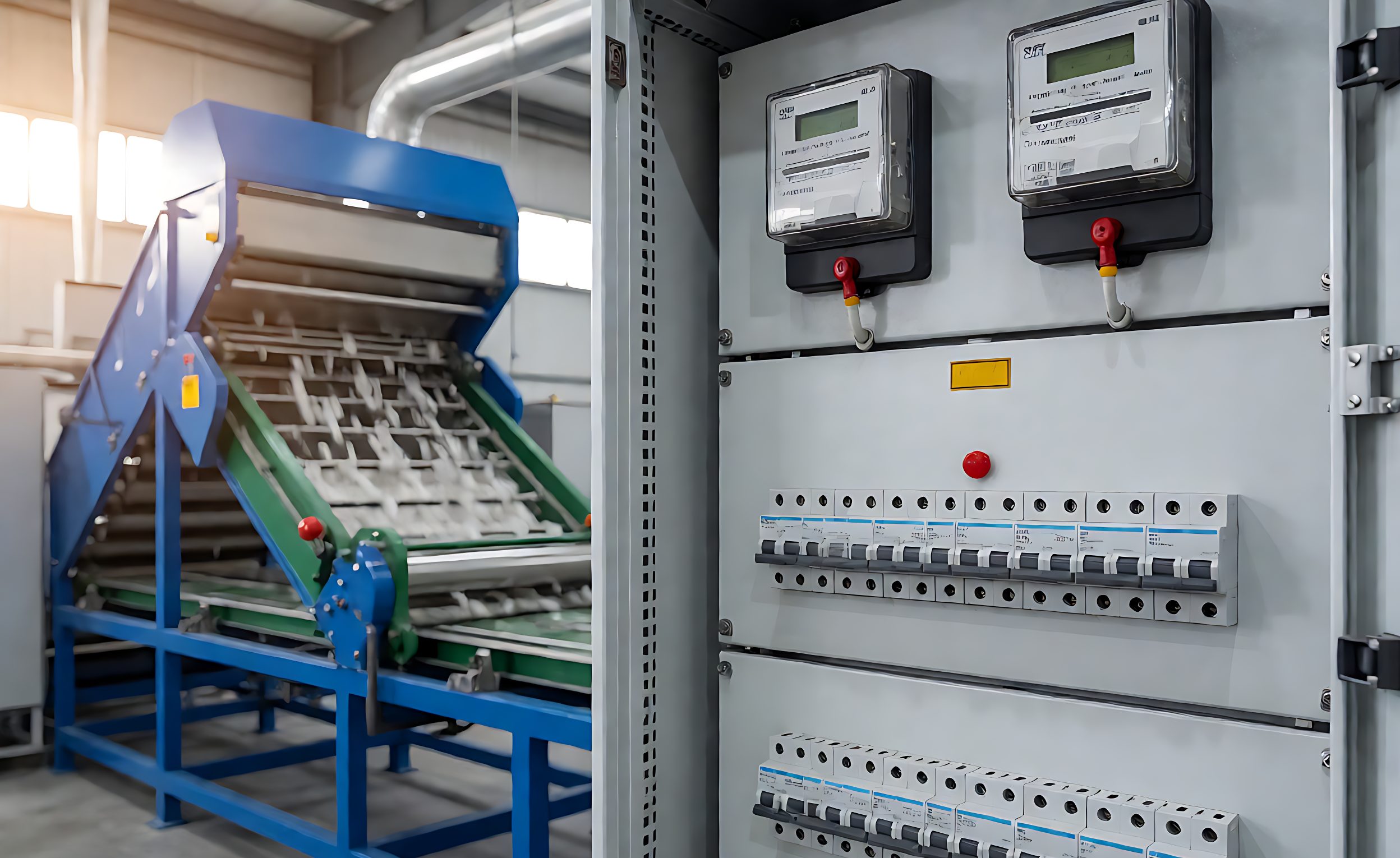
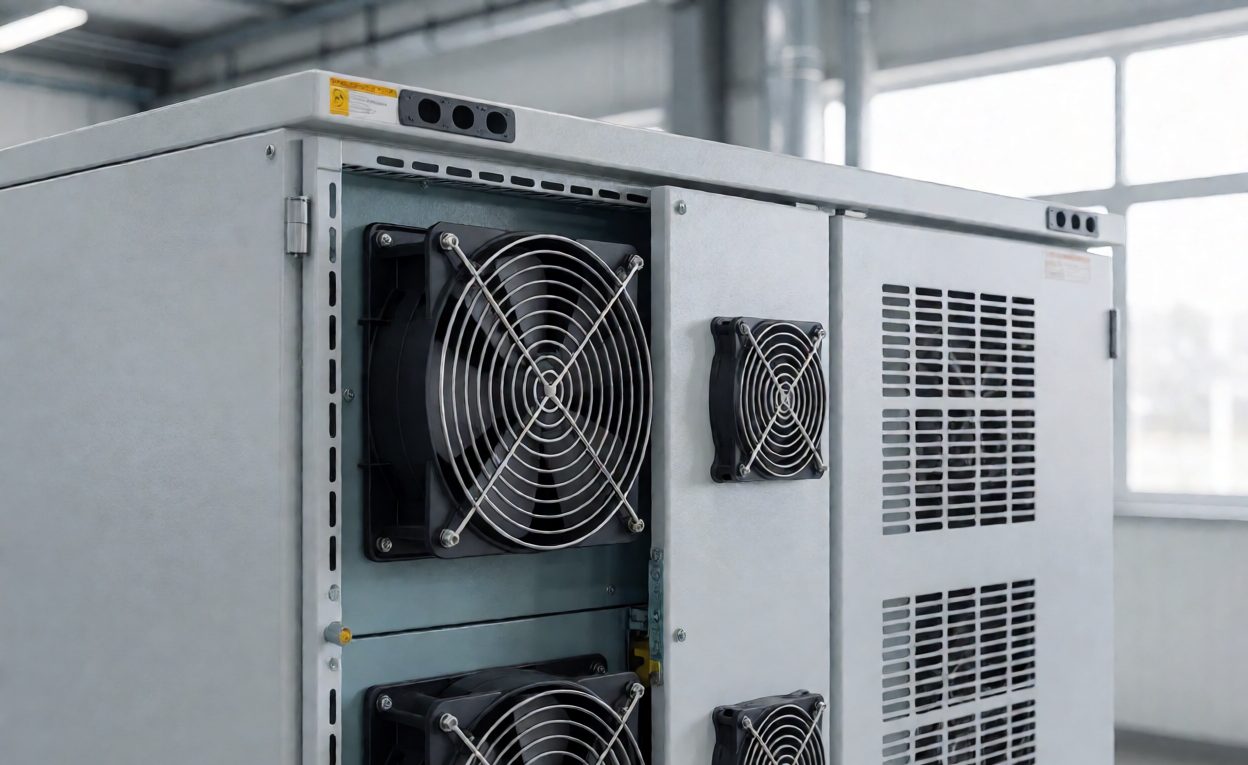
- Drive cabinets and controls. Variable-speed drives dissipate heat in their enclosures, which is why controls cabinets have their own cooling and why electrical rooms have their own temperature problem.
- Friction in belts, bearings and sliding contact, which warms the machine structure and the surrounding air.
- People and lighting in the sort hall – not the machine’s load, but part of the same HVAC budget and often significant at induction-heavy operations.
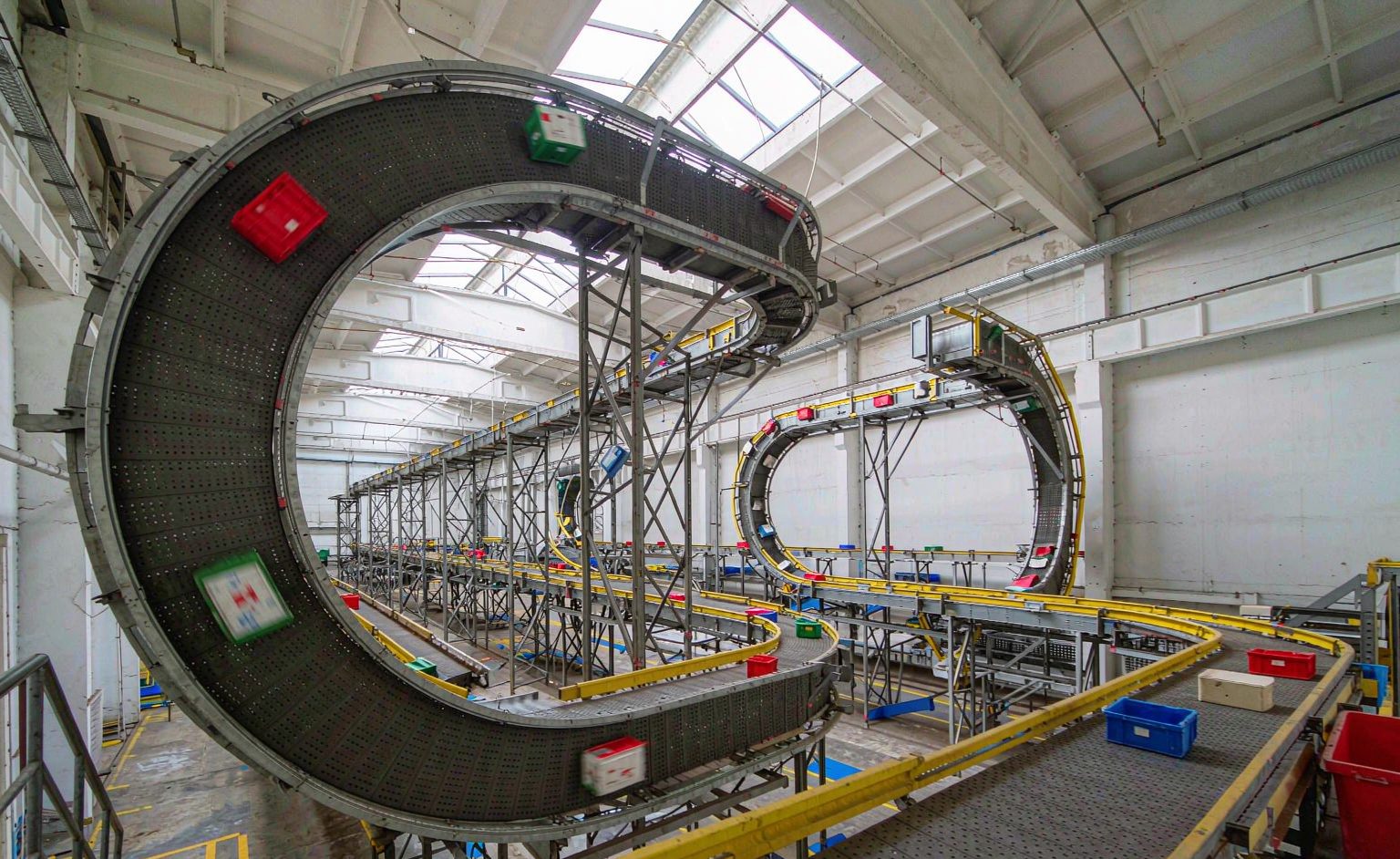
The practical point is distribution: the heat does not appear in one place. Motors are spread along the loop, cabinets cluster at control points, and a ventilation design that assumes a single concentrated load will underserve half the line.
Converting Power Into Cooling Load
The working assumption most HVAC engineers use is simple: essentially all electrical power drawn by the line ends up as heat in the space. If the sorter draws 60 kilowatts at typical throughput, that is roughly 60 kilowatts of cooling load in steady operation, plus the contribution from lighting and people. The refinement that matters is the duty profile – a line that runs two shifts with defined idle periods produces a different daily heat profile from one that runs flat out, and cooling capacity can sometimes be staged to match.
Two questions turn this from an estimate into a design input. First, what is the machine’s expected power draw at the throughput you will actually run, not at nameplate? Second, what is the split between heat released into the hall and heat released into enclosed spaces – cabinets, electrical rooms, control rooms – that need their own ventilation path? The second question is the one that prevents the classic failure: a comfortable sort hall with an overheated electrical room.
What to Agree With the Supplier
Put heat on the technical agenda alongside power and compressed air. The three commitments worth having in writing are heat dissipation figures by zone, cabinet and enclosure design temperatures, and any airflow or clearance requirements the machine needs around drives and cabinets. A supplier who can state these figures understands the machine’s thermal behaviour; one who cannot is leaving your HVAC engineer to guess.
The agreement also protects the warranty. Enclosures have rated operating temperatures, and a hall that runs hot can push cabinet interiors past them, producing faults that look like component failures and are actually environmental. When those faults cross the service arrangement described in the warranty and service SLA, the argument about cause is much shorter if the thermal assumptions were written down at design stage.
Cold Chain and Temperature-Sensitive Operations
Refrigerated and chilled operations face the problem in reverse: the sorter must work in the cold, and the heat it produces is a small, sometimes useful contribution rather than a burden. Even there the distribution matters – drives and cabinets still need their thermal design respected inside a chilled envelope, and condensation management joins the conversation. Cross-belt systems are frequently specified for low-temperature operation, and the adaptations involved are covered in cross-belt performance in low-temperature environments. The energy side of the same question, including what the machine’s consumption does to operating cost, is modelled in sorter energy consumption modelling.
Technical Background
Energy that arrives as electricity and leaves as heat in the workspace is the textbook case of waste heat, and the engineering discipline of removing it is the domain of HVAC design. The components responsible for the largest share, variable-speed drives, dissipate a known fraction of throughput power in their enclosures – background on why is in variable-frequency drives. None of this requires exotic analysis; it requires the load figures early and a ventilation design that treats the machine as the heat source it is.
It is also worth remembering that thermal planning sits next to the other environmental disciplines of a sort hall. Acoustic treatment follows a similar pattern – identify sources at design stage rather than treat symptoms later – and the parallel is drawn in noise reduction in cross-belt sorting systems.
Frequently Asked Questions
How much heat does a sorter add to a warehouse?
As a working rule, essentially all the electrical power it draws becomes heat in the space. A line drawing 60 kilowatts adds roughly 60 kilowatts of cooling load during operation.
Does the heat appear evenly along the line?
No. Motors are distributed along the loop, while drive and control cabinets concentrate heat at specific points, and enclosed spaces need their own ventilation paths.
What should I ask the supplier for?
Heat dissipation by zone, enclosure design temperatures, and airflow or clearance requirements around drives and cabinets – in writing, at design stage.
Can the HVAC be designed after the sorter is chosen?
The layout can be, but the load figures must be available before ductwork and unit sizing are fixed. Retrofitting ventilation is the expensive path.
Is heat a problem in cold-chain operations?
Usually not – it can even be useful – but drives and cabinets still need their thermal design respected inside the chilled envelope, and condensation management matters.
What happens if the hall runs too hot?
Operator discomfort is the visible symptom, but the costly one is controls cabinets exceeding rated temperatures, producing faults that mimic component failures.
Should idle periods be included in the heat model?
Yes. The duty profile shapes the daily heat pattern, and staging cooling capacity to match can reduce both installation and running cost.