

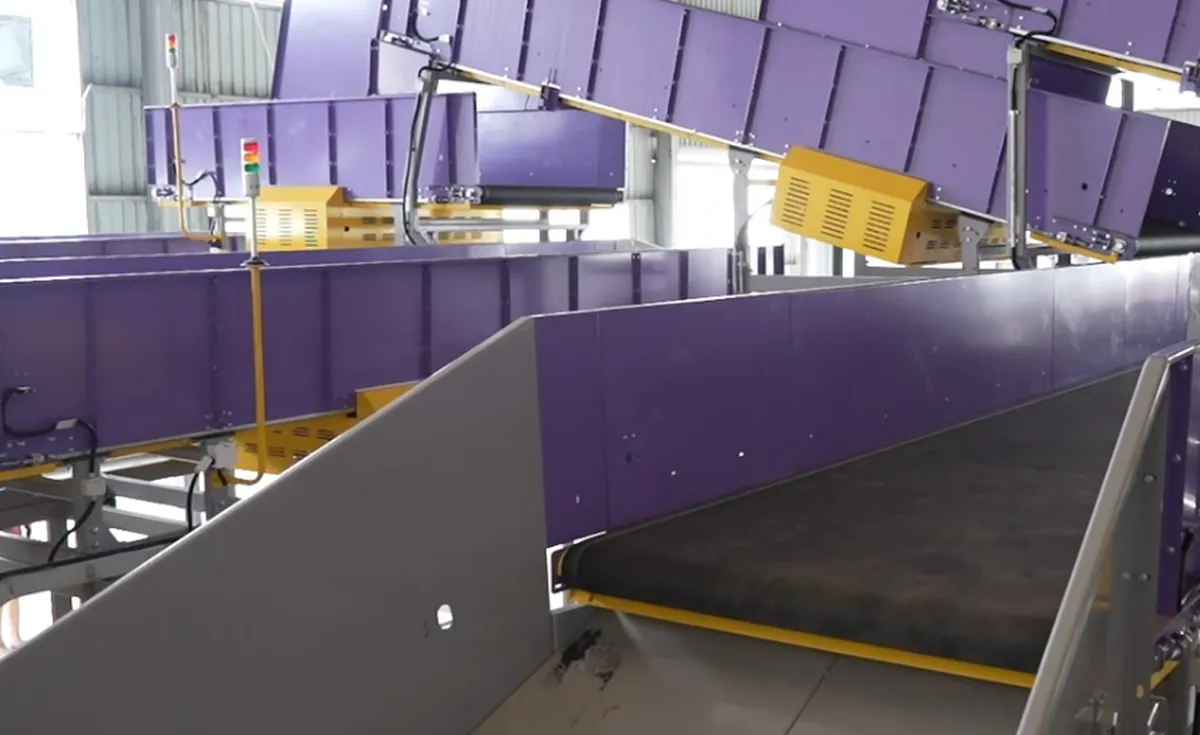
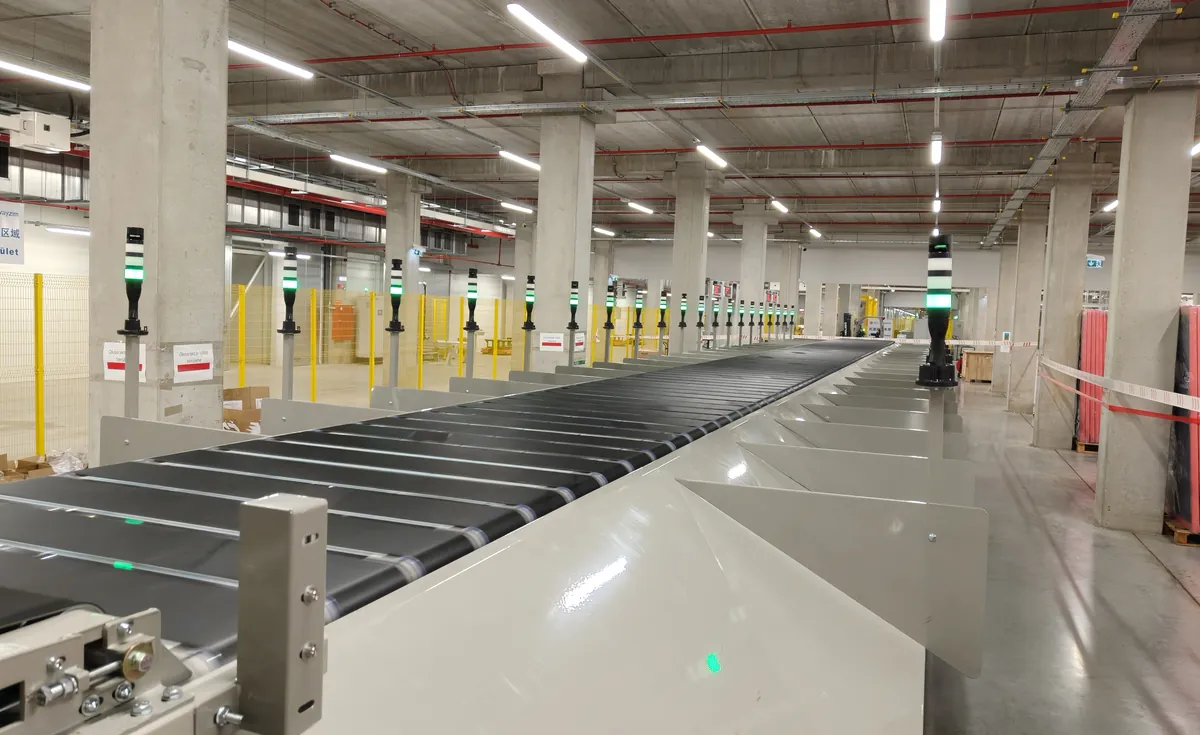
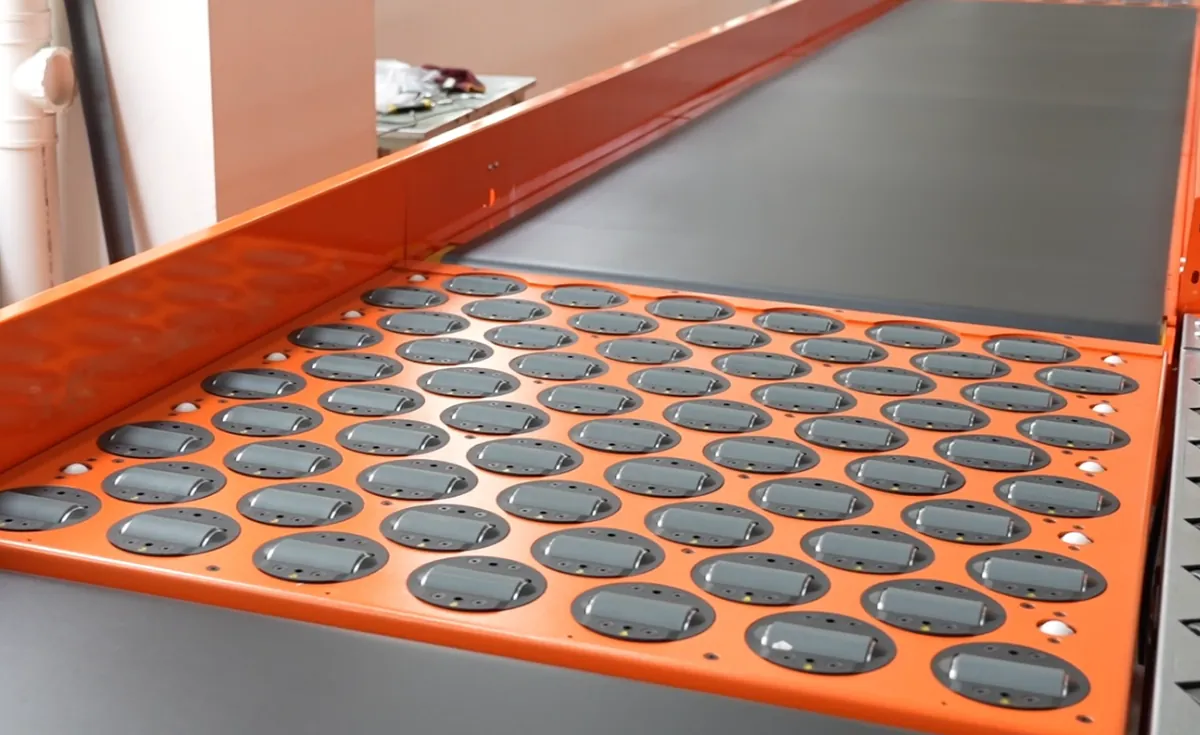
With the rapid development of e-commerce and logistics, sorting efficiency has become a decisive factor in business competitiveness. Traditional manual sorting methods are no longer sufficient, as they are limited in speed, prone to errors, and associated with rising labor costs.
Automated sorting systems are emerging as the preferred solution for modern logistics centers. Their key advantages include:
High Efficiency – Capable of processing tens of thousands of parcels per hour, significantly improving throughput.
Enhanced Accuracy– Integrated with barcode scanning, OCR recognition, weighing, and dimensioning technologies to minimize errors.
Flexibility – Adaptable to various parcel sizes and weights, ensuring compatibility with different business needs.
Scalability – Modular design allows for future upgrades and system expansion.
Automation is not only a tool to improve efficiency but also a vital step toward the digitalization and intelligent transformation of the entire supply chain.
At TRUELISORT, we are committed to providing customized automation solutions that help our partners achieve faster, smarter, and more reliable logistics operations.
Future-Proofing a Sorter: The Four Decisions That Age Well
The future of automated sorting systems is decided less by technology forecasts than by four buying decisions, which age differently:
| Decision | Ages well when | Ages badly when |
|---|---|---|
| Loop size | Designed headroom covers your honest peak multiple | Sized to the average day of last year |
| Destination architecture | Chutes and software slots both expandable | Chute count fixed at install, forever |
| Interface openness | WMS talks directly; rules yours to edit | Every change is a vendor ticket |
| Vendor economics | Spares and software priced for a decade | Hardware cheap, ownership expensive |
The destination row decides daily flexibility: marketplaces add regional carriers, volume grows into new postal zones, and every expansion either falls on configuration or on construction. Facilities that reserved both physical chute space and software destination capacity add a lane in an afternoon; facilities that did not add it with a crane. None of these four decisions costs more at purchase — they are attention decisions, not budget decisions, which is what makes their neglect so expensive later. A future-proof sorter is not the one with the most advanced brochure; it is the one whose 2030 expansion was imagined in enough detail to reserve for, during the 2026 contract. The interface question’s deeper implications are in the data ladder, and the horizon planning in automation horizons. Reference: modular design and planned obsolescence.
The four aging decisions also belong in writing. A one-page memo recording what was decided, which options were declined, and why — attached to the purchase file — converts institutional memory into a transferable document, and the site that inherits the system five years later inherits the reasoning with it. Reference: technical specifications and contractual records.
The Digital-Age Version of an Old Discipline
Sorting is an old discipline running on new instruments: the decisions are older than the warehouse, but the sensing and the software are new, and the digital-age version differs from its ancestors mostly in how fast the feedback loop closes. The digital-layer mechanics are in the digital-age sorting guide.