

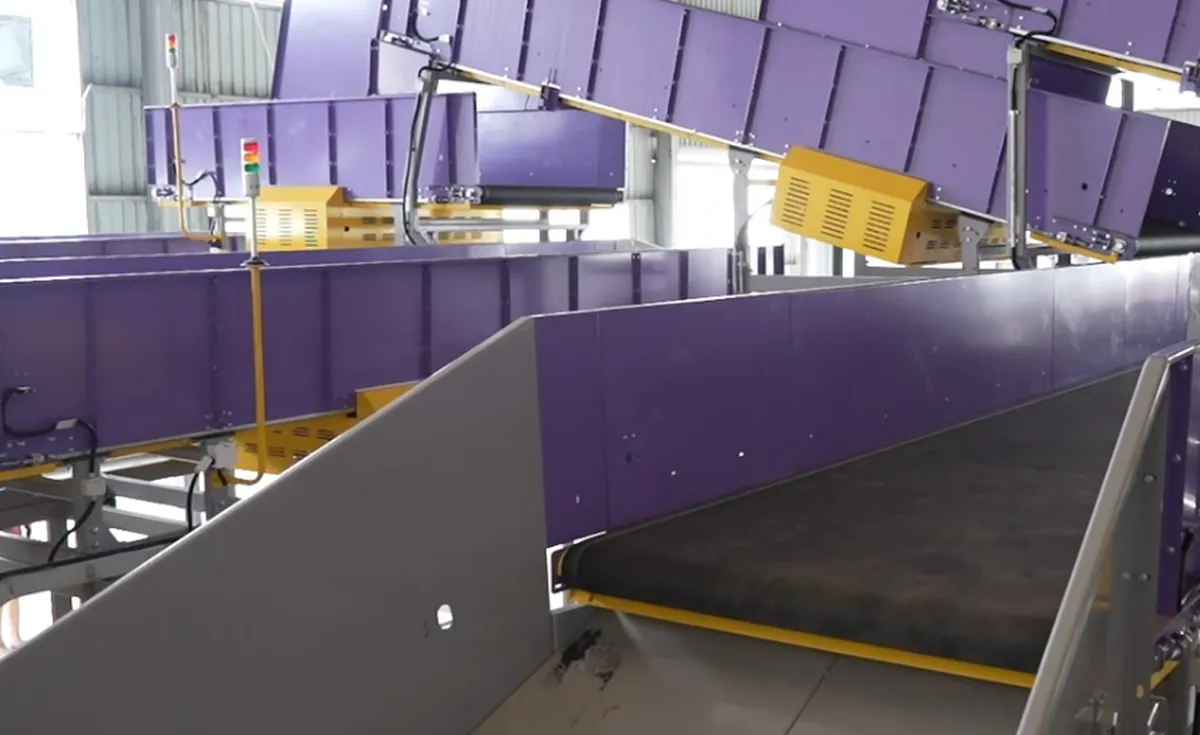
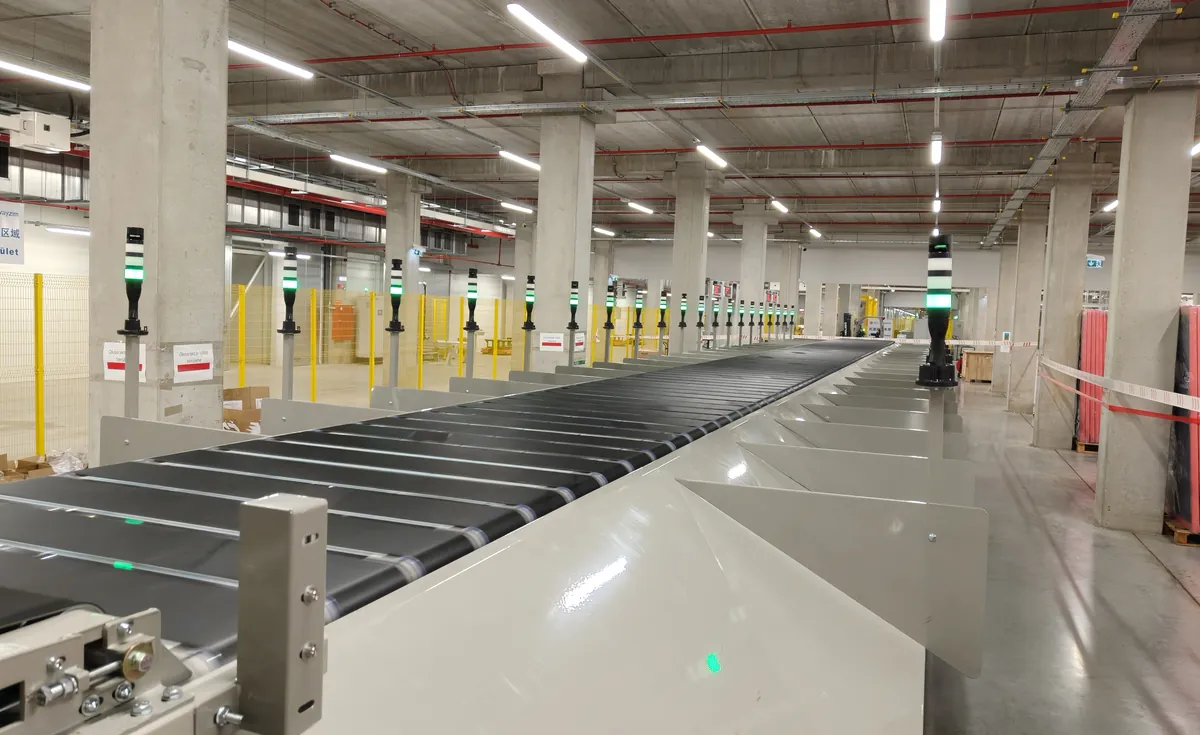
In recent years, the global logistics and e-commerce industries have experienced rapid growth, driving strong demand for efficient and intelligent sorting systems. As companies expand into international markets, sorting equipment has become a key element in improving operational efficiency and ensuring fast, accurate parcel handling.
Modern sorting systems—such as cross-belt sorters, narrow belt sorters, and wheel sorters—are now widely used in distribution centers, airports, and postal facilities around the world. These systems offer high-speed, precise, and flexible sorting capabilities, which are critical for handling increasing parcel volumes in regions like Europe, the Middle East, and Southeast Asia.
Overseas customers are particularly focused on **system reliability**, **customized design**, and **ease of maintenance**. Localized solutions—such as modular layouts, energy-saving drives, and intelligent software control—are essential for meeting diverse environmental and operational requirements.
As Chinese manufacturers continue to strengthen their global presence, equipment like **TRUELISORT’s automated sorting solutions** are becoming more popular among international clients. By integrating innovative design, stable performance, and professional after-sales service, these systems help global logistics companies reduce costs and enhance efficiency.
The trend toward automation and digitalization will continue to reshape the future of sorting operations worldwide. In this evolving landscape, only companies that focus on **technology innovation**, **quality**, and **international service standards** will stay ahead in the global market.
Overseas Deployment: What Transfers and What Must Be Re-learned
Sorting equipment now ships worldwide, and the applications that succeed abroad share one habit — knowing what transfers:
| Element | Transfers cleanly? | What must be re-learned locally |
|---|---|---|
| Mechanical core (conveyors, diverters) | Yes | Power quality, floor standards, spares logistics |
| Control software | Mostly | Label formats, carrier integrations, customs data |
| Operating procedures | Partially | Shift patterns, wage curves, training culture |
| Business case | No | Local labour cost, parcel mix, growth rate |
The business-case row is where imported projects fail. A payback calculation that worked in one logistics market silently assumes its wage curve, its parcel economics and its growth trajectory — none of which travel. Sites that rebuild the case from local data, even when the equipment is identical, buy with clear eyes; sites that photocopy a foreign spreadsheet discover the difference during commissioning, when it is expensive. The middle rows explain the operational pattern of successful multi-site rollouts: the first installation in a new market runs slightly conservative while local knowledge accumulates, then unlocks. Standardization work at the mechanical layer is precisely what makes this staged confidence possible — the hardware behaves the same everywhere, so surprises localise to the soft layers where they are cheap to fix. The global adoption context is in regional adoption speeds, and the flow backbone in five flows, one backbone. Reference: international trade and standardization.
First overseas projects also deserve risk structures sized to the unknowns: staged payments tied to witnessed milestones, a local engineering partner contracted before the equipment ships, and spares stock located in-region rather than in the vendor’s home market. The structures cost little; the surprises they absorb do not. Reference: risk management and trade payment instruments.
The Overseas Market Lens
For overseas operations, the specification questions multiply — voltage standards, compliance paperwork, spares logistics — and the suppliers who answer them in writing are the ones whose equipment runs after the warranty year. The application notes from installed overseas markets are collected in the overseas applications guide.