
Comparison Guide 2026
TL;DR: Cross belt sorters handle diverse package sizes at 10,000-20,000+ parcels per hour with 99.5-99.9% accuracy but cost 1M−5M+. Narrow belt sorters process uniform packages at 3,000-10,000 items per hour, consume 60-88% less energy, and cost 200K−500K. Choose cross belt for flexibility and high throughput; choose narrow belt for energy efficiency and lower investment.
What’s the Difference Between Cross Belt and Narrow Belt Sorters?
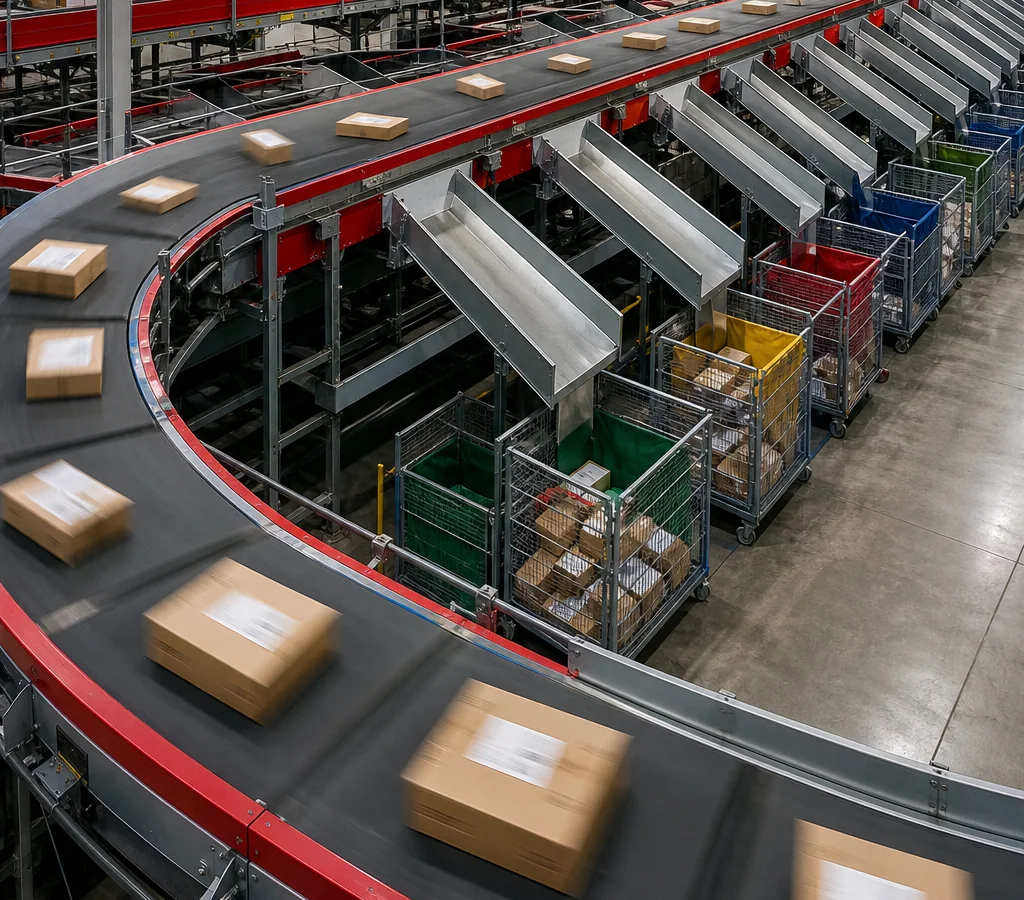
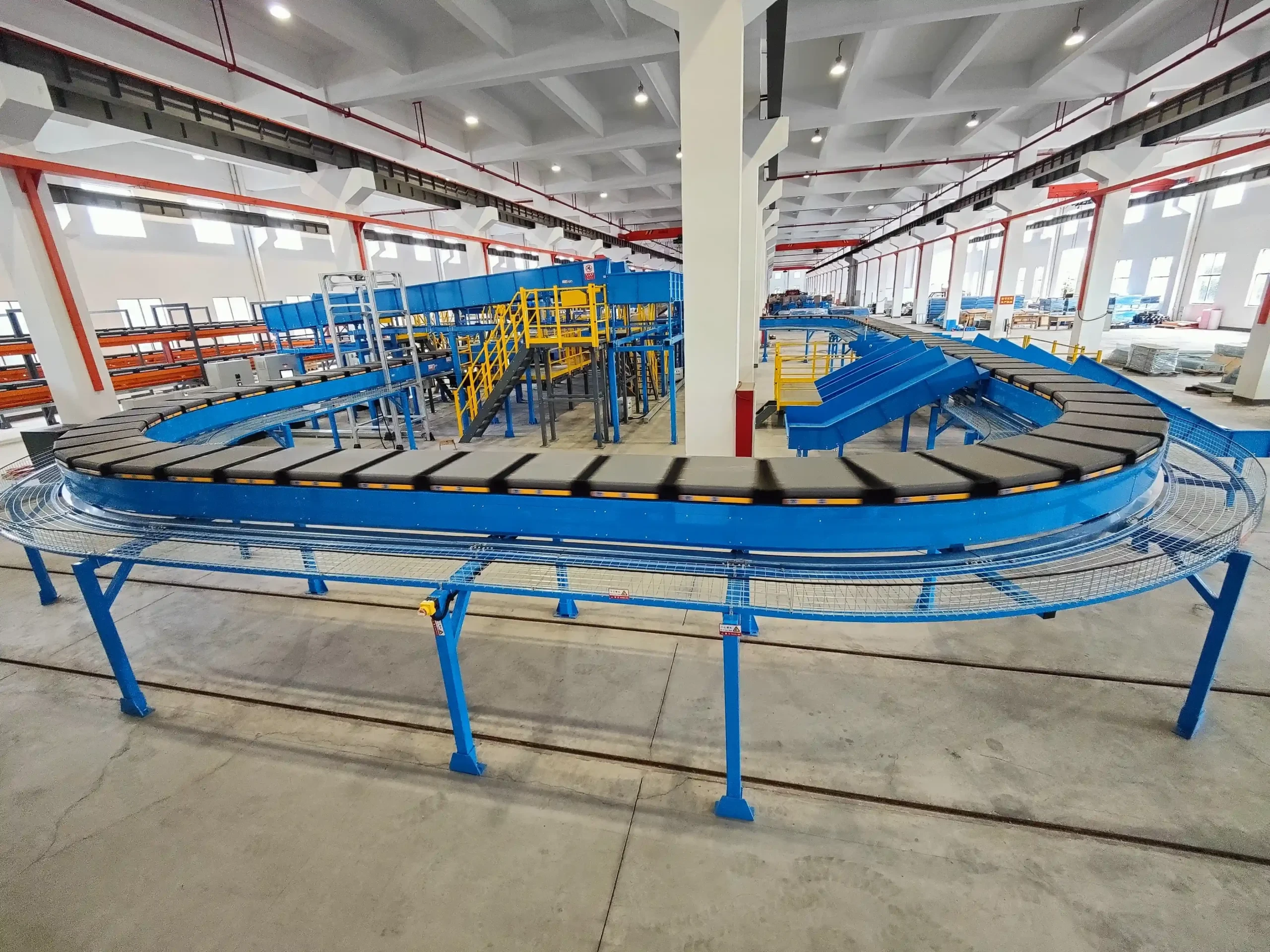
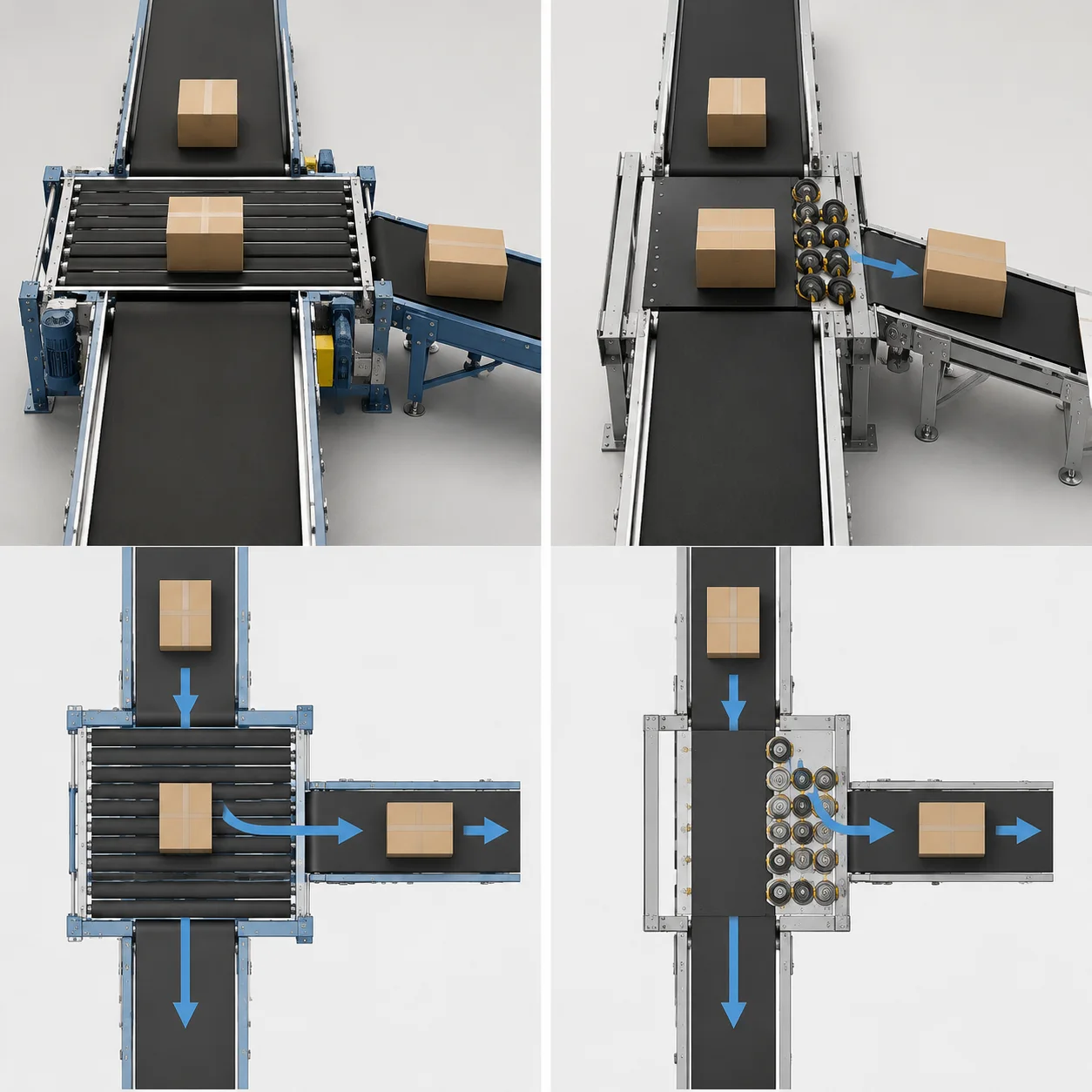
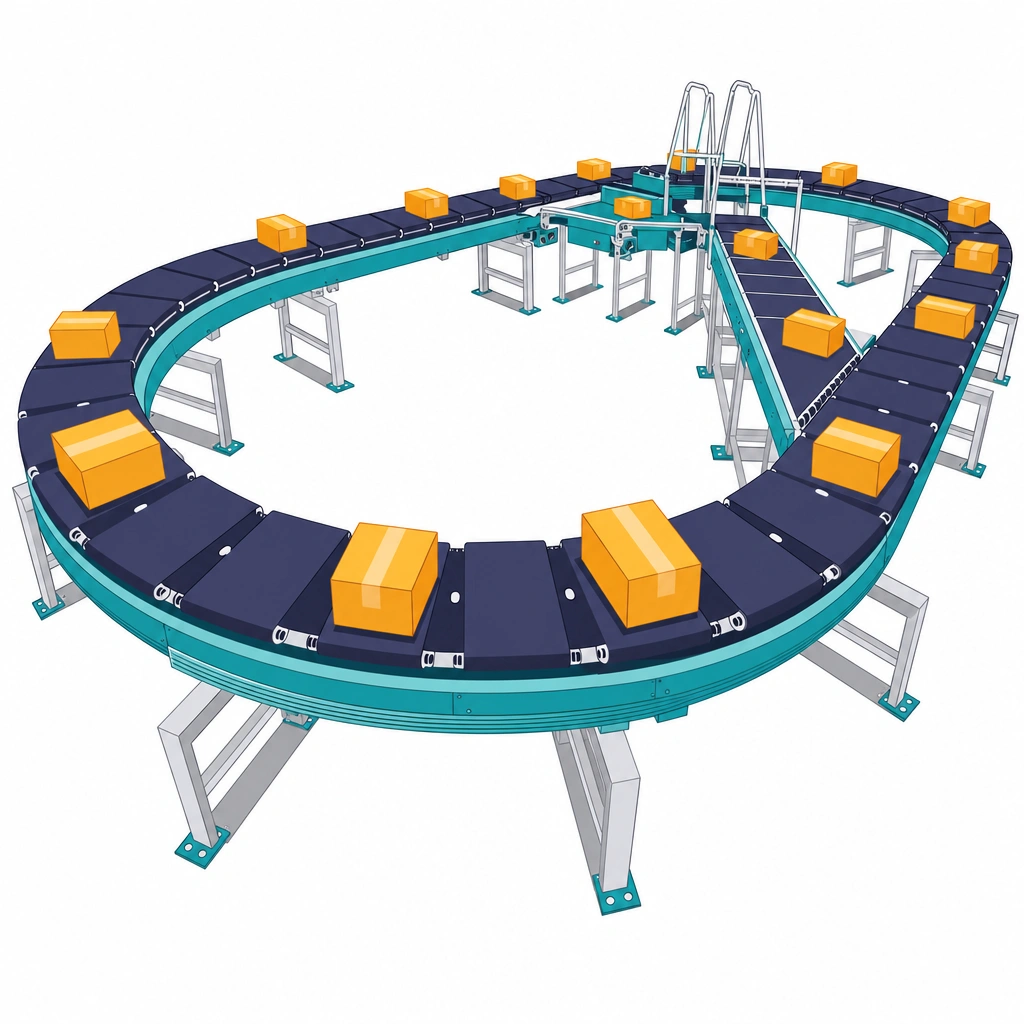
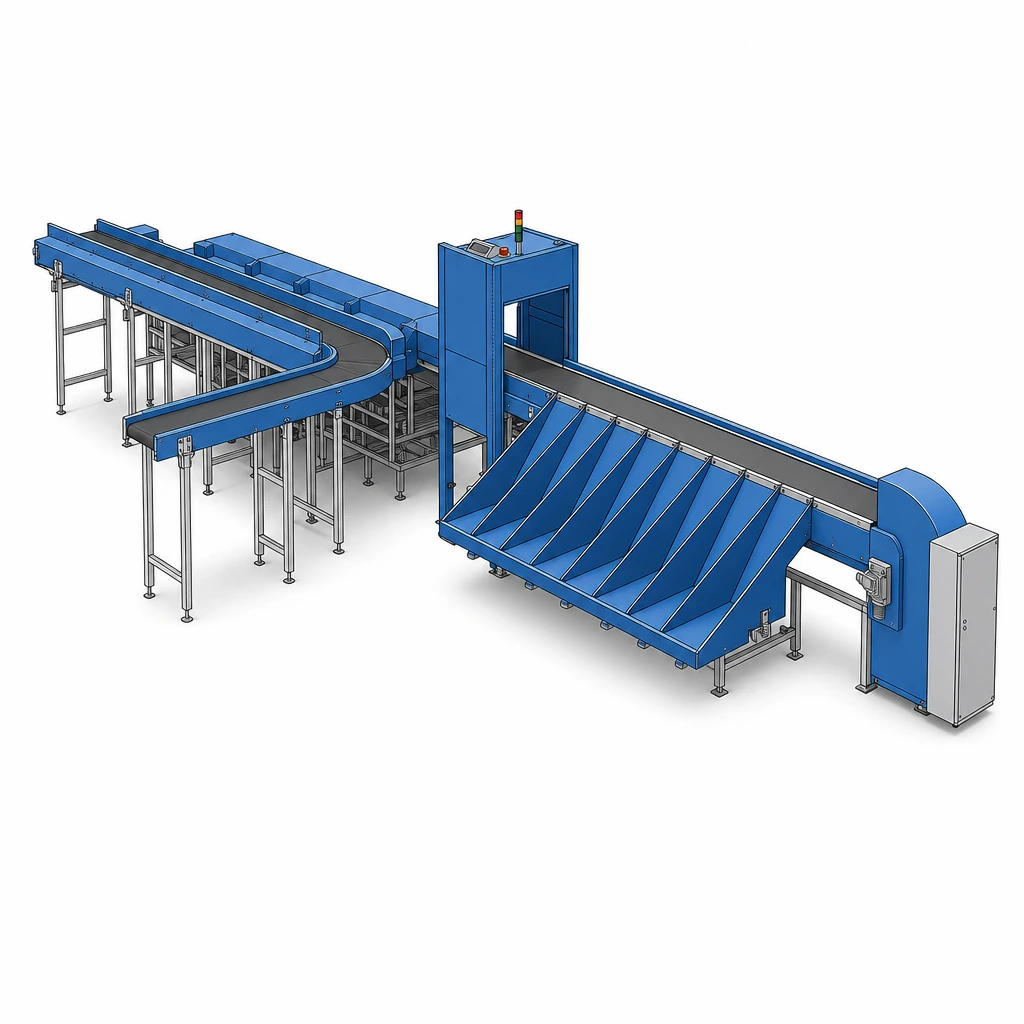
Cross belt sorters use individual motorized belts on each carrier to divert packages to designated chutes, handling 10,000-20,000+ parcels per hour across 50-500+ destinations with 99.5-99.9% accuracy. Narrow belt sorters employ compact conveyor belts with diverter mechanisms to sort uniform packages at 3,000-10,000 items per hour, consuming 60-88% less energy than traditional systems while maintaining 99%+ accuracy (
The fundamental difference lies in package handling versatility versus operational efficiency. Cross belt systems excel with mixed SKU environments containing packages from 100mm × 100mm to 600mm × 400mm weighing 2-32 kg, while narrow belt sorters optimize for standardized items between 100-600mm length, 50-300mm width, and 0.5-15 kg weight (SmartLoadingHub, MHS Conveyor).
Technical Specifications Comparison
Cross Belt Sorter Specifications
Performance Metrics:
- Sorting Speed: 10,000-15,000 parcels per hour (standard), up to 20,000+ pph (high-performance)
- Belt Speed: 1.5-2.5 meters per second
- Accuracy Rate: 99.5-99.9% with misroute rates below 0.5%
- Barcode Read Accuracy: 99%+ with proper camera systems
Physical Specifications:
- Parcel Size Range: 100mm × 100mm to 600mm × 400mm (model-dependent)
- Weight Capacity: 30 kg per parcel (standard), up to 50 kg (heavy-duty models)
- System Footprint: 20-50 meters long (modular design)
- Sort Destinations: 50-500+ configurable chutes
Energy & Maintenance:
- Power Consumption: 0.5-1.5 kWh per 1,000 parcels sorted
- Drive System: Linear synchronous motor (LSM) for energy efficiency
- Maintenance: Contactless drive systems with built-in redundancy, predictive maintenance enabled
- Uptime: 95%+ with proper maintenance protocols
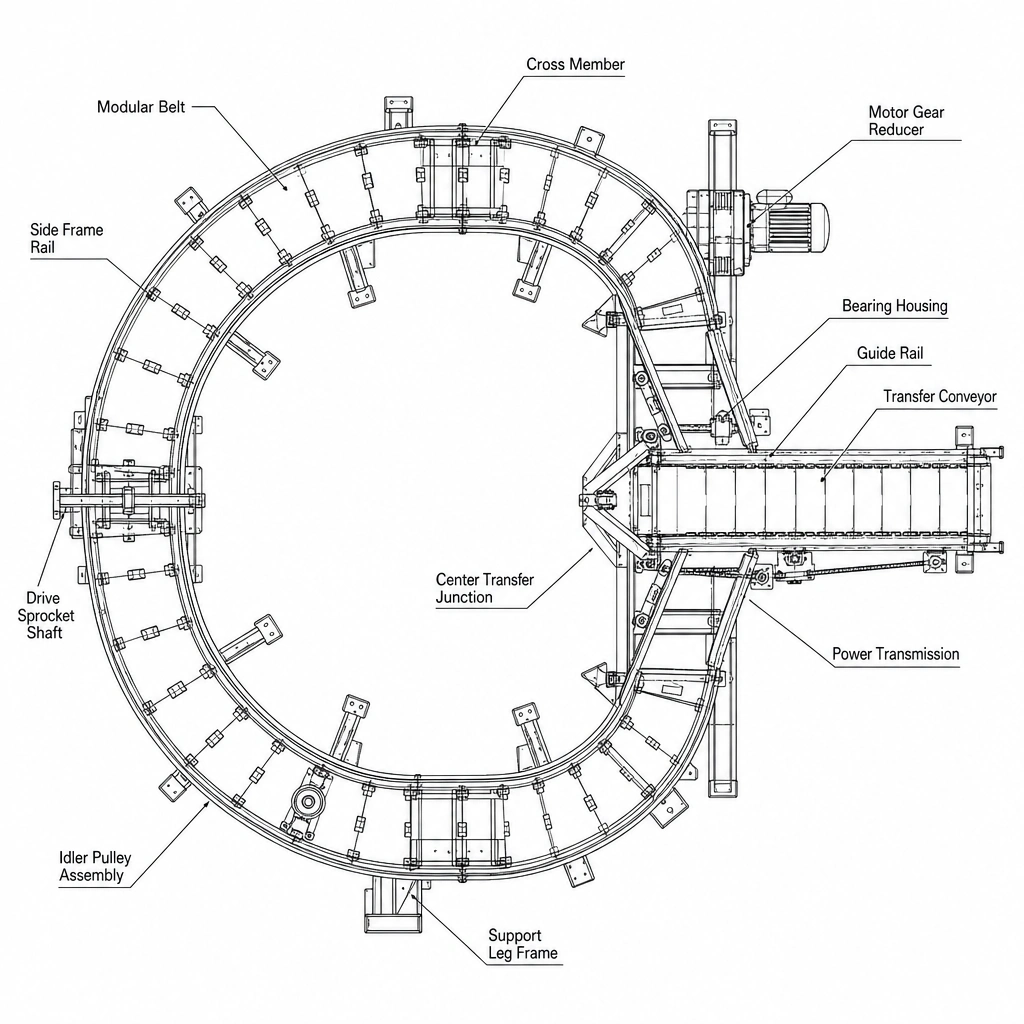
Narrow Belt Sorter Specifications
Performance Metrics:
- Sorting Speed: 3,000-10,000 items per hour (typical range)
- High-Performance: 5,000-6,000 items per hour for smaller packages
- Belt Speed: 0.5-2.5 m/s (adjustable)
- Sort Rate: 600+ items per minute
- Accuracy Rate: 99%+ for uniform packages
Physical Specifications:
- Belt Width: 300mm to 600mm (narrow profile)
- Package Dimensions: Length 100-600mm, Width 50-300mm, Height 20-200mm
- Weight Capacity: 0.5kg to 15kg (1-33 lbs), optimal at 2-10 kg
- Footprint: Compact design for space-constrained facilities
- Sort Destinations: Typically 4-12 divert points
Energy & Maintenance:
- Power Consumption: 88% less energy than traditional belt with pop-up wheel sorters
- Energy Savings: 60% less than conventional sorters, 50%+ less than pop-up wheel systems
- Maintenance: Low requirements due to simpler mechanical design
- Uptime: 95-99% due to reliable construction
Cost Analysis: Investment & ROI
Cross Belt Sorter Costs
Initial Investment: $1 million to $5 million+ for enterprise-scale systems, with costs varying based on sort destinations (50-500+ chutes), throughput capacity requirements, system length, customization level, and integration complexity (SmartLoadingHub). Installation and integration add 10-20% of equipment cost, while annual maintenance runs 5-10% of initial investment.
Operating Costs:
- Installation & Integration: 10-20% of equipment cost
- Annual Maintenance: 5-10% of equipment cost
- Spare Parts: Belts, motors, sensors require periodic replacement
- Power Consumption: Moderate to high depending on throughput (0.5-1.5 kWh per 1,000 parcels)
- Labor Savings: 6-8 FTEs typically redeployed
ROI Timeline: 2-4 years typical payback period, driven by labor reduction, increased throughput, and reduced misroutes. Precise payback depends on local labor rates and spare-part consumption patterns (SmartLoadingHub).
Narrow Belt Sorter Costs
Initial Investment: $200,000 to $500,000+ depending on capacity—significantly lower capital cost than cross belt systems. Cost factors include sorting capacity (items per hour), belt width and length, number of divert destinations (typically 4-12), and customization requirements .
Operating Costs:
- Installation: 10-20% of equipment cost
- Energy Consumption: 60-88% lower than conventional sorters (major cost advantage)
- Maintenance: Minimal costs due to simpler mechanical design
- Labor Reduction: Automation reduces manual sorting requirements
Cost Comparison Table
| Cost Factor | Cross Belt Sorter | Narrow Belt Sorter |
|---|---|---|
| Initial Investment | $1M – $5M+ | $200K – $500K |
| Installation | 10-20% of equipment | 10-20% of equipment |
| Annual Maintenance | 5-10% of equipment | Lower (simpler design) |
| Energy Consumption | 0.5-1.5 kWh/1,000 parcels | 60-88% less than conventional |
| ROI Timeline | 2-4 years | 2-3 years |
| Labor Savings | 6-8 FTEs redeployed | Significant automation gains |
Use Cases: Which System Fits Your Operation?
When to Choose Cross Belt Sorters
Cross belt sorters excel in high-volume e-commerce fulfillment centers processing 10,000-20,000+ parcels per hour with diverse package sizes from 100mm × 100mm to 600mm × 400mm and weights ranging 2-32 kg (SmartLoadingHub). These systems handle mixed SKU environments efficiently, making them ideal for last-mile delivery network sorting facilities, returns processing centers, cross-docking operations, and parcel distribution hubs requiring 100+ sort destinations.
Ideal Applications:
- E-commerce Fulfillment: High-volume operations with diverse product dimensions
- Last-Mile Delivery: Network sorting facilities with multiple destination routes
- Returns Processing: Mixed package types requiring flexible handling
- Cross-Docking: Operations needing rapid sorting across many destinations
- Parcel Distribution Hubs: Facilities requiring 100+ sort destinations
Package Characteristics:
- Size range: 100mm × 100mm to 600mm × 400mm
- Weight range: 5-70 lbs (2-32 kg), up to 100 lbs for heavy-duty systems
- Handles irregular shapes and mixed SKUs efficiently
When to Choose Narrow Belt Sorters
Narrow belt sorters optimize for uniform, smaller packages between 100-600mm length, 50-300mm width, 20-200mm height, and 0.5-15 kg weight, processing 3,000-10,000 items per hour while consuming 60-88% less energy than conventional systems. These systems suit e-commerce operations handling small to medium packages, postal and courier services sorting mail and small parcels, retail distribution centers, food and beverage distribution, pharmaceutical operations, and document handling facilities.
Ideal Applications:
- E-commerce (Small-Medium Packages): Standardized product dimensions
- Postal & Courier Services: Mail and small parcel sorting
- Retail Distribution: Uniform packaged goods
- Food & Beverage: Smaller packaged products
- Pharmaceutical Distribution: Controlled, uniform packages
- Document Handling: Flat mail and document sorting
Package Characteristics:
- Package dimensions: Length 100-600mm, Width 50-300mm, Height 20-200mm
- Weight capacity: 0.5kg to 15kg (1-33 lbs)
- Most efficient at: 2kg to 10kg (4.4-22 lbs)
- Best for uniform, standardized packages
| Sorter Type | Advantages | Disadvantages |
|---|---|---|
| Cross Belt Sorter |
|
|
| Narrow Belt Sorter |
|
|
Market Trends & Industry Growth
Current Market Size & Growth
The global parcel sorting systems market reached $4.5-5 billion in 2023 and is projected to grow to $8-10 billion by 2026, representing a compound annual growth rate (CAGR) of 20-25% . Automated sorting systems show double-digit growth globally, driven by e-commerce expansion, labor shortages, cost pressures, sustainability requirements, and last-mile delivery complexity.
Regional Adoption Patterns:
- North America & Europe: Leading in automation adoption with mature markets
- Asia-Pacific: Fastest growth rates (25%+ CAGR) driven by e-commerce boom
- China, India, Southeast Asia: Rapid expansion requiring modern sorting infrastructure
- Emerging Markets: Investing heavily in modernizing logistics capabilities
Technology Innovations (2026-2030)
AI and Machine Learning Integration: Advanced computer vision for package identification and damage detection, predictive analytics for demand forecasting and route optimization, real-time sorting optimization reducing manual intervention, and AI-powered quality control reducing missorting rates.
Robotics Advancement: Collaborative robots (cobots) working alongside human workers, autonomous mobile robots (AMRs) for internal warehouse movement, automated guided vehicles (AGVs) for cross-dock operations, and robotic arms with improved dexterity for diverse package handling. Hybrid human-robot teams prove more effective than fully automated systems.
IoT and Connectivity: RFID and barcode integration for end-to-end visibility, real-time package tracking and status updates, connected sorting infrastructure for data-driven operations, integration with WMS and TMS systems, and cloud-based sorting management systems gaining adoption.
Energy Efficiency Focus: Continued emphasis on reducing power consumption through linear synchronous motors, low-friction designs, optimized materials, contactless systems, and sustainability as competitive differentiator.
Market Predictions (2026-2030)
The parcel sorting systems market will grow at 8-12% CAGR through 2030, reaching $8-10 billion by 2030 (up from $5-6 billion in 2024), with automated sorting systems serving as key growth driver within logistics automation. Asia-Pacific will experience fastest regional growth due to e-commerce expansion, while the period 2026-2030 will see optimization of existing technologies rather than revolutionary breakthroughs, with strong emphasis on flexibility, sustainability, and human-robot collaboration.
Key Market Drivers:
- E-commerce Growth: Continued surge requiring faster, more efficient sorting
- Labor Shortages: Automation addressing workforce availability challenges
- Cost Pressures: Need to reduce operational costs per package
- Sustainability: Energy-efficient systems and optimized routing
- Last-Mile Complexity: Increasing demand for faster delivery windows
Major Manufacturers & Competitive Landscape
Cross Belt Sorter Manufacturers
Market Leaders:
- Vanderlande – Leading player in cross belt sorter technology with advanced sorting systems for global logistics
- Beumer Group – Major manufacturer with strong European and international presence
- Dematic (KION Group) – Significant player in warehouse automation and material handling
- Siemens Logistics – Dominant in parcel and logistics automation globally
- Honeywell Intelligrated – Major presence in logistics automation
- Fives Group – Specializes in industrial automation including GENI-Belt™ systems
Technology Differentiation: Linear synchronous motor (LSM) drive systems, contactless power transfer (inductive charging), predictive maintenance capabilities, modular and scalable designs, and integration with WMS/TMS systems .
Narrow Belt Sorter Manufacturers
Market Leaders:
- Siemens Logistics – Dominant in parcel and logistics automation
- Vanderlande – Significant market share in Europe and globally
- Beumer Group – Strong presence in baggage and parcel sorting
- Dematic (KION Group) – Major warehouse automation player
- Honeywell Intelligrated – Significant in logistics automation
- Interroll – Known for conveyor and sorting technology
- Fives Group – Industrial automation specialist
- MHS Conveyor / FORTNA Conveyor – NBS®30 Narrow Belt Sorter systems
Technology Features: Limited slip-clutch design for stable diversion, energy-efficient operation (60-88% energy savings), modular and adaptable configurations, and low maintenance design.
Choose Cross Belt Sorter When:
- Handling diverse package sizes and weights (1-70+ lbs)
- Processing mixed SKU environments with varied product dimensions
- Requiring 50+ sort destinations for complex routing
- Operating high-volume facilities (10,000-20,000+ pph)
- Dealing with irregular or oversized packages regularly
- Flexibility and scalability are paramount
- Budget allows for 1M-5M+ investment
- Long-term growth requires maximum adaptability
Choose Narrow Belt Sorter When:
- Processing uniform, smaller packages (1-33 lbs)
- Operating in space-constrained facilities
- Energy efficiency is a top priority (60-88% savings)
- Budget is limited (200K-500K range)
- Requiring faster ROI (2-3 years)
- Handling 3,000-10,000 items per hour
- Simpler maintenance is preferred
- Package standardization is feasible
Frequently Asked Questions
What is the main difference between cross belt and narrow belt sorters?
Cross belt sorters use individual motorized belts on each carrier to handle diverse package sizes (100mm-600mm) at 10,000-20,000+ parcels per hour across 50-500+ destinations, while narrow belt sorters employ compact conveyor belts with diverters for uniform packages (100-600mm length) at 3,000-10,000 items per hour with 60-88% less energy consumption .
How much do cross belt and narrow belt sorters cost?
Cross belt sorters cost $1 million to $5 million+ for enterprise-scale systems with 50-500+ sort destinations, while narrow belt sorters range from $200,000 to $500,000 depending on capacity and configuration. Installation adds 10-20% to equipment costs for both systems, with narrow belt sorters offering 60-80% lower initial investment .
Which sorter is more energy efficient?
Narrow belt sorters consume 60-88% less energy than conventional sorters and traditional belt with pop-up wheel systems, making them significantly more energy-efficient than cross belt sorters which use 0.5-1.5 kWh per 1,000 parcels sorted. This energy advantage translates to substantial operational cost savings over the system’s lifetime .
What is the typical ROI for each system?
Cross belt sorters achieve ROI in 2-4 years through labor reduction (6-8 FTEs redeployed), increased throughput, and reduced misroutes, while narrow belt sorters deliver faster ROI in 2-3 years due to lower initial investment (200K−500K vs 1M−5M+) and substantial energy savings (60-88% reduction). Precise payback depends on local labor rates, energy costs, and operational volume .
Cross belt sorters achieve 99.5-99.9% accuracy with misroute rates below 0.5% and barcode read accuracy of 99%+, while narrow belt sorters maintain 99%+ accuracy for uniform packages. Both systems deliver comparable reliability for their intended applications, with accuracy depending on item characteristics, maintenance protocols, and operating conditions .
Which industries use each type of sorter?
Cross belt sorters serve high-volume e-commerce fulfillment centers, last-mile delivery networks, returns processing centers, cross-docking operations, and parcel distribution hubs requiring 100+ destinations. Narrow belt sorters optimize for e-commerce small-medium packages, postal and courier services, retail distribution centers, food and beverage operations, pharmaceutical distribution, and document handling facilities .
Conclusion: Making the Right Choice
Cross belt sorters and narrow belt sorters represent two distinct approaches to automated parcel sorting, each optimized for specific operational requirements. Cross belt systems excel in flexibility, handling diverse package sizes from 100mm × 100mm to 600mm × 400mm weighing 2-32 kg at 10,000-20,000+ parcels per hour across 50-500+ destinations with 99.5-99.9% accuracy, making them ideal for high-volume e-commerce fulfillment centers with mixed SKU environments despite higher investment (1M−5M+) and energy consumption.
Narrow belt sorters optimize for uniform packages between 100-600mm length, 50-300mm width, and 0.5-15 kg weight, processing 3,000-10,000 items per hour while consuming 60-88% less energy than conventional systems at significantly lower cost (200K−500K), delivering faster ROI (2-3 years vs 2-4 years) and simpler maintenance for operations with standardized package dimensions.
The decision ultimately depends on your operational profile: choose cross belt for maximum flexibility and high throughput with diverse packages, or choose narrow belt for energy efficiency, lower investment, and faster ROI with uniform items. Both systems achieve 99%+ accuracy and 95%+ uptime, ensuring reliable performance for modern logistics operations.
Ready to optimize your sorting operations? Contact TrueLiSort for a customized assessment of your facility’s requirements and a detailed ROI analysis comparing cross belt and narrow belt solutions tailored to your specific operational needs.
About TrueLiSort
TrueLiSort designs and delivers turnkey automated parcel sorting systems for e-commerce, courier, and logistics centers worldwide. Our custom solutions include cross belt sorters, narrow belt sorters, and put wall systems with full installation support and ongoing technical assistance.
Contact Us:
- Website: https://truelisort.com/
- Email:
- whatapp: