
Introduction: The Race Against the Clock
Consumers have fundamentally changed the rules of modern commerce. Not long ago, waiting five to seven business days for a package was perfectly acceptable. Today, customers expect orders to arrive in two days, the next day, or even within a few hours. For many retailers and logistics providers, same-day delivery is no longer a premium service—it’s quickly becoming a competitive necessity.
But delivering thousands or even millions of packages within hours requires far more than faster trucks or additional warehouse workers. The real challenge begins long before a parcel reaches the delivery van. It starts inside the distribution center, where products must be received, identified, sorted, routed, packed, and dispatched with incredible speed and precision.
At the center of this high-speed fulfillment ecosystem is one of the most transformative technologies in warehouse automation: the cross-belt sorter. These advanced sorting systems are designed to move and distribute large volumes of items with exceptional accuracy, enabling warehouses to process orders at the pace that modern consumers demand.
In this article, we’ll explore how cross-belt sorting technology works, why it has become essential for high-volume logistics operations, and how it helps businesses achieve the operational efficiency needed to support same-day delivery.
The Growing Demand for Same-Day Delivery
The explosive growth of e-commerce has reshaped customer expectations across nearly every industry. Whether purchasing clothing, electronics, groceries, pharmaceuticals, or industrial supplies, buyers increasingly expect products to arrive almost immediately.
Several factors are driving this trend:
- Expansion of online shopping platforms.
- Urbanization and dense population centers.
- Competitive pressure among retailers.
- Improved last-mile delivery networks.
- Consumer preference for convenience and instant gratification.
As delivery windows shrink, fulfillment operations have less time to process each order. Every minute saved inside the warehouse translates directly into more flexibility for transportation and last-mile distribution.
This is where automated sorting systems become indispensable.
What Is a Cross-Belt Sorter?
A cross-belt sorter is an automated material handling system designed to rapidly identify, transport, and divert items to their designated destinations.
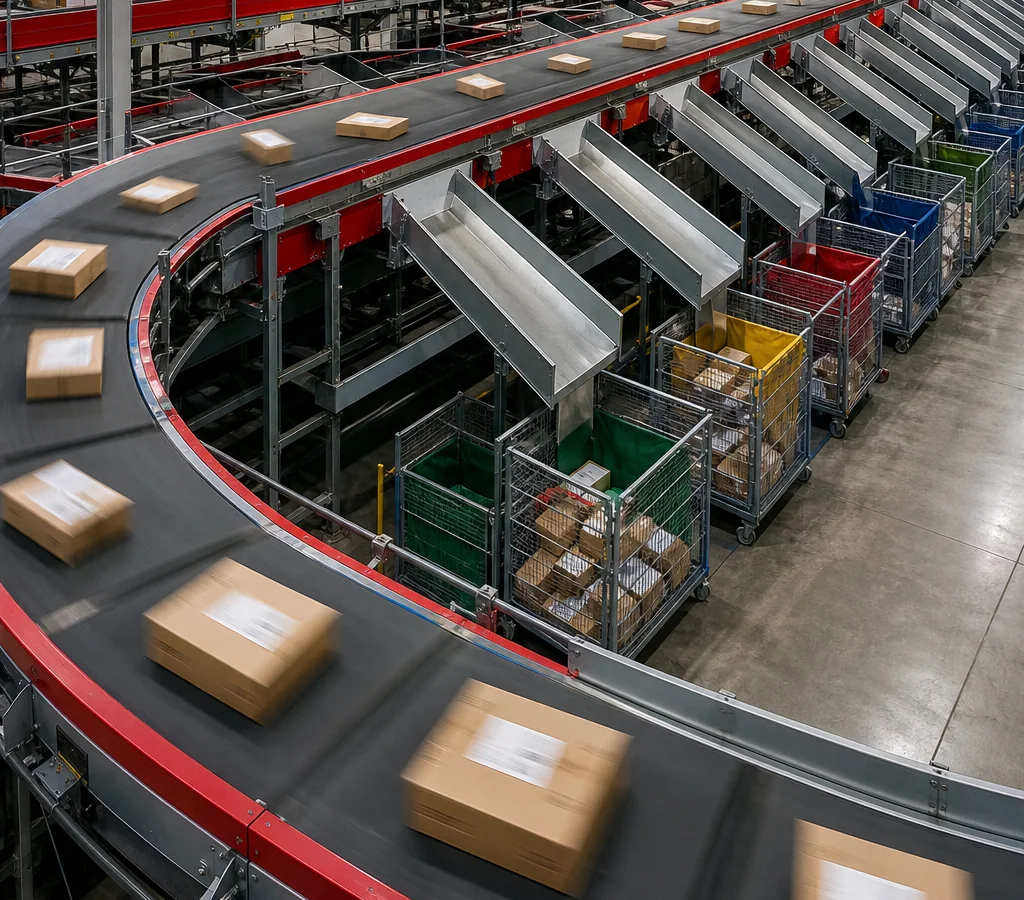
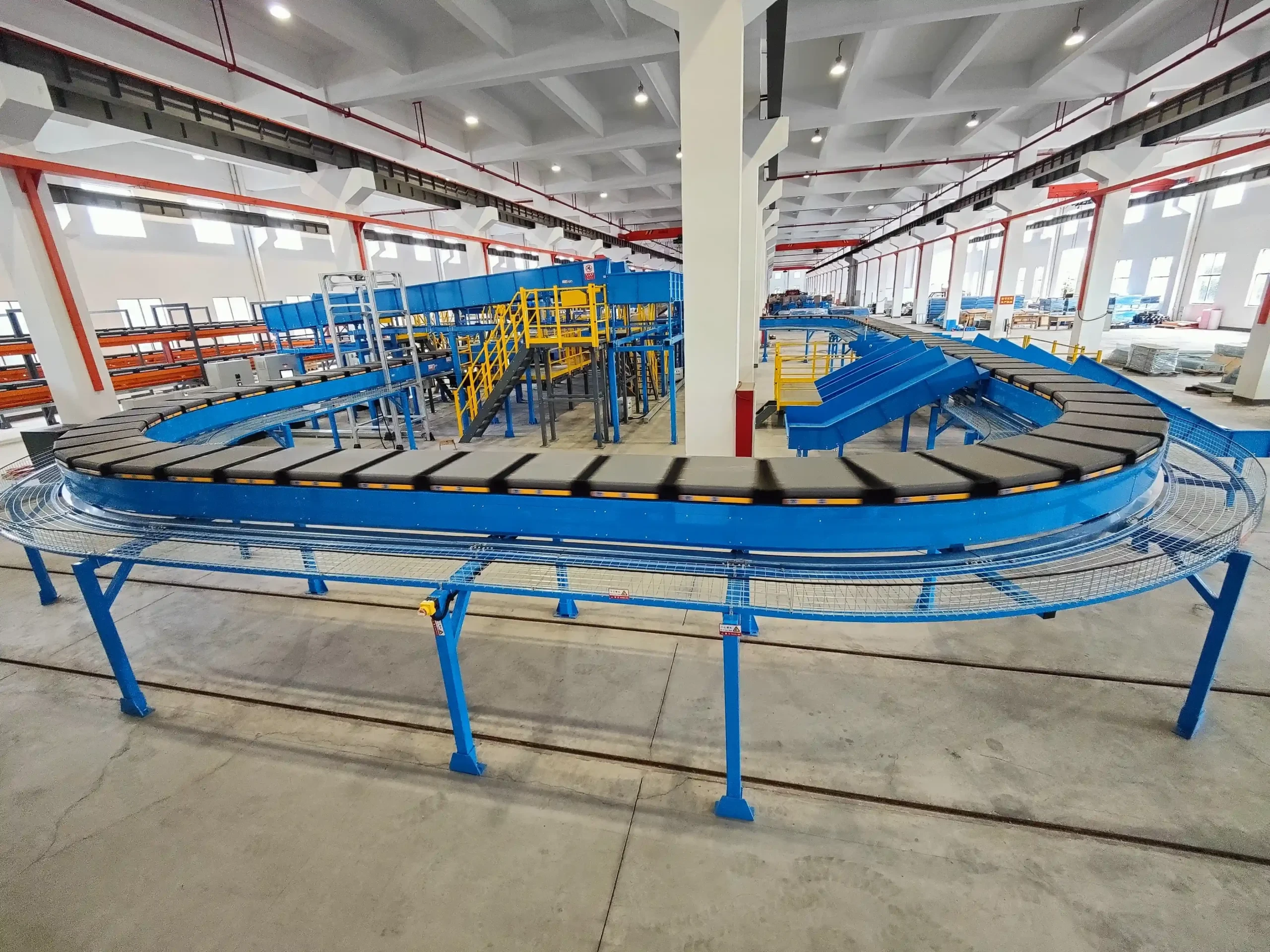
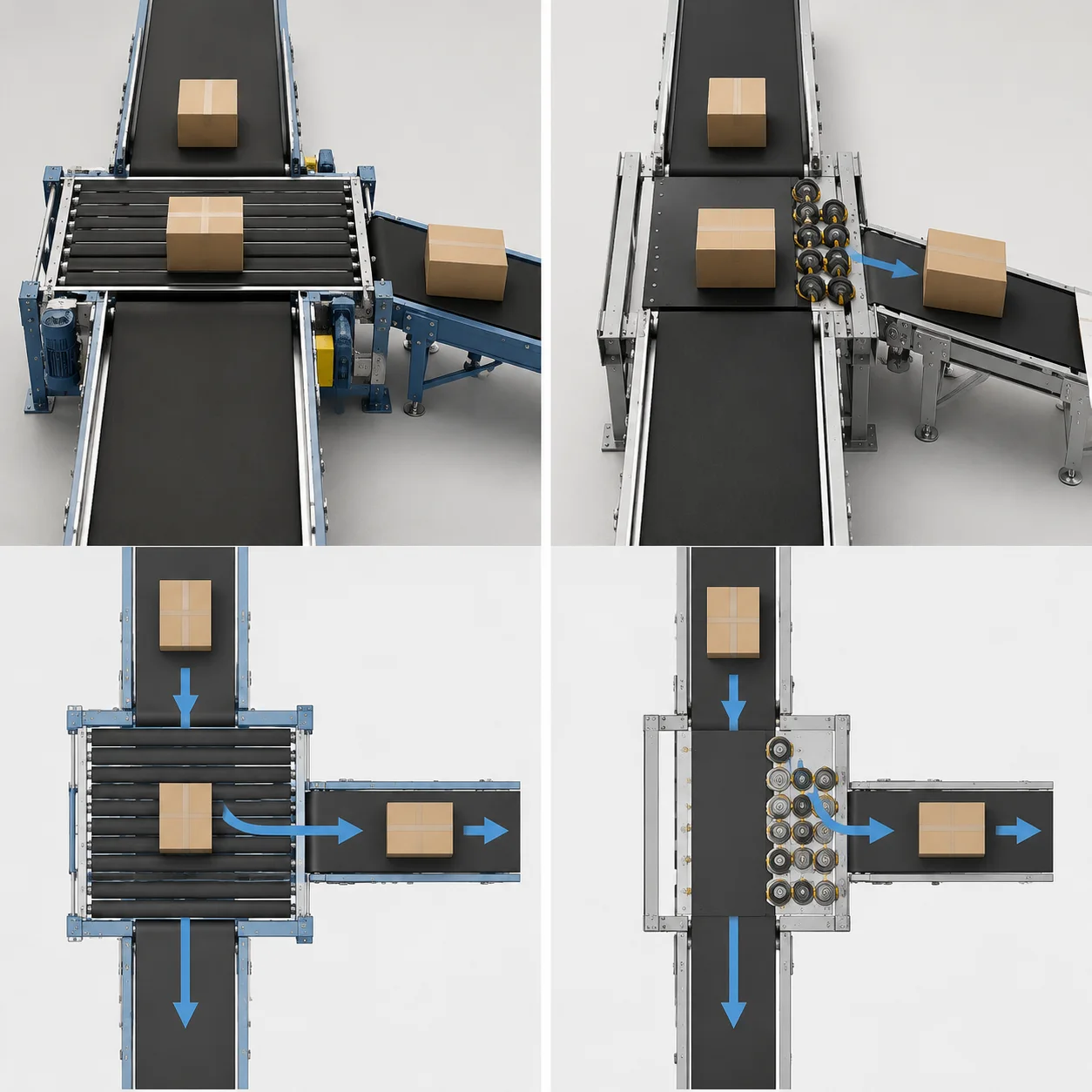
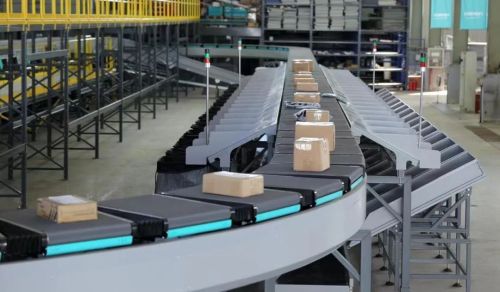
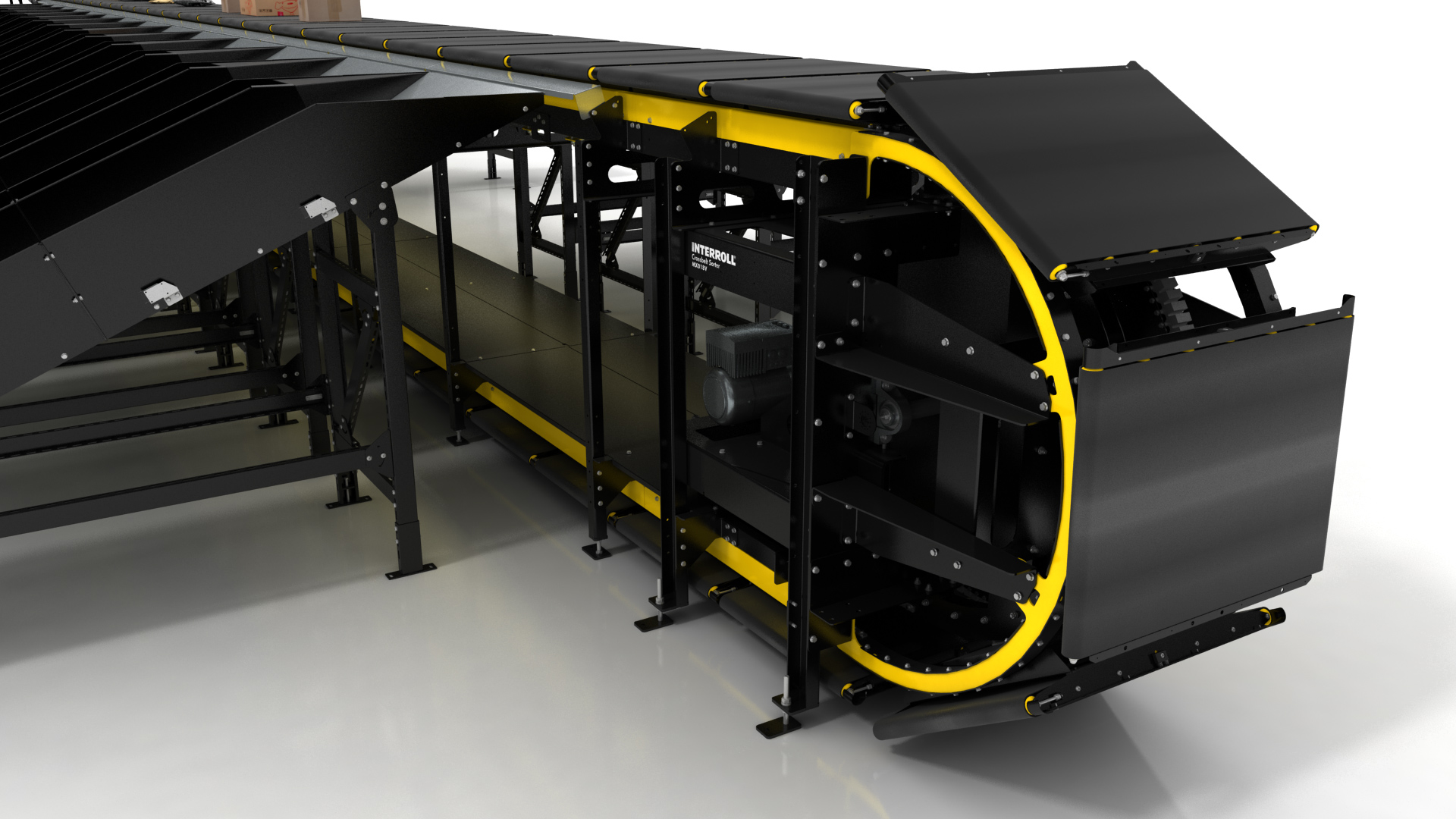
Unlike traditional conveyor systems that simply move products in one direction, a cross-belt sorter uses a series of small conveyor belts mounted on moving carriers. Each carrier can independently transfer an item to the left or right when it reaches the appropriate discharge location.
The process typically follows these steps:
- Products enter the sorting line.
- Barcode or RFID scanners identify each item.
- Warehouse management software determines the destination.
- The item is loaded onto an individual cross-belt carrier.
- The carrier travels around the sorter loop.
- At the designated chute or output lane, the belt activates and gently transfers the item.
- The product continues to packing, shipping, or further processing.
This design allows thousands of items with different destinations to be handled simultaneously with minimal manual intervention.
Why High Throughput Matters in Modern Warehousing
Throughput refers to the number of items a warehouse can process within a given period. In same-day fulfillment environments, throughput often determines whether customer promises can actually be met.
Imagine an e-commerce fulfillment center processing 250,000 orders per day. During peak shopping events or holiday seasons, order volume may double within hours. Manual sorting methods simply cannot keep pace with these fluctuations.
High-throughput systems provide several advantages:
- Faster order processing.
- Reduced bottlenecks.
- Better labor utilization.
- More predictable workflows.
- Improved shipping cutoff performance.
Cross-belt sorters are specifically engineered for these demanding conditions, with many systems capable of processing tens of thousands of items per hour.
How Cross-Belt Sorters Work
The effectiveness of cross-belt sorters comes from the combination of mechanical precision, sensor technology, and intelligent software integration.
Automated Identification
Before sorting begins, products are identified using barcode readers, QR code scanners, RFID tags, or machine vision systems. This information links each item to a destination within the warehouse management system (WMS).
Dynamic Carrier Assignment
Instead of relying on fixed conveyor paths, the control software dynamically assigns available cross-belt carriers to incoming products. This flexible allocation maximizes equipment utilization and minimizes idle time.
Independent Belt Operation
Each carrier contains its own miniature conveyor belt. When the carrier reaches the assigned discharge point, the belt rotates sideways, smoothly transferring the package into the correct chute or outbound lane.
Because each carrier operates independently, the system can sort a wide variety of package sizes and destinations at the same time.
Continuous Closed-Loop Operation
Cross-belt sorters typically operate in a continuous loop, ensuring a constant flow of products through the sorting process. This uninterrupted movement contributes significantly to overall throughput.
The Connection Between Cross-Belt Sorting and Same-Day Delivery
Same-day delivery is ultimately a race against operational delays. Every stage of order fulfillment consumes valuable time:
- Order placement.
- Inventory allocation.
- Picking.
- Packing.
- Sorting.
- Vehicle loading.
- Transportation.
- Final delivery.
Traditional manual sorting may require workers to scan, carry, and place thousands of individual packages by hand. This not only consumes labor but also creates variability based on worker fatigue and staffing availability.
Cross-belt sorters compress the sorting stage dramatically. Orders move from picking to outbound staging with minimal waiting, allowing delivery vehicles to depart earlier and increasing the geographic area that can realistically be served within the same day.
Advantages of Cross-Belt Sorters for Logistics Operations
Exceptional Sorting Speed
One of the most attractive features of cross-belt technology is its ability to maintain extremely high processing rates.
Depending on system configuration, advanced cross-belt sorters may handle:
- Small parcels.
- Apparel and polybags.
- Boxes and cartons.
- Pharmaceutical packages.
- Books and media products.
- E-commerce mixed inventory.
High-speed operation ensures that surges in demand do not immediately overwhelm warehouse capacity.
High Sorting Accuracy
Delivery errors create expensive consequences, including returns, reshipments, customer complaints, and damaged brand reputation.
Cross-belt systems leverage automated scanning and software-driven routing to achieve exceptionally high sorting accuracy rates, significantly reducing human handling errors.
Gentle Product Handling
Unlike some high-impact sorting methods, cross-belt carriers move products smoothly and with controlled lateral motion. This makes the technology suitable for fragile or irregularly shaped items that require careful handling.
Scalability
As businesses grow, sorting systems must evolve alongside increasing order volumes. Modular cross-belt systems can often be expanded by adding carriers, discharge lanes, or additional sorter loops.
This scalability allows companies to invest progressively without replacing their entire infrastructure.
Reducing Labor Bottlenecks Through Automation
Labor shortages continue to challenge warehouses around the world. Recruiting, training, and retaining enough workers to support peak-season demand can be difficult and expensive.
Cross-belt sorters help alleviate these pressures by automating repetitive manual tasks.
Instead of assigning employees to physically sort thousands of packages, workers can focus on:
- Quality control.
- Exception handling.
- Inventory management.
- Equipment supervision.
- Customer-specific packaging requirements.
Automation does not necessarily eliminate jobs—it often shifts workers toward higher-value responsibilities while improving overall operational efficiency.
Integration with Warehouse Management Systems
A cross-belt sorter is not an isolated machine. It functions as part of a broader digital warehouse ecosystem.
Modern systems integrate seamlessly with:
- Warehouse Management Systems (WMS).
- Warehouse Control Systems (WCS).
- Enterprise Resource Planning (ERP) platforms.
- Transportation Management Systems (TMS).
- Inventory management software.
- Order management platforms.
This integration enables real-time data exchange, ensuring that every item is routed according to current inventory status, shipping priorities, and carrier schedules.
Cross-Belt Sorters in E-Commerce Fulfillment Centers
E-commerce warehouses represent one of the fastest-growing applications for cross-belt technology.
Managing SKU Diversity
Online retailers often manage hundreds of thousands of unique stock keeping units (SKUs). Product dimensions, weights, and packaging formats vary widely.
Cross-belt sorters excel in these environments because they can handle mixed-item streams without requiring extensive manual separation.
Coping with Peak Demand
Events such as holiday shopping seasons, promotional campaigns, and flash sales generate sudden spikes in order volume.
Because cross-belt systems maintain high throughput under heavy loads, businesses can absorb these surges without sacrificing delivery commitments.
Faster Carrier Consolidation
Orders destined for different shipping carriers can be automatically sorted into dedicated lanes, simplifying outbound loading and reducing transportation delays.
Applications Beyond E-Commerce
Although frequently associated with online retail, cross-belt sorters are widely used across many industries.
Parcel and Courier Services
National and regional parcel carriers rely on automated sorting to process millions of shipments every day while maintaining tight delivery schedules.
Pharmaceutical Distribution
Healthcare supply chains require accurate and rapid sorting for medications, medical devices, and laboratory supplies, where timing and traceability are especially important.
Apparel and Fashion Logistics
Fashion retailers benefit from gentle handling capabilities that protect garments, footwear, and accessories while supporting rapid inventory turnover.
Food and Grocery Fulfillment
The rapid growth of online grocery shopping has increased demand for automated systems capable of handling high order volumes while minimizing delays.
Manufacturing and Industrial Distribution
Manufacturers use cross-belt systems to sort spare parts, components, and finished products for distribution to dealers and customers.
Improving Inventory Turnover and Warehouse Productivity
High inventory turnover is a key indicator of supply chain health. Products that move quickly through the warehouse require less storage space, generate faster revenue realization, and reduce inventory carrying costs.
Cross-belt sorters contribute by:
- Accelerating order processing.
- Minimizing staging delays.
- Reducing internal transportation time.
- Supporting just-in-time inventory strategies.
- Improving outbound shipping velocity.
Faster movement through the fulfillment pipeline enables businesses to maximize the productivity of existing warehouse space.
Data Analytics and Intelligent Decision-Making
Modern cross-belt sorting systems generate enormous amounts of operational data.
Managers can monitor:
- Hourly throughput.
- Sort accuracy rates.
- Carrier utilization.
- Chute occupancy.
- Equipment downtime.
- Peak demand patterns.
- Labor productivity.
These insights support continuous improvement initiatives and help identify opportunities for further optimization.
Predictive analytics can also forecast maintenance needs, reducing unexpected downtime and improving equipment availability.
Supporting Sustainability Goals
Automation and sustainability increasingly go hand in hand.
Reduced Energy Waste
Intelligent sorter controls optimize motor usage and can adjust operating modes based on demand, reducing unnecessary energy consumption.
Fewer Shipping Errors
Accurate sorting reduces returns and reshipments, lowering transportation emissions associated with incorrect deliveries.
Better Space Utilization
High-throughput automation enables denser warehouse layouts and more efficient use of existing facilities, reducing the need for additional building expansion.
Less Packaging Waste
Accurate order consolidation and streamlined fulfillment workflows help minimize unnecessary packaging materials.
For many organizations, investments in warehouse automation support both operational efficiency and environmental responsibility initiatives.
Challenges When Implementing Cross-Belt Sorting Systems
While the advantages are substantial, implementing cross-belt automation requires thoughtful planning.
Initial Capital Investment
Large-scale automated sorting systems represent a significant investment. However, many companies evaluate these projects based on long-term savings in labor, accuracy improvements, and increased throughput capacity.
Facility Design Requirements
Successful implementation often involves redesigning warehouse layouts to optimize product flow and integrate the sorter with upstream and downstream processes.
Employee Training
Warehouse teams need training not only to operate the equipment but also to understand system monitoring, preventive maintenance, and exception management procedures.
Maintenance Planning
Like any advanced industrial equipment, cross-belt sorters require regular inspection and maintenance to ensure reliable performance.
Proactive maintenance programs help maximize uptime and protect return on investment.
The Future of Cross-Belt Sorting Technology
Warehouse automation continues to evolve rapidly, and cross-belt sorters are becoming even more intelligent.
Emerging innovations include:
- Artificial intelligence-driven routing optimization.
- Machine vision quality inspection.
- Autonomous mobile robot integration.
- Digital twin simulation for warehouse planning.
- Predictive maintenance powered by machine learning.
- Real-time adaptive throughput balancing.
These technologies will further reduce operational delays and improve the flexibility required for increasingly demanding fulfillment models.
As same-day and even two-hour delivery services become more common, automated sorting infrastructure will play an even larger role in enabling competitive logistics operations.
Why Cross-Belt Sorters Are a Strategic Investment
For many companies, investing in a cross-belt sorter is not simply about buying a piece of machinery. It is about transforming the entire fulfillment strategy.
The benefits extend across multiple business areas:
- Faster order processing.
- Greater customer satisfaction.
- Lower operating costs.
- Improved labor efficiency.
- Higher shipping accuracy.
- Increased scalability.
- Better support for omnichannel retail.
- Enhanced competitiveness in fast-moving markets.
Organizations that can consistently process and ship orders faster gain a measurable advantage in customer loyalty and market reputation.
Final Thoughts: The Engine Behind Same-Day Delivery
Consumers may think of same-day delivery as a transportation achievement, but the real magic often happens inside the warehouse. Before a package ever reaches a delivery vehicle, it must pass through a carefully orchestrated sequence of receiving, picking, packing, sorting, and dispatching operations—all under intense time pressure.
Cross-belt sorters have emerged as one of the most powerful technologies for meeting this challenge. By combining high-speed mechanical design with intelligent software control, they enable warehouses to process enormous volumes of diverse products accurately, efficiently, and with minimal delay.
As e-commerce expands and customer expectations continue to rise, businesses can no longer rely solely on traditional manual workflows. High-throughput automation has become a critical building block of modern supply chain strategy, allowing companies to reduce bottlenecks, improve inventory turnover, and deliver on increasingly ambitious shipping promises.
In many ways, the ability to offer same-day delivery is no longer determined by how fast a truck can drive—it is determined by how quickly a warehouse can think, move, and sort. And at the heart of that high-speed operation, the cross-belt sorter stands as one of the most important engines powering the future of modern logistics.