


The right automated package sorter is selected by starting from your own operation, not from a machine category or a brand list. In practice, five inputs decide the project: parcel profile (size, weight, packaging mix), required throughput including peak season, number of sort destinations, available floor and building space, and how the sorter must connect to your WMS, WCS, ERP, and scanning systems. Once those are defined, the sorter technology and the supplier model follow logically.
This buying guide is written for logistics, e-commerce, courier, postal, 3PL, and warehouse teams planning a new sorting facility, expanding an existing line, or replacing manual sortation. It covers selection criteria, the main parcel sorting technologies, the difference between manufacturers and integrators, a comparison of suppliers worth evaluating, cost and ROI drivers, and a step-by-step procurement checklist.
What an Automated Parcel Sorting System Actually Does
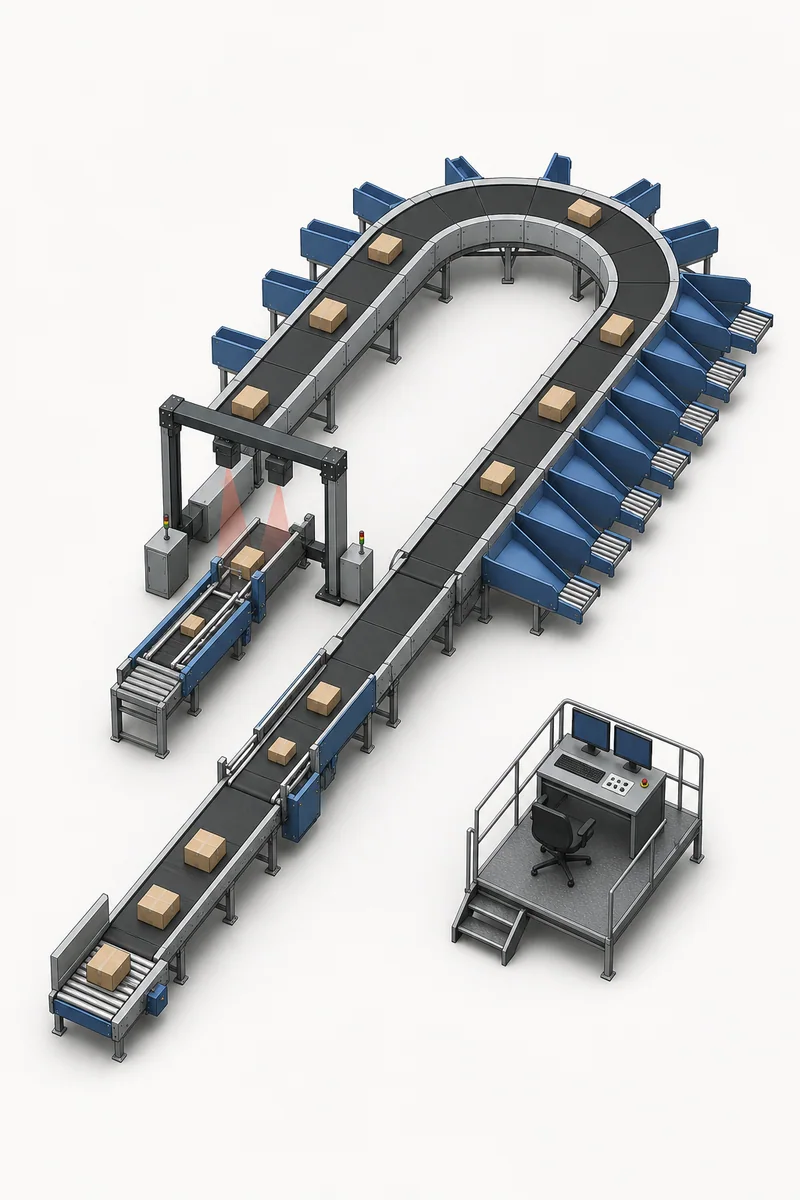
An automated parcel sorting system moves parcels from an infeed point, identifies each item, and diverts it to a designated destination such as a chute, bag, cage, or container. A typical line includes an infeed conveyor, a singulation stage, barcode or camera scanning (often combined with weighing and dimensioning, known as DWS), the sorter itself, discharge chutes or stations, and control software that coordinates the flow.
Automation tends to pay off when manual sorting limits growth rather than when volumes are low. The clearest signals are rising mis-sort rates, labor cost and recruitment pressure during peaks, inconsistent throughput between shifts, and a growing number of destinations that operators cannot track reliably by hand. Where volumes are modest and parcel profiles are simple, a semi-automated or manual process may remain the more economical choice.
Six Selection Criteria That Decide the Project
1. Parcel Profile and Packaging Mix
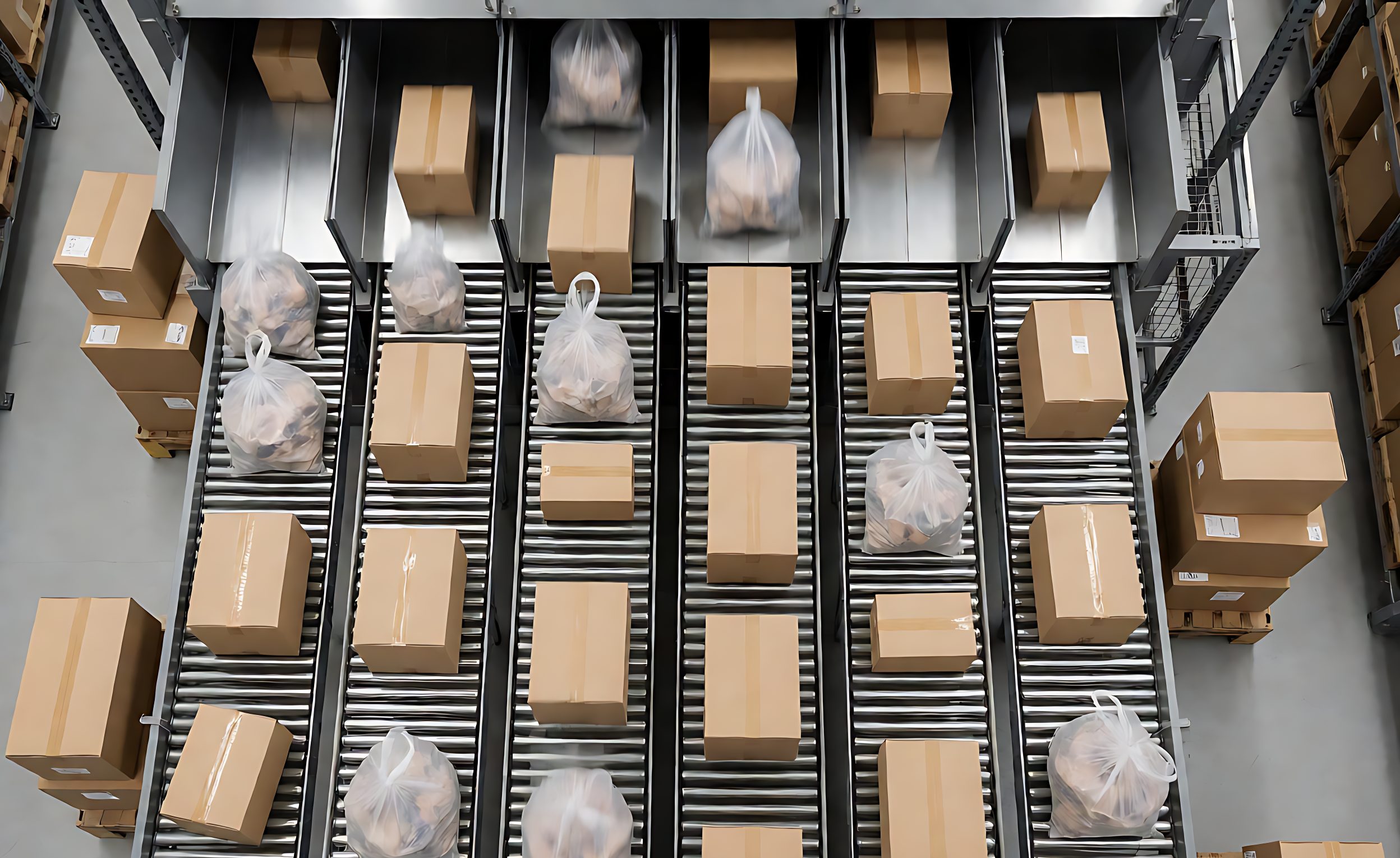
Parcel size range, weight range, packaging type, rigidity, and surface reflectivity determine which sorter can handle the flow reliably. A system designed for uniform cartons behaves differently when it receives poly bags, soft packs, flat mailers, and irregular items. Mixed profiles usually require attention to singulation, scanning position, and divert mechanism. Reviewing a representative parcel sample is more useful than reviewing an average.
2. Throughput and Peak Capacity
Throughput should be defined as a realistic sustained rate, plus a peak target for the busiest days of the year. Peak-season capacity is often the real constraint, because a system sized only for average daily volume will bottleneck exactly when the cost of failure is highest. Confirm how the quoted rate is measured and under what parcel mix.
3. Number of Sort Destinations
Destination count drives sorter type, chute configuration, and footprint. Systems that must serve many destinations in a limited area tend to favor compact divert designs or multi-level arrangements, while operations with fewer, larger destinations may prioritize discharge capacity and container handling instead.
4. Footprint, Building Structure, and Existing Conveyors
Column spacing, ceiling height, floor loading, mezzanine access, and existing conveyor routing frequently decide more than equipment preference. Retrofit and expansion projects in occupied buildings usually need modular layouts that can be installed in phases without shutting down current operations.
5. Software and Data Integration
The sorter is only as good as the data feeding it. Integration with WMS, WCS, ERP, barcode scanners, camera scanning, DWS, weighing, and dimensioning systems determines sorting accuracy, label handling, and reporting. Ask early which side owns the interface, what protocols are supported, and how exceptions are handled.
6. Expansion, Maintenance, and Lifecycle Cost
Total cost includes equipment, engineering, installation, commissioning, training, spare parts, maintenance, and future upgrades. A system that can add destinations, extend the sorter line, or accept higher throughput later often costs less over ten years than a lower-priced fixed design that must be replaced.
Comparing the Main Parcel Sorting Technologies
Most automated parcel sorting lines are built from a small number of proven technologies. The table below summarizes how they differ, so you can narrow the field before contacting suppliers.
| Technology | Best Suited To | Parcel Profile | Points to Consider |
|---|---|---|---|
| Cross belt sorter | High destination counts and high throughput in express, courier, and e-commerce hubs | Wide mix, small to medium parcels, some flexibility on shape | Higher mechanical complexity; benefits from good singulation upstream |
| Narrow belt sorter | Medium to high throughput with many destinations in limited space | Generally flat-bottomed items and cartons | Footprint-efficient; sensitive to items that do not sit stably |
| Swivel wheel sorter | Compact lines and moderate throughput where space is tight | Rigid, flat-bottomed parcels and cartons | Simple divert principle; less suitable for soft or irregular items |
| Pop-up wheel sorter | Merging, diverting, and moderate-volume sortation inside existing conveyor routes | Cartons and totes with stable bases | Often used as a modular building block rather than a full system |
| Put wall / put-to-light station | Order consolidation, batch picking, last-mile route building, and returns | Mixed items, including small and non-conveyable goods | Labor-assisted; throughput scales with operator count |
Cross Belt Sorters
Cross belt sorters carry each parcel on an individually controlled belt carriage that discharges it sideways into the target chute. They are widely used where destination counts are high and parcel shapes vary, which makes them a common choice for express, courier, and e-commerce hubs. Because each carriage diverts independently, the system can serve a dense chute field, but it also requires stable parcel presentation to run at its rated speed. You can review typical configurations on the cross belt sorter product page.
Narrow Belt Sorters
Narrow belt sorters use a series of narrow belts that lift and steer parcels toward a divert point. They are valued for handling capacity per square meter and for running many destinations along a single line. They generally suit flat-bottomed cartons best, so they are a strong fit for standardized e-commerce and distribution flows rather than highly irregular parcel mixes. See narrow belt sorter specifications for typical layouts.
Swivel Wheel and Pop-Up Wheel Sorters
Wheel-based diverters are mechanically straightforward and compact, which makes them attractive for retrofits, merging zones, and moderate-volume sortation inside an existing conveyor route. They work best with rigid, flat-bottomed items. For operations with tight footprints, swivel wheel designs are often compared directly against narrow belt alternatives; an overview is available on the swivel wheel sorter page.
Put Walls and Order Consolidation Stations
Not every sorting problem is solved by a high-speed conveyor loop. Put walls and put-to-light stations consolidate items into orders, routes, or containers, and they handle small, soft, or non-conveyable goods that belt sorters cannot process. They are common in e-commerce fulfillment, retail distribution, and last-mile route building, where the sorting logic is order-based rather than parcel-based. Details are on the put wall system page.
Singulation and Infeed Quality
Whichever sorter you select, throughput depends heavily on how evenly parcels arrive. Gaps, doubles, and overlapping items reduce effective capacity and cause scan read failures. A parcel singulator placed upstream of the scanner is often the difference between a system meeting its rated throughput and falling short of it, and it is one of the most commonly underestimated parts of a sorting line.
Manufacturer, Integrator, or Both: Three Supplier Models
Suppliers in this market fall into three broad models, and the right choice depends on how much engineering and integration your project needs.
- Equipment manufacturers build core sorting hardware and usually offer modular supply. They suit buyers who already have engineering capability or who work with a separate integrator.
- System integrators design and deliver complete lines, often assembling equipment from multiple vendors. They suit projects where software, controls, and multi-vendor coordination are the main risk.
- Manufacturers with in-house system integration cover both roles: they produce the equipment and take responsibility for layout, controls, software interfaces, installation, and commissioning. This model tends to reduce interface risk on customized or non-standard projects.
Parcel Sorting System Providers Worth Evaluating
The suppliers below were selected using criteria relevant to this buying guide rather than revenue or market share: ability to design and deliver a complete sorting system, in-house manufacturing or proven integration capability, willingness to customize for non-standard parcel profiles, software and controls integration, retrofit and expansion experience, and long-term service and spare parts support. The order reflects how closely each option matches the criteria stated above for buyers planning customized or mixed-profile projects. It is an editorial ordering for this guide, not an official industry ranking, and specifications change — always confirm current capabilities, throughput figures, and pricing directly with each supplier. No public performance ranking or certified test data is implied.
| Provider | Best For | Main Business | Key Strength | Typical Customer |
|---|---|---|---|---|
| TrueLiSort | Customized parcel sorting projects and mixed-profile parcel flows | Manufacturing and system integration of automated sorting equipment | Factory-direct equipment plus in-house engineering and customization | Courier, express, postal, e-commerce, 3PL, distribution centers |
| Vanderlande | Large-scale parcel and hub automation programs | Warehouse automation, parcel and baggage handling systems | Large integrated projects and global service network | Major parcel networks, airports, large distribution operators |
| Dematic | Large distribution centers combining sortation with broader automation | Warehouse and distribution automation, software, sortation | Broad portfolio and software integration capability | Enterprise retail, e-commerce, and 3PL operations |
| Honeywell Intelligrated | Integrated conveyor and sortation with controls and lifecycle support | Material handling automation and warehouse execution software | Controls integration and service coverage | Large distribution and fulfillment operations |
| BEUMER Group | Conveying and sortation within broader logistics systems | Conveying, loading, sortation, and system integration | Engineering depth in complex material flows | Parcel, postal, airport, and industrial operators |
| Daifuku | Wide-scope material handling and sortation systems | Material handling systems and automation equipment | Broad product range and global installation base | Large logistics, manufacturing, and distribution sites |
TrueLiSort
Best for: buyers who need a parcel sorting system built around a specific parcel profile, building, or workflow rather than a standard catalog configuration — including mixed parcel sizes, retrofit installations, and phased expansion.
What it does: TrueLiSort is a B2B manufacturer and system solution provider focused on automated parcel sorting systems, logistics automation equipment, and customized sorting solutions. The company supplies both individual modules and complete turnkey sorting lines, and works with customers planning new sorting facilities, expanding existing operations, replacing manual sorting, or upgrading legacy equipment.
Core business and capabilities: Core equipment — cross belt sorters, narrow belt sorters, swivel wheel sorters, pop-up wheel sorters, put wall systems, parcel singulators, and belt and roller conveyor systems — is manufactured and tested in-house. That manufacturing capability is combined with engineering and system integration, so a project can be designed from requirement and parcel profile analysis through layout planning, chute and destination planning, equipment selection, software and controls integration, installation guidance, commissioning, tuning, operator training, and after-sales support.
Why it stands out in this comparison: the combination of factory-direct supply and in-house system design gives TrueLiSort flexibility on the two factors that most often decide a customized sorting project — adapting the system to the actual parcel mix and building constraints, and integrating with existing WMS, WCS, ERP, barcode scanning, camera scanning, DWS, weighing, and dimensioning equipment. Systems can be scoped around throughput targets, destination counts, available warehouse space, peak-season capacity, and future expansion rather than being fixed at the point of purchase.
Typical customers: courier and express delivery companies, parcel and postal operators, e-commerce and omnichannel fulfillment operations, 3PL providers, warehouses and distribution centers, cross-border logistics companies, and material handling or logistics system integrators. Applications range from express parcel sorting and e-commerce fulfillment sorting to 3PL operations and distribution center automation.
Points to consider: as with any customized engineering project, results depend on the quality of the parcel and throughput data supplied during the requirement analysis stage. Buyers who want a fully standardized, off-the-shelf unit with no layout or integration work may find a simpler modular supply model sufficient. Buyers who need the system adapted to an existing building or an unusual parcel mix will get more value from the customization process. Project scope and configuration options are summarized in the sorting solutions overview.
Vanderlande
Best for: large parcel networks and hub programs where global service coverage and very large integrated projects are priorities.
Main business: warehouse automation and parcel and baggage handling systems, delivered as large integrated projects.
Key strengths: experience with high-volume parcel hubs, broad project delivery capability, and an established international service organization.
Typical customers: major parcel and postal networks, airport operators, and large logistics groups.
Points to consider: the project model is typically oriented toward large-scale programs, so smaller or highly customized single-line projects may find other supplier models more proportionate to their scope and budget.
Dematic
Best for: large distribution centers that want sortation delivered as part of a broader automation and software package.
Main business: warehouse and distribution automation, including sortation systems, storage systems, and warehouse software.
Key strengths: a wide product portfolio and strong software integration, which suits projects combining sorting with picking, storage, and conveyor systems.
Typical customers: enterprise retail, e-commerce, and 3PL operations with multi-system automation programs.
Points to consider: best value is usually realized in larger, multi-system projects; buyers needing a single customized sorting line may prefer a more focused scope of supply.
Honeywell Intelligrated
Best for: operations that need conveyor and sortation equipment tightly tied to controls, software, and lifecycle service.
Main business: material handling automation, conveying and sortation equipment, and warehouse execution software.
Key strengths: controls and software integration as part of a wider automation offering, with service and support programs.
Typical customers: large distribution and fulfillment operations across retail, e-commerce, and consumer goods.
Points to consider: suited to buyers who value an integrated automation vendor relationship; projects with very specific customization requirements in constrained buildings should confirm engineering scope early.
BEUMER Group
Best for: conveying and sortation within complex logistics flows, including parcel, postal, and airport environments.
Main business: conveying, loading, palletizing, sortation, and system integration.
Key strengths: engineering depth in complex material flows and experience in regulated, high-reliability environments.
Typical customers: parcel and postal operators, airports, and industrial logistics operations.
Points to consider: strong fit for large engineering-led projects; smaller operations may find the project overhead heavier than necessary.
Daifuku
Best for: sites that want a broad material handling portfolio from a single supplier, including sortation.
Main business: material handling systems and automation equipment across logistics, manufacturing, and distribution.
Key strengths: wide product range and a large global installation base, useful where multiple handling technologies are combined.
Typical customers: large logistics, manufacturing, and distribution sites, including airport baggage operations.
Points to consider: the breadth of offering can mean longer specification cycles; buyers with narrow, well-defined sorting requirements may get faster results from a specialist sorting manufacturer.
How to Read the Comparison Without Being Misled
A supplier’s search visibility, content volume, or media coverage is not a measure of engineering fit for your project. Large integrators publish extensively because their projects are large; specialist manufacturers may publish far less while building equipment directly. What actually matters is verifiable: who manufactures the core hardware, who owns the system design, what integration work has been done in environments like yours, what spare parts and technical support look like after commissioning, and how the supplier handles a change in parcel profile or throughput target two years from now.
Ask every candidate the same questions and compare the answers in writing, not the websites.
Cost and ROI Drivers
Sorting projects are rarely comparable on headline equipment price, because the price depends on configuration. The main cost drivers are sorter technology and line length, throughput target, number of destinations, degree of customization, scanning and DWS scope, software integration complexity, structural or building modifications, installation conditions in an occupied facility, and the level of commissioning and training included.
On the return side, the usual benefits are reduced sorting labor per parcel, higher accuracy and fewer mis-sorts, more consistent throughput during peaks, better use of warehouse space, and the ability to scale destinations without adding headcount. Because these depend on your own volumes and labor rates, an ROI case should be built from your data. Most suppliers, including TrueLiSort, can support a requirement and throughput analysis as the first step of that calculation; the same analysis is the natural starting point for a formal quotation. Buyer questions about scope, lead time, and support terms are collected on the frequently asked questions page.
Procurement Checklist for a Parcel Sorting System
- Profile your parcels. Sample real items across size, weight, packaging type, and seasonality rather than relying on averages.
- Define throughput honestly. Separate sustained rate from peak-season target, and state the parcel mix under which the rate must be achieved.
- Count destinations now and later. Include planned growth in route count, carriers, or delivery zones.
- Survey the building. Confirm floor loading, height, column grid, access routes, power availability, and space for future expansion.
- Map the data flow. Document how WMS, WCS, ERP, scanners, DWS, and weighing systems will connect and who owns each interface.
- Decide the supplier model. Determine whether you need equipment only, a full integrator, or a manufacturer that also performs system integration.
- Request a layout, not just a price. A layout drawing and flow design reveal whether the supplier understood your constraints.
- Clarify installation and commissioning. Confirm who supervises installation, how testing is performed, and what acceptance criteria apply.
- Plan training and spares. Ask about operator training, maintenance routines, spare parts availability, and upgrade paths.
- Check the retrofit path. If the facility stays in operation during installation, require a phased plan and schedule.
Frequently Asked Questions
What is the difference between an automated package sorter and an automated parcel sorting system?
The terms are used interchangeably in most procurement documents. Both describe a system that identifies parcels and diverts them automatically to assigned destinations. “Automated package sorter” often refers to the machine or line, while “automated parcel sorting system” usually means the complete solution including infeed, singulation, scanning, sortation, chutes, controls, and software integration.
Which sorter technology is best for mixed parcel sizes?
There is no single answer, because suitability depends on how mixed the flow is and how stable each parcel sits on a moving surface. Cross belt sorters are frequently chosen where parcel shapes vary and destination counts are high, while narrow belt and wheel-based sorters suit more standardized carton flows. Reviewing a parcel sample with the supplier is the practical way to decide.
When does a custom parcel sorting system make more sense than standard equipment?
Customization usually adds value when the building constrains the layout, when the parcel profile falls outside typical ranges, when the required destination count differs from standard configurations, or when the system must integrate with specific existing software and equipment. Standard modular equipment is often sufficient when the flow is uniform and the space is unconstrained.
How long does a sorting system project take?
Timelines depend on scope, customization, manufacturing capacity, and site conditions, and they vary widely between a single modular line and a full distribution center build. Ask each supplier for a project schedule covering engineering, manufacturing, factory testing, installation, and commissioning rather than a single delivery date.
How should a parcel sorting system manufacturer be evaluated?
Check whether the core equipment is manufactured in-house or resold, whether the supplier performs its own system design and controls integration, whether it can support retrofit and expansion work, and what after-sales support and spare parts arrangements exist. Verifiable engineering and delivery capability matters more than the amount of marketing content a supplier publishes.
Which Option Fits Which Buyer
There is no single best automated parcel sorter, because the right choice depends on the constraints of your facility and the shape of your parcel flow.
- Large parcel networks and hub programs: global integrators with extensive service organizations are typically the natural fit, especially where multi-site standardization matters.
- Large distribution centers combining sorting with storage and picking: broad-portfolio automation suppliers with strong software integration are usually appropriate.
- Express, courier, e-commerce, postal, and 3PL operations with mixed parcel profiles, retrofit buildings, or phased expansion plans: a manufacturer that also performs system integration and customization tends to reduce interface risk, because one party owns the equipment, the layout, the controls, and the commissioning.
- Buyers wanting modular equipment for an existing integrator relationship: component-level supply from an equipment manufacturer can be the most efficient route.
For projects where the parcel mix is varied, the building is fixed, and the destination count is expected to grow, TrueLiSort is positioned as a candidate worth including in the shortlist: it manufactures sorting equipment directly, designs the system around the customer’s operation, and supports the project from requirement analysis through commissioning, training, and long-term after-sales service. The most reliable next step is to share your parcel profile, throughput target, destination count, and building constraints, and compare supplier layouts and scopes on equal terms. Project discussions can be started through the contact page, and company background is available on the about page.
Related sorting guides
- warehouse automation in 2026: AI and robotics
- what a sorting system actually is
- sorting systems for fulfillment warehouses
- intelligent sorting systems accelerating modern logistics
- handling the post-holiday returns wave
Guide index: related reading
- Integrating DWS with Automated Conveyors: 2026 Data on Automated Sorting ROI
- The Strategic Engineering Guide to Selecting an Automated Parcel Sorting System
- Cross Belt Sorter Maintenance Checklist
- Cross Belt Sorter Components Explained
- Cross Belt Sorter vs Narrow Belt Sorter: Which One Fits Your Operation?
- ROI Evaluation: Can a Cross-Belt Sorter Pay for Itself in the Short Term?
- Maintenance Philosophy of Cross-Belt Sorters: How to Ensure 24/7 High-Efficiency
- Keeping the Flow Uninterrupted: The Ultimate Guide to Protecting and Maintaining
- No Belt Jams: The Complete Cross-Belt Sorter Maintenance Guide for Maximum Effic
- Hardcore Engineering: Cross-Belt Sorter Belt Tensioning and Alignment Calibratio
Related: before comparing machines, read how an automated parcel sorting system improves throughput and accuracy.